10 Foot Exercises That Relieve Pain and Strengthen Your Arches
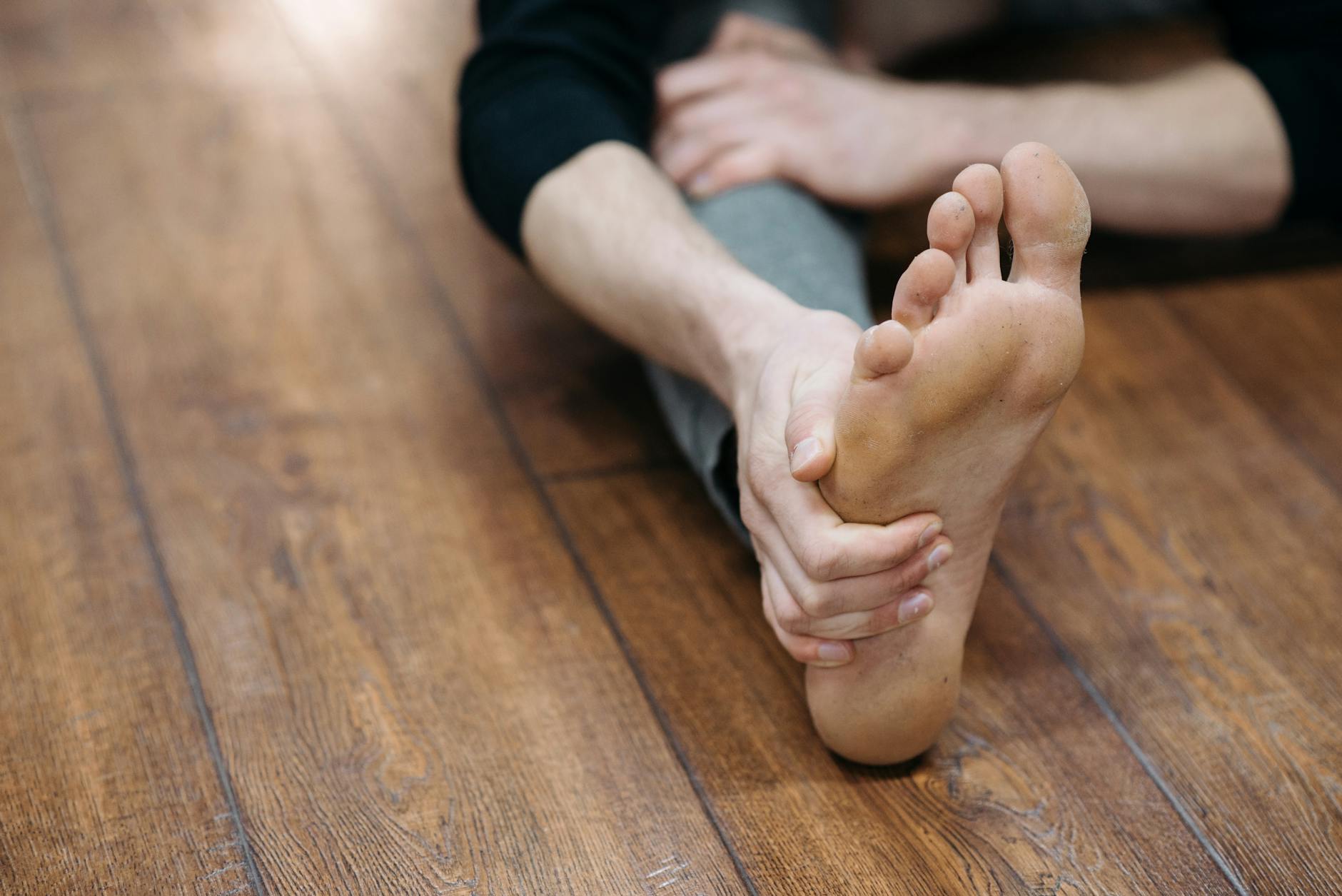
If you start the day with stabbing heel pain the moment your feet hit the floor, or notice an aching arch after a long shift on your feet, you are far from alone. Foot pain affects roughly one in four adults, and the majority of cases can be improved — sometimes dramatically — with consistent foot exercises for pain relief that cost nothing and take less than 15 minutes a day.
This guide walks you through 10 evidence-backed exercises that target the arches, plantar fascia, intrinsic foot muscles, calves, and ankles. Each entry includes sets and reps, who benefits most, and what to avoid so you train smart from day one.
No equipment is needed for most of these. A towel, a handful of marbles, and a resistance band cover the rest. Do them barefoot on a firm floor for the best results.
Why Foot Strengthening Exercises Actually Work
Your foot contains 26 bones, 33 joints, and more than 100 muscles, tendons, and ligaments. The plantar fascia — a thick band of connective tissue running along the sole — bears the equivalent of your entire body weight with every step. When the intrinsic muscles of the foot weaken (often from spending hours in cushioned, motion-controlling shoes), the plantar fascia absorbs disproportionate load and becomes inflamed.
Arch strengthening exercises rebuild the small muscles that support the arch from below, reducing the mechanical stress placed on the fascia itself. Research published in the Journal of Orthopaedic & Sports Physical Therapy found that a structured foot-muscle training programme reduced plantar fasciitis pain by more than 50 percent within eight weeks in participants who had suffered symptoms for at least three months.
The exercises below are progressive: begin with the gentler mobility work, then add the strength-focused movements once you feel comfortable.
Exercise 1 — Towel Scrunches
What it does: Activates the flexor digitorum brevis and lumbricals — the small muscles directly underneath the arch that support the medial longitudinal arch.
How to do it: Sit in a chair with a small hand towel flat on the floor in front of you. Place your bare foot on the towel and use your toes to scrunch the towel toward you, then release and smooth it out again.
- Sets/Reps: 3 sets of 10 scrunches per foot
- Best for: Flat feet, early-stage plantar fasciitis, general arch weakness
- Avoid: Curling the toes under rather than pulling them — keep the motion in the toe pads
Exercise 2 — Marble Pickups
What it does: Challenges individual toe dexterity and targets the intrinsic foot muscles through a functional gripping motion. Often used in post-injury rehabilitation programmes.
How to do it: Scatter 10 to 15 marbles on the floor beside a small cup. Sit in a chair, pick up each marble using only your toes, and drop it into the cup. Switch feet.
- Sets/Reps: 1 set of 10 pickups per foot (increase to 20 as strength improves)
- Best for: Post-fracture rehab, hammertoe prevention, low arch mobility
- Avoid: Rushing — slow, deliberate grips build more neuromuscular control
Exercise 3 — Toe Spreads
What it does: Retrains the abductor hallucis and abductor digiti minimi, muscles that splay the toes and stabilise the forefoot. Years of narrow-toe-box footwear compress these muscles into disuse.
How to do it: Sit or stand with feet flat on the floor. Spread all five toes as wide as possible, hold for three seconds, then relax. Progress to doing this standing to engage balance muscles simultaneously.
- Sets/Reps: 3 sets of 15 repetitions
- Best for: Bunion prevention, Morton's neuroma discomfort, narrow shoes wearers
- Avoid: Compensating by rolling the foot inward — keep the sole flat and even
Exercise 4 — Heel Raises (Calf Raises)
What it does: Strengthens the gastrocnemius and soleus muscles. Tight calves are one of the most common contributors to plantar fasciitis because they increase tensile load through the Achilles and into the plantar fascia. Strong calves also improve propulsion and reduce ankle strain.
How to do it: Stand facing a wall with fingertips touching it lightly for balance. Rise slowly onto the balls of your feet over a count of three, hold for one second at the top, then lower over a count of three.
- Sets/Reps: 3 sets of 15 reps; progress to single-leg heel raises when ready
- Best for: Plantar fasciitis, Achilles tendinopathy, flat feet
- Avoid: Locking the knees or letting the ankles roll outward at the top

Exercise 5 — Arch Doming (Short Foot Exercise)
What it does: The arch dome — sometimes called the "short foot exercise" — is arguably the most direct arch strengthening exercise available. It isolates the intrinsic foot muscles without recruiting the long toe flexors, producing a domed or cupped shape in the midfoot.
How to do it: Sit with your foot flat on the floor. Without curling your toes, try to shorten the distance between the ball of your foot and your heel by pulling the arch upward. You should see the arch lift and a slight dome form beneath the midfoot. Hold for five seconds, then release.
- Sets/Reps: 3 sets of 10 holds; progress to standing once seated form is solid
- Best for: Flat feet, overpronation, post-tibial tendon dysfunction
- Avoid: Curling the toes — this recruits the wrong muscles and masks weak intrinsics
Exercise 6 — Plantar Fascia Stretch
What it does: Directly lengthens the plantar fascia and the intrinsic foot muscles. Studies consistently identify this stretch as one of the most effective interventions for first-step morning heel pain — the hallmark symptom of plantar fasciitis.
How to do it: Sit in a chair and cross your affected foot over your opposite knee. Grip your toes and gently pull them back toward your shin until you feel a strong pull along the arch. Hold for 30 seconds, release, and repeat.
- Sets/Reps: 3 holds of 30 seconds, performed first thing in the morning before standing
- Best for: Plantar fasciitis — especially morning heel pain
- Avoid: Forcing the stretch past the point of mild discomfort; sharp pain is a signal to stop
Exercise 7 — Ankle Circles
What it does: Improves ankle joint mobility and synovial fluid circulation. Stiff ankles alter the way load is transferred through the foot, often pushing the arch into collapse during the midstance phase of walking.
How to do it: Sit in a chair with one foot lifted off the floor. Slowly draw large circles with your toes — 10 rotations clockwise, then 10 counter-clockwise. Focus on moving through the full range of motion at the ankle, not just rotating the toes.
- Sets/Reps: 2 sets of 10 circles in each direction per foot
- Best for: Post-sprain stiffness, desk workers, seniors with reduced ankle mobility
- Avoid: Moving at high speed — slow circles maximise range and proprioceptive feedback
Exercise 8 — Standing Calf Stretch (Gastrocnemius and Soleus)
What it does: While heel raises build calf strength, the calf stretch addresses the flexibility side of the equation. A tight gastrocnemius restricts ankle dorsiflexion — the ability to bend your ankle upward — which forces the foot to pronate excessively and overloads the arch.
Gastrocnemius stretch (knee straight): Step one foot back into a lunge position, press the back heel into the floor, and lean into the wall until you feel a pull high in the calf. Hold 30 seconds.
Soleus stretch (knee bent): Same position, but slightly bend the back knee while keeping the heel pressed down. This targets the deeper soleus and Achilles. Hold 30 seconds.
- Sets/Reps: 3 holds of 30 seconds for each variation, each leg
- Best for: Plantar fasciitis, Achilles tendinitis, shin splints
- Avoid: Letting the back heel rise off the floor — heel contact is essential for effective stretch
Exercise 9 — Resistance Band Foot Inversion and Eversion
What it does: Targets the tibialis posterior (the primary dynamic arch support muscle) and the peroneal muscles on the outer ankle. Weakness in these two opposing muscle groups is directly associated with overpronation, supination, and ankle instability.
Inversion (pulling inward): Sit in a chair. Loop a resistance band around the ball of your foot and anchor the other end to a fixed point at floor level to your outside. Slowly pull your foot inward against the band's resistance, hold one second, then return.
Eversion (pulling outward): Reverse the setup so the band anchors to your inside. Pull the foot outward.
- Sets/Reps: 3 sets of 12 reps in each direction per foot
- Best for: Overpronation, chronic ankle sprains, tibialis posterior tendinopathy
- Avoid: Using a band that is so strong that you compensate by rotating the hip
Exercise 10 — Single-Leg Balance with Arch Engagement
What it does: Integrates all the strength and mobility work above into a functional, weight-bearing position. Proprioception — your foot's ability to sense ground contact and adjust — is critical for injury prevention, and single-leg balance is the most efficient way to train it.
How to do it: Stand barefoot and lift one foot slightly off the floor. While balancing, actively perform a subtle arch dome (Exercise 5) so the foot is in its strongest position. Hold for 30 seconds. Progress by closing your eyes, which dramatically increases the proprioceptive challenge.
- Sets/Reps: 3 holds of 30 seconds per foot; work up to 60 seconds with eyes closed
- Best for: Ankle instability, post-surgery rehab, runners and anyone who stands for long periods
- Avoid: Locking the standing knee — keep a soft bend throughout
How to Structure Your Foot Exercise Routine
Consistency matters more than volume. A daily 12-to-15-minute session will outperform an occasional hour-long bout every time. Here is a practical schedule that works for most people:
| Phase | Duration | Focus |
|---|---|---|
| Weeks 1–2 | Daily | Exercises 1, 3, 6, 7 (mobility and stretching only) |
| Weeks 3–4 | Daily | Add Exercises 2, 4, 5, 8 (strength begins) |
| Weeks 5+ | 5–6 days per week | Full routine including Exercises 9 and 10 |
Perform the plantar fascia stretch (Exercise 6) every morning before you take your first step. This one habit alone can significantly reduce the notorious first-step heel pain associated with plantar fasciitis.
Who Should Be Doing These Exercises
These foot pain exercises at home are suitable for a wide range of people, but certain groups tend to see the fastest results:
- Plantar fasciitis sufferers — Exercises 4, 6, and 8 directly address the root biomechanical causes
- People with flat feet or low arches — Exercises 5, 1, and 9 rebuild the muscular support the arch needs
- Runners and walkers — All 10 exercises improve foot mechanics and reduce injury risk
- Workers who stand all day — Exercises 7, 4, and 10 counteract the fatigue of prolonged static loading
- Older adults — Exercise 10 targets proprioception, which declines with age and raises fall risk
- Desk workers with stiff feet — Exercises 3, 7, and 2 quickly restore mobility after hours of inactivity
People with acute injuries, post-surgical feet, diabetic neuropathy, or severe structural deformity should always consult a podiatrist or physiotherapist before starting any new exercise programme.
Common Mistakes That Slow Your Progress
Even well-intentioned foot strengthening exercises can produce disappointing results when certain errors creep in:
- Training through sharp pain. Mild discomfort and muscle fatigue are normal. Sharp, stabbing, or worsening pain is a signal to stop and reassess.
- Wearing shoes during exercises. Cushioned soles dampen sensory feedback and prevent the intrinsic muscles from activating fully. Always train barefoot on a firm surface.
- Skipping the stretch portion. Strength gains without corresponding flexibility improvements can increase tissue stiffness. Always pair strengthening with the calf and fascia stretches.
- Expecting overnight results. Tendon and connective tissue remodelling takes a minimum of six to eight weeks. Commit to the process before judging the outcome.
- Inconsistency. Three days a week delivers a fraction of the benefit of daily practice. Even five minutes every morning beats an intensive session twice a week.
Key Takeaways
The ten foot exercises for pain relief in this guide address every major contributor to common foot pain — weak intrinsic muscles, tight calves, poor arch support, restricted ankle mobility, and inadequate proprioception. Together they form a complete, progressive system you can perform in 12 to 15 minutes at home, with no gym membership and almost no equipment.
Start with the mobility and stretching exercises in the first two weeks to build a foundation, then layer in the strengthening work as your foot adapts. Doing the plantar fascia stretch before your first morning step and fitting in the arch doming exercise during everyday activities — standing at the kitchen counter, waiting for the kettle — makes it easy to accumulate meaningful training volume without disrupting your day.
Give it eight weeks of daily practice and most people find that the foot pain that seemed permanent becomes predictable, manageable, and in many cases entirely resolved through movement alone.