10 Gym Bag Tech Essentials Every Serious Athlete Needs in 2026
Werbung
Your gym bag says a lot about how seriously you take your training. Most athletes have the physical gear locked down — the right shoes, a solid water bottle, a clean towel. But the gym bag tech essentials are where serious performance gains hide in plain sight. A dead phone at minute 20 of a 90-minute session is more than an inconvenience — it kills your music, wipes your tracking data, and leaves you stranded without navigation or communication after a tough session.
In 2026, the gap between athletes who pack smart and those who just pack has never been wider. Gym tech gadgets have become lighter, more durable, and more purpose-built for physical environments than ever before. This guide covers all 10 items worth carrying — starting with the one most people overlook until it's too late.
1. A High-Quality, Versatile Charging Cable
It sounds unglamorous, but your charging cable is the single most important piece of technology in your gym bag. Everything else on this list depends on it. Yet most athletes pack whatever cable came in a random product box — a flimsy, single-connector cord that cracks under repeated bending, can't handle a pocket full of sweaty gear, and only works with one device.
The gym is uniquely brutal on cables. You're dealing with constant coiling and uncoiling, moisture from sweat and steam rooms, tight locker compartments that force sharp bends, and the physical stress of being stuffed next to a pair of shoes. A standard consumer cable degrades fast in this environment.
What to look for in a gym-grade charging cable:
- Braided nylon or Kevlar reinforcement over the outer jacket — resists fraying and cracking at the connector points where most failure happens
- Multi-tip or rotating connector design so one cable handles USB-C, Lightning (for older devices), and Micro-USB without needing separate cables for each device
- Compact length — a 1-meter cable is enough for locker-top charging and far less likely to tangle than a 2-meter cable packed into a side pocket
- Reinforced strain relief at both ends — the connector-to-cable junction is where 90% of breaks occur, especially with repeated bending
A single universal rotating-tip cable replaces three separate cables in your bag, removes tangling entirely, and handles every device from your earbuds case to your smartwatch. This is the one piece of gym bag accessories that pays for itself the first week.
2. True Wireless Earbuds Built for Sport
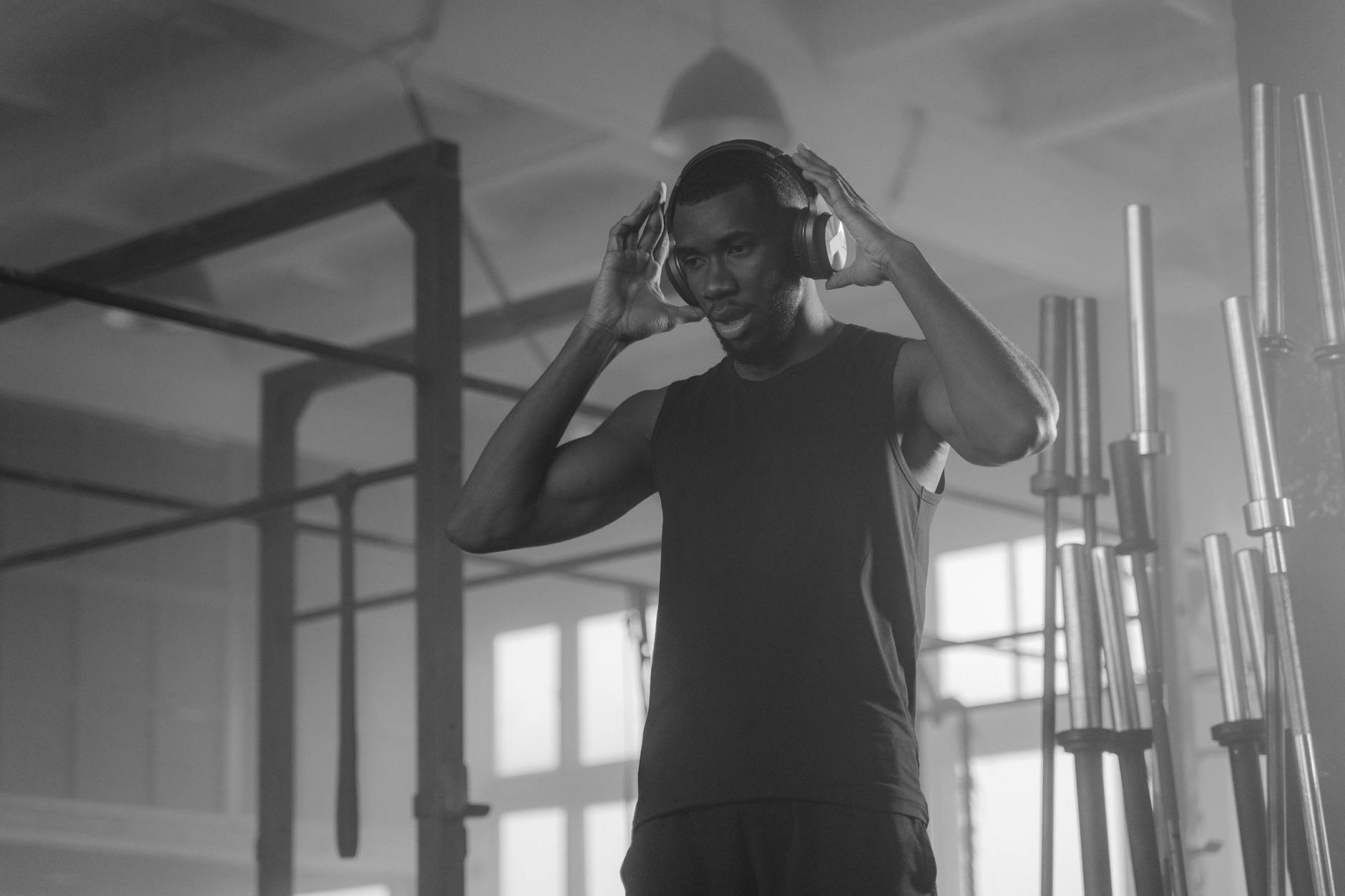
Not all true wireless earbuds are gym-worthy. Consumer earbuds designed for commuting or casual listening tend to fail hard in athletic environments. They slip during dynamic movement, fog up with moisture and short out, and battery life that looks fine on paper evaporates quickly when you're running hot and the Bluetooth is working harder.
For gym use specifically, prioritize these specs over everything else:
- IPX5 or higher sweat resistance rating — IPX4 technically handles sweat splashing but IPX5 holds up better in steam rooms and post-workout showers
- Ear hook or ear wing design — in-ear buds without a stabilizing hook will work loose during compound lifts, box jumps, or any lateral movement
- 6+ hours of continuous playback per charge — most serious sessions run 60–90 minutes; you want buffer room and the case should add at least two full charges
- Physical button controls rather than touch-only panels — wet or sweaty fingers make touch controls unreliable mid-set
- Ambient mode option — being able to hear the gym floor (trainers, rack warnings, other athletes) is a genuine safety consideration
3. A Fitness Tracker or Smartwatch That Lasts the Week
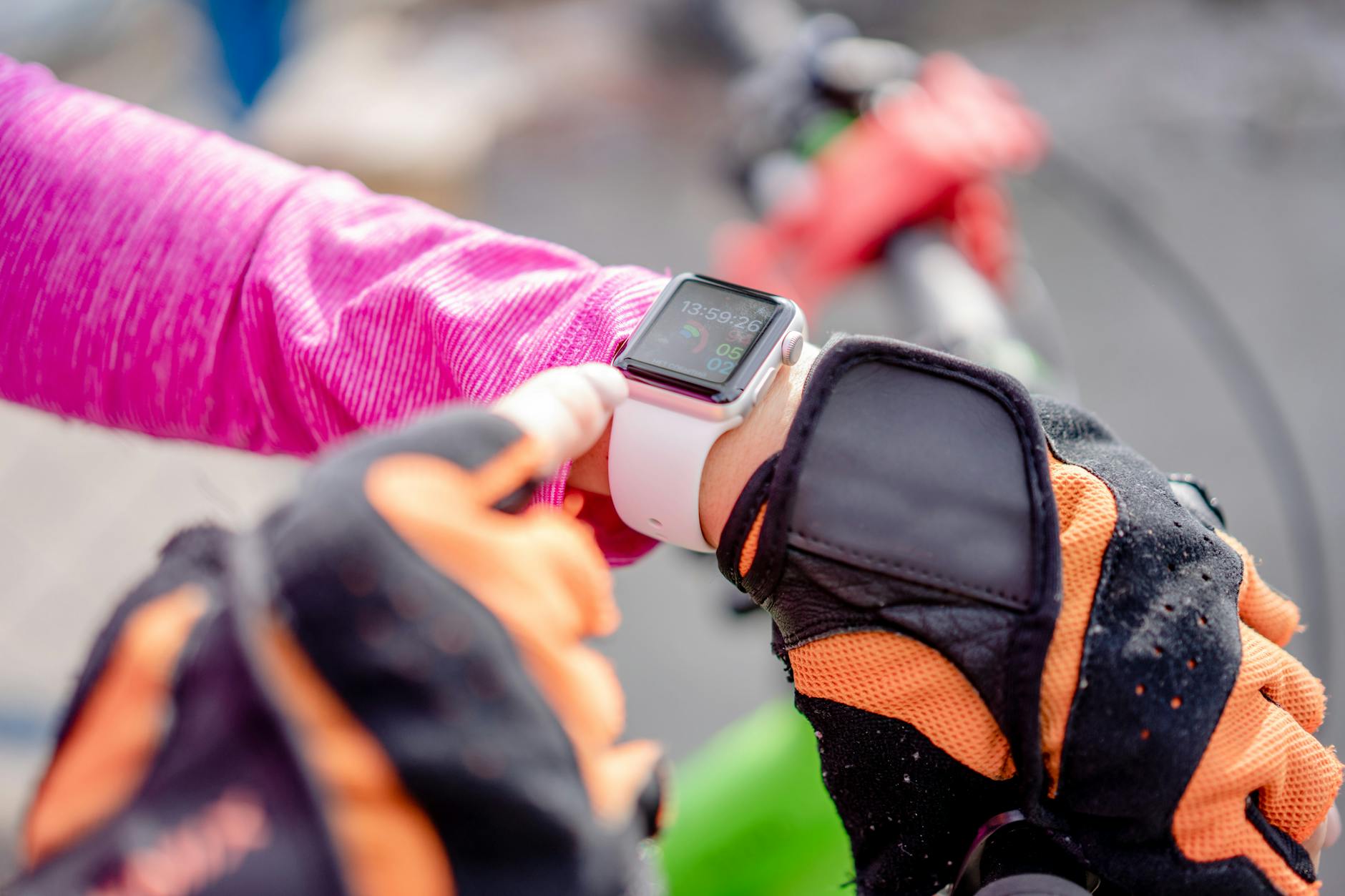
A fitness tracker or smartwatch that needs daily charging is a tool you will eventually stop using. The friction of charging one more device every night — especially after a hard training day — is enough to break the habit. For consistent data tracking, battery life should be a top selection criterion, not an afterthought.
The best fitness gadgets 2026 in this category target 5–14 days of battery life under mixed use (GPS off most of the time, continuous heart rate on). Models that achieve this generally sacrifice some smart notification features, which is a sensible trade for an athlete-first device.
Core features worth paying for:
- Continuous heart rate monitoring with exercise detection — auto-start for recognized activities removes the friction of manually logging every session
- HRV (heart rate variability) tracking — a reliable recovery indicator that tells you whether to push hard or pull back on a given day
- Sleep scoring — training adaptation happens during sleep; athletes who track sleep quality make better decisions about training load
- Water resistance to at least 5 ATM — swim-safe rating means it handles post-workout showers and outdoor training in rain without anxiety
4. A Compact Portable Charger
Even with a great charging cable, you need power to put into the cable. A portable charger — also called a power bank — is non-negotiable if your gym sessions run long or if you train at facilities without accessible outlets near lockers. The key word here is compact. A gym bag power bank has different requirements from a travel power bank.
Gym-specific portable charger considerations:
- 5,000–10,000 mAh capacity is the sweet spot — enough for 1–2 full phone charges without the brick-like weight and bulk of 20,000 mAh travel units
- Pass-through charging support — some lockers have a single outlet; a pass-through charger lets you charge the bank and your device simultaneously from one plug
- Built-in cables or flip-out connectors — eliminates one more loose cable to track in a crowded bag
- LED charge indicator — a simple 4-dot indicator is more reliable than a percentage display that drains battery to operate
- Under 200g weight — you're carrying this every session; grams add up over a training year
5. Wireless Headphones (Over-Ear) for Long Sessions
Earbuds are ideal for functional training and cardio. But for extended weight sessions — particularly accessory work, mobility, or programming review between sets — a quality pair of wireless over-ear headphones offers better passive noise isolation and longer battery life per charge. Many athletes carry both: earbuds for movement-heavy work, over-ears for stationary focus sets.
What matters for gym-use over-ear headphones is different from studio or travel use. Look for a folding design that fits into a compact carry pouch, a 30+ hour battery life so charging cycles are infrequent, and a durable headband that survives being stuffed under a water bottle each session. Active noise cancellation is useful in busy commercial gyms but drains battery faster — know whether you need it.
6. A Smart Water Bottle with Hydration Tracking
Hydration tracking technology has matured significantly in recent years. Smart water bottles now integrate with most major fitness platforms and use embedded sensors to log every sip passively — no manual entry, no estimation. For athletes tracking detailed performance metrics, adding hydration to the same dashboard as sleep, HRV, and training load creates a much clearer picture of recovery and readiness.
The best gadgets for gym in this category are the ones that disappear into your routine. A smart bottle that charges via USB-C (same cable as everything else), has a simple LED indicator for daily target progress, and holds at least 700ml is the right starting point. Insulation quality matters too — a bottle that keeps water cold for 12+ hours reduces the urge to skip hydration when the gym's water isn't cold.
7. A Wireless Charging Pad or Multi-Device Stand
If your phone and earbuds case both support wireless charging — which most flagship devices released after 2023 do — a compact dual wireless charging pad is worth space in your bag. It eliminates the cable-to-device connection entirely for overnight charging between sessions, reduces connector wear on your devices, and creates a zero-fumble charging ritual in a dark room after an evening session.
For gym bag use, prioritize a flat, single-coil design over a bulky stand format. A pad that folds in half or rolls into a cylinder packs cleanly in a side pocket and weighs under 100g. Qi2 standard pads are backwards compatible with original Qi devices and charge at higher wattages where supported — a useful future-proofing consideration as device turnover happens.
8. A Clip-On Phone Mount or Tripod

Athletes who review their form on video improve faster than those who train by feel alone. The feedback loop from watching a rep back — even a 10-second clip between sets — accelerates technical correction in ways that a mirror simply cannot. A clip-on phone mount weighs almost nothing and mounts to a cable machine, squat rack upright, or dumbbell stand in seconds.
Compact tripods with flexible legs (the "gorilla tripod" style) are the most versatile option. They can wrap around a barbell, sit on a bench, or freestand on a flat surface at floor level for deadlift review. Paired with a 10-second timer, this is one of the highest-leverage gym bag tech essentials an athlete can add without spending more than the cost of a single session's protein shake.
9. A Cable Management Pouch or Tech Organizer
Loose tech gear in a gym bag is a recipe for dead earbuds, cracked screens, and tangled cables that eat five minutes of pre-workout time. A dedicated tech organizer pouch — essentially a small, structured zip case with elastic loops and padded dividers — keeps every item in a known location and protected from the physical abuse of gym bag life.
What a good gym tech pouch should hold:
- Earbuds case (protected from being crushed by heavier gear)
- Charging cable, folded and secured in a loop or velcro strap
- Portable charger (padded compartment to prevent corner damage)
- Wireless charging pad
- Any recovery tech like a TENS unit or massage device
The goal is a single grab-and-go pouch that moves between bags as needed. Athletes who switch between a gym bag, a work bag, and a travel bag benefit enormously from a unified tech pouch that transfers as a single unit.
10. A Recovery Tech Device
Recovery technology has gone genuinely portable in 2026. Items like compact percussion massagers, muscle stimulation (EMS/TENS) units, and red light therapy panels now come in gym-bag-friendly sizes that would have been impossible five years ago. These belong in a considered discussion of gym tech gadgets because the training-recovery cycle is inseparable — you cannot optimize one without addressing the other.
Compact percussion massagers now weigh under 500g with a full-size head and provide meaningful myofascial release for quads, hamstrings, and upper traps immediately post-session — before inflammation sets in and stiffness builds overnight. Handheld EMS devices offer targeted muscle recovery for problem areas like the lower back or IT band without requiring a full foam rolling routine.
When choosing a recovery device for gym bag use, apply the same criteria as everything else on this list: USB-C charging, compact form factor, and durable construction. A device that requires a proprietary charger or crumbles after a few months of bag life is not a serious tool.
Putting It Together: How to Pack Your Gym Tech
The best gym bag accessories system is one you can execute on autopilot. After a hard session, you should be able to re-pack your tech without thinking — every item back in its pouch, everything queued for charging, nothing left behind at the gym. This means standardizing your packing routine the same way you standardize your warm-up.
A practical packing sequence:
- Open tech pouch, place earbuds in case, case in pouch
- Coil cable with a figure-eight fold and secure with its velcro strap
- Check portable charger indicator — if below 2 dots, flag for overnight charge
- Wrap any recovery device cord and place in padded section
- Zip pouch and drop it into the same side pocket every time
Consistency here prevents the 6am panic of a dead earbud with 45 minutes of cardio ahead. It's the same principle athletes apply to physical gear — preparation isn't dramatic, it's systematic.
Key Takeaways
The gym bag tech essentials that separate serious athletes from casual gym-goers share a few common traits: they're purpose-built for physical environments, they reduce friction in the training routine rather than adding to it, and they reinforce each other as part of a connected system. A great cable matters more when you also carry a power bank. Earbuds work better when they're stored properly in a tech pouch. Recovery tech compounds the value of every other item on this list.
- Charging cable quality is the most overlooked and highest-impact upgrade most athletes can make
- Wireless earbuds for gym use need physical button controls, ear hooks, and IPX5+ sweat resistance — consumer audio specs don't apply
- Fitness trackers with 7+ day battery life get used consistently; daily-charge devices get abandoned
- Portable chargers for the gym should be under 200g and under 10,000 mAh — gym-optimized, not travel-optimized
- A cable management pouch turns a bag full of loose gear into a professional kit that survives years of daily use
- Recovery tech belongs in the gym bag, not at home — the window immediately post-session is where it earns its place
The gym itself hasn't changed much. The technology you bring to it has. In 2026, the fitness gadgets available to everyday athletes are genuinely performance-grade tools — compact, durable, and intelligent enough to earn space in a serious kit. Pack accordingly.