10 Healthy Cooking Methods Ranked: From Best to Worst for Nutrient Retention
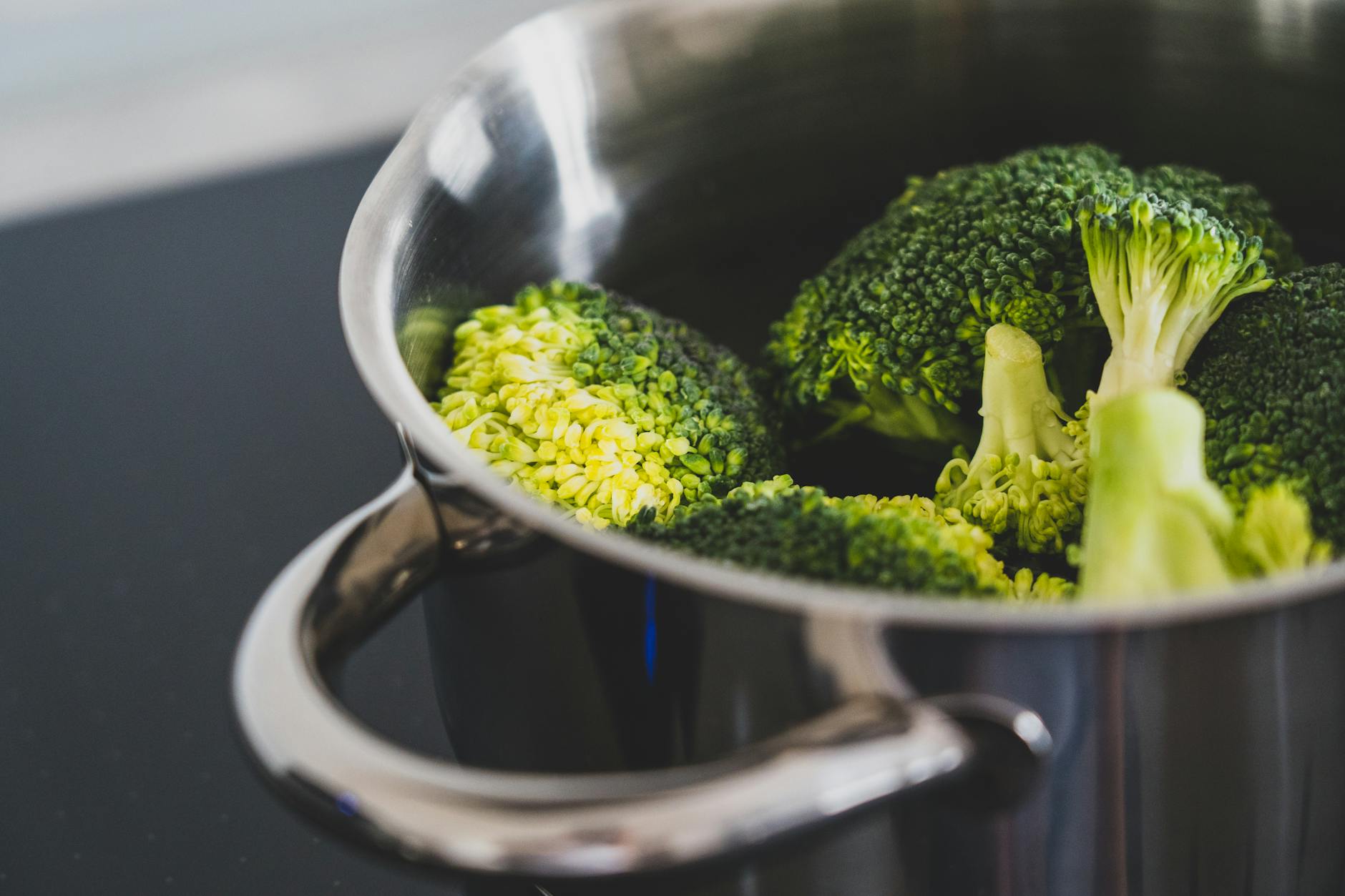
What you eat matters — but how you cook it matters almost as much. The healthiest cooking methods can preserve up to 90% of a vegetable's vitamins and antioxidants, while the worst can strip away the majority of those nutrients before your fork ever reaches your mouth. Research published in the Journal of Food Science and numerous peer-reviewed nutrition studies consistently shows that cooking technique is one of the most overlooked variables in a healthy diet.
This guide ranks 10 common cooking methods from best to worst for nutrient retention, covering the science behind each one, its calorie impact, and the best foods to cook with each technique. Whether you're trying to get more from your vegetables, reduce added calories, or simply make smarter everyday choices in the kitchen, this ranking will help you cook with confidence.
Quick Reference: Ranking Table
Before diving into the details, here is an at-a-glance overview of how each method compares across three key dimensions.
#1 — Steaming: The Gold Standard for Nutrient Retention
Steaming consistently tops the rankings when nutritionists ask which cooking method preserves the most nutrients. Because food never submerges in water, water-soluble vitamins like vitamin C and the B-vitamin family stay locked inside the food rather than leaching into a discarded cooking liquid. A landmark study in the Journal of the Science of Food and Agriculture (2009) found that steaming broccoli retained about 97% of its glucosinolates — potent cancer-fighting compounds — compared to just 58% after boiling.
From a calorie standpoint, steaming adds absolutely nothing. No oil, no fat, no sauces. This makes it especially valuable for people managing their weight while still trying to eat nutrient-dense food.
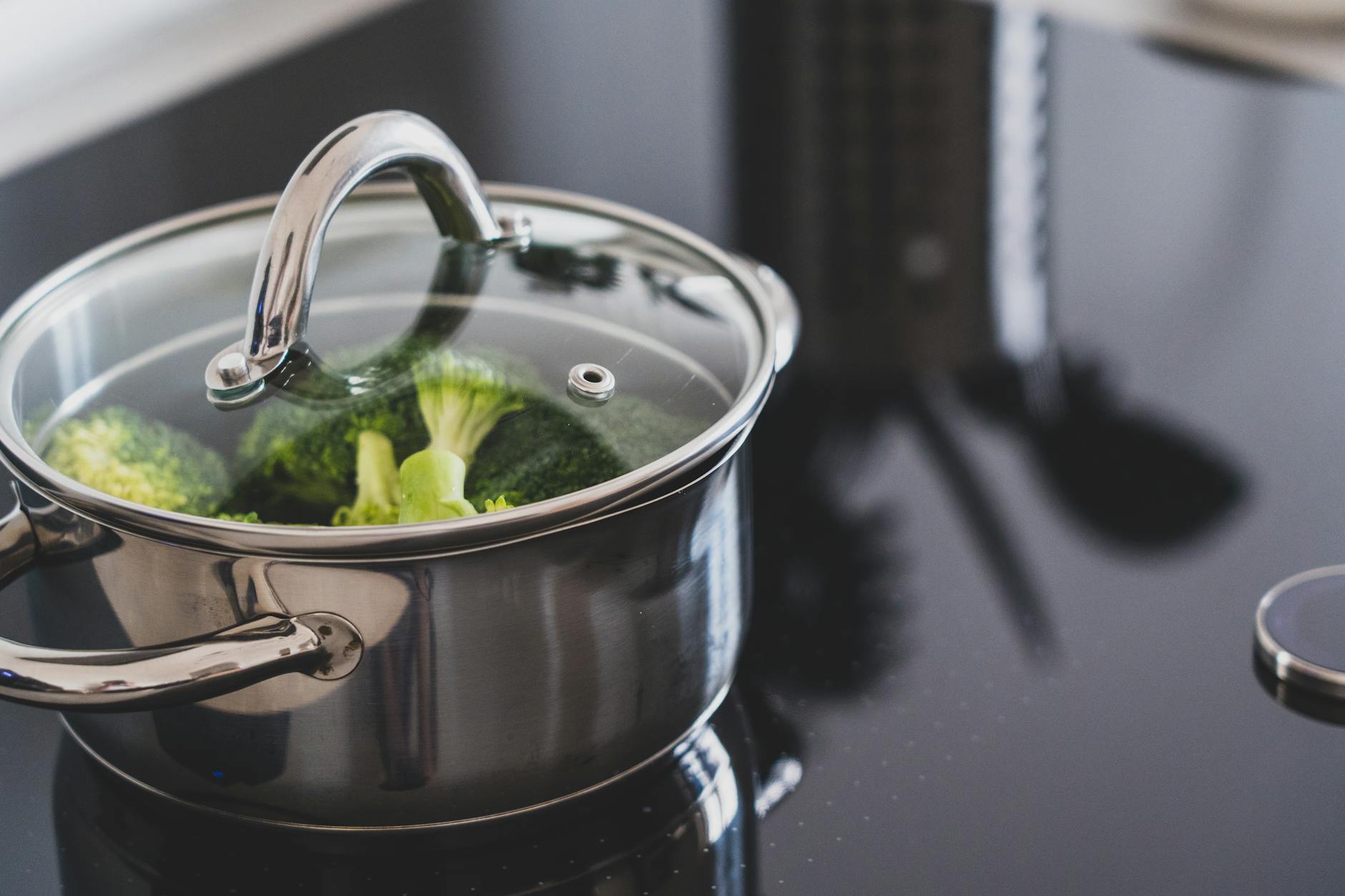
- Best for: Broccoli, carrots, green beans, asparagus, fish fillets, dumplings
- Pros: Highest nutrient retention, zero added calories, preserves color and texture
- Cons: Can be bland without seasoning; requires a steamer basket or insert
Pro tip: Steam vegetables only until just tender — overcooking in steam still degrades heat-sensitive vitamins like vitamin C. Aim for bright color and slight crunch as your visual cue.
#2 — Microwaving: Surprisingly Excellent Science Behind It
Microwaving has an undeserved reputation as a lesser cooking method, but the nutrition research tells a different story. Because microwave cooking is extremely fast and typically uses very little or no water, it is one of the healthiest cooking techniques available in any kitchen. The University of California at Davis published findings showing that microwaved vegetables retained significantly more vitamin C than boiled vegetables, due to the short cooking time and minimal water contact.
The key nutrient-destroying factors in cooking are heat intensity, cooking duration, and water exposure. Microwaving scores well on all three. It heats food rapidly at moderate-to-high internal temperatures, finishing in minutes rather than the extended times required by boiling or slow cooking.
- Best for: Spinach, corn, peas, sweet potatoes, leftover rice, fish
- Pros: Fast, convenient, minimal water contact, good vitamin retention
- Cons: Uneven heating if not stirred; not ideal for browning or texture development
#3 — Stir-Frying: Quick Heat, Minimal Loss
Stir-frying is a healthy cooking technique with deep roots in Asian culinary tradition — and the science backs up why it has endured for centuries. Using very high heat for a very short period (typically 2 to 5 minutes), stir-frying minimizes the window during which vitamins are exposed to degrading temperatures. A study in the Journal of Zhejiang University Science B found that stir-fried vegetables retained considerably more beta-carotene and lutein than their boiled counterparts.
The calorie impact is modest. A tablespoon of oil adds roughly 120 calories to the entire dish, which divided among portions is minimal. Use avocado or light olive oil for the best balance of flavor and healthy fats.
- Best for: Bell peppers, bok choy, snap peas, mushrooms, lean proteins
- Pros: Rapid cooking preserves nutrients, adds complex flavor through the Maillard reaction
- Cons: Requires attention and practice; oil adds some calories
#4 — Air Frying: A Leaner Alternative to Conventional Frying
Air frying has become one of the most popular cooking methods that reduce calories significantly compared to traditional deep frying. By circulating superheated air around the food at high velocity, air fryers mimic the crispy texture of frying while using up to 75–80% less oil. Research published in the Food Research International journal (2015) found that air-fried potatoes contained significantly less fat and acrylamide (a compound formed at high temperatures linked to health risks) than deep-fried equivalents.
Nutrient retention in an air fryer is respectable. The short cooking times help, though the high dry heat (typically 375–400°F / 190–204°C) does cause more vitamin C loss than steaming. However, for foods like chicken, salmon, or root vegetables, air frying strikes an excellent balance between palatability and nutritional quality.
- Best for: Chicken breast, salmon, zucchini, Brussels sprouts, sweet potato fries
- Pros: Dramatically less oil than deep frying, crispy texture, moderate nutrient retention
- Cons: High heat still degrades some heat-sensitive vitamins; limited batch size
#5 — Grilling: Great for Protein, Nuanced for Vegetables
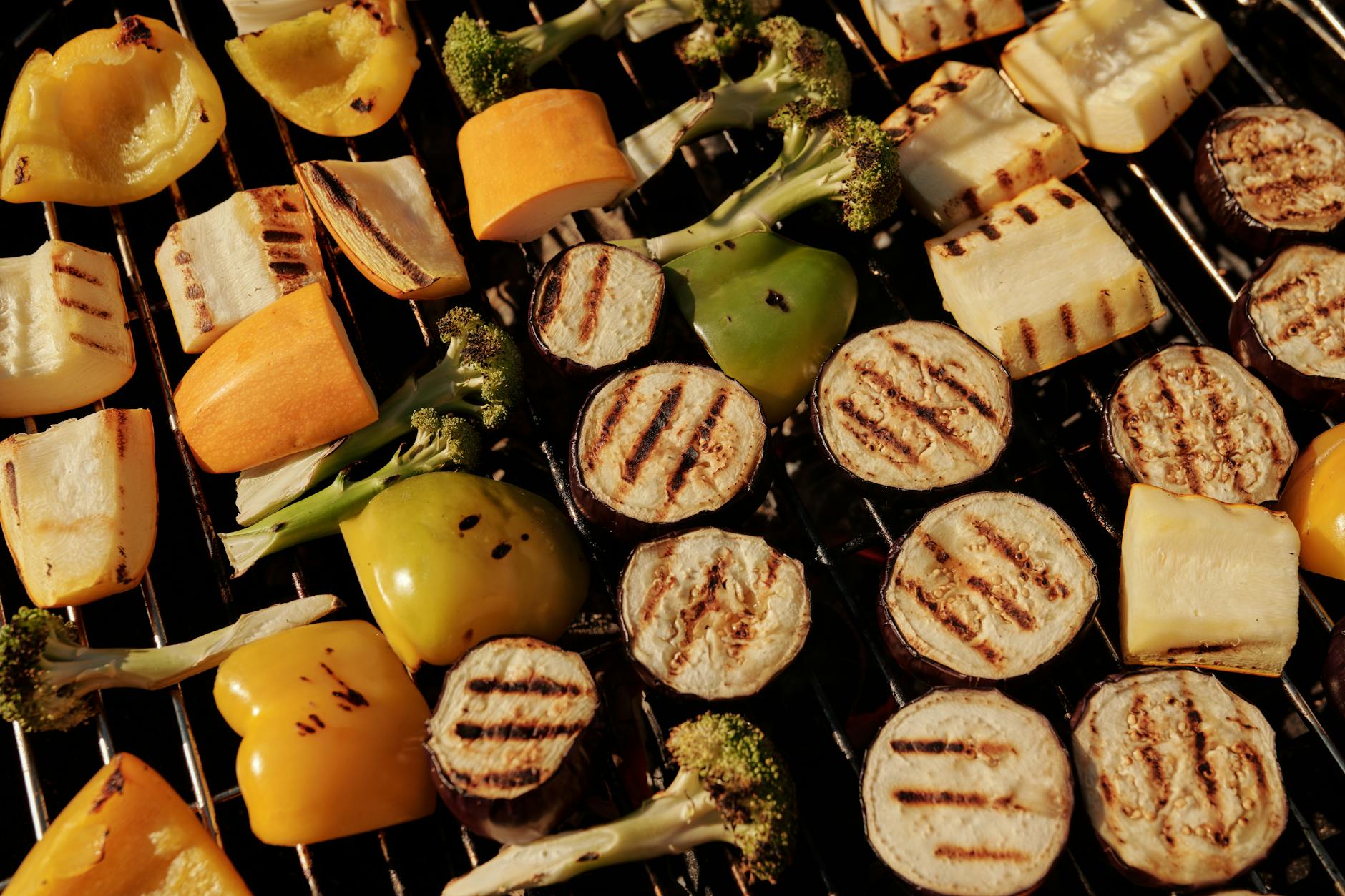
Grilling sits in the middle of our ranking because the results depend heavily on what you are cooking and how you do it. For lean meats like chicken, turkey, and fish, grilling is genuinely one of the healthiest cooking methods: fat drips away from the food during cooking, reducing the overall calorie and saturated fat content. Minerals like potassium and phosphorus remain largely intact because they do not leach into cooking water.
The concern with grilling lies in charring. When meat is cooked at very high temperatures — especially over direct open flame — it can form heterocyclic amines (HCAs) and polycyclic aromatic hydrocarbons (PAHs), compounds linked to increased cancer risk in animal studies. The National Cancer Institute recommends keeping flames low, flipping frequently, and removing charred portions to minimize exposure.
For vegetables, grilling preserves minerals well but does cause moderate loss of heat-sensitive vitamins, particularly vitamin C. Aim for light grill marks rather than heavy char.
- Best for: Chicken breast, salmon, corn on the cob, portobello mushrooms, zucchini
- Pros: Reduces fat in meat, excellent flavor, good mineral retention
- Cons: High-heat charring can produce harmful compounds; moderate vitamin loss
#6 — Roasting: Concentrates Flavor, Moderate Nutrient Trade-Off
Roasting uses dry oven heat (usually 375–450°F / 190–232°C) to cook food slowly and evenly. Because no water is involved, water-soluble vitamins that would leach into cooking water are preserved — but the prolonged high heat does degrade heat-sensitive nutrients over time. Studies show roasted vegetables typically retain 60–75% of their original vitamin content, which puts roasting squarely in the middle of the pack when answering the question of which cooking method preserves the most nutrients.
On the calorie front, roasting is as lean or indulgent as you make it. A light toss in olive oil adds healthy monounsaturated fats; overdoing the oil or coating foods in butter pushes the calorie count up considerably.
- Best for: Root vegetables (carrots, beets, parsnips), cauliflower, tomatoes, whole chicken
- Pros: Deep caramelized flavor, no water leaching, versatile
- Cons: Long cooking times increase heat-related vitamin degradation; oil adds calories
#7 — Sautéing: Effective but Oil-Dependent
Sautéing sits just below roasting because while the cooking time is short (which is favorable), the quantity of oil used can vary dramatically. When executed with a light hand — just enough oil to prevent sticking — sautéing preserves a similar percentage of nutrients as roasting. However, it is easy to over-oil a pan, particularly when cooking aromatics like garlic and onions, which can push the calorie count of a dish substantially higher.
On the positive side, cooking fat-soluble vitamins (A, D, E, K) alongside a small amount of healthy fat actually increases their bioavailability. Sautéing spinach in a little olive oil, for example, makes the vitamin K and beta-carotene far more absorbable than eating the spinach raw.
- Best for: Leafy greens, onions, garlic, mushrooms, thinly sliced proteins
- Pros: Quick, enhances fat-soluble vitamin absorption, develops flavor
- Cons: High calorie risk if too much oil is used; requires attention to avoid burning
#8 — Slow Cooking: Convenient but Nutritionally Costly Over Time
Slow cookers are beloved for convenience — set it and forget it — but they are among the more nutritionally costly approaches for vegetables. Cooking at low temperatures (170–280°F / 77–138°C) for 4 to 10 hours causes progressive vitamin degradation, particularly for vitamin C and folate, both of which are sensitive to sustained heat. A 2019 review in Comprehensive Reviews in Food Science and Food Safety noted that slow cooking consistently produced the greatest losses of thermolabile (heat-sensitive) vitamins compared to most other common cooking methods.
There is a silver lining: slow cooking is excellent for tough cuts of meat and legumes. Collagen from connective tissue converts to gelatin during the long cook, producing tender, protein-rich results. Minerals and fat-soluble vitamins are retained more effectively than water-soluble ones. And because cooking liquid typically stays in the pot (rather than being drained away as in boiling), any leached nutrients remain in the broth.
- Best for: Tough cuts of beef, pork shoulder, beans, lentils, bone broth
- Pros: Convenient, tenderizes tough proteins, retains minerals in cooking liquid
- Cons: Prolonged heat causes significant loss of heat-sensitive vitamins
#9 — Boiling: The Most Common Nutrient Killer
Few cooking debates are as well-documented as steaming vs boiling vegetables for nutrient retention — and boiling consistently loses. When vegetables are submerged in large volumes of water, water-soluble vitamins including vitamin C, vitamin B1 (thiamine), and folate migrate out of the food and into the cooking water. If that water is discarded (as it usually is), those nutrients are gone entirely.
A 2007 study in the Journal of the Science of Food and Agriculture found that boiling broccoli caused a 34–65% reduction in glucosinolates compared to steaming or microwaving. Vitamin C losses in boiled vegetables regularly exceed 50%. The longer the boil and the greater the water volume, the more severe the losses.
If you do boil, there are ways to minimize the damage: use as little water as possible, bring to a boil quickly, reduce cooking time, and consider using the cooking water in soups or sauces to recapture leached nutrients.
- Best for: Pasta, grains, eggs, dried legumes (where nutrients stay in the food or cooking water is consumed)
- Pros: Simple, inexpensive, no oil needed
- Cons: Significant water-soluble vitamin loss, especially when water is discarded
#10 — Deep Frying: The Least Healthy Cooking Method
Deep frying ranks last on every dimension that matters nutritionally. Submerging food in oil at 350–375°F (177–190°C) causes substantial losses of water-soluble vitamins due to heat and the displacement of moisture by fat. Foods absorb significant amounts of oil during frying — French fries, for example, can contain 10–15 grams of fat per 100g serving versus virtually none in a raw potato. Research consistently links frequent deep frying to increased dietary intake of oxidized fats and acrylamide, both of which are associated with adverse health outcomes in epidemiological data.
The calorie impact is severe. A piece of chicken breast that contains roughly 165 calories when baked can exceed 300 calories once deep fried and coated. The cooking oil itself — especially if reused multiple times, as is common in commercial kitchens — develops harmful breakdown products at high temperatures.
- Best for: Occasional indulgence only; no nutritional scenario in which it outperforms other methods
- Pros: Desirable texture and flavor; cultural significance in many cuisines
- Cons: Highest calorie addition, significant nutrient loss, potential for harmful compounds from oil degradation
Key Factors That Determine Nutrient Retention in Any Cooking Method
Regardless of the method you choose, four variables govern how many nutrients survive the cooking process:
- Temperature: Higher temperatures accelerate vitamin degradation. Vitamin C begins to degrade significantly above 158°F (70°C), and folate is similarly sensitive. Methods that use lower temperatures or very brief high-heat exposure tend to perform better.
- Cooking time: Duration matters as much as temperature. A 3-minute microwave session causes far less total nutrient loss than a 45-minute oven roast at the same nominal temperature, because the cumulative heat exposure is dramatically lower.
- Water contact: Water-soluble vitamins (C, B-complex, folate) leach directly into any water in contact with the food. Methods that avoid water contact — steaming, roasting, air frying — eliminate this loss pathway entirely.
- Surface area exposed: Cutting or chopping vegetables into small pieces before cooking dramatically increases the surface area exposed to heat and water, accelerating nutrient loss. Where possible, cook vegetables whole or in large pieces and cut after cooking.
Practical Tips for Getting the Most Nutrition from Your Cooking
Knowing the ranking is useful, but translating it into everyday habits is where the real gains come from. Here are evidence-based strategies for applying these healthy cooking techniques in a real kitchen:
- Default to steaming for vegetables. A simple bamboo steamer or a collapsible metal basket costs under $15 and transforms how many nutrients you actually absorb from your daily vegetables.
- Use the microwave strategically. For quick weeknight meals, microwaved vegetables in a covered dish with a tablespoon of water are nutritionally superior to boiling and take a fraction of the time.
- Save your boiling water. When you must boil vegetables — for pasta dishes or soups — use the cooking liquid as a base for sauces or broth to recapture leached vitamins and minerals.
- Pair fat-soluble vegetables with healthy fats. Vitamins A, D, E, and K require fat for absorption. Adding a drizzle of olive oil to roasted carrots or sautéed kale is nutritionally beneficial, not just a flavor choice.
- Minimize char when grilling. Use indirect heat zones, flip meats frequently, and trim off any visibly charred or blackened portions before eating.
- Cut vegetables after cooking when possible. Cooking whole broccoli florets or whole garlic cloves and then cutting reduces the surface area exposed to heat and water during the cooking process.
- Match the method to the food. Grilling is excellent for salmon; steaming is better for broccoli. There is no single best method for every food — flexibility produces the best nutritional outcomes overall.
Final Verdict: Which Cooking Method Should You Use?
The healthiest cooking methods are those that minimize water contact, limit total heat exposure time, and add as few extra calories as possible. Steaming earns the top spot in this ranking because it simultaneously checks all three boxes: no water leaching, short cooking times, and zero calorie addition. Microwaving is a close second for the same reasons and deserves to be rehabilitated from its unfairly negative reputation.
That said, a practical approach to nutrition does not demand that you steam every meal. The real-world takeaway is to be strategic: use steaming and microwaving as your defaults for vegetables, reserve grilling and roasting for when texture and flavor are the priority, use air frying as your go-to replacement for deep frying, and treat boiling and deep frying as methods to use sparingly or to modify (by keeping cooking water, reducing oil temperature, or minimizing cooking time).
No single cooking method used in isolation will make or break your health outcomes — but making consistently smarter choices across hundreds of meals per year adds up to a meaningful nutritional advantage. Understanding the science behind which cooking method preserves the most nutrients puts that advantage firmly in your hands.