Acne Scars vs. Hyperpigmentation: The Difference Matters — Here's How to Treat Each
You've finally cleared your breakout — and then you catch yourself staring at what's left behind. A pitted hollow where a cyst used to be. A brownish-red mark that just refuses to fade. Maybe both. If you've ever used the wrong product on the wrong type of mark, you already know how frustrating it can be to put in the effort and see zero results.
Here's the thing: acne scars and hyperpigmentation are not the same problem, and they don't respond to the same treatments. Using a brightening vitamin C serum on a textured atrophic scar won't fill it in — and using a resurfacing peel on fresh post-inflammatory discoloration can actually make things worse. Understanding how to treat acne scars at home starts with knowing exactly what you're dealing with.
This guide breaks down each type of mark left by acne — what it is, why it forms, and what the evidence actually says about treating it. Whether you're dealing with pitted indentations, dark spots, or a mix of both, you'll finish this article with a clear roadmap tailored to your specific skin concern.
What Are Acne Scars? (And What They're Not)
The word "scar" gets used loosely when people talk about skin marks left by acne — but from a clinical standpoint, a true scar involves a structural change to the skin's tissue. Real acne scars form when a breakout damages the dermis, the deeper layer of skin responsible for support, elasticity, and collagen production.
When the body repairs that damage, it doesn't always rebuild perfectly. Sometimes it produces too little collagen (resulting in a depression or indentation), and sometimes it produces too much (resulting in a raised lump). Both are true scars — permanent changes to the skin's architecture that require collagen remodeling to improve.
What many people call "acne scars" are actually post-inflammatory hyperpigmentation (PIH) — flat, discolored patches that are technically not scars at all. PIH is a pigmentation response, not a structural one, and it exists entirely in the upper layers of the skin. The distinction matters enormously because acne scar treatment options for PIH are completely different from those for textural scarring.
Types of Acne Scars: A Visual and Tactile Guide
Run your fingertips gently across the area you're concerned about. Does it feel smooth, or can you feel texture? That one simple test already tells you a lot.
Atrophic Scars (Indented / Depressed)
Atrophic scars are the most common type and result from insufficient collagen production during healing. They sit below the surface of surrounding skin and fall into three sub-categories:
- Boxcar scars: Wide, U-shaped depressions with well-defined, sharp edges. They tend to appear on the cheeks and temples. Their shallow-to-medium depth makes them among the more treatable types.
- Rolling scars: Broad, wave-like undulations without sharp edges. The skin has a rolling or uneven appearance because fibrous bands tether it down beneath the surface. Rolling scars respond well to treatments that target the sub-dermal tethering.
- Ice pick scars: Deep, narrow channels that extend into the dermis or sometimes down to the hypodermis. They look like small punctures or enlarged pores and are the most difficult to treat because of their depth. Standard resurfacing treatments rarely reach far enough to make a meaningful difference.
Hypertrophic and Keloid Scars (Raised)
These form when the body overproduces collagen during healing. Hypertrophic scars stay within the boundary of the original wound and may flatten on their own over time. Keloid scars grow beyond the wound's border and rarely resolve without treatment. Both are more common in people with darker skin tones and often appear on the jawline, chest, and shoulders.
Post-Inflammatory Hyperpigmentation (PIH)
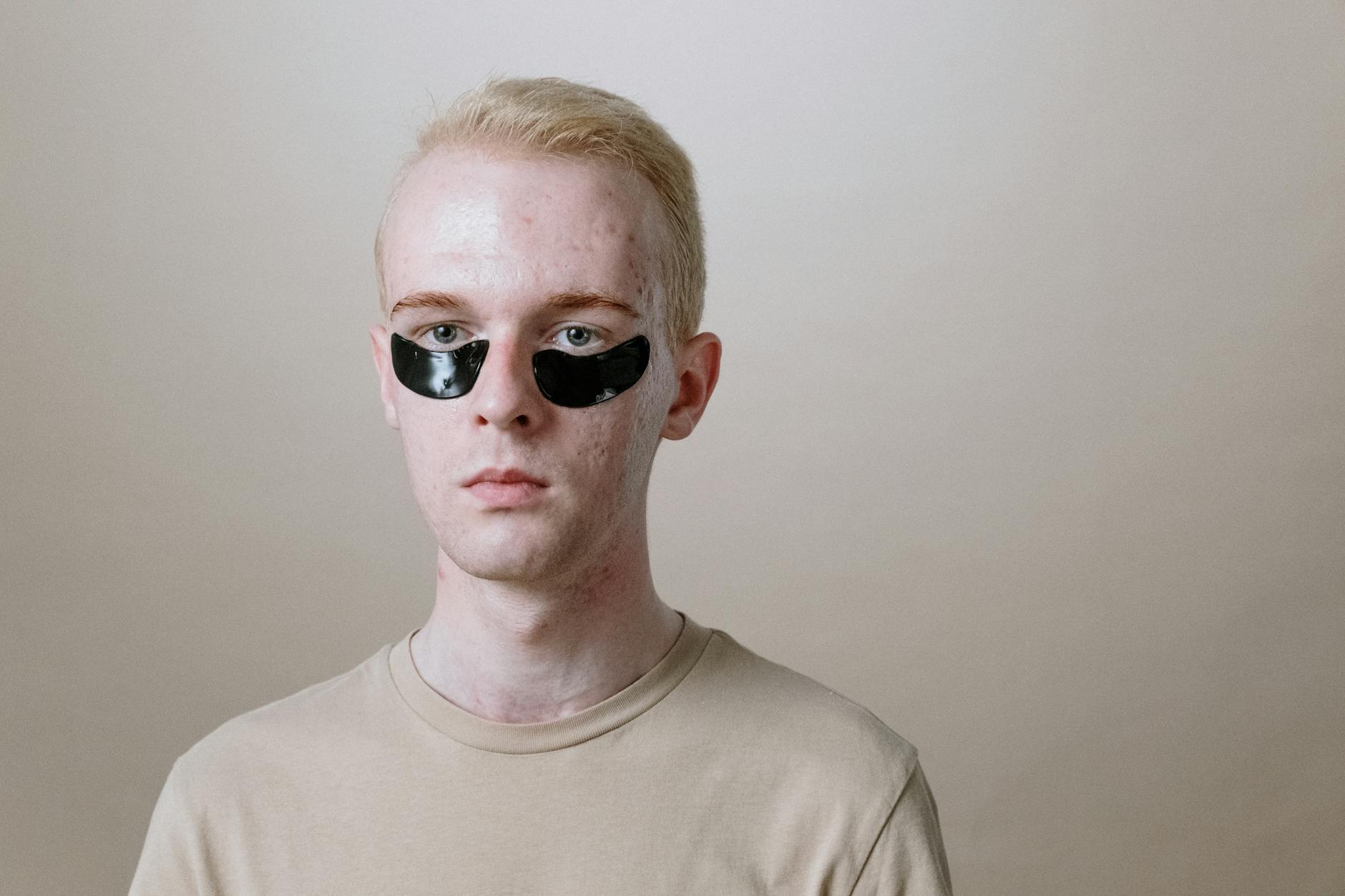
PIH is a flat, discolored mark — ranging from pink and red in lighter skin tones to dark brown or even purple-black in deeper skin tones — that appears after the skin has been inflamed. It's not a true scar. The skin surface is completely smooth. PIH occurs because inflamed skin triggers excess melanin production as a protective response. In most cases, PIH fades on its own within 3–24 months — but the right ingredients can accelerate that timeline significantly.
Acne Scars vs. Hyperpigmentation: The Key Differences at a Glance
Before diving into treatment, here is a side-by-side comparison that clarifies the hyperpigmentation vs acne scars difference in terms that actually matter for your skincare routine:
| Feature | Atrophic / Textural Scars | Post-Inflammatory Hyperpigmentation |
|---|---|---|
| Feel | Textured — pitted or raised | Smooth — no texture change |
| Appearance | Indentation or bump | Flat dark or red patch |
| Cause | Collagen loss or overproduction | Excess melanin production |
| Skin layer affected | Dermis (deep) | Epidermis (surface) |
| Does it fade on its own? | No — permanent without treatment | Often yes, over months to years |
| Treatment goal | Stimulate collagen remodeling | Inhibit melanin / accelerate cell turnover |
| Best at-home ingredients | Retinoids, peptides, AHAs | Vitamin C, niacinamide, kojic acid, AHAs |
How to Treat Atrophic Acne Scars
Because atrophic scars involve a physical deficit in the dermis, the treatment goal is collagen remodeling — rebuilding the skin's structural support from the inside out. This is a slower process than fading pigmentation, and it typically requires either professional intervention or consistent long-term use of proven at-home actives.
At-Home Approaches
Knowing how to treat acne scars at home starts with understanding which ingredients are actually proven to stimulate collagen. Consistency and patience are non-negotiable — meaningful improvement in textural scarring takes a minimum of 3–6 months of regular use.
- Retinoids (retinol, tretinoin, adapalene): The gold standard for collagen induction in the epidermis and dermis. Retinoids accelerate cell turnover, stimulate fibroblast activity, and over time, can meaningfully improve shallow boxcar and rolling scars. Prescription-strength tretinoin is more effective than OTC retinol, but even low-concentration retinol (0.025–0.1%) produces measurable improvement with consistent use. Start 2–3 nights per week to minimise irritation and increase gradually.
- Alpha hydroxy acids (AHAs — glycolic acid, lactic acid): Chemical exfoliants that remove dead surface cells and, with regular use, stimulate dermal collagen synthesis. Glycolic acid at 8–15% concentration is the most studied for scar improvement. Use 2–3 times per week, not daily, to avoid over-stripping the barrier.
- Peptides: Signal molecules that instruct fibroblasts to produce more collagen. Copper peptides and Matrixyl (palmitoyl pentapeptide-4) have the strongest research backing. They're gentle enough for daily use and work well layered under a moisturiser.
- Microneedling (derma rollers): At-home derma rollers (0.2–0.5mm) create micro-channels that trigger a controlled wound-healing response, stimulating collagen. Evidence supports their use for shallow scars, but they must be used with sterile technique. Rollers deeper than 0.5mm should only be used by professionals.
Professional Acne Scar Treatment Options
For deeper ice pick scars and moderate-to-severe atrophic scarring, professional treatments offer more significant results than at-home care alone can achieve:
- Fractional laser resurfacing (CO2 or Erbium): Creates controlled micro-injuries that trigger deep collagen remodeling. Considered the most effective single treatment for atrophic scarring, with studies showing 50–70% improvement. Requires downtime and multiple sessions.
- Microneedling with radiofrequency (RF): Combines physical needling with thermal energy to stimulate collagen at deeper levels. Particularly effective for rolling and boxcar scars, with less risk of post-inflammatory hyperpigmentation than laser in darker skin tones.
- Chemical peels (TCA, Jessner's): Medium-to-deep peels using trichloroacetic acid (TCA) can significantly improve shallow scarring with less downtime than laser.
- Subcision: A minor procedure where a needle is inserted beneath a rolling scar to break the fibrous tethering bands that pull the skin down. Often combined with filler or RF microneedling.
- TCA cross (for ice pick scars specifically): High-concentration TCA is applied precisely into the narrow channel of an ice pick scar to stimulate focused collagen production. One of the few treatments that can genuinely improve ice pick depth.
How to Treat Post-Inflammatory Hyperpigmentation
PIH is a pigmentation problem, not a structural one — and that actually makes it more responsive to topical treatment than true scars. The primary strategies are: slow down melanin production, speed up the skin's natural cell turnover, and protect existing progress from sun-induced reversal. Learning how to fade acne marks naturally comes down to building a consistent routine around these three pillars.
The Best Ingredients for Hyperpigmentation
These are the best ingredients for acne scars caused by pigmentation — backed by clinical evidence, not marketing claims:
- Vitamin C (L-ascorbic acid): A potent antioxidant that inhibits the tyrosinase enzyme needed for melanin production and also helps existing pigment oxidise more slowly. Effective concentrations are 10–20%. It's unstable and degrades quickly — store vitamin C serums in a dark, cool place and replace when they turn orange or brown.
- Niacinamide (vitamin B3): Prevents the transfer of melanin-containing melanosomes from melanocytes to skin cells without inhibiting melanin production itself. This makes it gentler and suitable for daily use even on sensitive skin. 4–10% concentrations are well-studied. Niacinamide also reduces inflammation, making it useful during active breakouts to prevent PIH from forming in the first place.
- Kojic acid: A natural tyrosinase inhibitor derived from fungi. Effective at 1–4%. It can cause sensitivity in some people — patch test first.
- Alpha arbutin: A stable, gentler derivative of hydroquinone that inhibits melanin synthesis. Concentrations of 1–2% are effective for gradually fading dark spots without irritation. A good alternative for those who find kojic acid or high-strength vitamin C irritating.
- Tranexamic acid: An emerging brightening ingredient that works through multiple pathways to suppress pigmentation. Well-tolerated across all skin tones and increasingly found in serums and toners at 2–5%.
- AHAs (glycolic, lactic, mandelic acid): Exfoliating acids that speed up cell turnover, physically removing pigmented cells from the skin's surface more quickly. Mandelic acid (from almonds) is the gentlest AHA and particularly well-suited for deeper skin tones where PIH risk is higher.
The Role of Sun Protection — This Cannot Be Overstated
Every single brightening ingredient you use becomes significantly less effective — and in some cases pointless — if you skip SPF. UV exposure is one of the primary triggers for excess melanin production. Without daily broad-spectrum SPF 30 or higher, your PIH will be continuously restimulated, cancelling out the progress made by brightening actives. Sun protection is not optional when treating hyperpigmentation — it is the treatment.
Combination Treatments: When You Have Both
Many people dealing with post-acne skin have a mix of textural scarring and hyperpigmentation simultaneously. If that describes your skin, the good news is that some ingredients — particularly retinoids and AHAs — pull double duty. Here's how to layer a combined routine effectively:
Sample Combined Routine (Intermediate)
Morning: Gentle cleanser → Niacinamide serum (10%) → Vitamin C serum → Moisturiser → SPF 50
Evening: Cleanser → AHA exfoliant (2–3 nights/week) → Retinol (0.3–0.5%, on alternate nights to AHA) → Peptide moisturiser
Note: Do not layer AHA and retinol on the same night — both are active and the combination can over-irritate the barrier. Alternate their use.
For at home acne scar removal results that address both texture and tone, the most important principle is building up slowly. Introduce one active ingredient at a time over 2–3 weeks before adding the next. Your barrier needs time to adapt, and breakouts or flaking caused by over-irritation will only set your pigmentation progress back.
What NOT to Do: Common Mistakes That Make Things Worse
When it comes to treating post-acne skin, well-intentioned mistakes are extremely common. These are the ones most likely to slow your progress or actively worsen your skin:
- Picking or squeezing: The single most reliable way to turn a healing blemish into a permanent scar. When you rupture a follicle manually, you push bacteria and debris deeper into the dermis, dramatically increasing the chance of significant collagen damage.
- Using harsh physical scrubs on PIH: Gritty scrubs create micro-tears and friction heat that can darken hyperpigmentation through renewed inflammation. Swap physical exfoliation for chemical exfoliants (AHAs/BHAs) which work without abrasion.
- Overloading on actives too quickly: Stacking multiple acids, retinoids, and actives simultaneously before your barrier has adapted doesn't accelerate results — it triggers irritation and inflammation, which causes more PIH.
- Skipping SPF on "cloudy" days: Up to 80% of UV rays penetrate cloud cover. If you're using any brightening, exfoliating, or retinoid products, daily SPF is essential regardless of weather.
- Using vitamin C alongside AHAs at low pH: Vitamin C (L-ascorbic acid) works at a low pH (below 3.5). AHAs also work at low pH. Layering them together can create too much acidity for the skin and increase irritation without increasing efficacy. Use vitamin C in the morning and AHAs in the evening.
- Expecting overnight results: PIH takes a minimum of 8–12 weeks of consistent treatment to show meaningful fading. Atrophic scar improvement takes 6–12 months. If you abandon a routine at week 4 because you "don't see results," you're discontinuing at exactly the wrong moment.
When to See a Dermatologist
At-home care can make a real and visible difference for mild-to-moderate PIH and shallow atrophic scarring. But there are situations where professional guidance isn't just helpful — it's the only way to get meaningful results:
- Ice pick scars: These narrow, deep channels are genuinely resistant to all topical treatments and OTC devices. TCA cross and fractional laser are the most effective options and both require professional administration.
- Moderate to severe atrophic scarring: If you have extensive pitting across cheeks or temples, professional treatments (RF microneedling, fractional laser, subcision) can achieve 50–80% improvement that is simply not replicable at home.
- PIH that hasn't improved after 6 months of consistent treatment: Persistent PIH — especially deep dermal pigmentation — may require prescription-strength hydroquinone (4%), professional peels, or a combination approach under dermatological supervision.
- Keloid scars: These require specialised treatment including intralesional corticosteroid injections, silicone sheeting, and in some cases radiation therapy. Do not attempt to self-treat with OTC products.
- Darker skin tones (Fitzpatrick IV–VI): The risk of PIH from aggressive treatments (strong lasers, high-concentration peels) is significantly higher in deeper skin tones. A dermatologist experienced with melanin-rich skin can guide you toward treatments that are effective without triggering new post-inflammatory pigmentation.
Key Takeaways
Understanding the difference between acne scars and hyperpigmentation isn't just academic — it's the single most important factor in choosing treatments that will actually work for your skin. To summarise what we've covered:
- True acne scars are structural — they involve collagen loss or overproduction in the dermis. They require collagen-stimulating treatments: retinoids, AHAs, microneedling, or professional procedures.
- Post-inflammatory hyperpigmentation is a pigmentation response — the skin surface is smooth. It responds to melanin-inhibiting and cell-turnover-accelerating ingredients like vitamin C, niacinamide, AHAs, and alpha arbutin.
- Ice pick scars are the most resistant to at-home treatment and typically require professional intervention (TCA cross, fractional laser).
- Sunscreen daily is non-negotiable — it directly determines how quickly your hyperpigmentation fades and prevents new discolouration from forming.
- Patience is the most underrated ingredient. PIH improvements take 8–12+ weeks. Textural scar improvement takes 6–12 months. Consistency beats intensity every time.
- When in doubt — especially for deeper skin tones, ice pick scars, or persistent pigmentation — see a board-certified dermatologist for a personalised treatment plan.
Post-acne skin is something millions of women navigate every day, often with a confusing mix of contradictory advice. The clearest path forward is a simple one: identify what you're actually dealing with, match your treatment to the mechanism, and stay consistent. Your skin is healing — it just needs the right support.