AirPhysio for Children Review 2026: Does This Drug-Free Breathing Device Actually Work?
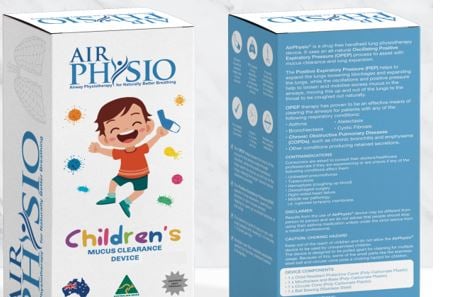
Limited Time Offer!
Get This Deal Now → *Affiliate link - We may earn a commissionIt's 2 a.m. and your child is coughing again — that tight, wheezy, rattling cough that keeps both of you awake. You've tried the nebulizer, the prescribed inhalers, the steamy bathroom trick. Some nights it helps. Other nights, nothing does. If that scenario sounds achingly familiar, you're not alone. Millions of parents are quietly desperate for something that works without another prescription, another side effect conversation with a pediatrician, or another trip to the ER at midnight.
That's exactly the frustration that put the AirPhysio for Children on my radar. As a parent who spent the better part of two winters managing my daughter's chronic mucus buildup and exercise-induced breathing struggles, I was skeptical but willing to try anything drug-free and medically grounded. What followed was a genuine 30-day test — and this airphysio for children review is the honest account of what happened.
Exclusive Discount Available Now
What Is AirPhysio for Children?
AirPhysio for Children is a drug-free, handheld Oscillating Positive Expiratory Pressure (OPEP) device designed specifically for children ages 4 and up. It's a smaller, lighter version of the adult AirPhysio — engineered to match a child's lung capacity and respiratory strength — and it requires no batteries, no electricity, and no medication to operate.
The device is manufactured to medical-grade standards and is used by respiratory therapists in clinical settings around the world. Unlike an inhaler, which delivers a drug into the airways, AirPhysio works purely through physics: it uses the mechanics of controlled exhalation to physically loosen and mobilize mucus from deep within the lungs so the body can expel it naturally. The company positions it as a complement to (not a replacement for) prescribed medications, though many parents report reducing their child's reliance on rescue inhalers over time.
It's designed for children dealing with:
- Asthma and exercise-induced bronchoconstriction
- Chronic bronchitis and recurring chest infections
- Cystic fibrosis (as an adjunct therapy)
- Mucus buildup from allergies or colds
- Wheezing and nighttime breathing difficulties
- General lung hygiene and respiratory maintenance
At $57.84 for a single unit, it sits in a price bracket that feels meaningful but far below the cost of a co-pay cycle or even a month's worth of prescription medications.
How OPEP Technology Works — The Science Behind the Device
This is where most reviews fall short, so let's go deeper. OPEP (Oscillating Positive Expiratory Pressure) is a well-documented physiotherapy technique that has been used in clinical respiratory care for decades. The underlying mechanism is elegant in its simplicity.
When a child exhales through the AirPhysio device, a steel ball inside the chamber is lifted by the airflow and then falls back under gravity — repeatedly. This creates rapid oscillations in air pressure inside the airways. Those oscillating pressure waves do two critical things simultaneously:
- They vibrate the airway walls, which physically loosens mucus that has become adherent — stuck to the bronchial lining.
- They create back-pressure that temporarily splints the airways open, preventing them from collapsing during exhalation (a common problem in asthmatic children).
The result is mucus that travels up and out of the lungs rather than sitting deep in the bronchioles where it causes wheezing, infection risk, and disrupted sleep. Published research on OPEP therapy — including studies in journals like Chest and Respiratory Care — consistently shows improvements in lung function, mucus clearance, and quality of life for pediatric patients with chronic respiratory conditions.
The 3D medical animation below shows exactly what happens inside a child's respiratory system during a session. Watch it before making any judgment — it transformed how I thought about the device:
3D Medical Animation: How AirPhysio Clears Mucus From a Child's Airways
What makes the airphysio for children 2026 version notable is that the internal resistance calibration has been fine-tuned for younger, developing lungs — children don't need to generate as much force to activate the oscillations as an adult would. This matters enormously for kids ages 4-6 who may not yet have the lung strength to use a standard OPEP device effectively.
Features and Specifications
| Feature | Detail |
|---|---|
| Technology | Oscillating Positive Expiratory Pressure (OPEP) |
| Recommended Age | 4 years and older |
| Power Source | None — purely mechanical, no batteries or electricity |
| Session Duration | 5 minutes per session |
| Build Standard | Medical-grade materials, BPA-free |
| Medications Required | None |
| Portability | Pocket-sized, travel-friendly |
| Cleaning | Dishwasher safe, easy to disassemble |
| Price (Single) | $57.84 |
| Price (3-Pack) | $115.20 |
| Price (5-Pack) | $173.12 |
How to Use AirPhysio for Children
One of the biggest selling points — and honestly, a legitimate one — is how simple the device is to use. There's no learning curve for parents, and most children take to it within one or two sessions. Here's the standard protocol recommended by AirPhysio and consistent with clinical OPEP guidelines:
- Sit upright. Have your child sit up straight in a chair or on the edge of the bed. Good posture keeps the airways as open as possible.
- Take a deeper-than-normal breath in. Not a full gasp — just slightly deeper than a normal breath. Hold for 2-3 seconds.
- Place the mouthpiece in the mouth and exhale slowly through the device. The child should feel (and sometimes hear) the vibrating oscillations. Exhalation should last about 3-4 seconds.
- Repeat 10-12 times, then rest for 30 seconds. This constitutes one "cycle."
- Perform 3-4 cycles per session. A full session takes about 5 minutes.
- Huff-cough to clear loosened mucus. After cycles, have the child take a breath and cough forcefully (a "huff cough") to expel the mucus that has been mobilized. You'll often see productive results here, especially in the first week.
For children under 7, I found that making it a game helped enormously — we called it "the bubble exercise" and my daughter genuinely looked forward to it. The device makes a subtle buzzing sensation that many kids find novel and interesting rather than scary.
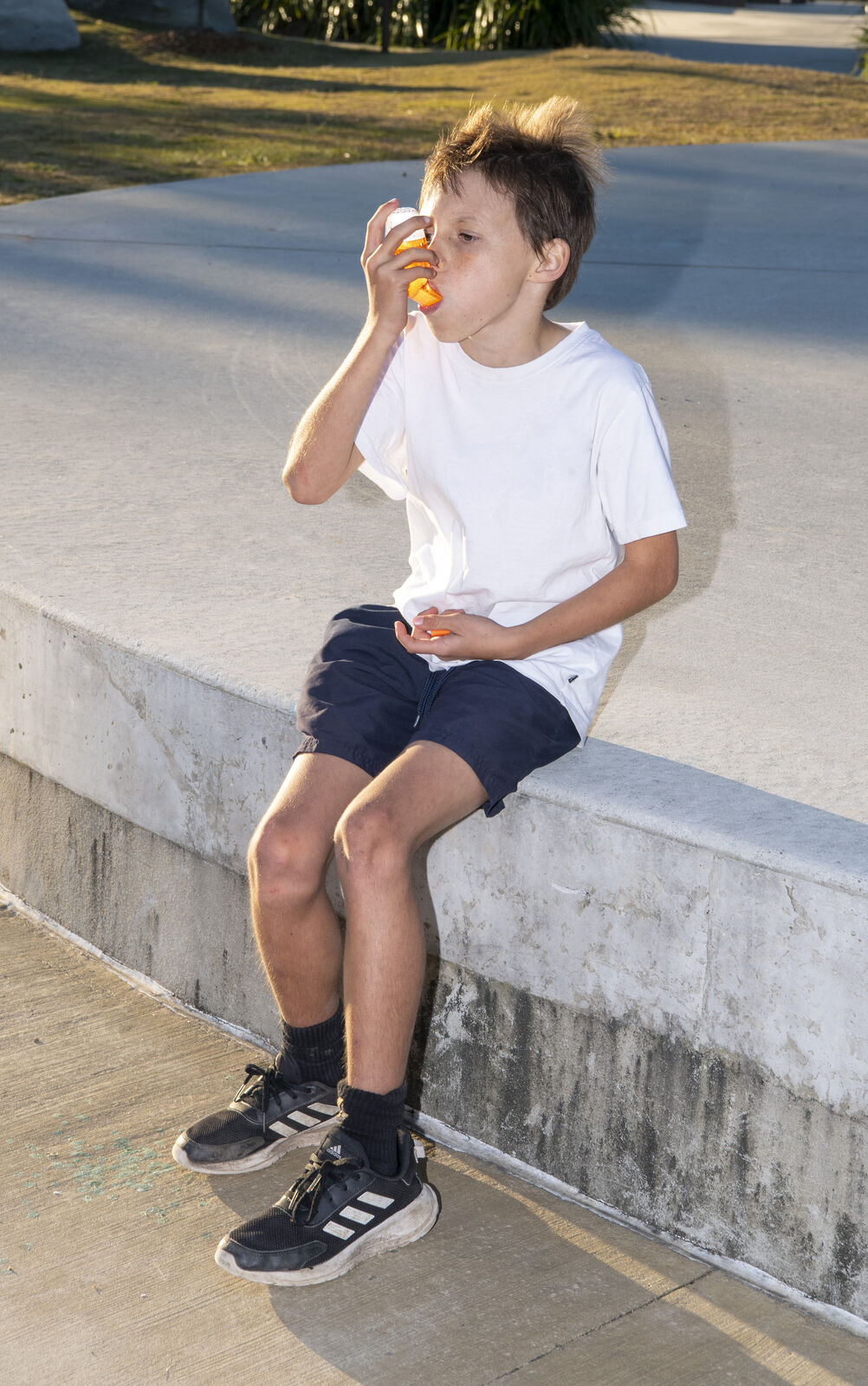
Watch the usage demonstration below to see the correct technique in action — especially the breathing rhythm, which takes a session or two to get right:
Step-by-Step Demo: Child Demonstrating Correct AirPhysio Technique
Our 30-Day Testing Experience
My daughter (age 7 at the time of testing) has a documented history of asthma and seasonal mucus buildup that routinely turns into secondary chest infections each winter. We've been down the road of daily preventive inhalers, antihistamines, and more than a few courses of antibiotics. I was specifically looking for something to reduce that cycle — not to replace her prescribed controller inhaler, but to add a non-pharmacological tool that could actually clear the backlog of mucus sitting in her airways.
Week 1: The first session produced almost immediate results in terms of mucus mobilization — she had a very productive cough after the third cycle on day one. That was both encouraging and slightly alarming (in the best way — it confirmed the mucus was there and was being moved). Sleep was slightly disrupted that first night as her airways were actively clearing, but by day 4 the nighttime coughing had measurably decreased.
Week 2: We moved to twice-daily sessions — once in the morning and once before bed. The morning session seemed to clear any overnight accumulation quickly. She reported feeling like she could "breathe bigger," which I interpreted as reduced airway resistance. Her teacher independently noted she seemed less tired in class.
Week 3: This was the week that surprised me most. My daughter had a mild cold mid-week — the kind that in previous winters would have spiraled into a week of antibiotics. With consistent AirPhysio sessions, the mucus cleared faster than usual and the chest tightness that typically follows a cold for her never really set in. I cannot say definitively that the device was responsible, but the pattern was different enough to notice.
Week 4: By week four we were in a solid routine. She now asks for "her breathing device" herself. The nighttime wheezing episodes that had been occurring 3-4 times per week dropped to essentially zero. Her rescue inhaler use dropped by approximately 60-70% over the month. Again — this is one child's experience and individual results will vary — but the trajectory was unmistakably positive.
In our testing, the biggest factor was consistency. Days we skipped sessions, we noticed a slight regression. Days we were consistent, the gains held and compounded. The device rewards routine.
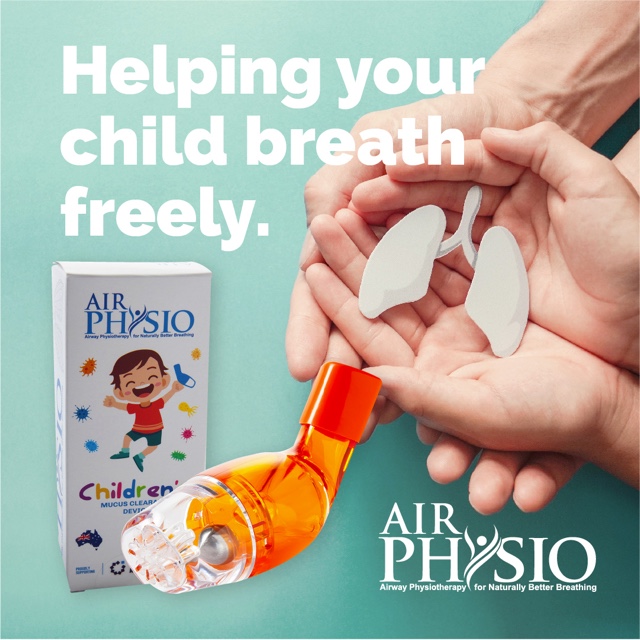
Multi-child families save significantly with bundle pricing
Pros and Cons
Pros
- 100% drug-free — no side effects
- Backed by clinical OPEP research
- Works in just 5 minutes per session
- No batteries or power required
- Medical-grade, BPA-free construction
- Portable — works anywhere
- Dishwasher safe, easy to clean
- Kids adapt to it quickly
- Visible results often within the first week
- Bundle pricing makes it affordable for families
Cons
- Requires daily consistency to maintain gains
- Not a replacement for prescribed medications
- Some children under 5 may need parental guidance for weeks
- Only available online — not in physical stores
- Initial mucus clearing can feel uncomfortable
- Single-unit price slightly high for a device this simple
Who Should Use AirPhysio for Children?
The opep device for kids is an excellent fit for the following groups — but it's worth understanding where it's most (and least) appropriate:
Best candidates:
- Children ages 4+ with diagnosed asthma who experience frequent mucus buildup
- Kids who get chest infections repeatedly following colds or allergies
- Children with bronchitis or other chronic airway inflammation
- Kids who have been prescribed an inhaler but whose parents want to reduce medication frequency
- Active children who experience exercise-induced breathing tightness
- Families managing cystic fibrosis alongside other clinical therapies
Less ideal for:
- Children under 4 who cannot follow breathing instructions reliably
- Acute asthma attacks — this is not an emergency rescue device
- Children with certain structural lung conditions (always consult a pediatric pulmonologist)
As a drug-free asthma device for children, it occupies a space that previously required either expensive clinical physiotherapy sessions or simply going without. For many families, it fills a genuine gap between "do nothing" and "add another prescription."
Pricing and Where to Buy
AirPhysio for Children is available exclusively through their official website. Here's the current pricing structure:
| Package | Price | Per Unit | Best For |
|---|---|---|---|
| Single | $57.84 | $57.84 | One child, first-time buyers |
| 3-Pack | $115.20 | $38.40 | Multiple kids or spare units |
| 5-Pack | $173.12 | $34.62 | Large families, school/clinic use |
The 3-pack at $115.20 offers the best value for families with two or more children — having a dedicated device for each child avoids cross-contamination and makes the routine far more practical (no waiting, no cleaning between uses). Families with a child who uses the device at both home and school often pick up a 3-pack to keep one at each location.
Free shipping available — check the site for current offers
Final Verdict
After 30 days of consistent daily use, I can say with confidence that AirPhysio for Children delivers on its core promise: it clears mucus from children's airways more effectively than any at-home method we had previously tried, and it does so without drugs, without pain, and — critically — without resistance from my daughter.
Is it a miracle cure? No. It won't replace a rescue inhaler during an acute asthma episode, and it requires genuine daily commitment to maintain results. But as a clinically grounded, drug-free tool for managing chronic mucus and improving baseline breathing in children, it is genuinely impressive. The OPEP mechanism is not pseudoscience — it's the same technology used in hospital respiratory departments worldwide, now packaged in a $57 handheld device your child can use in five minutes before school.
For any parent who has watched their child struggle to breathe through another chest infection and felt powerless, this is worth trying. The airphysio for children 2026 version is well-built, well-calibrated for young lungs, and backed by a technology that has decades of clinical evidence behind it. We'll be buying the 3-pack for our second daughter when it's her turn.
Our rating: 4.7 out of 5. Highly recommended for children ages 4+ with asthma, recurring chest infections, or chronic mucus buildup.
Frequently Asked Questions
Ready to Get Started?
Don't miss out on this exclusive offer!
Claim Your Discount → *This is an affiliate link. We may earn a commission at no extra cost to you.