Bedroom Organization for Better Sleep: 8 Simple Upgrades That Make a Real Difference
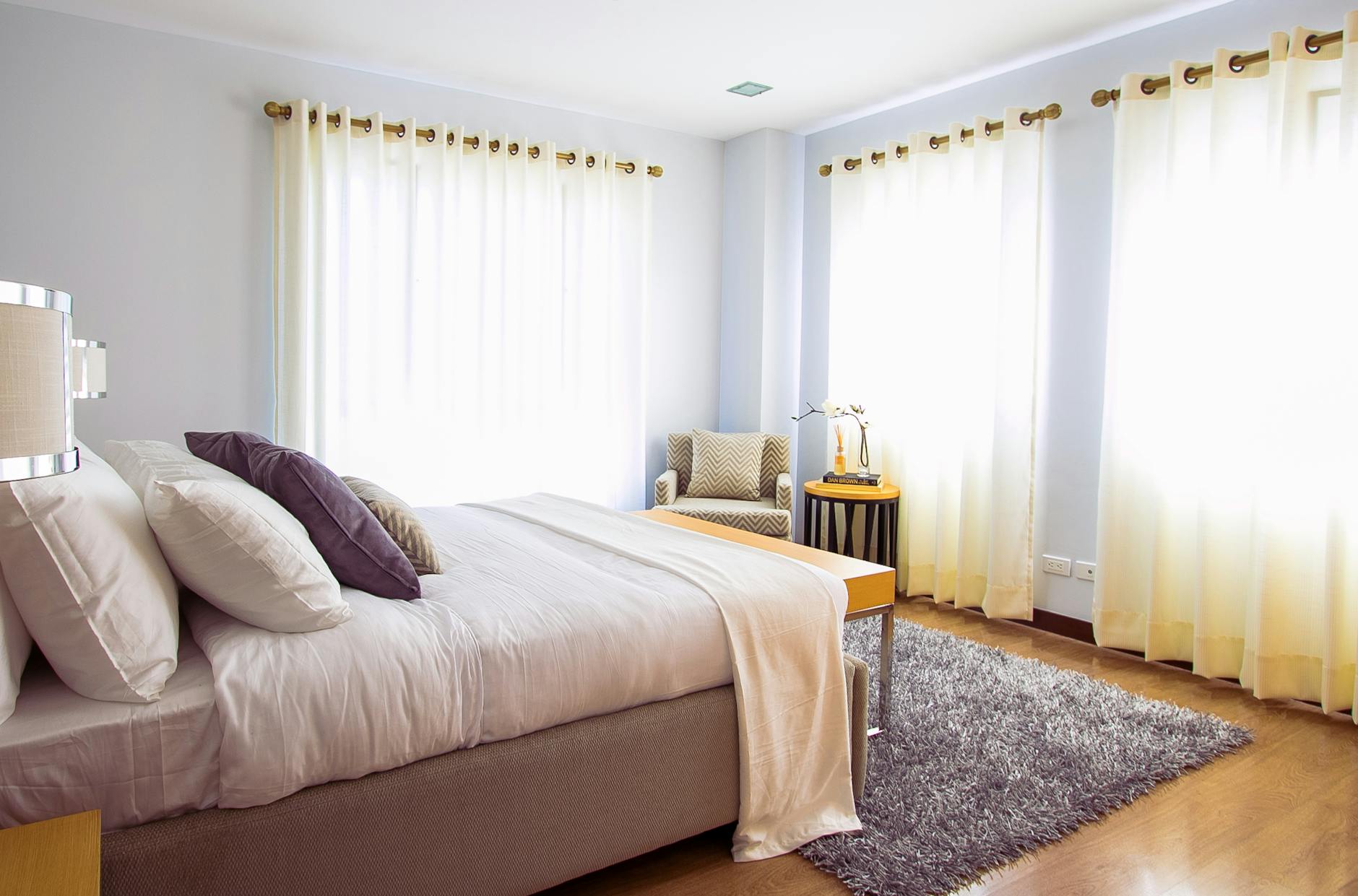
If you regularly lie in bed staring at the ceiling, running through tomorrow's to-do list while piles of clothes stare back at you from the corner, there's a good chance your bedroom is working against your sleep. Bedroom organization for better sleep is not just a tidying trend — it's a practical, science-backed strategy that can cut down the time it takes you to fall asleep and noticeably improve how rested you feel in the morning.
Researchers at St. Lawrence University found that people who sleep in cluttered rooms are significantly more likely to experience sleep problems, including difficulty falling asleep and disrupted rest during the night. The visual noise of a disorganized space keeps your brain in a low-level state of alertness — the exact opposite of what you need for quality sleep.
The good news? You do not need a full bedroom renovation to see results. Eight targeted upgrades, most of which take less than an hour each, can transform your sleep environment in a single weekend.
Why a Disorganized Bedroom Hurts Sleep
Your brain is constantly scanning your environment for unfinished business. Neuroscientists call this the "Zeigarnik effect" — the tendency for incomplete tasks to occupy mental bandwidth. A pile of laundry on the chair, paperwork on the dresser, or shoes scattered across the floor all register as unresolved tasks, even when you are trying to wind down.
Beyond psychology, clutter has measurable physiological effects. Studies measuring cortisol levels (your primary stress hormone) have found elevated readings in people whose homes, particularly their bedrooms, score high on objective clutter assessments. Cortisol is fundamentally incompatible with the melatonin your body needs to initiate sleep. When one goes up, the other tends to stay suppressed.
The bedroom also carries enormous psychological weight as a cue. If your brain associates the space with stress, screens, work, and chaos, it will not easily shift into sleep mode when you climb into bed. This is one of the core principles of sleep hygiene bedroom setup — your environment trains your nervous system. A calm, organized space becomes a powerful sleep trigger over time.
The 15-Minute Reset: What to Tackle First
Before diving into longer organization projects, start with a 15-minute reset that delivers immediate results. This is the quickest path to a calming bedroom and addresses the visual clutter that most directly impacts your stress levels at bedtime.
Set a timer and work through this sequence:
- Clear all flat surfaces — dresser tops, nightstands, windowsills. Move everything off and only return what genuinely belongs there.
- Address the floor — shoes, bags, and clothes piled on the floor create instant visual chaos. Put them away or designate one basket for items needing attention.
- The chair problem — most bedrooms have a chair that becomes a dumping ground. Either eliminate it or make a firm rule that it stays empty.
- Cords and cables — loose charging cables on the nightstand or floor register as clutter and can stimulate screen use before bed. Route them out of sight.
This reset alone, done every evening, has a compounding effect on sleep quality. It takes under five minutes once the initial declutter is complete, and it gives your brain a clear signal that the sleep environment is ready.
Storage Solutions That Actually Keep a Bedroom Calm
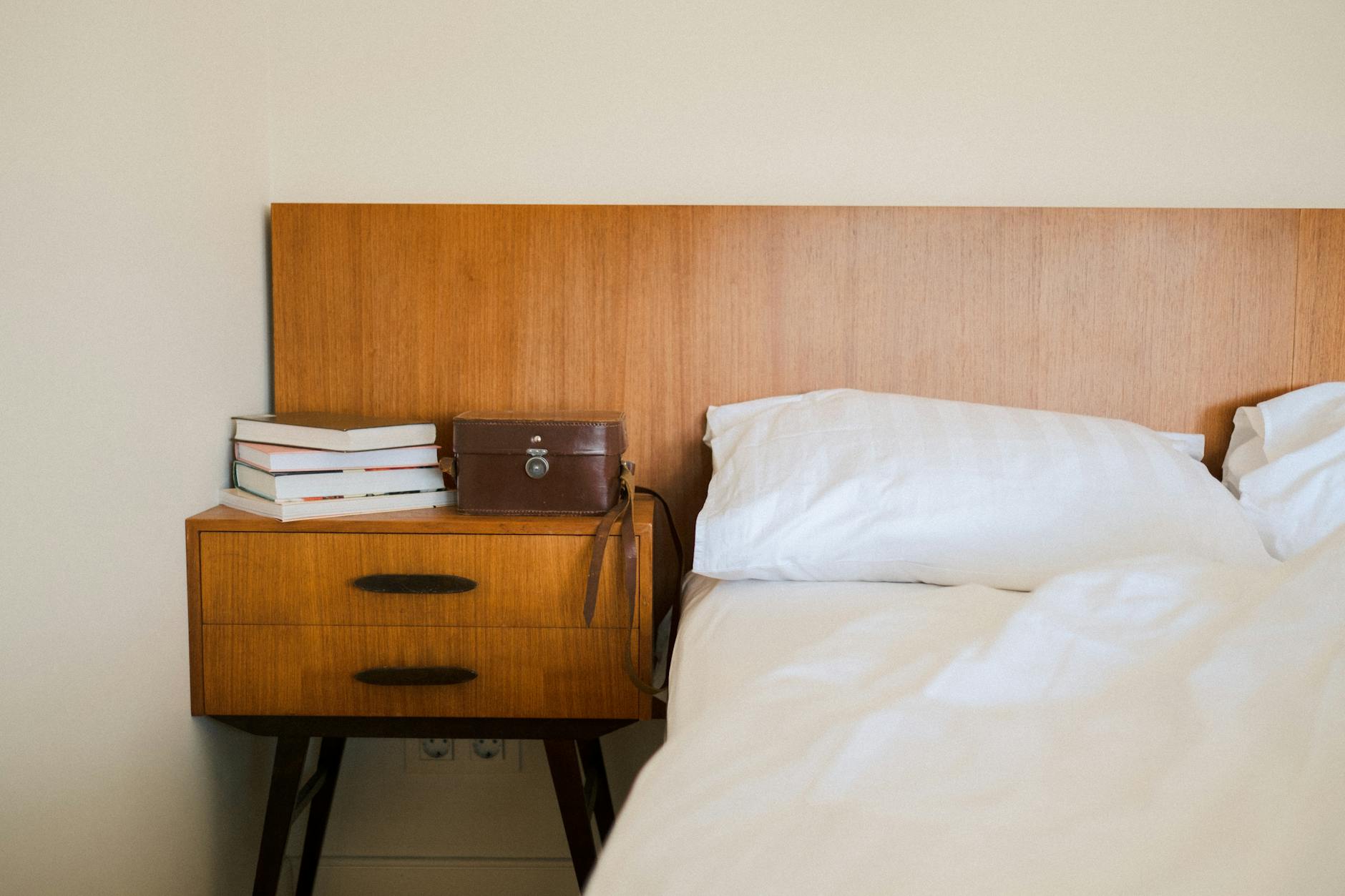
The reason most bedroom organization efforts fail within weeks is a lack of designated homes for everyday items. Things accumulate on surfaces and floors not because people are careless, but because there is no obvious, easy place to put them. Good storage solves this by making tidying the path of least resistance.
Here are the storage approaches that make the biggest difference for a minimalist bedroom organization setup:
Under-Bed Storage
The space under your bed is often the most underutilized in the entire room. Flat, lidded storage bins can hold seasonal clothing, extra bedding, or bulky items that would otherwise crowd your closet. The key is to keep this space organized, not to use it as a secondary dumping ground. Clear bins with labels make it easy to find things without pulling everything out.
Vertical Wall Space
Many bedrooms have unused vertical space above dressers and along walls. Floating shelves, hooks behind the door, and wall-mounted organizers can dramatically increase storage without taking up floor space. Fewer items on the floor means a more open, less anxious visual field.
The One-In-One-Out Rule
Organization is not a one-time event — it is an ongoing system. Committing to removing one item whenever a new one enters your bedroom prevents accumulation from undoing your hard work. This simple habit is one of the most effective long-term bedroom declutter tips you can adopt.
Designated Zones
If you must use your bedroom for purposes beyond sleep — reading, light work, exercise — create clearly bounded zones for each activity. A specific basket for reading materials, a defined corner for a yoga mat, a drawer exclusively for anything work-related. Boundaries prevent activities from bleeding into each other and contaminating your sleep zone.

The Bedding Simplification Rule
One of the most overlooked aspects of how to organize your bedroom for better sleep is what is actually on the bed. Many people layer their beds with multiple decorative pillows, throws, and blankets that have to be removed each night and re-piled each morning. This ritual creates friction, and friction — even small amounts of it — reduces the likelihood that you will maintain the habit.
The bedding simplification rule is straightforward: keep only what you sleep with on the bed. If you do not use a decorative throw while sleeping, it does not need to be on the bed. If five of your eight pillows end up on the floor each night, those five pillows are not serving your sleep — they are serving an aesthetic that costs you time and effort every single day.
Consider switching to a single high-quality duvet that can be easily straightened in thirty seconds each morning. A made bed takes less than a minute with this approach, and the visual impact of a neatly made bed on your evening cortisol levels is significant. Multiple studies on environmental aesthetics and mood confirm that a tidy, well-made bed is one of the single strongest visual cues for a calm, restful bedroom atmosphere.
For spare blankets and extra pillows, a lidded storage bench at the foot of the bed or a basket in the closet keeps them accessible without cluttering the space. This kind of streamlined sleep hygiene bedroom setup makes the entire room easier to maintain and more genuinely restful to spend time in.
8 Bedroom Upgrades to Do This Weekend, Ranked by Impact
These upgrades are ordered from highest to lowest impact on sleep quality. Work through them in order for the fastest results, or choose the ones that match the most pressing issues in your own bedroom.
- Remove work and screens from the bedroom. This is the single most impactful change you can make. Laptops, paperwork, and even books related to work keep your brain in a problem-solving mode that directly suppresses melatonin. If you charge your phone in the bedroom, move the charger to a drawer or across the room so the phone is not the last and first thing you see each day.
- Declutter every flat surface down to the essentials. Nightstands should hold a maximum of three to five items: a lamp, perhaps a book, a glass of water, and a small clock if you use one. Anything else is visual noise that your brain processes as unresolved tasks.
- Establish a laundry system that does not involve the floor or a chair. Whether that is a hamper with a lid, a hook system on the back of the door for tomorrow's clothes, or a small drawer organizer, the goal is ensuring clothes never end up in a visible pile. This one habit change eliminates what is often the biggest source of bedroom disorder.
- Simplify your bedding. Follow the rule above — remove anything from the bed that you do not actually sleep with. Make the bed each morning using only what stays. This takes the act of getting into bed from a multi-step process to an instant, inviting one.
- Introduce intentional lighting. Overhead lighting is often too harsh for evenings and works against melatonin production. Add a warm-toned bedside lamp on a dimmer, or use a smart bulb set to automatically shift to a warmer, lower-intensity output after 8 PM. Lighting is a powerful environmental cue for circadian rhythm alignment.
- Audit your closet and remove excess. A stuffed, overflowing closet creates a sense of chaos even with the door closed — because you know it is there. Donating or storing out-of-season items can cut the volume in half and make getting dressed in the morning significantly less stressful. Less morning stress means a better start that carries through to better sleep that night.
- Add one storage solution for the room's biggest pain point. Identify the single item category that causes the most recurring mess in your bedroom — shoes, reading materials, jewellery, extra blankets — and add one targeted storage solution for it. A shoe rack, a bedside caddy, a small tray, or a basket can eliminate a chronic problem permanently.
- Create an evening reset habit of five minutes. The most durable organization system is one with a daily maintenance habit built in. Five minutes each evening — surface wipe, floor check, laundry in hamper, tomorrow's clothes laid out — keeps the room consistently calm and reinforces the psychological association between your bedroom and rest.
The Psychology Behind Calm Bedrooms and Better Sleep
It is worth understanding why bedroom organization for better sleep works at a psychological level, not just a practical one. Sleep scientists refer to the concept of "stimulus control" — the idea that your brain learns to associate specific environments with specific states. If your bedroom is regularly associated with stress, chaos, and wakefulness, that association becomes a conditioned response that works against you every time you try to sleep.
Conversely, a consistently organized, calm, and visually simple bedroom becomes a powerful sleep trigger. Over time, simply entering the space begins to initiate physiological changes — a drop in heart rate, a shift in brainwave activity, a release of tension in the body. This is the same principle behind why elite athletes and military personnel are trained to optimize their sleep environments as a performance variable.
The color palette, the scent, the texture of your bedding, the amount of natural light in the morning and darkness at night — all of these are environmental inputs that your nervous system is continuously processing. Calming bedroom ideas are not about aesthetics for its own sake. They are about engineering an environment that actively supports the neurological transition from wakefulness to sleep.
Neutral, cool tones on the walls — soft greys, muted blues, warm whites — have been shown in interior environment research to reduce reported stress and increase subjective feelings of calm. A small amount of natural material (wood, cotton, linen) rather than synthetic textures can contribute to a warmer, more restful sensory environment. None of these changes are expensive or complicated, but together they compound into a bedroom that genuinely works for your sleep rather than against it.
Key Takeaways
A disorganized bedroom is not just an aesthetic problem — it is a sleep problem. Visual clutter elevates cortisol, prevents the psychological wind-down that precedes quality sleep, and conditions your brain to associate the space with stress rather than rest.
The eight upgrades in this guide work because they address the root causes of bedroom disorder rather than just the symptoms. Removing work triggers, simplifying your bedding, establishing a daily reset habit, and creating proper homes for everyday items are all changes that compound over time. Each one reduces a small source of friction or stress. Together, they create a fundamentally different sleep environment.
You do not need to tackle all eight in a single weekend. Prioritize the first two or three — removing screens and work materials, clearing flat surfaces, and fixing your laundry system — and you will likely notice a difference in how quickly you fall asleep and how calm you feel in the evenings within the first week. From there, work through the remaining upgrades at a pace that suits your schedule. Minimalist bedroom organization is not about achieving a magazine-perfect room. It is about removing the friction and visual noise that stands between you and a genuinely good night's sleep.