Bodyweight Exercises for Golfers: Build Strength at Home
If you want to hit the ball farther, stay injury-free, and play 18 holes without fading on the back nine, the gym is not the only answer. Bodyweight exercises at home can build the exact kind of functional strength, rotational power, and stability that golf demands — no barbells, no membership, and no commute required. Whether you are a weekend hacker or a scratch player, a consistent home training routine will translate directly to lower scores and a healthier swing.
This guide covers 14 of the most effective bodyweight movements for golfers, explains the golf-specific benefit of each one, and wraps up with two ready-to-use workout plans — one for beginners and one for more advanced players. All you need is a small patch of floor and about 30 minutes.
Why Bodyweight Training Is Ideal for Golfers
Golf is not a static sport. Every swing calls on your hips, core, thoracic spine, shoulders, and legs to fire in a precise sequence. Bodyweight training naturally trains movement patterns rather than isolated muscles, which aligns perfectly with the demands of the golf swing. Here is why it works so well:
- No equipment barrier. You can train in your living room, backyard, or hotel room — consistency is the biggest predictor of results.
- Joint-friendly loading. Because you are not adding external weight, the risk of overloading joints is low, which matters for golfers who already stress their lower backs and wrists.
- Proprioceptive challenge. Balancing your own body builds the kinesthetic awareness that helps you feel your swing positions.
- Rotational emphasis. Many classic bodyweight moves mimic or directly train the rotational patterns used in a golf swing.
- Scalability. Every exercise below has a beginner and a harder variation, so you can progress without ever needing to buy a single piece of gear.
Core Exercises for a Stronger Golf Swing
The core is the engine of a golf swing. A stiff, well-braced midsection transfers power from your lower body into the club without leaking energy through lateral sway or excessive spine tilt. These three movements build anti-rotation strength and deep spinal stability.
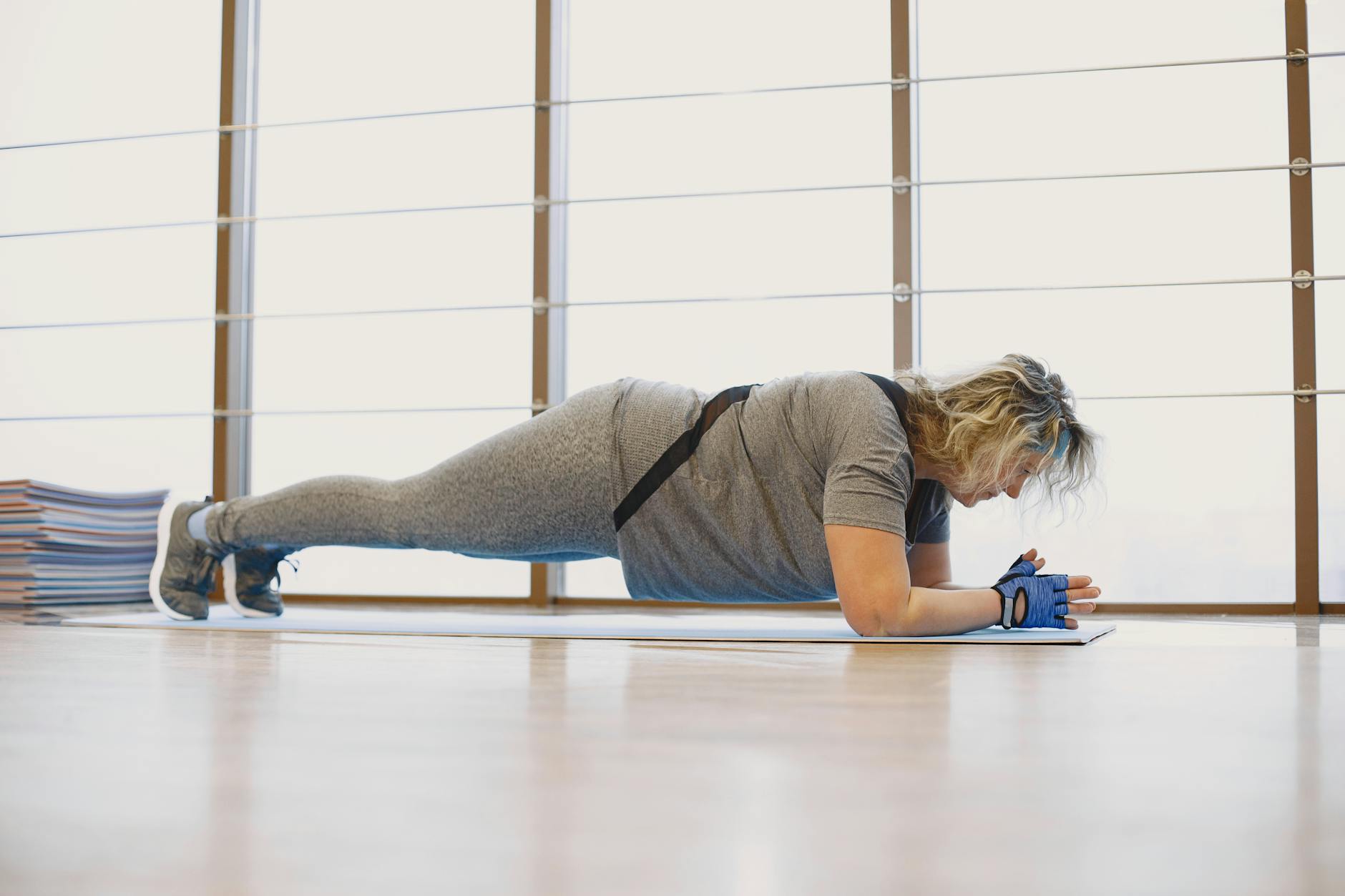
1. Forearm Plank
How to do it: Rest on your forearms and toes, keeping your body in a straight line from head to heel. Brace your abs as if you are about to take a punch. Hold for 20–60 seconds. Golf benefit: Builds the anti-extension stiffness that prevents your spine from collapsing at impact. Progression: Lift one foot off the ground for 5 seconds, alternating sides, to add a rotational anti-rotation challenge.
2. Mountain Climbers
How to do it: Start in a push-up position. Drive one knee toward your chest, then quickly switch legs in a running motion. Keep your hips level and your lower back flat. Aim for 20–40 reps (10–20 per leg). Golf benefit: Combines core bracing with hip flexor mobility and cardiovascular conditioning — exactly what you need on a long walk between holes. Progression: Slow down and hold each knee-drive for two seconds to increase time under tension.
3. Bird Dog
How to do it: Begin on all fours. Simultaneously extend your right arm forward and your left leg back, holding for 3–5 seconds before switching sides. Keep your spine neutral and avoid letting your hips rotate. Do 8–12 reps per side. Golf benefit: Trains the diagonal muscle chains that fire through the backswing and downswing — and teaches you to resist hip sway, a common swing fault. Beginner tip: Start by extending just one limb at a time until you feel comfortable with the balance.
4. Dead Bug
How to do it: Lie on your back with arms pointing to the ceiling and knees bent at 90 degrees above your hips. Slowly lower your right arm and left leg toward the floor while pressing your lower back flat. Return and repeat on the other side. Do 8–10 reps per side. Golf benefit: The dead bug builds deep lumbar stability under load — one of the best exercises for preventing the lower-back pain that plagues so many recreational golfers.
Lower Body Exercises for Power and Stability
Leg drive is often the most underutilized source of distance for amateur golfers. A powerful, stable lower body lets you push into the ground through impact, translating ground force into club-head speed. These bodyweight exercises at home develop that foundation without a squat rack.
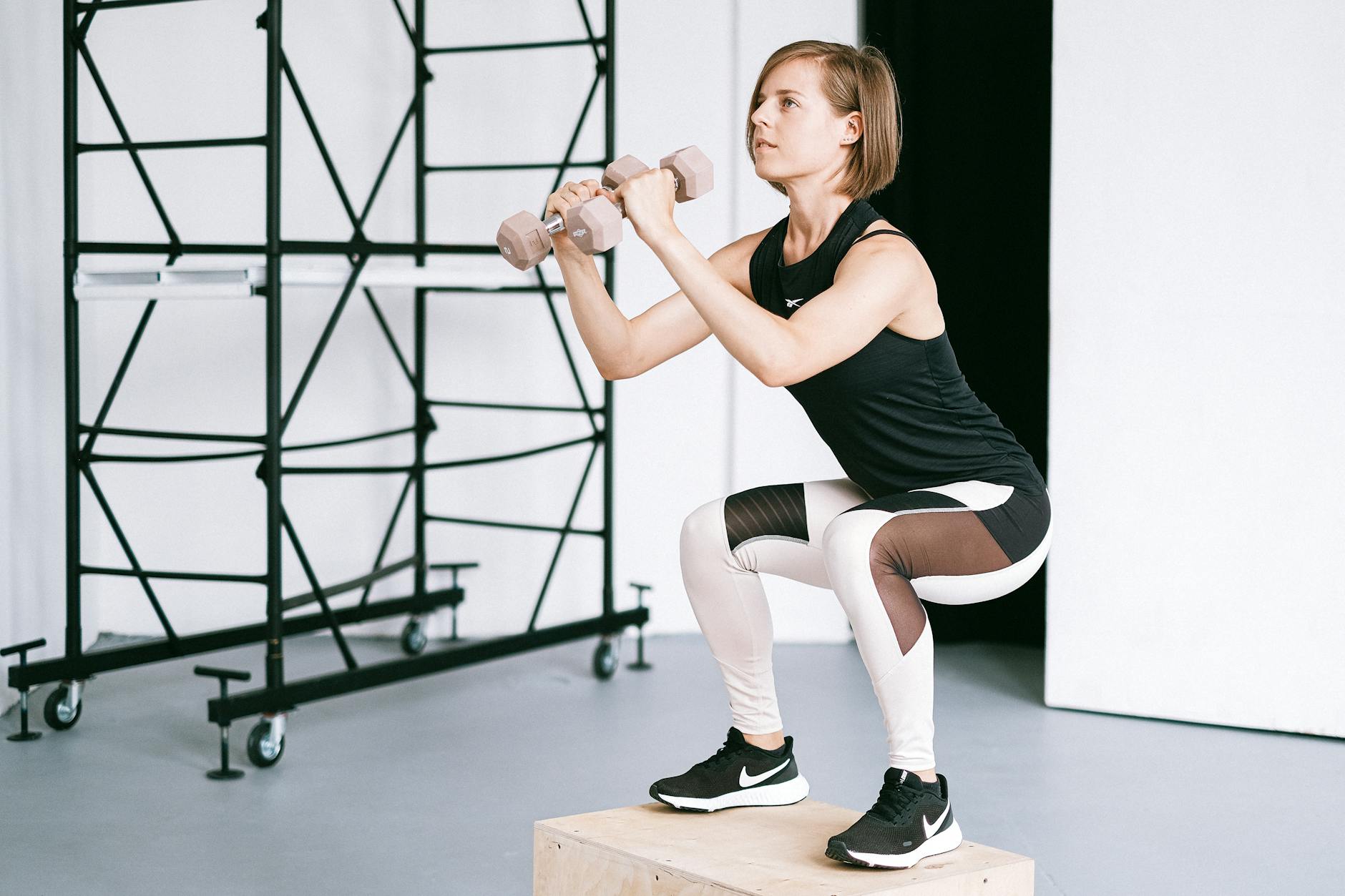
5. Bodyweight Squat
How to do it: Stand with feet shoulder-width apart and toes turned out slightly. Push your hips back, lower until your thighs are parallel to the floor (or as low as comfortable), then drive through your heels to stand. Do 3 sets of 12–15 reps. Golf benefit: Strengthens the glutes and quads that stabilize your base throughout the swing and generate the upward push at impact. Progression: Pause for 3 seconds at the bottom of each rep, or progress to single-leg variations.
6. Reverse Lunge
How to do it: Step backward with one foot, lowering your back knee toward the floor without letting it crash down. Push through the front heel to return. Do 10–12 reps per leg. Golf benefit: Unlike a forward lunge, the reverse lunge places less shear force on the knee and better mirrors the hip extension pattern of the follow-through. Progression: Add a torso rotation toward the front leg at the bottom of the lunge to make it directly golf-specific.
7. Single-Leg Glute Bridge
How to do it: Lie on your back with knees bent. Extend one leg straight, then drive your hips up until your body forms a straight line from shoulder to knee. Lower slowly. Do 10–15 reps per side. Golf benefit: Directly targets the glute medius — the hip stabilizer that prevents the dreaded "slide" in the downswing and keeps you centered over the ball at impact.
8. Lateral Band Walk (Bodyweight Version)
How to do it: No band needed here. Assume a quarter-squat position and step sideways in a controlled manner, keeping tension in the outer hips. Take 10 steps in each direction for 2–3 sets. Golf benefit: Reinforces hip abductor strength and the lateral stability needed during the weight transfer from trail foot to lead foot.
Upper Body Exercises for Control and Consistency
Golfers do not need massive arms, but they do need strong, stable shoulders and a capable pushing and pulling chain. Upper-body bodyweight work improves the shoulder girdle stability that keeps your club on plane and protects your rotator cuff over thousands of swings.
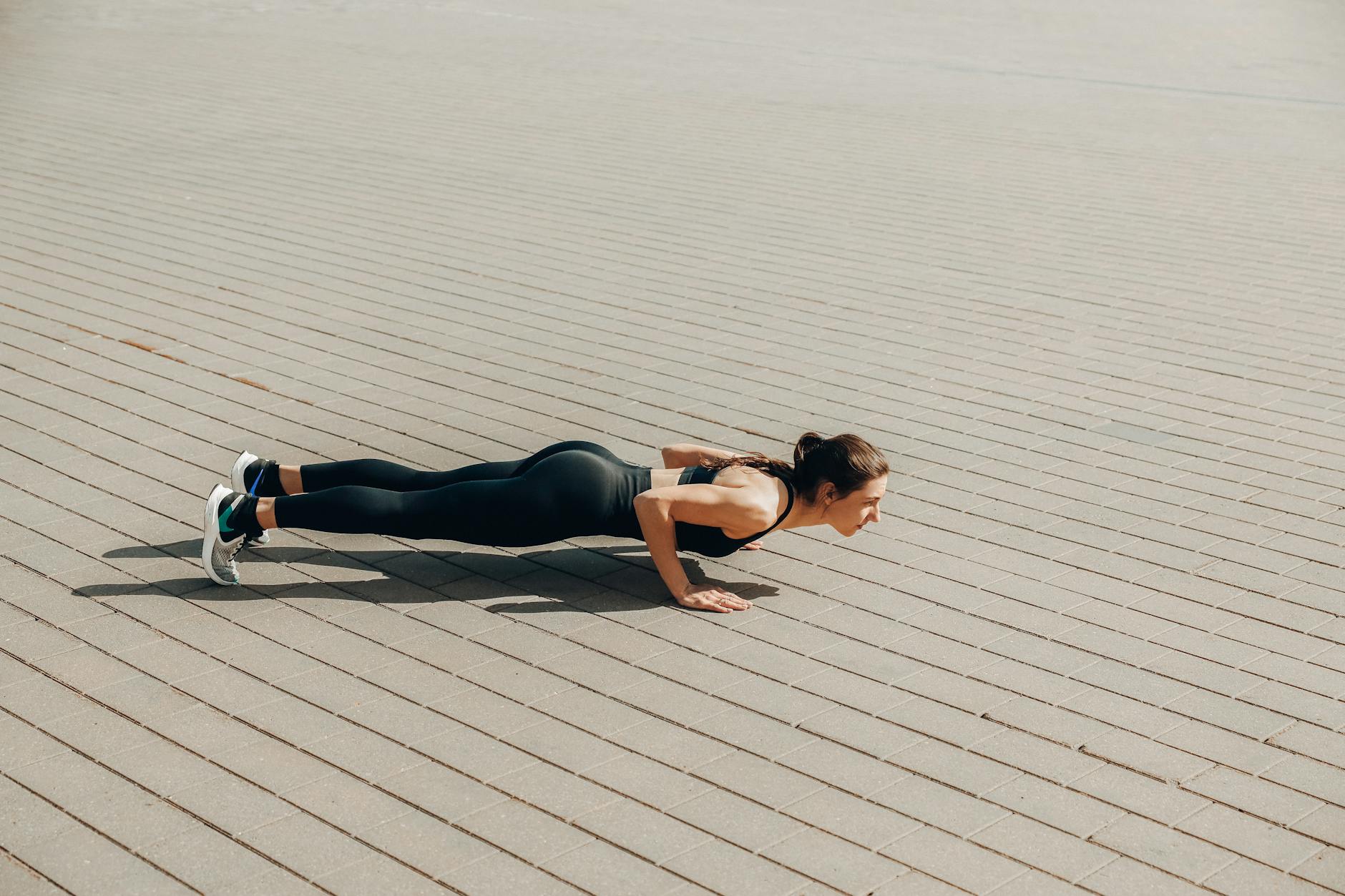
9. Push-Up
How to do it: Place hands slightly wider than shoulder-width. Lower your chest to the floor in a controlled 3-second count, then press back up. Keep your elbows at roughly a 45-degree angle from your body. Aim for 3 sets of 8–15 reps. Golf benefit: Builds the pectoral, anterior deltoid, and tricep strength that governs arm extension through the hitting zone. Beginner variation: Perform from your knees to reduce load. Progression: Elevate your feet on a chair (decline push-up) to shift emphasis to the upper chest and shoulders.
10. Pike Push-Up
How to do it: Start in a downward-dog position with hips high. Bend your elbows to lower the top of your head toward the floor, then press back up. Do 3 sets of 6–10 reps. Golf benefit: Targets the deltoids and upper trapezius, which stabilize your lead shoulder at the top of the backswing — a critical checkpoint for keeping the club on plane.
11. Scapular Push-Up
How to do it: In a standard push-up position with arms locked, let your shoulder blades pinch together (body lowers slightly), then push them wide apart. That is one rep. Do 15–20 reps slowly. Golf benefit: This overlooked drill builds serratus anterior strength, which controls how your shoulder blade moves against your ribcage — essential for a smooth, pain-free shoulder turn.
Rotational Power Exercises
Rotation is what separates golf from most other sports, and it is the quality most often neglected in general fitness routines. These movements train your body to generate, control, and transfer rotational force — the exact motion of a golf swing.
12. Russian Twist
How to do it: Sit on the floor with knees bent and feet flat (or slightly lifted for more challenge). Lean back to about 45 degrees. Clasp your hands together and rotate your torso left, then right, tapping the floor on each side. Do 3 sets of 20 reps (10 per side). Golf benefit: Trains the obliques and hip flexors to work together in a rotary pattern, directly mimicking the uncoiling of the downswing. Progression: Hold a full water bottle or a heavy book to add load.
13. Rotating Plank (Plank to Side Plank)
How to do it: Begin in a forearm plank. Rotate your entire body to the right into a side plank, stacking your feet and raising your top arm to the ceiling. Hold for 2 seconds, return to center, and repeat on the left. Do 8–12 full rotations. Golf benefit: Combines anti-rotation bracing with controlled rotational movement — a combination that mirrors what the core actually does in a golf swing.
14. Thoracic Rotation Stretch (Active)
How to do it: Sit cross-legged or in a 90/90 hip position. Place one hand behind your head and rotate your upper back (not your lower back) as far as you comfortably can. Hold for 2 seconds, return, and repeat 10 times per side. Golf benefit: Thoracic (mid-spine) mobility is one of the single biggest limiting factors for amateur golfers. More T-spine rotation means a bigger backswing without swaying — and that means more distance without more effort.
Sample Home Workout Routines for Golfers
Below are two complete routines you can do entirely at home with no equipment. Perform each routine 2–3 times per week with at least one rest day between sessions.
Beginner Routine (25–30 minutes)
| Exercise | Sets | Reps / Duration | Rest |
|---|---|---|---|
| Forearm Plank | 3 | 20 sec hold | 45 sec |
| Bird Dog | 3 | 8 reps/side | 45 sec |
| Bodyweight Squat | 3 | 12 reps | 45 sec |
| Reverse Lunge | 3 | 10 reps/leg | 45 sec |
| Push-Up (knees if needed) | 3 | 8–10 reps | 60 sec |
| Russian Twist | 3 | 16 reps | 45 sec |
| Thoracic Rotation Stretch | 2 | 10 reps/side | 30 sec |
Advanced Routine (35–40 minutes)
| Exercise | Sets | Reps / Duration | Rest |
|---|---|---|---|
| Dead Bug | 3 | 10 reps/side | 30 sec |
| Mountain Climbers | 3 | 30 sec | 30 sec |
| Single-Leg Glute Bridge | 3 | 12 reps/side | 30 sec |
| Reverse Lunge with Rotation | 3 | 10 reps/leg | 30 sec |
| Decline Push-Up | 3 | 12–15 reps | 45 sec |
| Pike Push-Up | 3 | 8–10 reps | 45 sec |
| Rotating Plank | 3 | 10 full rotations | 45 sec |
| Russian Twist (with load) | 3 | 20 reps | 30 sec |
Progression Tips: How to Keep Getting Better
Bodyweight training only produces results if you continue to challenge your body. Here are the best ways to progress without adding a single piece of equipment:
- Slow the tempo. A 3-second lowering phase (eccentric) on any exercise makes it dramatically harder and builds more strength than bouncing through reps.
- Reduce your base of support. Move from two feet to one foot, or from two arms to one arm, to increase the stability demand.
- Add a pause at the hardest point. Pausing at the bottom of a squat or at full rotation in a Russian twist removes momentum and forces your muscles to work harder.
- Increase density, not just volume. Try to do the same workout in less time — this builds work capacity alongside strength.
- Add rotation to everything. A lunge with a twist, a push-up with a side plank rotation — these small additions keep the training golf-specific as you advance.
- Track your sessions. Keep a simple log of sets, reps, and how each workout felt. Even a note on your phone is enough. Progress becomes visible and motivating within two to three weeks.
A realistic timeline: expect noticeable improvements in stability and endurance after 3–4 weeks of consistent training. Meaningful gains in rotational power — the kind you feel at the tee box — typically emerge after 6–8 weeks. Stick with it through a full season and the results accumulate significantly.
Key Takeaways
Bodyweight exercises at home are one of the most practical and effective tools a golfer can use to improve performance. The 14 movements in this guide cover every key quality the golf swing demands: core stability, lower body power, shoulder control, and rotational athleticism. None of them require equipment, a gym, or more than 40 minutes of your time.
Start with the beginner routine twice a week. Add a third session after two weeks. Progress to the advanced routine when each set feels comfortable and controlled. The off-season is the best time to build a foundation, but there is no bad time to start — your game will reflect the work you put in.