Early Signs of Hearing Loss You Shouldn't Ignore

If you've been asking people to repeat themselves more often lately — or if family members keep commenting that the TV is too loud — you may already be experiencing the early signs of hearing loss. The problem is that most people don't recognize the warning signs until the damage is well underway. Hearing loss rarely arrives all at once. It creeps in gradually, making it easy to dismiss or rationalize for months, even years.
According to the National Institute on Deafness and Other Communication Disorders, approximately 28.8 million American adults could benefit from hearing aids — yet only about one in five who need them actually use them. The gap between onset and treatment averages seven years. That's seven years of strained conversations, social withdrawal, and cognitive fatigue that could be reduced with earlier intervention.
This guide walks through the 10 most common early hearing loss symptoms you should know, what each one actually means, and how to decide when it's time to get a professional evaluation.
Why Early Detection Matters
Untreated hearing loss doesn't just affect how well you hear — research published in The Lancet has identified it as the single largest modifiable risk factor for dementia. It's also linked to depression, social isolation, and an increased risk of falls in older adults. The auditory system works closely with the brain, and when it's deprived of sound input over time, cognitive pathways can weaken.
The good news is that catching symptoms of hearing loss early — ideally in the mild stage — gives you the most options. Treatment is more effective, adjustment periods are shorter, and the social and cognitive consequences can be minimized significantly.
Sign 1: You're Constantly Turning Up the Volume
One of the clearest and most common mild hearing loss signs is reaching for the remote more often than you used to. If your TV or radio volume is noticeably higher than it was a few years ago, or if visitors complain that the volume is uncomfortable for them while it feels fine to you, that discrepancy is meaningful.
This happens because high-frequency hearing loss — the most common type — gradually reduces your ability to distinguish sounds at certain pitches. The brain compensates by making everything feel quieter until volume is increased. Many people don't notice this drift until someone else points it out.

Sign 2: You Miss Words, Not Just Sounds
Early hearing loss in seniors frequently shows up not as total silence, but as an inability to distinguish specific consonants — especially high-frequency sounds like "s," "f," "th," "sh," and "ch." You can hear that someone is speaking, but words blur together. "Sixty" sounds like "sixteen." "Fish" sounds like "fist."
This symptom is particularly frustrating because it looks — from the outside — like inattention or confusion. Many people who experience it describe the feeling of hearing the rhythm of speech clearly but not being able to decode the actual words. If this sounds familiar, it's a strong indicator of early high-frequency hearing loss.
Sign 3: You Struggle in Background Noise
Difficulty hearing in noisy environments — restaurants, parties, family gatherings — is one of the most telltale early hearing loss symptoms. Healthy hearing allows the brain to focus on a single voice and filter out background noise (audiologists call this the "cocktail party effect"). When hearing loss begins, this selective filtering degrades first.
If you find yourself nodding along in group conversations without fully following them, or feeling exhausted after social events from the effort of trying to listen, pay attention to that pattern. It is not simply "getting older" or "not being a people person." It is a measurable, treatable symptom.
Sign 4: You Ask People to Repeat Themselves Frequently
Occasionally asking someone to repeat a sentence is normal. Doing it in nearly every conversation — especially with certain people (those who speak softly or have higher-pitched voices) — is a red flag. Women's and children's voices fall in the higher frequency range that is most commonly affected early in sensorineural hearing loss, the most prevalent type.
Notice whether you find it consistently harder to hear certain people. That pattern of who you struggle with can tell an audiologist a lot about the specific frequencies affected.
Sign 5: You Rely Heavily on Lip Reading Without Realizing It
Many people with early signs of hearing loss unconsciously begin to lip-read as a compensatory strategy. They may not realize they are doing it until the lights dim in a restaurant and suddenly they can barely follow the conversation, or someone turns away while talking and comprehension drops dramatically.
If face-to-face conversations feel significantly easier than phone calls — where visual cues are removed — this is a meaningful distinction worth mentioning to an audiologist.

Sign 6: Phone Calls Feel Unusually Difficult
Telephone conversations strip away two powerful compensatory tools: lip reading and body language. For someone with developing hearing loss, this can make phone calls feel disproportionately exhausting or frustrating. You may find yourself preferring text messages, putting calls on speaker, or pressing the phone harder against your ear and still not fully catching everything.
Some people notice this symptom with only certain callers or certain phone handsets, which reflects the frequency-specific nature of typical early hearing loss.
Sign 7: You Hear Ringing or Buzzing in Your Ears (Tinnitus)
Tinnitus — a persistent ringing, buzzing, hissing, or whooshing sound in one or both ears — affects roughly 15% of the U.S. population. While tinnitus is not itself hearing loss, it is strongly associated with it. In many cases, tinnitus is the first noticeable symptom that something is changing in the auditory system, and it often appears alongside early high-frequency hearing loss.
Tinnitus alone warrants an audiological evaluation. Its presence does not automatically mean significant hearing loss, but it is a reliable early warning signal that should not be ignored or dismissed as "just stress."
Sign 8: You Feel Exhausted After Conversations
Listening fatigue — sometimes called "cognitive load from hearing effort" — is a real and well-documented phenomenon. When the auditory system is working harder than normal to decode degraded sound signals, the brain compensates by recruiting additional cognitive resources. This is mentally taxing in a way that normal hearing is not.
If you frequently feel drained after social situations, meetings, or family dinners that others seem to navigate effortlessly, it may be because your brain is burning extra energy just to hear. This is not a personality trait. It is a symptom of a treatable condition.
Sign 9: You Mishear and Misunderstand in Quiet Settings Too
While noisy environments are challenging for almost everyone with hearing difficulties, struggling even in quiet, one-on-one conversations is a sign that symptoms of hearing loss have progressed beyond the mildest stage. If you're at home with a family member and still routinely miss what they say from another room — or even from across the table — the hearing loss is likely moderate rather than borderline.
The distinction between struggling only in noise versus struggling in quiet settings helps audiologists categorize the degree of hearing loss and tailor the appropriate intervention.
Sign 10: Others Have Noticed Before You Did
Perhaps the most consistent pattern in hearing loss in seniors is that a spouse, adult child, or close friend notices the problem before the person with hearing loss does. This isn't surprising — humans are remarkably good at adapting to gradual changes in their own perception. We normalize what becomes familiar.
If someone who cares about you has mentioned that you seem to struggle with hearing, take it seriously. Research consistently shows that people underestimate their own degree of hearing loss when self-reporting. An outside perspective is often more accurate than your own assessment.
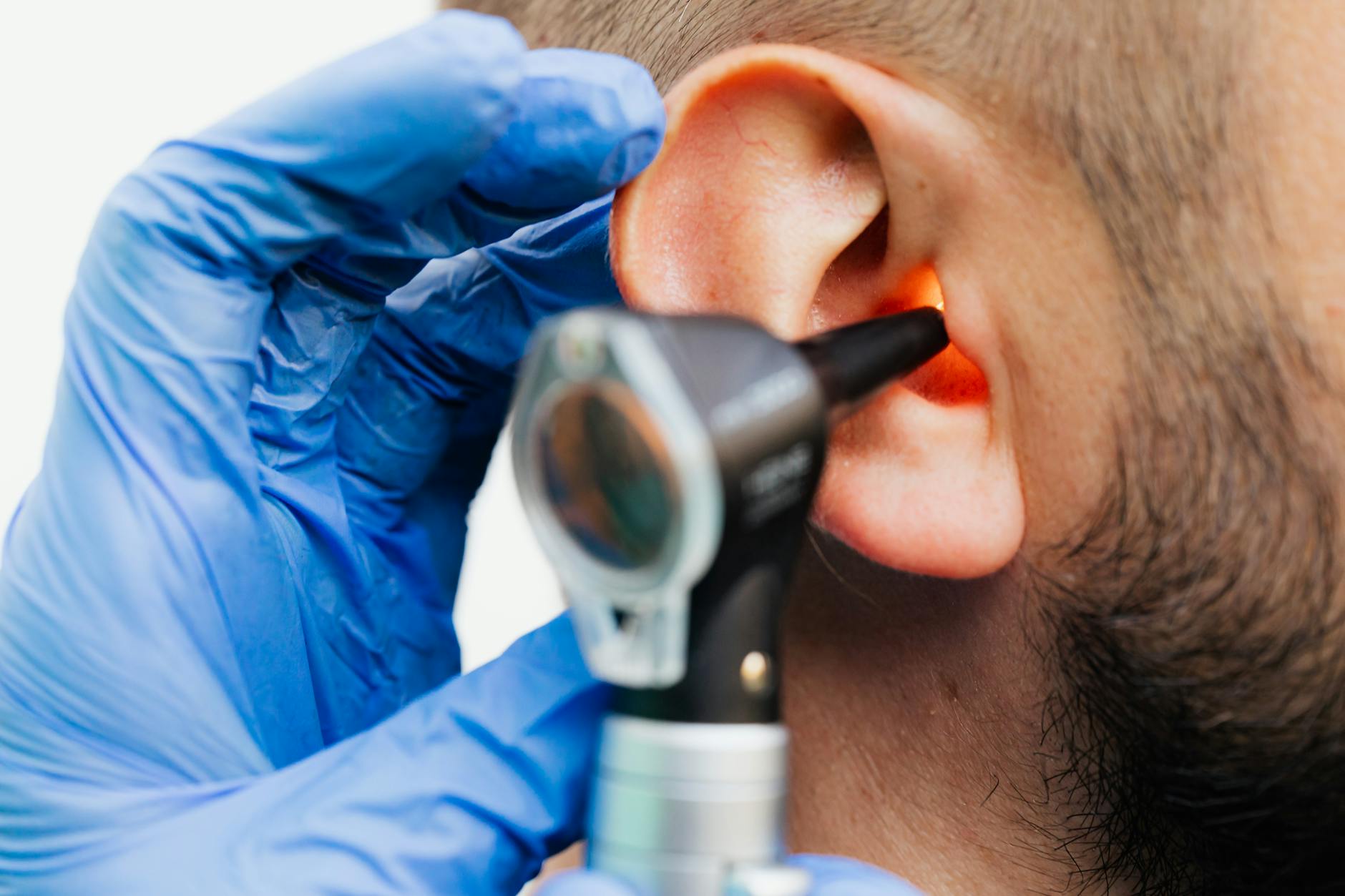
When to Get a Hearing Test
If you recognized yourself in three or more of the signs above, scheduling a hearing evaluation is a reasonable and prudent next step. Knowing when to get a hearing test shouldn't be complicated — the guidelines are straightforward:
- Adults over 50 should get a baseline hearing test even without symptoms, since age-related hearing loss (presbycusis) typically begins in the high frequencies during middle age.
- Anyone who notices two or more of the above signs should seek an evaluation regardless of age — noise-induced hearing loss affects younger adults too.
- Anyone with sudden hearing loss in one ear should seek evaluation urgently, within 24–72 hours, as sudden sensorineural hearing loss can sometimes be partially reversed with prompt treatment.
- Anyone with tinnitus that persists for more than a week should consult a primary care physician or audiologist.
- People with a family history of hearing loss should be proactive about baseline testing earlier than the general population.
A standard audiological evaluation is painless, takes about an hour, and gives you a detailed map of exactly which frequencies and decibel levels you can and cannot hear. This is called an audiogram, and it's the definitive tool for understanding what's actually happening with your hearing.
What Happens During a Hearing Test
Many people avoid scheduling a hearing evaluation simply because they don't know what to expect. The process is simple. You'll sit in a soundproofed booth wearing headphones while an audiologist plays a series of tones at different frequencies and volumes. You press a button each time you hear a tone. The test maps your hearing across the frequency spectrum in each ear separately.
There's no preparation required, no discomfort, and no right or wrong answers — the test simply reveals what you can and cannot hear. Most audiologists also conduct speech recognition tests, where you repeat back words played at different volumes to assess how well you process speech rather than just pure tones.
Results are reviewed with you the same day, and if hearing loss is detected, the audiologist will explain the type, degree, and likely cause — and discuss whether any intervention, monitoring, or referral is appropriate.
Common Myths About Hearing Loss
Several widespread misconceptions prevent people from seeking help for early hearing loss symptoms sooner than they do. These are worth addressing directly:
- "It's just a normal part of aging — there's nothing I can do." While age-related hearing loss is common, it is highly treatable. Most people see significant improvements in communication and quality of life with appropriate intervention.
- "If I had real hearing loss, I'd know." This is the most dangerous myth. Gradual hearing loss is by definition easy to miss. The brain adapts, and the loss feels like "normal" hearing until someone else points it out.
- "Hearing aids are for old people." The fastest-growing segment of hearing aid users is adults aged 40–60, driven by noise exposure and changing attitudes. Modern devices are discreet, sophisticated, and far removed from the bulky devices of previous decades.
- "I only have trouble in noisy places — that's not real hearing loss." Difficulty in noise is specifically and consistently listed as one of the first and most reliable signs of hearing loss in clinical guidelines.
Final Verdict
The ten signs of hearing loss covered in this guide — turning up the TV, missing consonants, struggling in noise, relying on lip reading, tinnitus, listening fatigue, and more — are not inevitable facts of life to be accepted and worked around. They are measurable signals from your auditory system that something has changed and that help is available.
The single most important takeaway is this: the average person waits seven years between noticing early hearing loss symptoms and seeking professional help. Those are seven years of avoidable strain on relationships, cognitive resources, and quality of life. An audiological evaluation is free of risk, low in cost, and can be life-changing in its clarity.
If any of the signs in this guide felt familiar — for you or someone you care about — the most useful thing you can do right now is schedule a hearing test. Early action leads to better outcomes. Every time.