Fire Extinguisher Types Explained: Which Class Do You Actually Need at Home?

If you've ever stood in the hardware store staring at a wall of red cylinders, wondering what "2-A:10-B:C" actually means, you're not alone. Fire extinguisher types for home use are categorized by the kind of fire they're designed to fight — and choosing the wrong one can make a dangerous situation even worse. This guide breaks down every class in plain English, tells you exactly what a typical homeowner needs, and explains where to put each extinguisher so it's actually useful in an emergency.
Why the Type of Fire Extinguisher Matters
Not all fires burn the same way. A grease fire in a pan behaves completely differently from a smoldering sofa or a sparking outlet. Fire extinguishers are engineered with specific agents — dry chemicals, water, CO2, wet chemicals — that work by interrupting the combustion process in ways matched to each fuel type. Using the wrong extinguisher doesn't just fail to put the fire out; it can actively spread flames, create steam explosions, or conduct electricity back to the user.
The classification system used in the United States (maintained by the National Fire Protection Association, or NFPA) assigns letter grades — A, B, C, D, and K — to describe which fire types an extinguisher can handle. Many consumer extinguishers carry multiple ratings, which is why understanding the letters is the first step in any sensible fire extinguisher guide for homeowners.
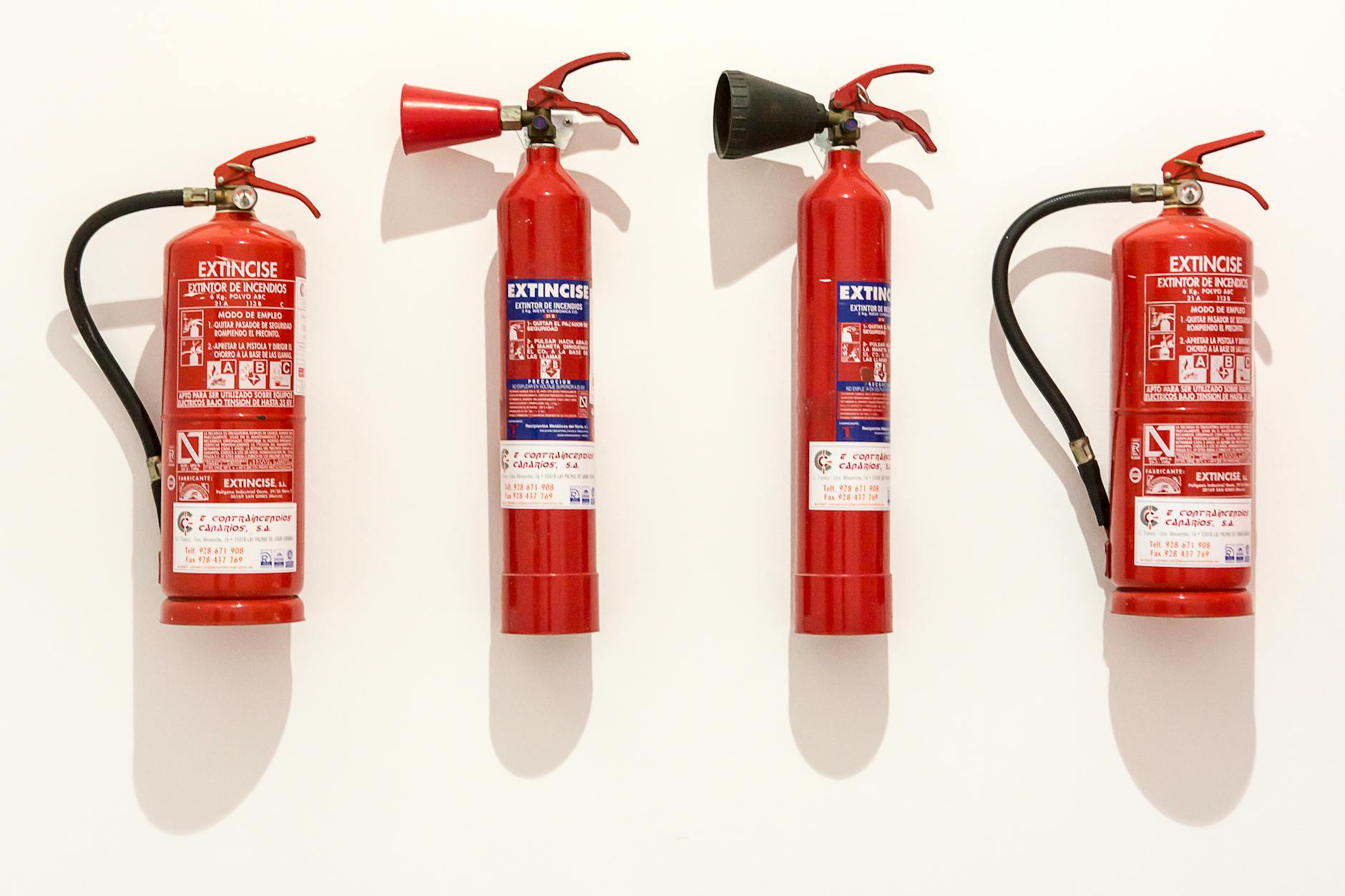
The Five Fire Extinguisher Classes — Explained Simply
Class A — Ordinary Combustibles
What it fights: Wood, paper, cloth, rubber, most plastics, and other solid organic materials.
Class A fires are the most common type in residential settings. A couch catching a spark from a fireplace, a pile of newspapers igniting near a space heater, a wooden deck catching from a barbecue — all of these are Class A scenarios. The symbol for Class A on an extinguisher label is a green triangle containing the letter "A."
Class A extinguishers typically use water, water mist, or monoammonium phosphate (a dry chemical) to cool burning materials and smother flames. The numeric rating that precedes the letter — like "2-A" or "4-A" — tells you the relative extinguishing capacity. A 4-A unit can handle roughly twice the fire load of a 2-A unit.
Homeowner relevance: Very high. Living rooms, bedrooms, garages, and home offices are full of Class A fuel sources.
Class B — Flammable Liquids and Gases
What it fights: Gasoline, diesel, oil, paint, solvents, propane, butane, and other flammable liquids and gases.
The symbol is a red square containing the letter "B." Class B extinguishers work by smothering the fire — cutting off the oxygen supply — rather than cooling it, because liquid fuel fires can reignite the moment cooled liquid reheats. Common agents include dry chemical, CO2, and foam.
The numeric rating before the "B" (e.g., "10-B") indicates the square footage of a flammable liquid fire the extinguisher can control when used by a trained operator.
Homeowner relevance: High, especially for garages, workshops, and outdoor spaces where gasoline-powered equipment or solvents are stored.
Important: Class B does cover some cooking oil and grease fires — but not the high-temperature deep-frying scenario you'll find in a kitchen. That's what Class K is for (covered below).
Class C — Energized Electrical Equipment
What it fights: Fires involving live electrical equipment — fuse boxes, wiring, appliances, circuit breakers, and motors.
The symbol is a blue circle containing the letter "C." The key thing to understand about Class C is that it does not describe the fuel — it describes the environment. Electrical fires are almost always burning something (insulation, plastic, nearby materials) that falls into Class A or B. What Class C certification tells you is that the extinguishing agent is non-conductive, meaning it won't carry electricity back to the person holding the nozzle.
CO2 and dry chemical are the most common agents used in Class C-rated extinguishers. Water is never appropriate for energized electrical fires.
Homeowner relevance: High. Any home can experience an electrical fire. Most ABC-rated extinguishers (see below) cover this scenario.
Class D — Combustible Metals
What it fights: Combustible metals such as magnesium, titanium, potassium, and sodium.
The symbol is a yellow five-pointed star containing the letter "D." Class D fires are rare outside of industrial, laboratory, and manufacturing environments. Certain metal shavings or powders can ignite under specific conditions, and standard extinguishing agents can actually intensify these fires. Class D extinguishers use specialized dry powder agents matched to the specific metal involved.
Homeowner relevance: Very low. Unless you have a metalworking shop at home that handles reactive metals, you are unlikely to ever need a Class D extinguisher.
Class K — Commercial Cooking Oils and Fats
What it fights: High-temperature cooking oils, animal fats, and vegetable fats — the kind found in deep fryers and commercial cooking equipment.
The symbol is a black hexagon containing the letter "K." Class K extinguishers use a wet chemical agent (typically a potassium-based solution) that reacts with burning oil to form a soapy foam layer — a process called saponification — which smothers the fire and cools the oil simultaneously.
This is the answer to the common question: what type of fire extinguisher is best for grease fires? For a home kitchen with a standard range, a Class K or a multi-rated ABC extinguisher that also covers cooking oils is the right answer. For a home with a deep fryer, a dedicated Class K unit is strongly recommended.
Homeowner relevance: High for kitchens. Cooking fires are the leading cause of home fires in the United States according to the NFPA, making this class particularly important for residential use.
Multi-Class Extinguishers: The ABC Rating Explained
The most important thing most homeowners can learn about class A B C fire extinguishers is this: a single ABC-rated unit handles the vast majority of household fire scenarios. These extinguishers use monoammonium phosphate dry chemical, which works across all three categories simultaneously.
A label reading "2-A:10-B:C" means:
- 2-A — Equivalent to 2.5 gallons of water for fighting ordinary combustibles
- 10-B — Can control a 10-square-foot flammable liquid fire
- C — The agent is non-conductive and safe for electrical fires
There is no numeric rating attached to "C" because Class C simply confirms the agent is non-conductive — it doesn't measure extinguishing capacity for electrical fires separately.
For most rooms in a home — bedroom, living room, hallway, garage, laundry room — an ABC-rated extinguisher is the appropriate choice. The higher the numeric rating, the more fire-fighting power the unit contains, which usually corresponds to a larger and heavier cylinder.
What Homeowners Actually Need: A Practical Breakdown
Here is a straightforward room-by-room recommendation based on typical fire risks:
Kitchen
The kitchen demands the most careful thought. Standard cooking on a stovetop can produce Class B grease fires and Class A fires from nearby combustibles like dish towels or wooden utensils. An ABC-rated extinguisher handles both scenarios adequately for most home kitchens. If you regularly use a deep fryer, adding a compact Class K unit specifically for the kitchen is worth the investment. A fire extinguisher for the kitchen should always be stored within arm's reach of the exit — never directly beside the stove, where a fire would block your access to the extinguisher.
Garage and Workshop
Garages typically contain gasoline, motor oil, paint, solvents, and power tools — a strong mix of Class A and Class B hazards. An ABC extinguisher is the right choice here, and sizing up to a 5-pound or 10-pound unit is sensible given the volume of potential fuel. If you do any welding or work with reactive metals, consult a fire safety professional about Class D coverage.
Bedroom and Living Areas
Standard ABC extinguishers handle the ordinary combustibles found in these rooms. A 2.5-pound or 5-pound ABC unit stored in an easily accessible location — a hall closet, mounted on a wall bracket — is adequate.
Laundry Room
Dryer fires are more common than most people realize and almost always involve Class A materials (lint, fabric). An ABC extinguisher is appropriate here. Keeping the dryer vent clean is the best preventive measure, but having an extinguisher nearby adds a critical safety layer.
Basement and Utility Room
Furnaces, water heaters, and electrical panels make basements higher-risk for electrical and fuel-related fires. An ABC extinguisher covers all three categories and belongs in any basement with mechanical equipment.
How to Read the Label and Rating System
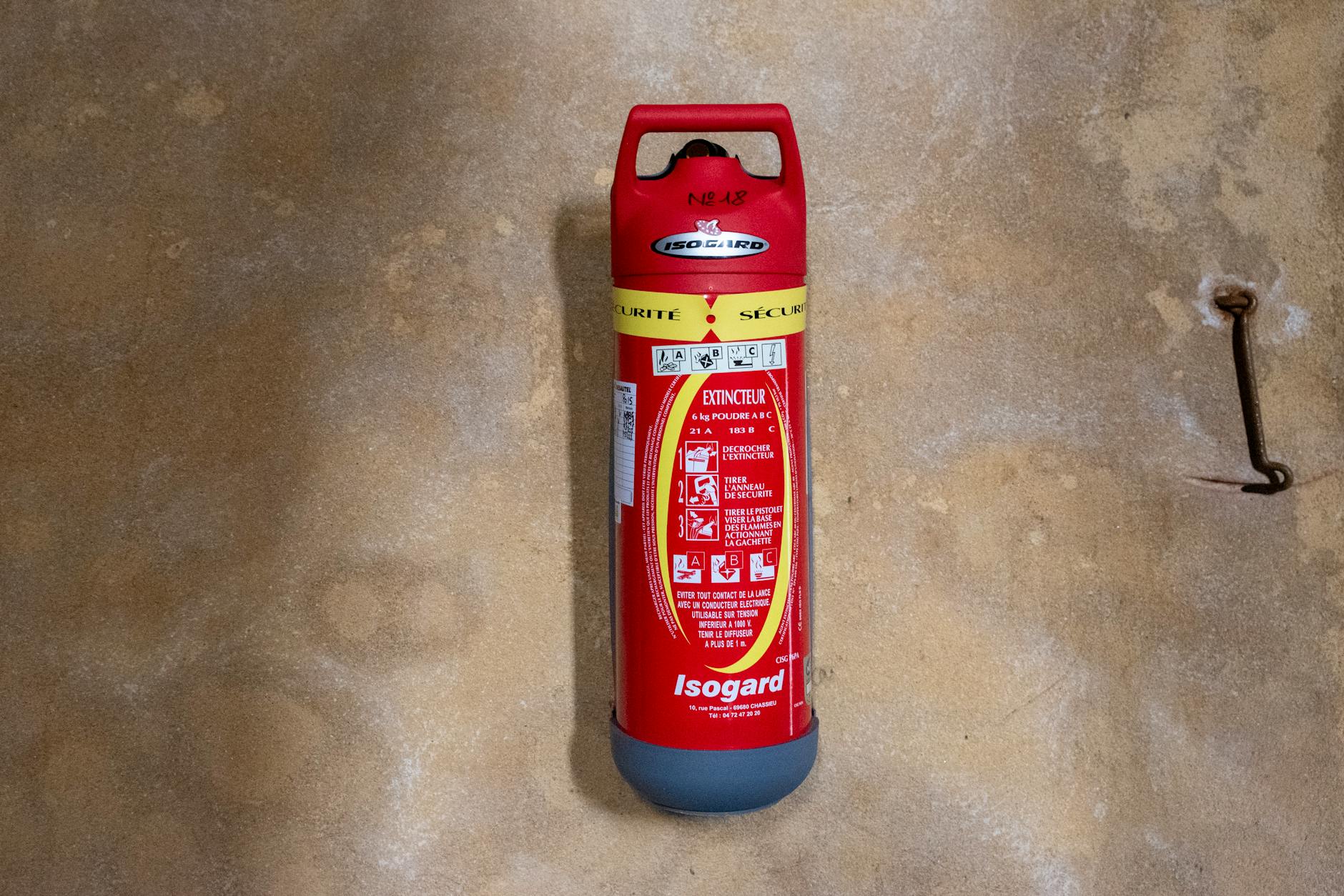
When you pick up an extinguisher at a hardware store, the label tells you everything you need to know — if you know how to read it. Here is what to look for:
- UL Listing mark: Confirms the unit has been tested and certified by Underwriters Laboratories to meet the performance standards for its stated ratings.
- Class letters: The combination of A, B, C, D, and K on the label. An ABC rating covers the widest range of household fires.
- Numeric rating: Higher numbers mean greater extinguishing power. A "3-A:40-B:C" extinguisher is significantly more powerful than a "1-A:10-B:C" unit.
- Agent type: Listed on the label — common options are "Dry Chemical," "Carbon Dioxide (CO2)," "Water Mist," and "Wet Chemical." Each has trade-offs for cleanup and residue.
- Weight/size: Consumer extinguishers range from 2.5-pound "kitchen size" units to 20-pound commercial cylinders. The NFPA recommends a minimum of a 2-A:10-B:C for general home use.
Dry chemical extinguishers (the most common ABC type) leave a fine yellow or white powder residue that can damage electronics. CO2 extinguishers leave no residue, which makes them popular for server rooms and electronics — but they're less effective on Class A fires. Wet chemical (Class K) leaves a foam residue that is designed to prevent re-ignition of hot cooking oils.
Placement Rules: Where to Mount Extinguishers in Your Home
Having the right extinguisher is only half the equation. The NFPA's recommendations for residential placement include:
- At least one on every floor of a multi-story home, including the basement.
- In or near the kitchen, but positioned away from the stove — ideally near the kitchen exit so you can access it even if the stove area is burning.
- In the garage, mounted near the pedestrian door rather than the overhead door, for the same reason.
- Near sleeping areas, particularly in hallways leading from bedrooms to exits.
- At a height of 3.5 to 5 feet from the floor when wall-mounted, with the handle or carrying grip accessible without bending.
- Not inside cabinets or closets unless the door is always open and the extinguisher is clearly visible.
The general rule is: you should be able to reach an extinguisher within 30 to 75 feet of any point in a residential space. In practice, that means one per floor in most homes, with a second unit in the kitchen.
Maintenance and Inspection: Keeping Your Extinguisher Ready
An extinguisher you've never checked isn't much better than no extinguisher at all. Here is a straightforward maintenance schedule:
Monthly Visual Check
Take 30 seconds to confirm: the pressure gauge needle is in the green zone, the safety pin is intact and sealed with a tamper indicator, the nozzle is unobstructed, and the unit shows no signs of corrosion, dents, or damage. Write the date on a tag or sticker each time you check.
Annual Professional Inspection
The NFPA recommends a professional inspection once a year. A certified fire equipment dealer will check the internal pressure, inspect all components, and recharge the unit if the pressure is low. This service typically costs between $15 and $30 and is well worth it.
Recharge After Any Use
Even a one-second discharge can depressurize an extinguisher enough to make it ineffective for a real emergency. Recharge or replace immediately after any use — even partial use.
Replacement Timeline
Most manufacturers recommend replacing disposable extinguishers every 5 to 12 years, depending on the model. Rechargeable units can last longer with proper service. Check the manufacturer date stamped on the cylinder and follow the replacement schedule in your owner's manual.
Key Takeaways
Understanding fire extinguisher types for home doesn't require a fire safety certification — it just requires knowing a few key principles:
- Fire classes A, B, C, D, and K describe the type of fuel involved — choosing the wrong class can make a fire worse.
- A class A B C fire extinguisher handles the vast majority of household fires and is the single best all-purpose choice for most rooms in a home.
- The kitchen deserves special attention — a Class K or ABC-rated unit designed for cooking oils is the safest choice when grease fires are a real risk.
- Class D is rarely relevant for residential use unless you have a specialized metalworking setup.
- Placement matters as much as type — an extinguisher blocked by a fire is useless.
- Monthly checks and annual professional inspections keep your extinguisher reliable when you actually need it.
Home fires can escalate from a small, containable flame to a structure-threatening blaze in under two minutes. The investment in the right extinguisher — properly placed and routinely maintained — is one of the most practical safety steps any homeowner can take.