Flexibility Exercises for Golfers: Improve Your Swing Range

If you want to hit the ball farther, swing more consistently, and walk off the 18th hole without your back aching, the answer almost certainly starts with flexibility exercises. A full, powerful golf swing demands mobility from virtually every major joint — your hips, thoracic spine, shoulders, and hamstrings all need to work together through a wide range of motion. When any one of those areas is tight, the rest of your body compensates in ways that quietly rob you of distance, accuracy, and longevity on the course.
The good news is that targeted flexibility training does not require hours in the gym or a yoga background. A consistent routine of golf-specific stretches — done before and after your round, and a few minutes each day at home — can produce noticeable improvements in swing range within just a few weeks.
This guide covers everything you need: a dynamic pre-round warm-up, post-round static stretches, hip mobility drills, shoulder and thoracic spine work, and a simple daily routine you can stick to. Let's get into it.
The Role of Flexibility in Your Golf Swing
The golf swing is a rotational movement that asks your body to coil and uncoil rapidly while maintaining balance and posture. At the top of a full backswing, a right-handed golfer needs roughly 90 degrees of thoracic (upper back) rotation, significant hip turn, and a wide shoulder arc. If your body cannot reach those positions comfortably, it finds shortcuts — early extension, reverse pivot, an abbreviated backswing — that reduce clubhead speed and make consistent ball-striking much harder.
Beyond performance, poor flexibility is a leading contributor to golf injuries. Lower back strains, golfer's elbow, and hip impingement are overwhelmingly more common in players with restricted mobility. Research published in the Journal of Strength and Conditioning Research has consistently linked hip and thoracic mobility limitations to increased lumbar load during the swing. In other words, your back is doing work it was never meant to do when your hips and mid-back cannot move freely.
The encouraging side of this picture is that flexibility is highly trainable at any age. Golfers in their 50s, 60s, and 70s regularly add meaningful swing range by committing to a structured stretching program — and they do so while reducing pain at the same time.

Dynamic Warm-Up Stretches (Pre-Round)
Static stretching before a round — holding a stretch for 30-plus seconds on cold muscles — is outdated advice and can temporarily reduce muscle power. Instead, use dynamic flexibility exercises that move your joints through their range of motion progressively. These warm the muscles, activate the nervous system, and prep your body for the explosive demands of the swing. Aim to spend 8–10 minutes on these before your first tee shot.
1. Hip Circles
Stand with feet shoulder-width apart and hands on your hips. Draw slow, large circles with your hips — 10 rotations clockwise, then 10 counter-clockwise. Gradually increase the size of the circle each rep. This lubricates the hip joints and begins waking up the glutes and hip flexors, both critical for generating rotational power.
2. Trunk Rotation with Club
Place a club across your shoulders (behind your neck, resting on your traps). Assume your golf posture — slight forward tilt from the hips, soft knees. Rotate your torso slowly from side to side, mimicking the backswing and follow-through. Start small and gradually increase the range over 15–20 reps. This is one of the most effective dynamic flexibility exercises for golfers because it replicates the exact movement pattern you are about to perform.
3. Leg Swings
Hold a club vertically for balance. Swing one leg forward and backward like a pendulum, gradually increasing the range. Do 15 reps per leg, then repeat with lateral (side-to-side) swings. This opens the hip flexors and adductors, which are notorious for limiting hip turn in the golf swing.
4. Shoulder Arm Circles
Extend both arms out to the sides at shoulder height. Make small forward circles, progressively growing them to full, large circles over 15 seconds. Reverse direction for another 15 seconds. This warms the rotator cuff tendons and increases shoulder mobility before you put them under the load of repeated swings.
5. Inchworm Walk-Out
From a standing position, hinge at the hips and walk your hands out to a plank position. Hold for two seconds, then walk your feet toward your hands. Repeat 6–8 times. The inchworm simultaneously stretches the hamstrings, activates the core, and mobilizes the thoracic spine — a three-for-one warm-up move that every golfer should know.
Static Flexibility Exercises (Post-Round)
After a round, your muscles are warm and much more receptive to lengthening. This is the ideal time to use static holds (30–60 seconds each) to build lasting flexibility. Make a habit of stretching immediately after play, before you get into the car — your body will thank you in the morning.
1. Standing Hip Flexor Stretch (Lunge Stretch)
Step your right foot forward into a lunge position, lowering your left knee to the ground. Keep your torso upright and gently press your hips forward until you feel a stretch along the front of your left hip and thigh. Hold 45 seconds, then switch sides. Tight hip flexors from sitting are one of the biggest limiters of backswing turn for recreational golfers.
2. Seated Hamstring Stretch
Sit on a bench or the ground with one leg extended straight and the other bent. Hinge forward from the hips (not the lower back) toward the extended leg until you feel a strong stretch along the back of the thigh. Hold 45–60 seconds per side. Short hamstrings force you to lose your posture angle during the swing — addressing them directly pays dividends immediately.
3. Figure-Four Glute Stretch
Lie on your back and cross your right ankle over your left knee, forming a "4" shape. Gently pull your left thigh toward your chest. You should feel this deep in the right glute and outer hip. Hold 45 seconds per side. The glutes are the primary rotational engines of the golf swing, and stretching them after play reduces next-day stiffness dramatically.
4. Child's Pose with Rotation
From a kneeling position, sit back toward your heels and walk your hands forward, lowering your forehead toward the floor. Once settled, reach one arm underneath your chest, rotating your thoracic spine. Hold 20–30 seconds per side. This is a gentle and effective way to decompress the lumbar spine and restore thoracic rotation after a round.
Hip Mobility Drills
Hip mobility deserves its own section because it is so central to swing power and so commonly restricted. The hips need to rotate independently of the spine — your lower body leads the downswing while your upper body stays coiled — and this requires excellent mobility in multiple planes.
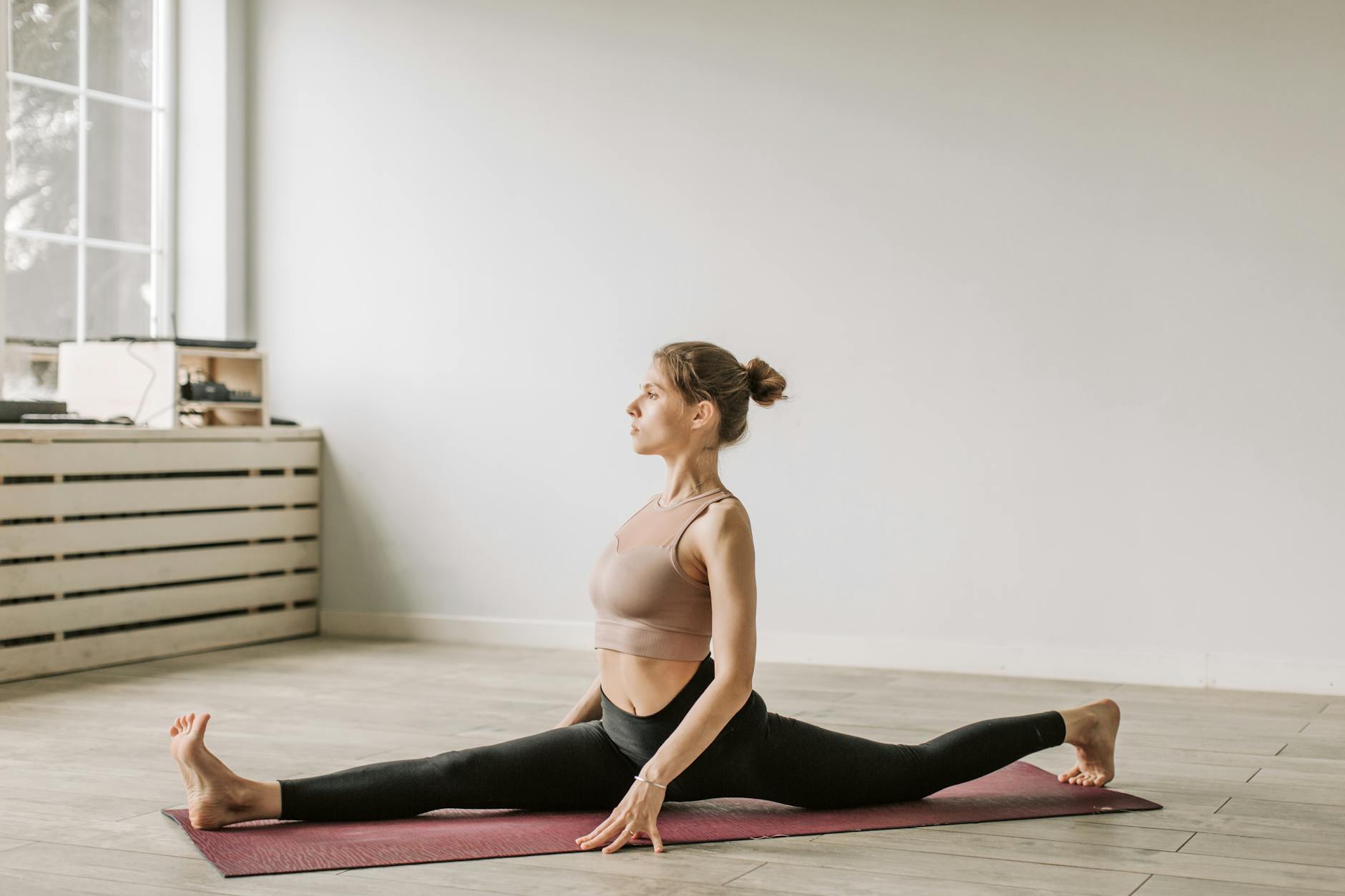
90/90 Hip Stretch
Sit on the floor with both legs bent at 90-degree angles — one leg in front of you and one behind, both forming right angles at the knee. The front leg is in external rotation, the back leg in internal rotation. Sit tall and hold 60 seconds, then switch sides. This is widely regarded as one of the most comprehensive hip flexibility exercises available, addressing both internal and external rotation in a single position.
Half-Kneeling Hip Flexor with Rotation
From a half-kneeling position (one knee down, one foot forward), press your hips forward slightly to engage the hip flexor stretch. Then rotate your torso toward the front knee and reach your arm overhead. Hold 3–5 seconds, return to center, and repeat 8 times per side. This drill combines hip flexor lengthening with thoracic rotation — a powerful pairing for golf-specific mobility.
Deep Squat Hold
Stand with feet slightly wider than shoulder-width. Squat down as deeply as possible while keeping your heels on the ground and your torso upright. Hold a club in front for counterbalance if needed. Hold the bottom position for 30–60 seconds. This one move improves ankle, knee, hip, and lower back mobility simultaneously — all joints involved in maintaining your posture through the golf swing.
Shoulder and Thoracic Spine Stretches
The thoracic spine (the section of your back between the neck and lower back) is the primary driver of rotational range in the golf swing. Most people spend their days hunched over desks or phones, which causes the thoracic spine to stiffen in flexion. Reversing this with targeted extension and rotation work is one of the highest-leverage things a golfer can do.
Thoracic Extension Over Foam Roller
Place a foam roller perpendicular to your spine, just below your shoulder blades. Support your head with your hands and gently arch backward over the roller. Breathe deeply and relax into the stretch for 30–60 seconds. Slowly move the roller up and down your mid-back, pausing at any stiff segments. This is the single best tool for restoring thoracic extension and dramatically improving your ability to rotate at the top of the backswing.
Thread-the-Needle
Start on all fours. Reach one arm underneath your chest and slide it along the floor until your shoulder contacts the ground. Your opposite arm stays extended. Hold 30 seconds and feel the rotation through your mid-back. Return and repeat on the other side for 3 rounds each. Thread-the-needle is a go-to for sports physiotherapists working with golfers precisely because it isolates thoracic rotation without loading the lumbar spine.
Cross-Body Shoulder Stretch
Bring your right arm across your chest at shoulder height and gently press it in with your left forearm. Hold 30–45 seconds per side. This targets the posterior capsule of the shoulder — an area that becomes chronically tight in golfers who hit hundreds of balls — and helps maintain a full shoulder turn without impingement.
Doorway Pec Stretch
Stand in a doorway with your arms at 90 degrees (elbows bent, forearms on the door frame). Step forward gently until you feel a stretch across your chest and the fronts of your shoulders. Hold 45 seconds. Tight pectorals pull the shoulders forward and limit the ability to make a full shoulder rotation — this stretch directly addresses that restriction.
Building a Daily Flexibility Routine
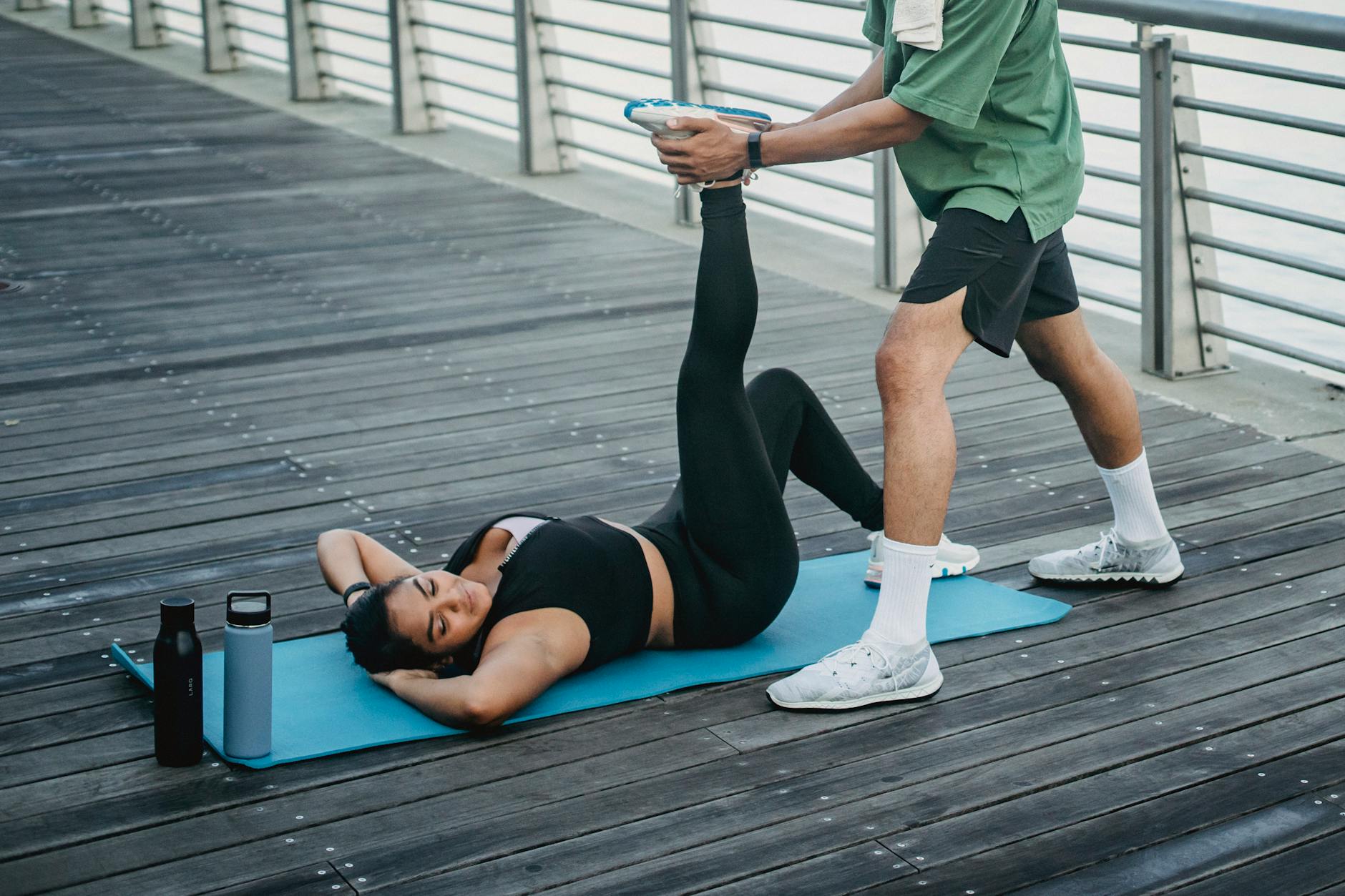
Stretching only on the days you play golf will produce limited results. Flexibility improves through consistent, daily practice — even 10–15 minutes is enough to drive meaningful change over weeks and months. Here is a simple structure you can follow at home:
Morning (5–7 minutes):
- Hip circles — 10 reps each direction
- 90/90 hip stretch — 60 seconds per side
- Thread-the-needle — 3 reps per side
- Thoracic extension over foam roller — 60 seconds
Evening (8–10 minutes):
- Standing hip flexor stretch — 45 seconds per side
- Seated hamstring stretch — 45 seconds per side
- Figure-four glute stretch — 45 seconds per side
- Doorway pec stretch — 45 seconds
- Child's pose with rotation — 30 seconds per side
If you can do this routine six days per week, most golfers begin noticing measurable improvement in swing range within 3–4 weeks. After 8–12 weeks, the changes become structural — your tissues are genuinely longer and your joints move more freely, not just when warm.
Common Flexibility Mistakes Golfers Should Avoid
Even well-intentioned stretching can fail to deliver results — or worse, cause injury — when done incorrectly. Watch out for these common pitfalls:
- Stretching cold muscles: Always warm up with 5 minutes of light movement (a brisk walk, arm swings) before any static stretching outside of a post-round session.
- Holding your breath: Breath is what allows muscles to release. Exhale into each stretch and maintain slow, steady breathing throughout the hold.
- Pulling through pain: Stretching should feel like moderate tension, never sharp or burning pain. If you feel either, back off immediately — you may be working into an existing impingement or injury.
- Rushing through holds: A 10-second stretch does almost nothing for lasting flexibility. You need a minimum of 30 seconds — and 60 seconds is better for chronically tight areas.
- Stretching only what is easy: Most golfers naturally stretch the areas that already move well and ignore their true restrictions. Assess honestly. If your hips are the limiting factor, that is where you must invest most of your time.
- Inconsistency: Flexibility is a use-it-or-lose-it quality. Missing a week of stretching can meaningfully reverse the gains from a month of consistent work. Make it a non-negotiable part of your golf preparation.
Final Verdict
Flexibility exercises are not a luxury for elite golfers — they are a fundamental necessity for any player who wants to improve their swing, protect their body, and enjoy the game for decades. The stretches and drills in this guide are evidence-based, golf-specific, and genuinely effective when performed with consistency.
Start with the pre-round dynamic warm-up and post-round static routine. Add the daily home practice as a second tier. Focus especially on hip mobility and thoracic spine rotation — these two areas have the greatest direct impact on swing range for the vast majority of recreational golfers.
Give yourself eight weeks of honest, daily effort. Most golfers who commit to this see a noticeably fuller backswing, improved follow-through, reduced soreness after rounds, and often a meaningful gain in driving distance — without changing a single other thing about their game. That is the quiet power of consistent flexibility training, and it is available to every golfer willing to put in the work.