Golf Tee Height for Driver: The Exact Height That Maximizes Distance

Ask any amateur golfer what they do before a tee shot and they'll describe a pre-shot routine — grip check, alignment, waggle, swing. Almost nobody mentions golf tee height for driver. Yet research from Trackman and the work of coaches like Andrew Rice consistently shows that tee height is one of the largest controllable variables affecting launch angle, spin rate, and ultimately, carry distance. One half-inch of change at the tee can shift your launch angle by three to four degrees and swing your spin numbers by hundreds of RPM. On a well-struck 250-yard drive that difference can mean 15 yards of carry — gained or lost — before you even think about your swing.
On the PGA Tour, caddies often carry a specific tee — or even a custom-height rubber insert — to guarantee their player tees the ball at exactly the same height on every par-4 and par-5. Recreational golfers, by contrast, tend to jam a tee into the turf by feel, varying the height by as much as an inch between holes. This guide covers the exact numbers, the simple rules, and the daily habits that will make your tee height as consistent as a tour caddie's.
Why Tee Height Is the Most Overlooked Variable in the Amateur Game
A 2022 Trackman analysis of amateur swings found that recreational golfers average a dynamic loft at impact of around 12–14 degrees with the driver, while tour players average closer to 10–11 degrees — but the bigger differentiator was launch angle. Tour players typically launch the ball between 10 and 12 degrees; amateurs often launch between 8 and 10 degrees, leaving significant distance on the table. A large portion of that gap is not swing speed — it is attack angle and where on the face contact is made, both of which are directly influenced by golf tee height for driver.
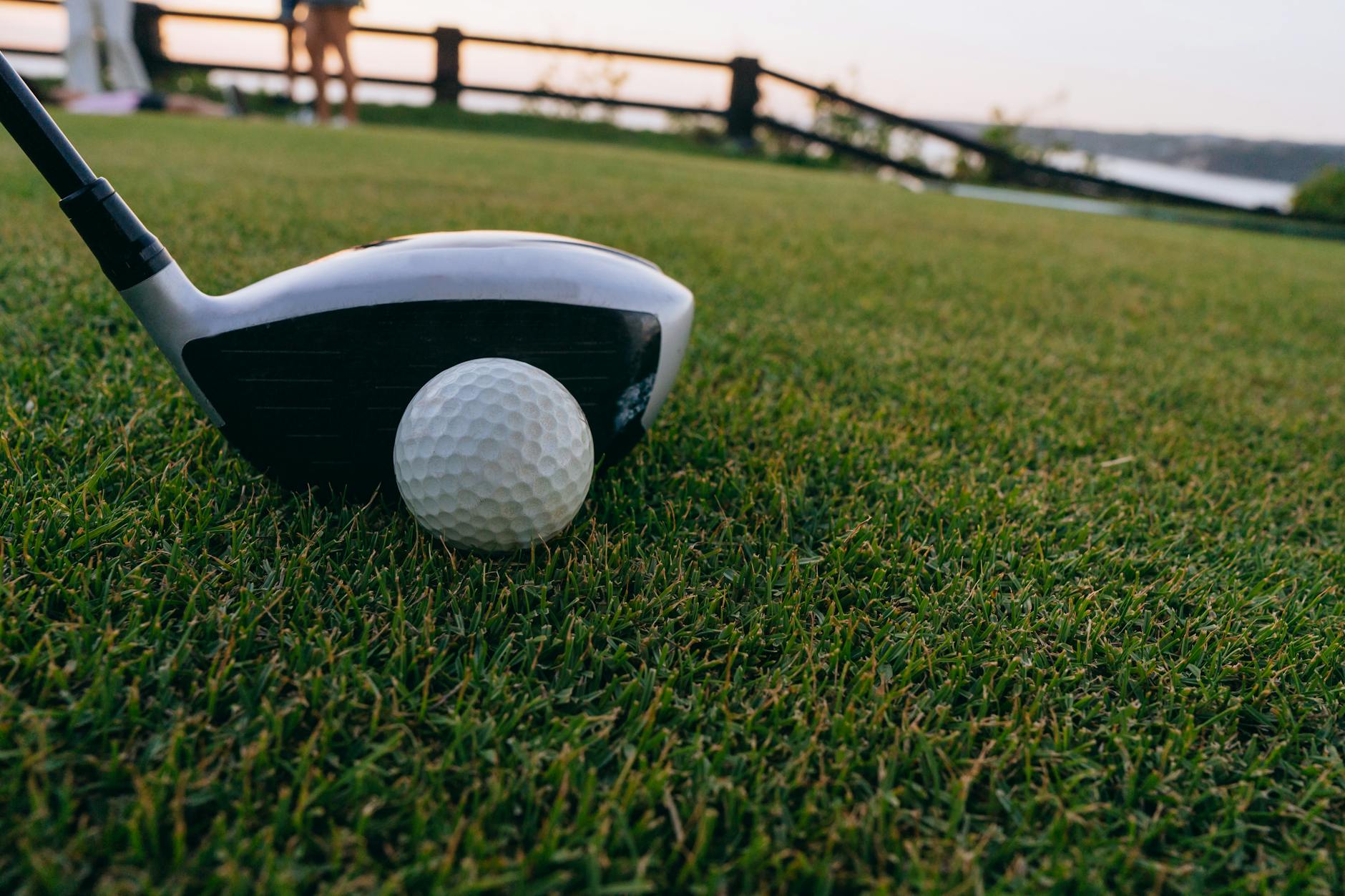
When a ball is teed too low, the player is forced to make contact on the lower half of the clubface. Physics then dictate a higher spin rate and a lower launch angle — exactly the combination that kills distance. When the ball is teed too high, the opposite risk emerges: sky shots, where contact is made on the very top of the clubface, producing a balloon trajectory with almost no forward momentum. The sweet spot — literally and figuratively — sits in a narrow half-inch band, and understanding where that band is for your specific driver is worth more practice time than almost anything else.

The Golden Rule: How Much of the Ball Should Sit Above the Driver Crown
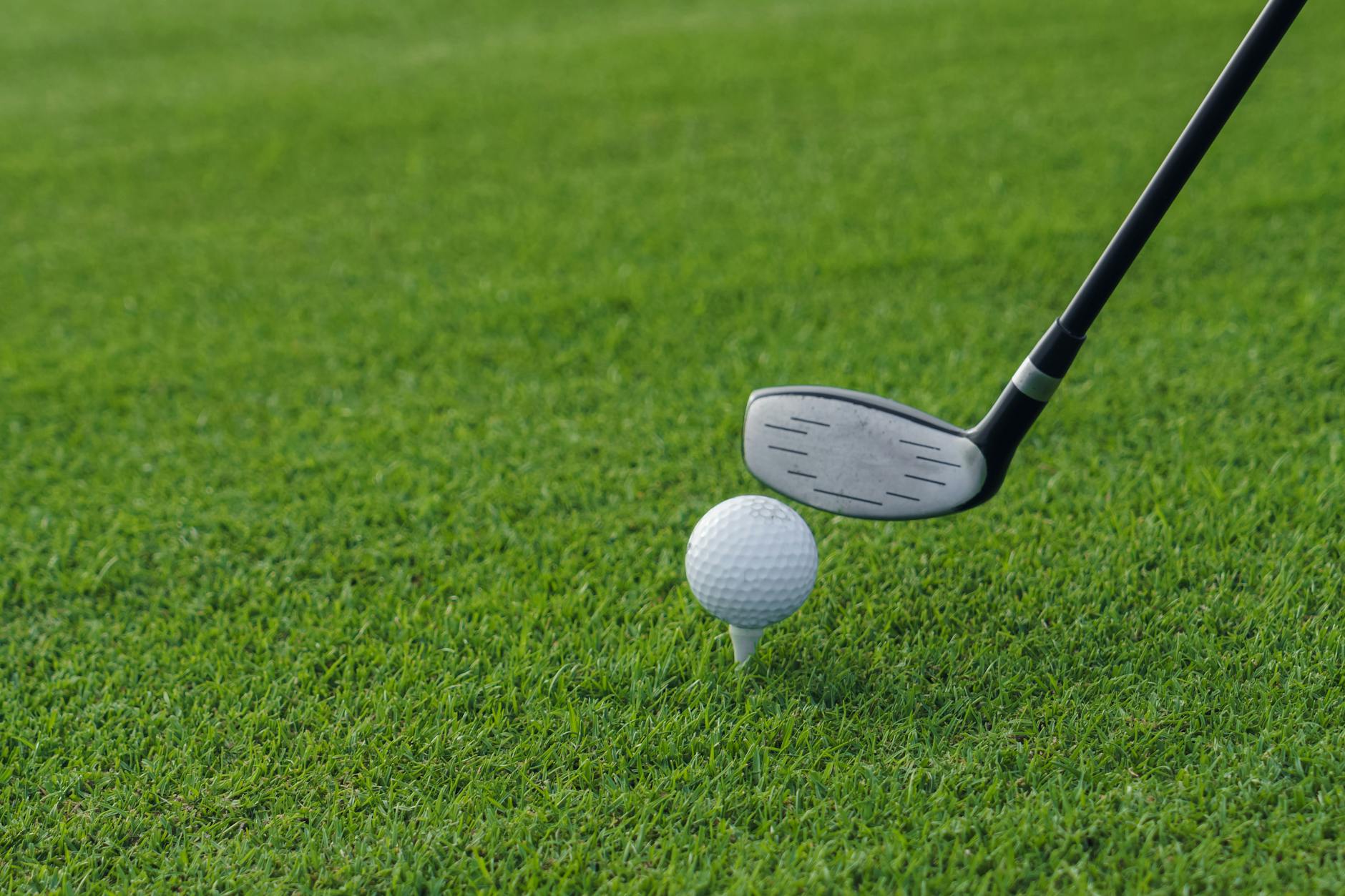
The most widely taught and biomechanically sound guideline is the half-ball rule: when you sole the driver on the ground at address, roughly half of the golf ball should sit above the top edge of the clubface (the crown). This is the correct tee height for driver play in the vast majority of situations, and it is the standard used by most PGA Tour caddies.
In practical terms, a standard golf ball has a diameter of 1.68 inches. "Half the ball above the crown" therefore places the equator of the ball — its widest point — at approximately the same height as the top line of the driver. The center of the ball ends up sitting roughly 0.84 inches above the crown. When you account for driver shaft lean at address and the slight upward attack angle a modern driver swing encourages, this setup produces contact right at or slightly above the geometric center of the face — the location that generates maximum ball speed with the lowest spin rate.
How Clubhead Size Changes the Calculation
Not all drivers are created equal, and best tee height golf practice acknowledges that clubhead volume changes the ideal setup. Modern drivers come in two broad categories:
- 460cc (maximum legal volume): These are the most common heads on the market — TaylorMade Stealth, Callaway Paradym, Cobra Aerojet, and so on. The face height on a 460cc head is typically 55–60mm (roughly 2.2–2.4 inches). For these clubs, the half-ball rule means teeing the ball so that 0.84 inches of ball sit above the crown. A standard 2.75-inch tee pushed into firm turf until about 1 inch of shaft remains above ground achieves this almost perfectly.
- Smaller or shallower-face drivers (430cc or less): Older persimmon-era drivers, some low-spin heads used by tour professionals, and compact player's drivers have a face height of 50–53mm. With these clubs, "half the ball above the crown" puts the contact point slightly higher on the face relative to the geometric center. Players using smaller heads often need to tee the ball approximately 1/4 inch lower than they would with a 460cc head to keep the optimum strike point consistent.
A simple way to check: after soling your driver at address, lay a second tee flat across the top of the crown. The bottom of the ball should be at or just above that reference line. If the ball sits entirely above the flat tee, you are teeing too high. If the flat tee cuts through the top third of the ball, you are teeing too low.

Step-by-Step: How to Set Consistent Tee Height Every Round
Knowing the theory is one thing. Reproducing the same driver tee height distance-maximizing setup under pressure, on a windy first tee, with your playing partners watching, is another challenge entirely. The following method takes less than five seconds and removes all guesswork.
Step 1 — Choose a Reference Tee
Buy a pack of tees in a single, consistent length. For modern 460cc drivers, a 2.75-inch tee is the industry standard starting point. Some players prefer a 3.25-inch tee if they push the tee deeper. What matters is consistency: use the same tee length every round. Mixing 2.75-inch and 3.25-inch tees in your bag guarantees inconsistent height, even if your insertion depth feels the same.
Step 2 — Use Your Index Finger as a Depth Guide
Hold the tee between your thumb and index finger with roughly one finger-width of tee above your thumb. Push the tee into the ground until your thumb touches the turf. This naturally leaves approximately 1.5 to 1.75 inches of tee above ground — enough for the correct tee height for driver use with most 460cc heads. Practice this motion at home on a piece of foam or carpet until it becomes automatic.
After a few rounds, measure the results: place the ball, sole your driver, and use the flat-tee check described in the previous section. If you need to adjust the finger grip by 1/4 inch up or down to hit the ideal height, make that adjustment and repeat the motor pattern until it is hardwired. Most golfers nail the right calibration in one practice session.
Step 3 — Mark Your Tees
For even more precision, take a permanent marker and draw a line around your tees at the exact insertion depth. When you push the tee in, stop when the line reaches ground level. This removes all variation caused by different turf firmness or distracted pre-shot routines. It takes thirty seconds per pack of tees and is one of the most underrated golf tee setup tips available to any handicap level.
Step 4 — Check Ball Position Together With Tee Height
Tee height and ball position work together. The ball should be positioned off the inside of your front heel (for a right-handed golfer, the left heel). This naturally encourages a slight upward attack angle at impact — typically between +1 and +4 degrees — which pairs with the higher tee height to maximize launch angle and minimize spin. If you move the ball back in your stance toward center, you will naturally catch it on a steeper, more downward angle, and the tee height that worked off the front heel will suddenly produce thin contact. Always set ball position before finalizing tee height.
Step 5 — Commit to One Height Per Club, Not Per Situation
One of the most common amateur mistakes is changing tee height based on the hole. "I need to keep it low to avoid that tree" leads to teeing the ball down an inch, which produces the very topped or pop-up shot you were trying to avoid, because the swing pattern built around the correct height suddenly has the wrong contact point. If you genuinely need a lower trajectory, adjust your swing mechanics (steeper attack angle, less forward shaft lean) rather than lowering the tee. Keep the tee height constant and let technique handle the shape.

Common Tee Height Mistakes and How to Fix Them
The vast majority of golf tee height for driver errors fall into two categories, and both have clear, diagnosable symptoms.
Mistake 1 — Teeing Too Low
When the ball is teed so that the equator of the ball is at or below the crown of the driver, a player faces two primary miss patterns:
- Topped shots: The leading edge of the club catches the bottom portion of the ball, producing a low, rolling shot with no carry. This is more common when the tee is only slightly too low and the player sweeps rather than drives through the ball.
- Pop-up shots (sky shots): Counterintuitively, teeing too low can also produce sky shots when a player subconsciously tries to "lift" the ball, adding loft through early wrist extension. The crown of the driver strikes the ball from above, leaving the characteristic white scuff mark on the top of the driver head. Pop-ups travel only 100–140 yards regardless of swing speed.
The fix is straightforward: raise the tee. However, players who have been teeing low for years often experience sky shots or pushed fades when they first tee higher, because their swing has adapted to the lower position. Give the adjustment 10–15 range sessions before evaluating whether it is working.
Mistake 2 — Teeing Too High
When more than two-thirds of the ball sits above the driver crown, the risk profile reverses. The contact point moves too high on the face, into the "hot zone" near the top edge. While some players occasionally find this produces extra distance (a very high launch with low spin can carry well in calm conditions), it is unreliable and tends to produce:
- Thin contact and weak fades: Striking the top edge of the face produces a glancing blow with reduced energy transfer. The ball balloons high, stops quickly, and consistently falls short of solidly struck drives by 20–40 yards.
- Inconsistent face angle at impact: A very high tee forces the player to reach upward at address, altering spine tilt and sometimes causing an open face at impact, producing a persistent left-to-right shot shape for right-handed players.
The fix: lower the tee until you are back to the half-ball rule. Players who have been teeing high often comment that the "correct" height feels too low at first. This is purely a sensation mismatch — trust the measurement, not the feeling.
Mistake 3 — Inconsistency Between Rounds
Research into motor learning consistently shows that variable practice builds adaptability, but fixed practice builds precision. For a repeatable driver swing, precision is the goal. Golfers who vary tee height round to round never fully ingrain the specific neuromuscular pattern that produces consistent, center-face contact. The result is a driving game that feels "on" some days and completely off on others, with no obvious mechanical explanation. The explanation is often the tee.
Adopting the marked-tee method described above and using the same tee length for an entire season is one of the highest-leverage, lowest-effort golf equipment tips available to any player. It costs nothing, requires no lessons, and can realistically add 10–15 yards to your average drive simply by ensuring consistent face contact.
How Tee Height Interacts With Your Attack Angle
No discussion of best tee height golf practice is complete without addressing attack angle — the vertical direction the clubhead is traveling at the moment of impact. Unlike irons, which benefit from a slightly downward attack angle (to compress the ball against the turf), the driver performs best when the clubhead is moving slightly upward through the impact zone.
Trackman data from the PGA Tour shows the average male tour player has an attack angle of approximately -1.3 degrees (very slightly downward) while the longest hitters on tour average between +3 and +5 degrees (upward). The difference in carry distance between a -5 degree attack angle and a +5 degree attack angle at the same swing speed can be 25–35 yards. Tee height is the simplest mechanical lever for nudging your attack angle in the right direction — a higher tee naturally encourages a more upward swing path because it sets the "target" higher in space.
This is why the advice to "tee it lower for control" is often counterproductive. A lower tee steepens the attack angle, increases spin, lowers launch, and reduces carry — all of which produce less distance and, typically, less accuracy too, because a high-spin drive is harder to keep on line in wind.
A Quick Reference: Tee Height by Driver Type
| Driver Type | Face Height | Ball Above Crown | Recommended Tee Length |
|---|---|---|---|
| Modern 460cc (standard) | 55–60mm | ~0.75–0.85 inches | 2.75 in. standard tee |
| 430cc / shallow face | 50–53mm | ~0.60–0.70 inches | 2.75 in. (pushed ~0.25 in. deeper) |
| 3-wood off tee | 40–45mm | Top of ball at crown height | 1.5 in. tee or standard pushed deep |
FAQ: Golf Tee Height for Driver
Key Takeaways
Golf tee height for driver is one of the few completely free, zero-equipment changes any golfer can make that has a measurable and immediate effect on driving distance and consistency. Here is a summary of everything covered in this guide:
- The half-ball rule is the universal starting point: with the driver soled at address, approximately half the ball — about 0.75 to 0.85 inches — should sit above the crown of the club.
- Modern 460cc drivers pair best with a 2.75-inch tee inserted until roughly 1.5 to 1.75 inches remain above ground. Smaller-headed drivers require the ball positioned about 1/4 inch lower.
- Use the marked-tee method or the index-finger depth guide to hit the same tee height on every hole, every round. Inconsistency in tee height is responsible for swings of 10–15 yards in average drive length in most amateur games.
- Teeing too low promotes sky shots and topped drives by forcing the player to scoop. Teeing too high produces thin, ballooning contact with reduced energy transfer.
- Tee height and attack angle are linked: the correct height naturally encourages a slight upward strike, which is the biomechanically ideal pattern for maximizing driver distance at any swing speed.
- Do not lower the tee for control shots — instead, adjust ball position or swing path. Keeping tee height constant builds the muscle memory your driving game needs.
Apply these golf tee setup tips at your next range session before taking them to the course. Set up with the correct height, take ten drives, and compare your strike pattern to your usual result. The improvement in center-face contact frequency is typically obvious within a single session — and the yardage you find will stay found.