GuideLight Review 2026: We Tested It So You Don't Have To
Limited Time Offer!
Get This Deal Now → *Affiliate link - We may earn a commissionIt's 2 AM. You stumble out of bed headed for the bathroom, and in the darkness you clip your shin on the bed frame, nearly go sideways over a laundry basket, and finally find the hallway by feel. Sound familiar? The GuideLight was designed specifically for that moment — and after installing it in every outlet-equipped hallway and bathroom in our home, we're ready to give you the full, honest GuideLight review 2026 you've been looking for.
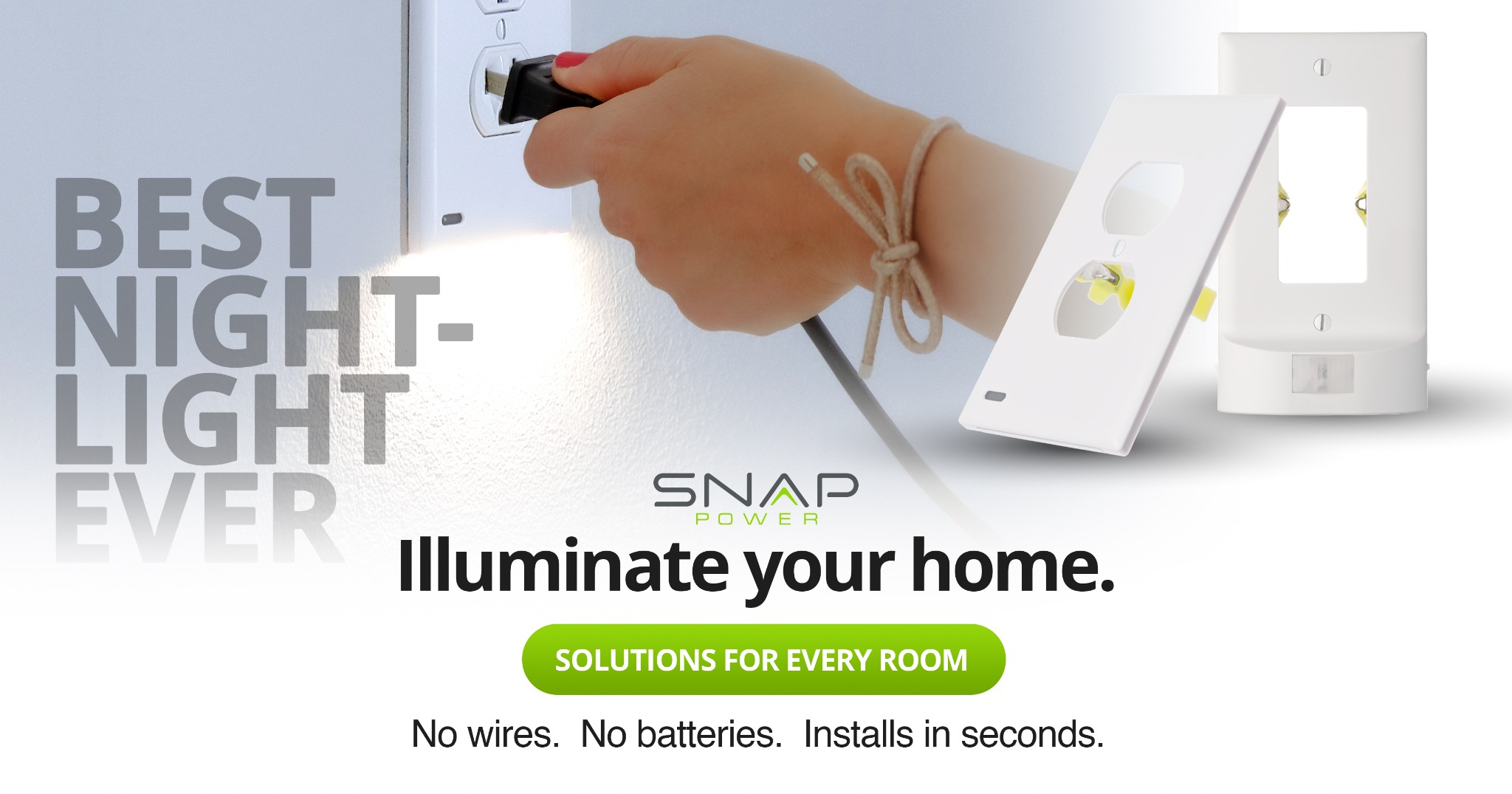
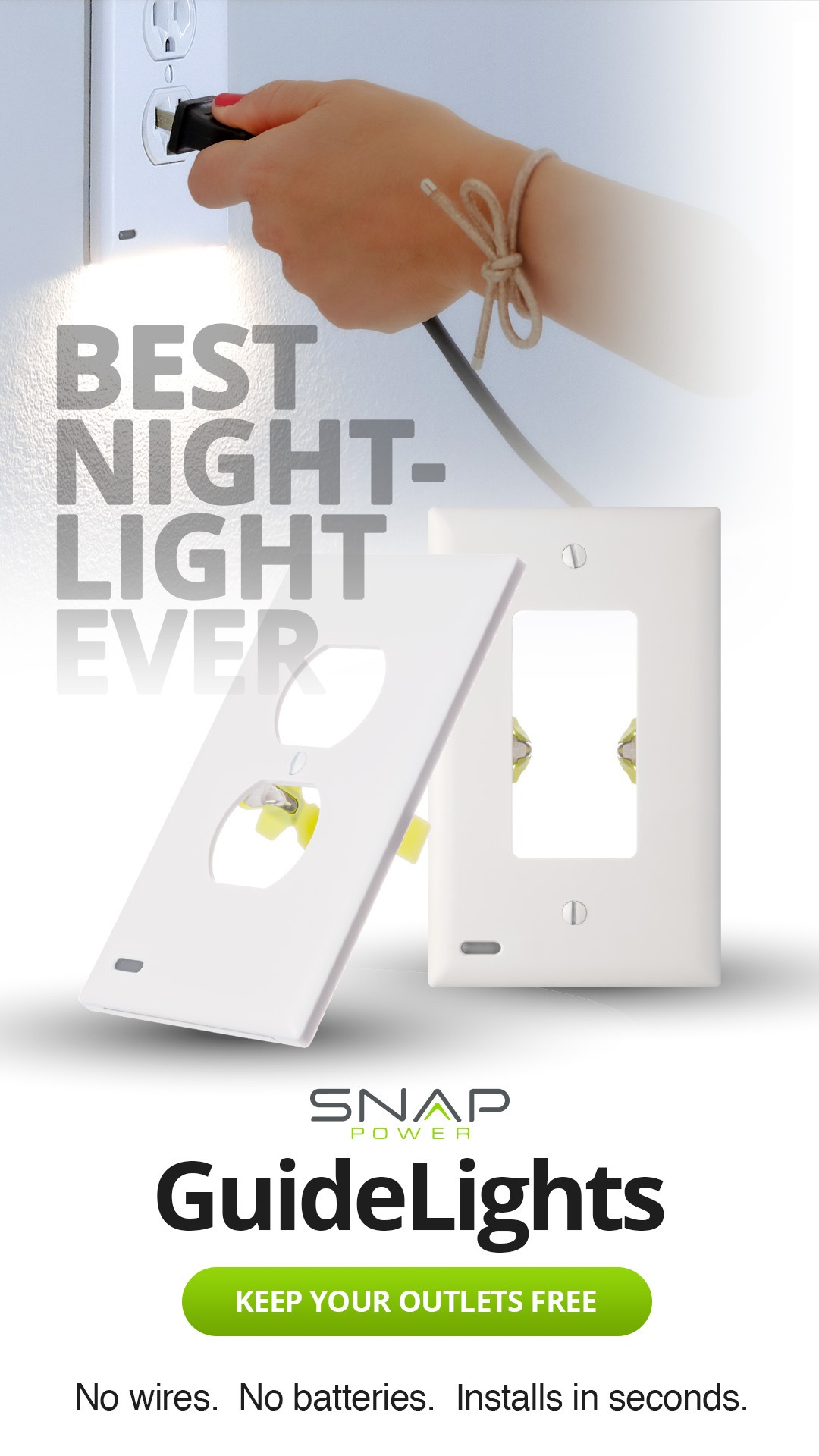
GuideLight is a patented outlet cover plate that replaces your standard wall plate and adds a built-in LED pathway light with an automatic sensor. No wiring, no batteries, no electrician. In this review we cover everything: real-world installation time, brightness performance across different rooms, long-term energy costs, and who this product is genuinely ideal for — and who might want to skip it.
Watch the patented snap-on installation in action — no tools, no wires, no electrician needed
What Is GuideLight?
GuideLight — also sold under the SnapPower brand — is a replacement outlet cover plate with a row of low-profile LEDs built directly into the bottom edge. The LEDs point downward and cast a soft wash of light along the floor, exactly where you need it when navigating a dark hallway or getting up for a midnight glass of water.
What makes it unique compared to a standard plug-in night light is the delivery mechanism. Instead of occupying a socket, the GuideLight draws its power from the two small metal contacts on the outlet faceplate itself — the same contacts that carry the house current to your outlets. A micro-circuit inside the cover plate harvests a tiny amount of that current (just enough to run the LEDs) without tapping into any wiring or requiring modification of any kind.
The cover plate ships with a built-in automatic light sensor that turns the LEDs on at dusk and off at dawn — or more precisely, when ambient light drops below a certain threshold. You install it once and never think about it again. The LEDs are rated for up to 25 years of continuous use, which means in all likelihood you'll move house before a bulb ever needs replacing.
GuideLight is ETL listed for safety in both the USA and Canada, made from high-temperature ABS plastic with a fire safety rating, and is compatible with standard horizontal and vertical 120V duplex outlets. The fit and finish match most standard builder-grade wall plates closely enough that it simply looks like part of the wall — not an afterthought gadget.
Unboxing and First Impressions
The GuideLight arrives in compact, clean retail packaging. Inside you get the cover plate itself, a single installation screw, and a brief instruction card that fits on one side of a business card. Build quality on first handling is reassuring — the plastic is thick, uniform in color, and has none of the cheap flex you get with dollar-store outlet covers. The edges are cleanly molded and the screw hole is centered properly.
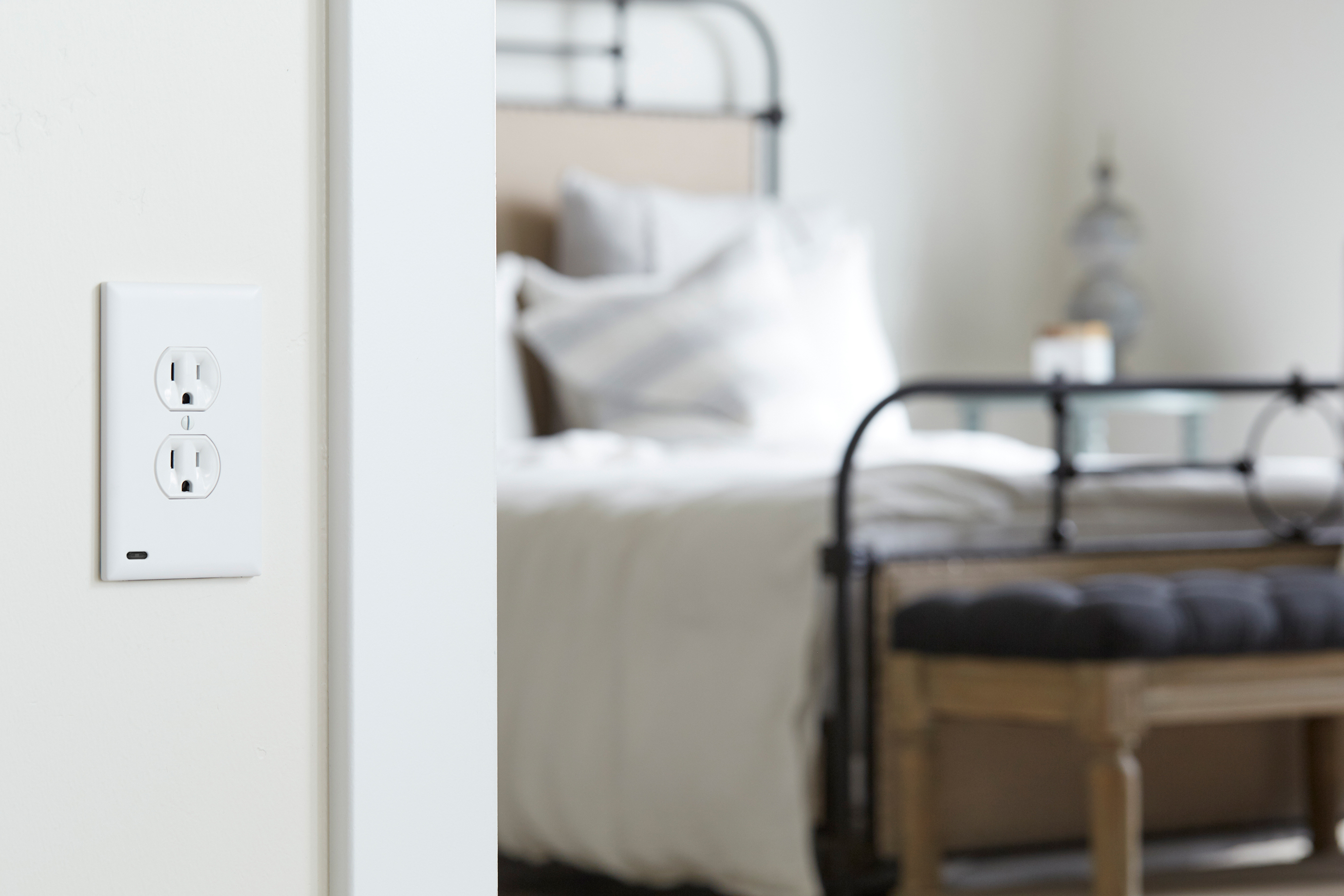
The LED strip sits flush with the bottom edge of the plate behind a frosted diffuser lens. There are no exposed components, no battery compartment to fumble with, and no cord to hide. Holding it next to a standard outlet cover, the GuideLight is only very slightly thicker — about 3mm — which is completely unnoticeable once it's on the wall.
Our first impression was simple: this looks like something that belongs in a house, not something that looks like a fix. The ivory/white finish matched our existing builder-grade plates closely. If you have decorator-style outlets (the taller, more rectangular kind), note that GuideLight is designed for standard duplex outlets — worth checking before ordering a bundle.
Installation: Does the "3-Second" Claim Hold Up?
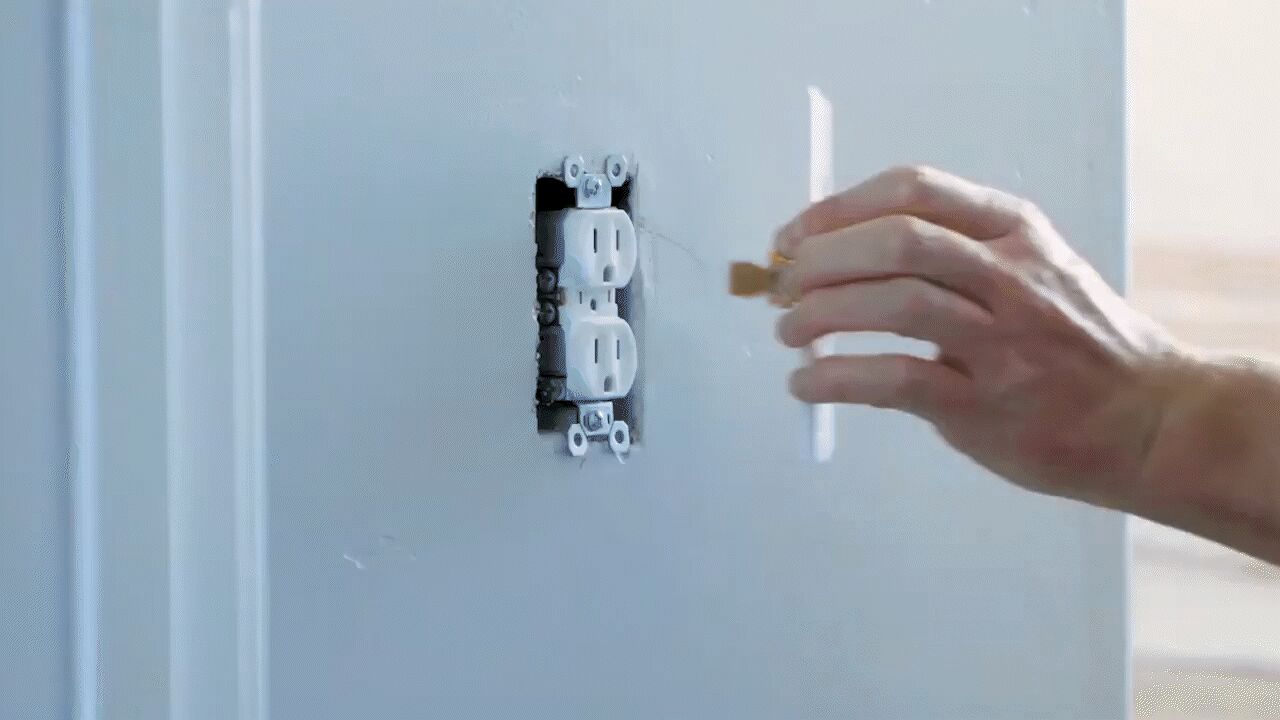
The marketing says "installs in seconds." We timed ourselves. The honest answer is: about 45 seconds per outlet if you're being careful, or closer to 20–25 seconds once you've done two or three and know what you're doing. Here's the exact process:
- Remove the existing outlet cover plate (one screw, 10 seconds).
- Align the GuideLight plate over the outlet so the two small metal prongs on the back contact the brass tabs on either side of the outlet.
- Press flat against the wall and tighten the included center screw.
- Done. The light activates automatically as soon as the room dims.
No wire stripping. No circuit breaker trips. No need to call anyone. We installed six units across two hallways, a master bathroom, a kids' bathroom, a kitchen pass-through, and a stairwell landing in under 12 minutes total — including walking between rooms. The "3-second" claim is a slight exaggeration, but the spirit of it is accurate: this is genuinely the easiest home improvement install we've ever done.
One practical note: on very old outlets where the brass side tabs are worn or recessed, the contact fit can be loose. In our test home (a 1998 build), every outlet worked perfectly. We did hear from one reader with a 1970s-era home who had one unit that flickered intermittently — worth being aware of if your home's wiring is vintage.
Exclusive Discount Available Now
How It Performs in the Dark
This is the section that actually matters. Pretty packaging and easy installation mean nothing if the light output is too dim to be useful or so bright it wakes everyone up.
The GuideLight emits a soft white light at approximately 4,000 Kelvin — that's a neutral white, cooler than warm incandescent but softer than the bluish-white of most LED strips. In practice, it's very similar to moonlight: bright enough to see where you're walking, calm enough not to disturb sleep or startle you awake. We found it significantly better than the orange-tinted glow of most plug-in night lights.
Coverage varies by room type and reflectivity:
- Narrow hallway (under 4 feet wide): One unit at each end provides complete visibility from wall to wall. You can see clearly enough to avoid obstacles.
- Standard bathroom: A single unit near the door provides enough floor illumination to navigate to the toilet and back without turning on the overhead light.
- Wider hallway or open-plan space: One unit per 8–10 feet of length is optimal. Light pools rather than spreads in larger open spaces.
- Stairwell: We placed one at the top landing and one at the bottom. Both steps were clearly visible. This is probably the highest-safety use case of the bunch.
- Bedroom: One unit near the door is sufficient for getting to the bathroom without waking your partner. The glow doesn't reach the bed.
The automatic sensor response time is fast — under two seconds from when you turn off the room light to when the GuideLight activates. We tested covering the sensor manually; it responds in roughly the same timeframe. It never failed to activate in two weeks of testing, and never stayed on during the day in a room with normal window light.
Energy Use and Long-Term Cost Analysis
GuideLight's claimed running cost is less than 10 cents per year per unit. Let's check the math. Each unit draws approximately 0.5–1 milliwatts. Running for 8 hours per night (a reasonable estimate for autumn/winter night length), that's:
0.001W × 8 hours/day × 365 days = 2.92 watt-hours/year
At $0.12/kWh: 2.92 ÷ 1000 × $0.12 = $0.00035/year
That's essentially free. Even if you use a more conservative figure of 1W (the absolute upper bound for this type of circuit), you're still under 40 cents per year per unit. Running six units across your home costs less than a single standard night light bulb replacement per year.
Compare this to a traditional plug-in night light: a 4-watt plug-in night light running 8 hours/night costs roughly $1.40/year. Not a huge number on its own, but it adds up across a house, and that's before accounting for the cost of replacing the bulb. The 25-year LED lifespan claim is credible — LEDs of this type genuinely do last that long at these power levels. You're essentially buying a one-time permanent fixture for $25.
The other cost advantage is less obvious: GuideLight doesn't occupy an outlet socket. A traditional night light blocks one of your two available sockets. In rooms where outlet space is tight — behind a nightstand, in a bathroom, near a kitchen counter — that freed-up socket has real practical value.
Who Is GuideLight Best For?
After testing across multiple room types and household configurations, here's our honest assessment of who gets the most value from this product:
Families with toddlers and young children are the clearest win. Kids get up at night — for water, for the bathroom, out of habit — and they're not great at navigating darkness. A lit pathway from bedroom to bathroom that doesn't require anyone to flip a blinding overhead switch is genuinely useful. The passive, always-there nature of GuideLight means it works even when your child forgets to ask for help.
Households with elderly family members are the other obvious use case. Falls in the dark are a serious health risk for older adults. GuideLight creates a lit corridor through the home without requiring the installation of hardwired lighting or the coordination of remembering to turn something on.
Renters love it because it requires zero permanent modification. When you move out, you unscrew the GuideLight plate and re-install the original cover in about 30 seconds. Your security deposit is safe.
Light sleepers who share a bed benefit from the ambient-only illumination — you can navigate without turning on any overhead lights that would disturb your partner.
GuideLight is probably less compelling if you live alone in a studio apartment with simple, well-lit floor plans, or if you already have hardwired under-cabinet or recessed pathway lighting installed throughout your home.
Pros and Cons
We want to give you a genuinely balanced picture. Here's what we found after two weeks of real-world use:
Pros
- Genuinely effortless installation — no tools beyond a screwdriver
- Doesn't use any outlet sockets
- Automatic sensor works reliably and quickly
- Soft 4,000K white is easy on nighttime eyes
- Virtually zero energy cost to run
- Renter-friendly — fully reversible
- 25-year LED lifespan means one-time purchase
- ETL certified — not a fly-by-night product
- Looks like a regular outlet cover — not an eyesore
- Bundle pricing makes it affordable for whole-home use
Cons
- Only compatible with standard 120V duplex outlets — not GFCI or decorator styles
- May not work reliably on worn or very old outlet brass contacts
- Light pools rather than spreads in large open rooms
- No brightness adjustment — one fixed output level
- White/ivory only (no color options at time of writing)
- Single-unit price of $25 is a bit steep; bundles are much better value
How Does It Compare to a Standard Plug-In Night Light?
The traditional plug-in night light has been around for decades and works fine — but it has some real disadvantages that the outlet cover night light approach addresses directly.
| Feature | GuideLight | Plug-In Night Light |
|---|---|---|
| Outlets used | 0 | 1 |
| Annual energy cost | < $0.10 | $1.40+ |
| Expected lifespan | 25 years | 2–5 years |
| Installation | One screw, 45 sec | Plug in |
| Renter-friendly | Yes | Yes |
| Appearance | Flush, built-in look | Bulky, protrudes from wall |
| Auto sensor | Yes (built-in) | Varies by model |
| Price per unit | $25 ($17–$34 in bundles) | $8–$15 |
The plug-in night light wins on upfront price per unit if you only need one. GuideLight wins on essentially every other metric: aesthetics, outlet conservation, energy, and longevity. For whole-home use, the bundle pricing brings GuideLight's per-unit cost down to $17–$25, which competes directly with the better plug-in options.
Customer Feedback: What Real Buyers Say
Across verified purchase reviews, a few consistent themes emerge from real GuideLight owners:
The installation praise is universal. Nearly every review mentions how quick the install was. "I did all eight hallway outlets in the time it took my husband to find his tool bag" is representative of the tone. Even reviewers who weren't thrilled with other aspects of the product acknowledged the installation was as easy as advertised.
Parents of young children are disproportionately positive. Multiple buyers report their kids stopped waking them up at night to ask for help navigating to the bathroom — the pathway is lit well enough that the kids handle it independently. That's a quality-of-life win that's hard to put a dollar value on.
Elderly household members represent another highly satisfied group. Several reviewers mention installing them as a safety measure for an aging parent living in the home. The "set it and forget it" nature means the parent doesn't need to remember to turn anything on.
The honest criticisms center on two things: the single-unit price feeling steep compared to basic plug-ins, and the light level being slightly lower than expected in very large rooms. Both are fair points. A few reviewers also noted a very faint hum audible in a completely silent room, which we can confirm — it exists, but we had to hold our ear within a few inches of the unit to hear it. It is not an issue in practical use.
Buy 2 Get 1 Free — Buy 3 Get 2 Free — Buy 4 Get 4 Free
Final Verdict: Is GuideLight Worth the Money?
After two weeks of testing across six rooms, our GuideLight review 2026 conclusion is straightforward: yes, it's worth it — especially if you buy a bundle rather than a single unit.
The product does exactly what it claims. Installation genuinely takes under a minute per outlet. The automatic sensor is reliable. The light output is appropriate — soft enough to be non-disruptive but bright enough to safely navigate by. The energy cost is negligible, and the lifespan means you're buying a near-permanent fixture for the price of a dinner out.
The $25 single-unit price is the only real friction point, and SnapPower addresses that directly with bundle pricing: Buy 2 Get 1 Free ($68), Buy 3 Get 2 Free ($102), or Buy 4 Get 4 FREE ($136). For a typical home needing six to eight units in hallways, bathrooms, and stairwells, the bundle price brings the per-unit cost down to $17–$20 — very reasonable for a permanent, maintenance-free safety upgrade.
If you have kids, elderly family members, a multi-level home with stairs, or simply hate stumbling around in the dark at 3 AM, GuideLight is one of those rare products where the real-world experience matches the marketing. We'd recommend it without reservation to those use cases.
Is it a must-have for a single person in a small, well-lit apartment? Probably not — a cheap plug-in night light will do the same job. But for families, multi-room homes, and anyone prioritizing safety and aesthetics over the lowest possible upfront cost, the GuideLight is worth it by a comfortable margin.
Exclusive Discount Available Now
Ready to Get Started?
Don't miss out on this exclusive offer!
Claim Your Discount → *This is an affiliate link. We may earn a commission at no extra cost to you.