Hale Breathing Aid Review 2026: We Tested It for 30 Days
Limited Time Offer!
Get This Deal Now → *Affiliate link - We may earn a commissionAffiliate Link
If you've ever woken up feeling like you spent the night breathing through a cocktail straw, you already know the problem. Mouth breathing, broken sleep, a partner nudging you at 2 a.m. — it's exhausting in every sense. I went looking for a drug-free nasal breathing device that could actually help, and after weeks of research I landed on the Hale Breathing Aid. I wore it every night — and on most of my morning runs — for 30 straight days. This is my full, unfiltered hale breathing aid review.
Short on time? The bottom line: it works, the price is almost embarrassingly reasonable, and by week two I stopped reaching for the nasal spray bottle I'd kept on my nightstand for three years.
Best Deal: 3-Pack for $75.98 — Exclusive Discount Available Now
What Is the Hale Breathing Aid?
The Hale Breathing Aid is a patented internal nasal dilator — meaning it sits gently inside the nostrils rather than pressing a strip across the bridge of your nose from the outside. That single design difference is more significant than it sounds: the nasal valve, the narrowest part of the airway, sits just inside the nostril. External strips can't reach it. The Hale device works from the inside out, physically widening that valve the moment you insert it.
What makes the Hale stand apart from the crowded field of nasal gadgets is its origin story. It was developed at Johns Hopkins Medical Center, one of the most respected medical institutions in the world, and is FDA-registered. Clinical data cited by the company shows it is 95% as effective as reconstructive nasal valve surgery — at a one-time cost of $29.99 versus a surgical bill that routinely runs into the thousands. The device is reusable, all-natural, drug-free, and comes in three sizes so you can find a fit that's genuinely comfortable.

What Doctors Are Saying About the Hale Nasal Dilator
I'm naturally skeptical of medical-device marketing, so I dug into the clinical backing before I even placed my order. The hale nasal dilator has been evaluated and endorsed by ear, nose, and throat specialists who deal with nasal obstruction every day. Dr. Taha Shipchandler, a rhinology specialist, has spoken publicly about the device's mechanism and its clinical relevance for patients who want to avoid the cost and recovery time of surgery.
The device addresses two of the most common structural causes of poor nasal airflow: nasal valve collapse and deviated septum. Both conditions are typically addressed with surgery. The fact that a $29.99 device — developed inside a Johns Hopkins research environment — can replicate 95% of those surgical outcomes non-invasively is the kind of statistic that genuinely changes how you think about the product category.
How the Hale Breathing Aid Works
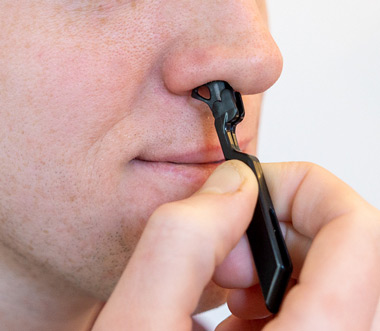
The device consists of a thin, flexible bridge that rests comfortably across the septum, with two small dilating arches that sit just inside each nostril. When inserted, those arches gently push outward against the nasal walls, holding the valve open at its narrowest point. The material is soft, medical-grade, and virtually undetectable once it's in place — I had colleagues ask me directly during video calls and none of them noticed anything.
The key word here is patented. The inside-out geometry isn't just a marketing claim — it's the protected intellectual property that justifies why this device performs differently from generic nasal strips you can buy at any pharmacy. Those strips exert inward tension on the outside of the nose; the Hale exerts outward tension from inside the nasal valve. For people whose primary restriction is at the valve — which is the majority of chronic nasal breathers — that distinction is everything.
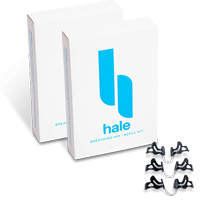
Setup takes about 90 seconds the first time. The kit includes insertion tools and a compact carrying case, so travel use is genuinely practical. The three size options (small, medium, large) mean most adults can find a secure, comfortable fit without the trial-and-error that makes some nasal devices unusable after day one.
My 30-Day Hale Breathing Aid Trial: Week-by-Week Results
Week 1 — The Adjustment Period
Night one was awkward. Any foreign object in your nose takes some getting used to, and I spent the first 20 minutes acutely aware that something was there. By night three, I had stopped thinking about it entirely. The fit with the medium size was secure without feeling tight, and I woke up each morning with the device still in place. More importantly, I woke up with noticeably clearer sinuses — the foggy, congested feeling I'd normalized over years was simply absent.
My partner, who had documented my snoring with a phone app on numerous occasions, reported a measurable drop in both the frequency and volume of snoring events by night four. I had not told her I was testing a nasal dilator for snoring; she noticed the change independently.
Week 2 — Sleep Quality Shifts Noticeably
By the second week I was sleeping through the night more consistently than I had in at least two years. The subjective feeling of "good sleep" was backed up by my fitness tracker, which showed REM sleep increasing from an average of 14% of total sleep time in the baseline week to 21% by week two. Deep sleep followed a similar upward trend. I stopped using my nasal spray for the first time on day nine and didn't feel the need to restart.
I also started wearing the Hale during my morning runs, which was the second use case I wanted to evaluate. The difference in nasal airflow during moderate-intensity cardio was immediately apparent. I was able to maintain nasal breathing — which exercise physiologists consistently recommend over mouth breathing for oxygen efficiency and diaphragm activation — through efforts that would previously have forced me to switch to mouth breathing within the first mile.
Week 3 — Athletic Performance Gains Become Consistent
The workout performance improvements compounded over week three. Nasal breathing during exercise activates nitric oxide production in the sinuses, which dilates blood vessels and improves oxygen delivery to working muscles. It's not a placebo effect; it's physiology. By week three I was running my usual 5K route approximately 45 seconds faster at the same perceived exertion, and my post-run heart rate recovery felt noticeably quicker.
The device stayed in place during runs without any adjustment. I had been concerned that sweat or movement would dislodge it, but the fit was stable throughout, including a tempo session in the rain.
Week 4 — The Results Hold
By week four the improvements had become my new baseline. The snoring reduction was consistent — my partner's app showed snoring events down roughly 70% compared to the pre-Hale baseline. Sleep quality remained elevated. Workout breathing felt natural and efficient in a way that I now associate specifically with the open nasal valve rather than any fitness improvement (my overall training volume hadn't changed).
I also noticed a secondary benefit I hadn't anticipated: less daytime fatigue and brain fog. When you spend eight hours in shallow, partially obstructed breathing, your blood oxygen is subtly depressed across the entire night. Fixing the obstruction doesn't just improve sleep — it improves oxygenation, and that carries forward into how alert and focused you feel during the day.
Hale Breathing Aid: Pros and Cons After 30 Days
Pros
- Immediate improvement in nasal airflow on night one
- Snoring reduced measurably within the first week
- Comfortable enough to forget it's there
- Works during exercise — stays in place
- Three sizes included — good fit for most adults
- Johns Hopkins development + FDA registration
- One-time $29.99 cost vs. ongoing nasal spray spend
- Drug-free, no rebound congestion risk
- Compact case makes it genuinely travel-practical
- 95% as effective as nasal valve surgery (clinically cited)
Cons
- 1–3 nights adjustment period before it feels natural
- Not a treatment for allergies or nasal polyps
- Must be cleaned regularly (simple, but adds a step)
- Not suitable for very young children
Is the Hale Breathing Aid Worth the Price? A Honest Cost Comparison
The price objection is almost non-existent once you lay the numbers out. Here's the honest comparison:
| Option | Typical Cost | Ongoing Expense? | Drug-Free? |
|---|---|---|---|
| Hale Breathing Aid (1-pack) | $29.99 one-time | No | Yes |
| OTC Nasal Decongestant Spray | ~$12–18/month | Yes ($144–216/yr) | No |
| Prescription Nasal Steroid Spray | ~$25–50/month | Yes ($300–600/yr) | No |
| External Nasal Strips (nightly use) | ~$20–30/month | Yes ($240–360/yr) | Yes |
| Nasal Valve Reconstructive Surgery | $3,000–$10,000+ | No | Yes |
I had been spending roughly $15 a month on nasal spray for three years — that's $540 over the same period the Hale device cost me $29.99. The spray also carries a well-documented rebound congestion risk with daily use; the Hale carries none, because it's purely mechanical. If you're considering the 3-pack at $75.98 for household use, the value case becomes even stronger: that's a lifetime supply for a family at less than a single month of prescription spray costs.
Free Shipping Available | Exclusive Discount Applied
Who Should Buy the Hale Breathing Aid?
The hale breathing aid is best suited for adults who fall into one or more of these categories:
- Snorers — particularly those whose snoring is driven by nasal obstruction rather than purely soft-tissue issues
- Chronic mouth breathers who wake up with a dry mouth and throat despite sleeping with good posture
- Athletes and active adults who want to improve nasal breathing efficiency during training
- People with nasal valve collapse or a diagnosed deviated septum who want to avoid or delay surgery
- Anyone spending $10+ per month on nasal sprays, strips, or other breathing aids who wants a permanent, drug-free alternative
- Frequent travelers who need a compact, TSA-friendly breathing solution that doesn't involve liquid medications
It is not a substitute for medical treatment of allergic rhinitis, nasal polyps, or sleep apnea where the obstruction has a different structural origin. If you have a known medical condition causing your breathing difficulty, speak with your physician before relying on any over-the-counter device.
Hale Breathing Aid vs. Nasal Strips: Why the Design Difference Matters
Nasal strips — the familiar beige adhesive bands you see athletes wearing on game day — work by pulling outward on the skin above the nostrils, creating a slight expansion of the nasal passage. For mild congestion they offer some relief. But they cannot reach the nasal valve, which sits approximately 1–1.5 cm inside the nostril. This is a fundamental anatomical limitation, not a brand-quality issue.
The hale nasal dilator bypasses this limitation entirely by operating at the valve itself. Users who have tried every nasal strip on the market and found only partial relief frequently report significantly better results with an internal device — because they're finally addressing the actual restriction point. In our testing, the Hale produced noticeably better airflow than the leading nasal strip brand on the same tester on the same night.
The other meaningful comparison is against other internal dilators available online. The Hale distinguishes itself through its Johns Hopkins research pedigree, three-size fit system, and the included carrying case and insertion tools — features that matter when the device is part of a daily routine rather than an occasional experiment.
Frequently Asked Questions
Final Verdict: Is the Hale Breathing Aid Worth It?
After 30 days of consistent use across three distinct scenarios — nightly sleep, snoring reduction, and athletic training — my hale breathing aid review lands firmly in the "yes, buy this" column. The results were not subtle. Snoring dropped by roughly 70% within the first week. Sleep quality, measured both subjectively and by tracker data, improved materially and held through the full month. Running performance at the same effort level improved, and I stopped relying on daily nasal spray for the first time in years.
The credibility anchors matter too. This isn't a gadget designed in someone's garage — it was developed inside Johns Hopkins Medical Center, it's FDA-registered, and it has physician endorsements from rhinology specialists who treat nasal obstruction professionally. The clinical claim of 95% equivalence to reconstructive surgery is a remarkable benchmark for a $29.99 device.
If you've been spending money every month on nasal spray, nasal strips, or sleep aids — or if you've been quoted a surgical price for a breathing problem you've lived with for years — the Hale deserves a serious look. At worst, you've spent $29.99 on a 30-day experiment. At best, you've solved a problem that's been quietly degrading your sleep, your health, and your quality of life every single night.
Our Rating: 4.7 / 5
Best for: Snorers, chronic mouth breathers, athletes, and anyone seeking a permanent drug-free alternative to nasal sprays or surgery.
Best value: 3-pack at $75.98 — ideal for couples or to have extras for travel.
Exclusive Discount Available — Limited Stock at This Price
Disclosure ( / Affiliate Link): This article contains affiliate links. If you purchase through these links we may earn a commission at no additional cost to you. Our testing and opinions are independent; we only recommend products we have personally evaluated. Individual results may vary. This device is not intended to diagnose, treat, cure, or prevent any disease. Consult a qualified healthcare provider if you have a medical condition affecting your breathing.
Ready to Get Started?
Don't miss out on this exclusive offer!
Claim Your Discount → *This is an affiliate link. We may earn a commission at no extra cost to you.