Hearing Loss in Seniors: Causes, Stats, and What Actually Helps

Hearing loss in seniors is one of the most prevalent — and most overlooked — health conditions in the developed world. By age 65, roughly one in three adults has measurable hearing impairment. By 75, that figure climbs past 50%. Cross the 80-year mark and nearly two-thirds of people are living with significant hearing loss every single day. Despite these staggering numbers, the average person waits more than seven years from first noticing symptoms before seeking any kind of help.
That delay has consequences that go far beyond missing a few words at the dinner table. Research published over the past decade has linked untreated age-related hearing loss to accelerated cognitive decline, higher rates of depression, social withdrawal, falls, and even earlier death. This is not a minor quality-of-life inconvenience — it is a serious public health issue, and understanding it clearly is the first step toward doing something about it.
This guide covers the physiological reasons hearing deteriorates with age, the hard statistics on prevalence and risk, the downstream effects on brain health and social wellbeing, and the practical interventions that have the strongest evidence behind them. There is no sales pitch here — just the clearest picture of what the science actually says.
How Common Is Age-Related Hearing Loss? The Numbers Are Striking
Presbycusis — the clinical term for age-related hearing loss — is formally classified as the third most common chronic health condition among older adults in the United States, trailing only hypertension and arthritis. According to the National Institute on Deafness and Other Communication Disorders (NIDCD), approximately 28.8 million Americans could benefit from hearing aids, yet fewer than one in three adults aged 70 and older who need them have ever used one.
Globally, the World Health Organization estimates that 1.5 billion people currently live with some degree of hearing loss, with 430 million of those experiencing disabling levels. The WHO projects that by 2050, that number will exceed 700 million — driven primarily by aging populations in high-income countries. In the United States alone, the number of people over 65 is expected to double between 2020 and 2060, making senior hearing health a growing national priority.
Key Statistics at a Glance
- 1 in 3 adults over 65 has measurable hearing impairment
- Nearly 2 in 3 adults over 70 have significant hearing loss
- 7+ years — average delay between first symptoms and treatment
- Fewer than 30% of those who need hearing aids actually use them
- $750 billion — estimated global economic cost of unaddressed hearing loss annually (WHO)
- 2x higher risk of dementia in people with moderate untreated hearing loss
These statistics reveal two distinct problems: the sheer scale of the condition, and the enormous gap between prevalence and treatment. Understanding why that gap exists requires looking honestly at both the stigma around hearing aids and the barriers — cost, access, awareness — that prevent older adults from getting help.
What Actually Causes Presbycusis? The Physiology of Hearing and Age
Hearing is a remarkable mechanical and neurological process. Sound waves enter the outer ear, travel down the ear canal, and strike the eardrum (tympanic membrane), causing it to vibrate. Those vibrations pass through three tiny bones in the middle ear — the malleus, incus, and stapes — and into the fluid-filled cochlea of the inner ear. Inside the cochlea, thousands of specialized cells called hair cells convert those fluid movements into electrical signals, which the auditory nerve carries to the brain for interpretation.
Age-related hearing loss is primarily a disease of the inner ear, and specifically of those hair cells. Several interconnected processes are responsible.
Hair Cell Death
Hair cells in the cochlea do not regenerate. Once they die — from noise exposure, oxidative stress, or simple aging — they are gone permanently. High-frequency hair cells (those at the base of the cochlea) tend to degrade earliest, which is why the first sounds to go are typically high-pitched consonants like "s," "f," "th," and "sh." This is also why many older adults describe being able to hear that someone is talking but not being able to understand what is being said, particularly in noisy environments.
Stria Vascularis Degeneration
The stria vascularis is a structure in the cochlea responsible for maintaining the electrical potential that powers the hair cells. Age-related atrophy of this tissue reduces the overall sensitivity of the cochlea, producing a flat hearing loss across all frequencies rather than just the high-frequency pattern described above. Research suggests this "metabolic" form of presbycusis may be more strongly influenced by genetic factors and cardiovascular health than by cumulative noise exposure.
Auditory Nerve and Central Processing Changes
Beyond the ear itself, the aging brain processes sound more slowly and less efficiently. Reduced myelin integrity in auditory nerve fibers slows signal transmission. Age-related changes in the auditory cortex affect the brain's ability to separate speech from background noise — a phenomenon researchers call "central auditory processing disorder" when it occurs in isolation. This explains why the social situations that older adults find hardest (crowded restaurants, family gatherings, phone calls) are exactly the ones where signal-to-noise processing demands are highest.
Compounding Risk Factors
While aging is the dominant driver of presbycusis, several other factors accelerate the process. Lifetime noise exposure is the most well-documented — studies of populations with minimal occupational noise exposure (such as the Mabaan people of Sudan, examined in landmark research from the 1960s) show far less high-frequency hearing loss in older age compared to industrialized populations. Other risk factors include: cardiovascular disease (which reduces cochlear blood supply), diabetes, certain ototoxic medications (including some chemotherapy agents, loop diuretics, and high-dose aspirin), smoking, and genetic predisposition.
The Hidden Costs: Cognitive Decline, Depression, and Social Isolation
For decades, untreated hearing loss in seniors was framed primarily as a communication inconvenience. That framing has been decisively overturned by research accumulated since the early 2010s. We now know that age-related hearing loss carries downstream consequences that are medically serious and, in many cases, potentially reversible with intervention.
Dementia and Cognitive Decline
The association between hearing loss and dementia is one of the most robustly studied links in geriatric medicine. A landmark 2011 study by Dr. Frank Lin at Johns Hopkins University found that adults with mild hearing loss were twice as likely to develop dementia as those with normal hearing; the risk rose to three times higher for those with moderate loss and five times higher for those with severe loss. More recent large-scale research, including data from the UK Biobank and the Lancet Commission on Dementia Prevention, now lists hearing loss as the single largest modifiable risk factor for dementia — accounting for an estimated 8% of all cases worldwide.
Researchers propose several mechanisms. The cognitive load hypothesis suggests that when the brain must constantly work to decode degraded auditory signals, fewer resources are available for memory and higher-order cognition. The social isolation hypothesis posits that hearing loss drives withdrawal from social engagement, and social isolation is itself a major dementia risk factor. A third hypothesis involves shared underlying pathology — the same vascular and metabolic processes that damage the cochlea may simultaneously damage brain tissue.
Critically, emerging evidence suggests that hearing aids may mitigate this risk. A 2023 randomized controlled trial published in The Lancet found that hearing intervention reduced cognitive decline by 48% over three years in participants deemed at higher cognitive risk — one of the most encouraging findings in preventive dementia research in recent memory.
Depression and Anxiety
Studies consistently show elevated rates of depression and anxiety among older adults with untreated hearing loss. The mechanism is relatively intuitive: when conversations require enormous effort, become frustrating, or result in social embarrassment, people begin to avoid them. They stop attending dinners, decline social invitations, and disengage from communities and relationships that gave their lives structure and meaning. A 2014 analysis of over 18,000 adults found that moderate to severe hearing loss was associated with a 50% increased likelihood of depression after controlling for age and other health factors.

Falls and Physical Safety
This connection surprises many people: hearing loss is independently associated with a higher risk of falls in older adults. A 2012 Johns Hopkins study found that every 10-decibel increase in hearing loss corresponded to a 1.4-fold increase in fall risk. The proposed mechanism involves the inner ear's role in spatial orientation and balance, as well as the cognitive load diversion described above — when more mental bandwidth goes to hearing, less is available for postural monitoring and hazard detection.
What Actually Helps: Evidence-Based Interventions for Senior Hearing Health
The good news embedded in all of this research is that hearing loss in seniors is not inevitable in its full severity, and its consequences are not unavoidable. Several interventions have strong evidence behind them.
1. Audiological Assessment — The Non-Negotiable Starting Point
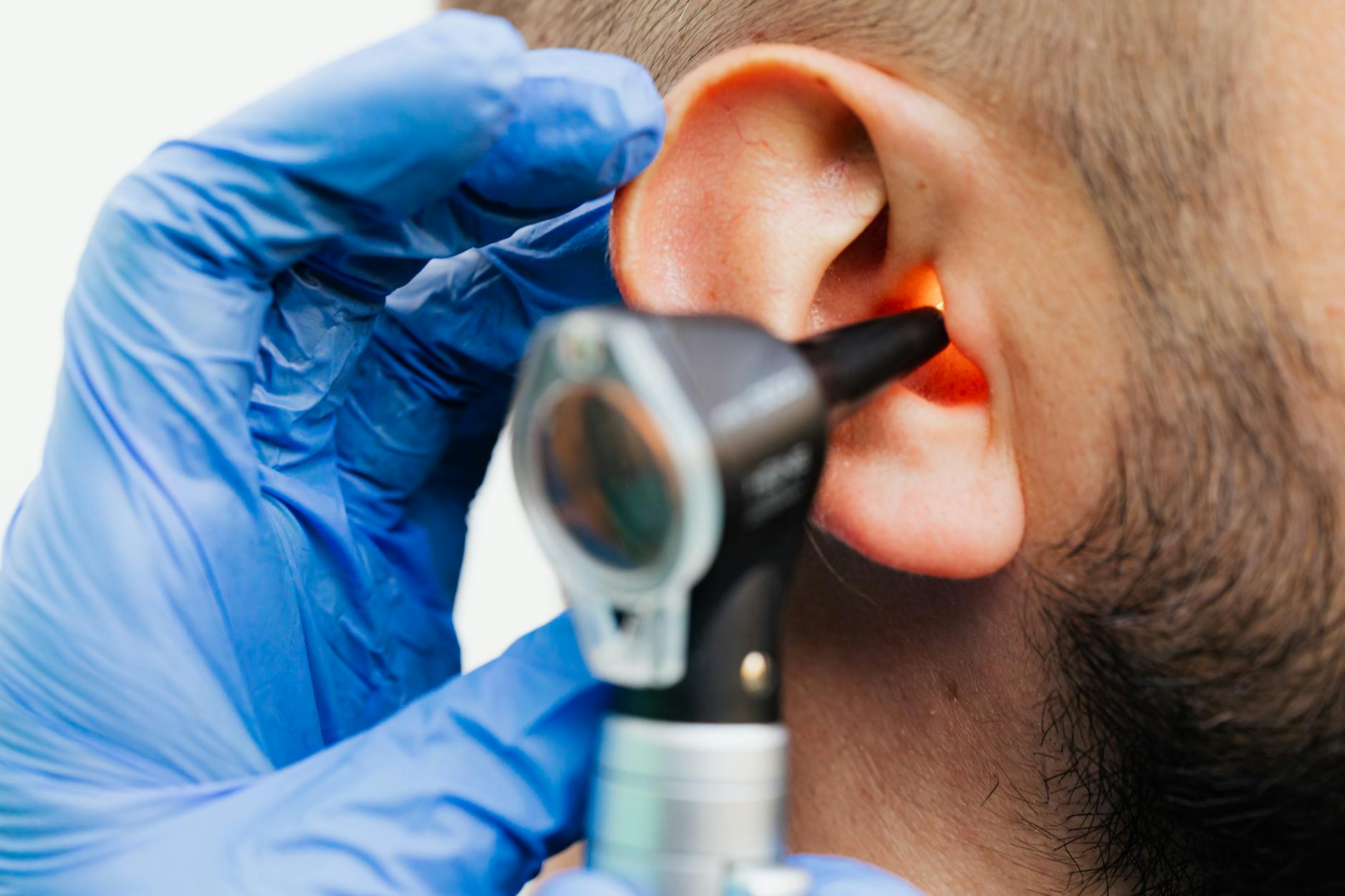
The American Academy of Otolaryngology recommends that all adults over 50 have a baseline hearing evaluation, with follow-up testing every few years thereafter. A standard audiogram — the chart produced during a hearing test — takes about 30 minutes and maps hearing sensitivity at multiple frequencies. This baseline matters because hearing loss is gradual and people often do not notice it until a significant amount is already gone. Getting tested is the only way to know where you actually stand.
2. Hearing Aids — More Effective and Accessible Than Ever
Hearing aids for elderly adults are the most established and evidence-supported treatment for presbycusis. Modern hearing aids are dramatically different from the bulky, whistling devices of a generation ago. Contemporary behind-the-ear (BTE) and receiver-in-canal (RIC) models offer Bluetooth connectivity, automatic environment detection, feedback suppression, and directional microphone arrays that meaningfully improve speech intelligibility in noise — the exact scenario older adults struggle with most.
A significant access barrier was reduced in 2022 when the FDA created a new over-the-counter (OTC) hearing aid category in the United States for adults with mild to moderate hearing loss. OTC devices from established manufacturers now sell for $200 to $1,500 — compared to $3,000 to $7,000 for prescription devices — and clinical trials have shown outcomes comparable to prescription aids for appropriate candidates. Medicare Advantage plans are increasingly covering hearing care, and some states have expanded Medicaid coverage in this area as well.
3. Cochlear Implants for Severe-to-Profound Loss
For adults with severe to profound hearing loss who receive limited benefit from even the most powerful hearing aids, cochlear implants are a highly effective surgical option. Unlike hearing aids, which amplify sound, cochlear implants bypass the damaged hair cells entirely and directly stimulate the auditory nerve. Outcomes for older adults are generally excellent — large registry studies show that adults implanted in their 70s and 80s achieve speech understanding scores comparable to younger recipients. Despite this, cochlear implants remain vastly underutilized in older populations due to a persistent (and largely unfounded) belief that older adults are not good surgical candidates.
4. Auditory Rehabilitation and Communication Strategies
Hearing technology works best when combined with auditory rehabilitation — structured programs that help individuals develop listening strategies, optimize their hearing devices, and train communication partners. Techniques such as speechreading (lipreading), environmental modifications (reducing background noise, improving lighting for visual cues), and assertive communication strategies ("Please face me when you speak" or "Can you rephrase that?") meaningfully improve real-world communication outcomes beyond what a hearing device alone can achieve.
5. Prevention: Protecting Hearing at Every Age
While presbycusis cannot be entirely prevented, its severity can be meaningfully moderated. The most evidence-backed protective measures include: consistent use of hearing protection in loud environments throughout life, aggressive management of cardiovascular risk factors (blood pressure, blood sugar, cholesterol), avoidance of ototoxic substances where possible, and limiting recreational noise exposure from headphones and concerts. For the current generation of middle-aged adults, the choices made today will substantially influence hearing health at 70 and beyond.

Overcoming the Barriers: Why So Many Seniors Go Untreated
Understanding what helps is only part of the problem. It is equally important to understand why the treatment gap is so large — and what can be done about it.
Stigma remains the most frequently cited barrier in survey research. Older adults associate hearing aids with disability, old age, and cognitive decline — precisely the associations they most want to avoid. This is deeply ironic, given that untreated hearing loss is far more strongly linked to cognitive decline than treated hearing loss. Changing this perception is partly a cultural challenge and partly a design challenge; the hearing aid industry has made substantial progress on the latter, with devices that are now near-invisible and functionally sophisticated.
Cost and access are the other major barriers. Even with the OTC category, many people in rural areas or without reliable internet access struggle to navigate the new landscape of hearing care. Audiologists in many parts of the country are in short supply. Telehealth audiology services are expanding but are not yet universal. Medicare's historically limited hearing coverage — traditional Medicare still does not cover routine hearing exams or hearing aids — has left millions of older adults without a clear pathway to affordable care.
Family members and primary care physicians also play an underappreciated role. Research shows that older adults are far more likely to seek hearing care when a family member raises the concern — yet many family members hesitate, not wanting to embarrass a parent or spouse. Similarly, primary care visits frequently proceed without any mention of hearing, despite guidelines recommending routine screening. Normalizing the conversation around senior hearing health at the family and clinical level may be one of the highest-leverage interventions available.
Frequently Asked Questions About Hearing Loss in Seniors
Key Takeaways
Hearing loss in seniors is not simply an inconvenience of getting older — it is a medically significant condition with well-documented links to dementia, depression, social isolation, and falls. The prevalence is enormous: by their early 70s, most adults have meaningful hearing impairment. Yet the treatment rate remains dismally low, largely due to stigma, cost, and the slow normalization of conversations about senior hearing health.
The science is clearer than ever on what the right path looks like. Early audiological assessment establishes a baseline and catches loss before it becomes severe. Appropriately fitted hearing aids — whether OTC or prescription — restore functional communication and may meaningfully reduce dementia risk. Auditory rehabilitation optimizes real-world outcomes beyond what technology alone delivers. And an honest family conversation about what a parent or spouse is missing can be the most important intervention of all.
Presbycusis causes a gradual narrowing of the world for the people it affects — fewer conversations joined, fewer places visited, fewer connections maintained. The evidence says this narrowing is not inevitable. Seeking a hearing evaluation, exploring treatment options, and talking openly about age-related hearing loss within families and in clinical settings are straightforward, well-supported actions that can genuinely change the trajectory of someone's later years. That is worth taking seriously.