How to Add 20 Yards to Your Drive Without Changing Your Swing
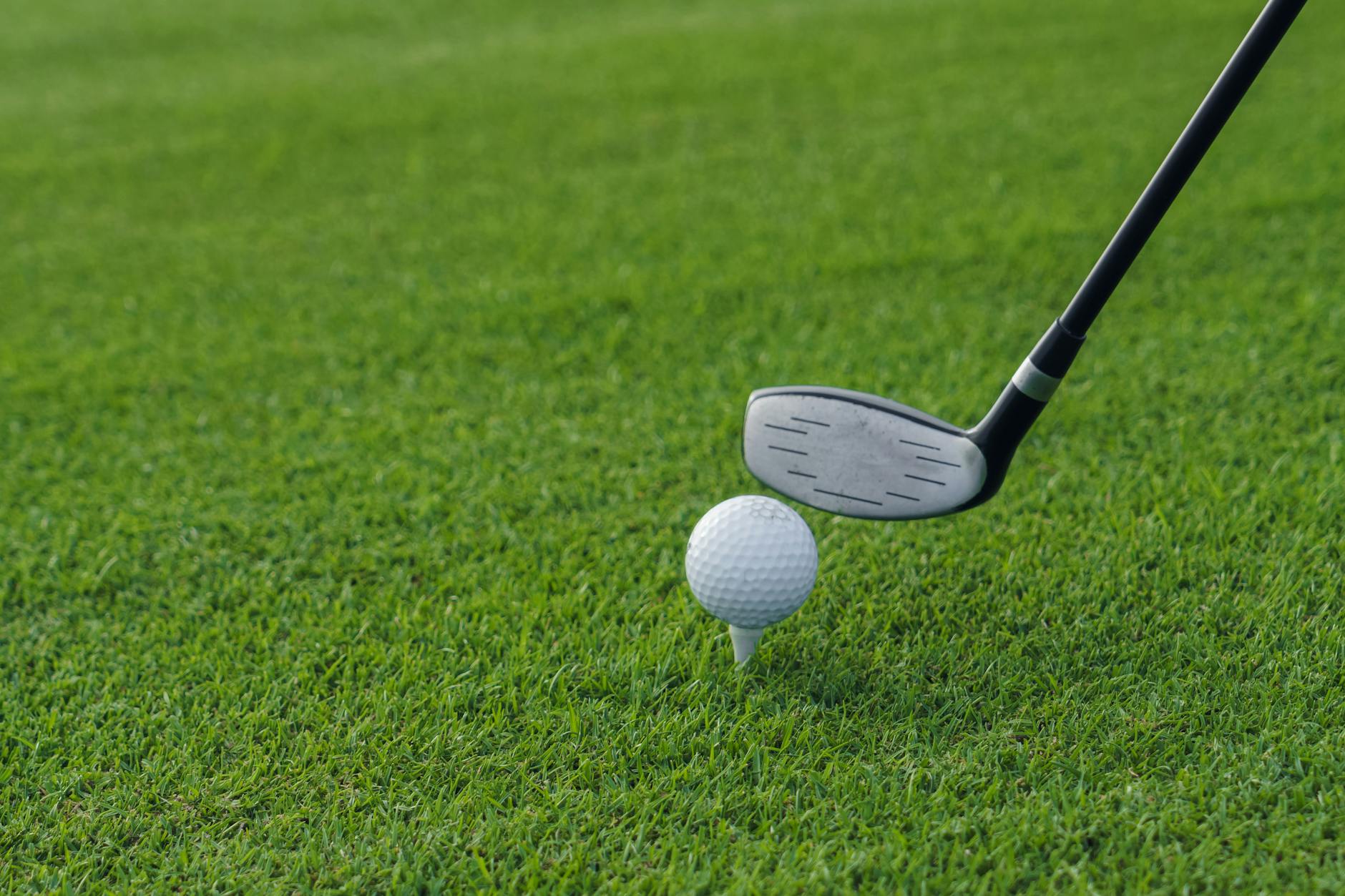
If you want to know how to add distance to your golf drive, you are almost certainly looking in the wrong place. Most amateur golfers spend hundreds of dollars on lessons, hours on the range, and enormous mental energy trying to rebuild their swing — when the biggest gains available to them have nothing to do with swing mechanics at all. They are sitting, unused, in five simple setup and equipment variables that take about ten minutes to check before you ever hit a ball.
Research from TrackMan and the USGA consistently shows that the average male amateur golfer drives the ball around 220 yards — roughly 70 yards shorter than the average PGA Tour professional. A significant portion of that gap is not raw power. It is launch angle, spin rate, contact point, and basic setup fundamentals that most recreational players have never been taught. Fix those variables and a gain of 15 to 25 yards is realistic, even with the exact same swing speed you have today.
This guide breaks down the five factors that actually govern how far your ball travels off the tee, and gives you a concrete pre-round checklist to make sure you are optimizing all of them every single time you play.
The Distance Myth: Why Your Swing Is Not the Problem
Here is the uncomfortable truth about golf instruction: the "hit it harder" or "fix your swing" advice that fills YouTube channels and magazine covers is genuinely useful — but only after you have the fundamentals dialed in. Swing a driver with a terrible tee height, the ball positioned off your right heel, and a death-grip on the handle, and no amount of swing improvement will deliver the distance you are capable of.
The physics of a golf drive are governed by three outputs: ball speed, launch angle, and spin rate. Ball speed is mostly determined by clubhead speed and strike quality. Launch angle and spin rate, however, are enormously influenced by setup — things you control before you even begin your backswing. A 2019 study published in the International Journal of Golf Science found that amateur golfers who corrected only their tee height and ball position showed an average carry distance increase of 14 yards with no change in swing mechanics whatsoever.
With that framework in mind, here are the five factors to address.

Factor 1 — Tee Height: The Half-Inch That Changes Everything
This is the single most overlooked distance variable in recreational golf, and it is entirely free to fix. Golf tee height for driver directly controls where on the clubface the ball makes contact, which in turn determines your launch angle and spin rate.
The physics work like this. A modern driver head is designed with a "hot zone" at the top-center of the face. When you make contact in that zone — roughly at or just above the equator of the ball when the clubface is at address — you produce a high launch angle with low backspin. That combination maximizes carry distance. TrackMan data from thousands of amateur golfers shows the optimal driver launch angle sits between 14 and 17 degrees with a spin rate under 2,800 RPM. Most amateurs launch the ball between 8 and 11 degrees with spin rates above 3,500 RPM — a brutal combination that bleeds distance.
The fix is embarrassingly simple. When you tee up a driver, the equator of the ball should sit at or just above the top line of the clubhead at address. That means roughly half the ball is visible above the crown of the driver. Most amateur golfers tee the ball too low — a habit carried over from iron play. Raise your tee by half an inch and you will immediately begin making contact higher on the face, increasing launch angle and reducing spin.
A practical test: after your next round, check the impact sticker or foot spray on your driver face. If your strikes cluster in the lower third of the face, raise your tee. If they cluster high and toward the toe, lower it slightly. The goal is center-high contact, every time.
The number to remember: Gaining just two degrees of launch angle by teeing the ball higher can add 12 to 18 yards of carry at a 95 mph swing speed, according to TrackMan's launch monitor data.
Factors 2 Through 5: The Setup Variables That Steal Your Distance
Factor 2 — Ball Position in Your Stance
For driver, the ball should be positioned directly opposite your lead heel (left heel for right-handed golfers). This feels extreme to many players who are used to playing the ball in the middle of their stance for irons, but it is critical for a fundamental reason: you need to be hitting the ball on the upswing with a driver.
Unlike iron shots, where a slightly descending blow is ideal, the driver is meant to be struck as the clubhead is traveling upward through impact. Hitting up on the ball — even by just two to four degrees — can add 20 to 30 yards of carry because it simultaneously increases launch angle and reduces backspin. When the ball sits too far back in your stance, you almost guarantee a descending blow, killing both variables at once.
Move the ball forward in your stance until it is level with your lead heel. If that feels uncomfortable, your stance width may be the culprit — widen it until the position feels natural.
Factor 3 — Clubface Setup and Alignment
Many golfers unconsciously close or open their clubface at address trying to compensate for a slice or hook, then make swing adjustments on top of that manipulation. The result is a chain of compensations that kills clubhead speed and consistency.
Set the face square to your target line at address — use an intermediate target (a divot or discolored blade of grass) two feet in front of your ball on the target line to make this easier. Then set your body alignment (feet, hips, shoulders) parallel-left of that line. Do not manipulate the face as a band-aid for ball flight. If you are fighting a slice, the root cause is almost always path, not face angle, and addressing it with a closed face at address compounds the problem.
Factor 4 — Grip Pressure and How It Costs You Clubhead Speed
On a scale of one to ten, most amateur golfers grip the club at a seven or eight. Tour professionals average a three to four. This matters enormously because a tight grip creates tension in the forearms that physically prevents the full release of the club through impact — the moment where the last few miles per hour of clubhead speed are generated.
Think of the club as a whip. A whip works because the handle is loose enough for the tip to accelerate past it. A death-grip on your driver does the equivalent of stiffening the whip handle — the energy never transfers properly. Research by biomechanics experts at the Golf Biomechanics Laboratory at Centenary University found that grip pressure alone can account for a 4 to 7 mph difference in clubhead speed between amateur golfers. At typical conversion rates, that translates to 10 to 17 yards of carry.
A useful drill: on the range, grip the club as loosely as you possibly can while still maintaining control, then gradually increase pressure until you feel secure. That threshold — just barely secure — is where your grip pressure should live on the course.
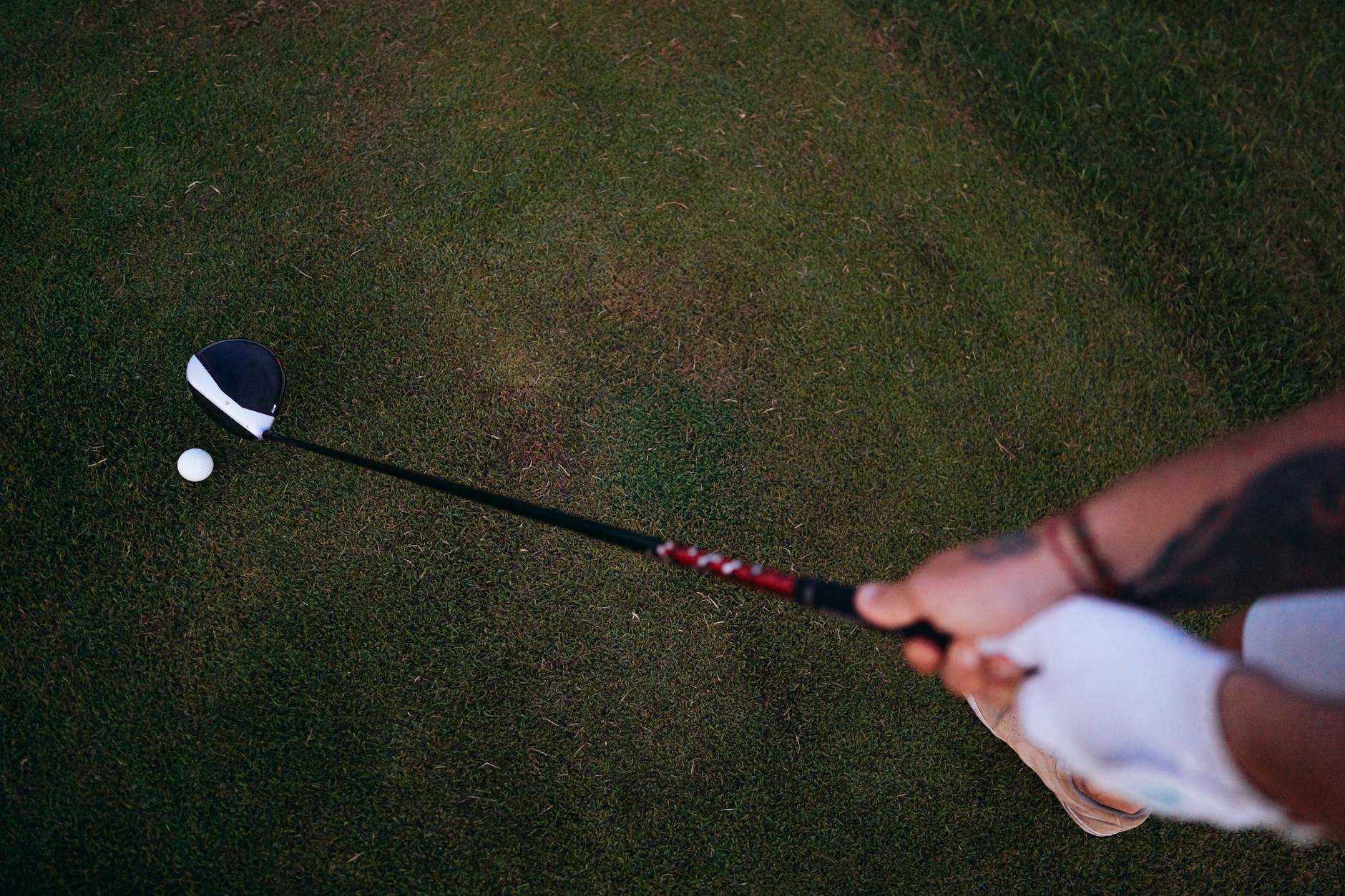
Factor 5 — Spin Rate: The Distance Vampire You Cannot See
Of all five factors, spin rate is the one most golfers never think about because you cannot observe it with the naked eye. Yet it may be the single biggest distance lever available to recreational players.
Backspin is what keeps the ball airborne — you need some of it. But excess backspin creates a "balloon" trajectory that climbs steeply and then falls almost straight down, sacrificing enormous amounts of carry and roll. Sidespin is even more destructive: it is the direct cause of slices and hooks, and every degree of sidespin is distance that literally curves off to the side.
The primary causes of excess backspin with a driver are:
- Hitting down on the ball (solved by ball position, as above)
- Too much loft on your driver (many amateurs play 9.5 or 10.5 degrees when 12 or 13 degrees would serve them better)
- A stiff shaft that does not match your swing speed
- Striking the ball low on the face (solved by tee height, as above)
The primary cause of sidespin is a clubface that is open or closed relative to the swing path at impact. This is where alignment and setup (Factor 3) pay dividends — the more consistently you set up square, the less compensating your swing has to do, and the less sidespin you generate.
If you have access to a launch monitor — many modern driving ranges and golf shops offer free or inexpensive sessions — your target numbers as an amateur are: launch angle of 13 to 17 degrees, backspin of 2,200 to 2,800 RPM, and sidespin as close to zero as possible. Seeing your actual numbers for the first time is usually a revelation.
How to Hit Longer Drives: The 10-Minute Pre-Round Checklist
Knowing the five factors is one thing. Building them into a consistent pre-round habit is another. The following checklist takes less than ten minutes on the range and covers all five variables so that how to hit longer drives in golf becomes a repeatable process rather than a lucky occurrence.

The 10-Minute Pre-Round Driver Checklist
1. Tee height check (1 minute)
Tee three balls at your normal height, then tee three at "half-ball above the crown" height. Hit both sets and compare trajectory. Commit to the height that produces the highest, most penetrating ball flight.
2. Ball position confirmation (1 minute)
Place a club on the ground along your toe line. Check that the ball is sitting opposite your lead heel. If it is more than two inches back from that position, adjust. Hit five balls from the correct position to ingrain the feel.
3. Alignment check (2 minutes)
Pick a target 150 yards away. Place one club on the ground pointing at the target, and a second club parallel to it along your toe line. Confirm your shoulders are also parallel. Hit five balls without moving either club, checking alignment before each one.
4. Grip pressure reset (1 minute)
Take your normal grip, then consciously loosen it until the club feels like it might slip, then add just enough pressure to feel secure. Waggle the club a few times. That is your target pressure. Hit three balls while consciously maintaining it — your misses will likely improve immediately.
5. Trajectory read (5 minutes)
Hit ten driver balls while watching the peak height and the shape of each shot. High, climbing draws or gentle fades that land softly indicate good launch and manageable spin. Low line drives, hard hooks, or balloons indicate a spin or launch issue. Use the earlier adjustments (tee height, ball position) to dial in the trajectory before you head to the first tee.
One More Variable: Your Equipment
This guide has intentionally focused on the setup factors you can fix for free, today. But it is worth acknowledging that equipment fit does matter — particularly shaft flex. A golfer with an 85 mph swing speed using a stiff shaft will consistently under-load it, losing clubhead speed and launch angle. Conversely, a 105 mph swinger on a regular flex shaft will create excessive spin and inconsistency.
Getting a proper driver fitting at a reputable golf retailer or club fitter costs between $50 and $150 in most markets and can yield more distance than months of lessons for a player whose equipment is poorly matched to their swing. The fitting itself will also tell you your current launch and spin numbers, giving you a baseline for the checklist above.
As for tee technology — modern brush tees and zero-friction tees are designed to reduce the resistance between tee and clubhead at impact. The gains are modest (typically one to three yards), but at no cost to your setup and for essentially no additional effort, they represent easy yardage. The more meaningful gains, however, will always come from the five factors outlined above.
Key Takeaways
To increase golf drive distance without overhauling your swing, focus on what happens before the club moves. The five setup and equipment fundamentals — tee height, ball position, clubface alignment, grip pressure, and spin rate awareness — are each independent contributors to carry distance, and each one is entirely within your control on every tee shot you ever hit.
Here is a quick reference summary of what to take to the course:
- Tee height: Half the ball above the crown of the driver. Not lower.
- Ball position: Opposite the lead heel. Always, for driver.
- Alignment: Set the face first, then build body alignment around it.
- Grip pressure: Three to four out of ten. You should feel almost like it could slip.
- Spin awareness: High climbing shots that fall quickly mean too much spin. Adjust tee height and ball position first.
None of these adjustments require strength, flexibility, or athletic ability you do not already have. They require only attention and the willingness to practice a different setup before your next round. For most amateur golfers, that combination is genuinely worth 15 to 25 yards of honest, repeatable distance — and that kind of gain changes the game in ways that go far beyond the scoreboard.