How to Boost Collagen Production Naturally: 12 Evidence-Based Methods That Actually Work

If you have ever noticed your skin looking a little less firm than it used to — or wondered why fine lines seem to appear faster than expected — collagen production is likely a big part of the answer. Collagen is the most abundant structural protein in the human body, making up roughly 75–80% of your skin's dry weight. It acts as the scaffolding that keeps skin plump, elastic, and resilient. The problem? Starting around age 25, your body produces about 1–1.5% less collagen every year. By your mid-40s, that adds up to a meaningful structural decline.
The good news is that there is a growing body of peer-reviewed research showing that certain dietary choices, lifestyle habits, topical ingredients, and even specific treatments can meaningfully stimulate collagen production or protect the collagen you already have. This guide walks through 12 evidence-based methods for how to boost collagen production naturally — backed by science, not marketing claims.
Why Collagen Declines — and Why It Matters
Before diving into solutions, it is worth understanding what drives collagen loss in the first place. Two broad forces are at work: intrinsic aging and extrinsic damage.
Intrinsic aging is driven by genetics and the natural slowdown of fibroblast activity — fibroblasts are the skin cells responsible for manufacturing collagen and elastin. Hormonal changes, particularly the drop in estrogen after menopause, significantly accelerate this process. Research published in the British Journal of Dermatology found that women lose approximately 30% of their skin collagen in the first five years after menopause.
Extrinsic factors are environmental and behavioral: UV radiation, cigarette smoke, poor diet, chronic stress, and insufficient sleep all accelerate collagen degradation through oxidative stress and a process called glycation (where sugar molecules attach to and damage collagen fibers). The encouraging implication is that you have meaningful control over extrinsic factors — which is exactly what the methods below address.
Part 1 — Collagen-Boosting Foods and Nutrients
Diet is foundational. Your body cannot synthesize collagen without the right raw materials, and several nutrients directly drive — or protect — the collagen synthesis pathway.
Method 1: Eat Collagen-Rich Foods and Bone Broth
Collagen is found in the connective tissues of animals, which means it appears in foods like bone broth, skin-on chicken, pork rinds, sardines, and gelatin. When you consume these foods, they are broken down into amino acids (primarily glycine, proline, and hydroxyproline) that your body uses to build its own collagen. A 2019 study in the Journal of Agricultural and Food Chemistry found that collagen peptides from food sources are efficiently absorbed and distributed to skin tissue.
Bone broth deserves special mention among collagen boosting foods. Slow-simmered bones release collagen, minerals, and glycosaminoglycans (like hyaluronic acid) into the broth. While the direct research on bone broth specifically is limited, its nutrient profile makes it a logical inclusion in a collagen-supportive diet.
Method 2: Prioritize Vitamin C Every Single Day
Vitamin C is arguably the single most critical nutrient for collagen synthesis. It is required for the hydroxylation of proline and lysine — a chemical step that is essential for collagen to form its stable triple-helix structure. Without adequate vitamin C, collagen fibers simply cannot form properly. This is why scurvy (severe vitamin C deficiency) causes wounds to stop healing and old scars to reopen: the collagen holding them together breaks down.
The best foods for collagen production via vitamin C include:
- Bell peppers (one red bell pepper contains ~190 mg of vitamin C)
- Guava (one fruit contains ~228 mg)
- Kiwi, strawberries, and citrus fruits (60–90 mg per serving)
- Broccoli and Brussels sprouts (strong plant-based sources)
- Kakadu plum (the richest known food source, with up to 2,900 mg per 100g)
The RDA for vitamin C is 65–90 mg/day for adults, but many skin researchers suggest that 200–500 mg/day from food may better support collagen synthesis without the risks associated with high-dose supplementation.
Method 3: Get Enough Protein — Especially Glycine, Proline, and Lysine
Collagen is a protein, so adequate overall protein intake is necessary for its production. More specifically, the amino acids glycine, proline, and lysine are the direct building blocks of collagen fibers. Glycine-rich foods include skin-on poultry, pork, gelatin, and spirulina. Proline is found in egg whites, dairy, asparagus, and mushrooms. Lysine is abundant in legumes, fish, eggs, and meat.
If your diet is low in these specific amino acids — common in vegetarian and vegan diets — collagen synthesis may be limited even if other conditions are optimal.
Method 4: Eat Zinc and Copper-Rich Foods
Two minerals play critical supporting roles in collagen synthesis. Zinc activates the proteins that produce collagen and also functions as an antioxidant that protects skin cells from UV-induced damage. Good sources include shellfish (especially oysters), pumpkin seeds, hemp seeds, lentils, and red meat.
Copper is essential for cross-linking collagen and elastin fibers — the step that gives them tensile strength. Without adequate copper, collagen is produced but remains weak and poorly structured. Organ meats, shellfish, sesame seeds, cashews, and dark chocolate are excellent copper sources.
Method 5: Reduce Sugar and Refined Carbohydrate Intake
This is the dietary method most people overlook. A process called glycation occurs when excess glucose in the bloodstream binds to collagen fibers, forming harmful compounds called advanced glycation end-products (AGEs). AGEs stiffen and discolor collagen fibers, causing them to break down faster and reducing their ability to regenerate properly. Research in the journal Dermato-Endocrinology has linked high dietary glycemic load to accelerated skin aging through this mechanism.
Reducing added sugars, white bread, pastries, and sweetened beverages is therefore one of the most direct dietary levers for protecting collagen — especially the collagen you already have.
Part 2 — Lifestyle Habits That Protect and Increase Collagen Production
Method 6: Protect Your Skin From UV Radiation Daily
UV radiation is the single largest extrinsic driver of collagen degradation. UVA rays penetrate deep into the dermis and directly activate matrix metalloproteinases (MMPs) — enzymes that break down collagen and elastin fibers. Chronic sun exposure without protection can cause more collagen loss in a few decades than genetic aging would produce in a lifetime. This is why heavily sun-exposed skin ages dramatically faster than covered skin, even on the same person — a phenomenon dermatologists call "photoaging."
Daily broad-spectrum SPF 30 or higher sunscreen is among the most powerful evidence-based interventions for preserving collagen. A landmark Australian study published in Annals of Internal Medicine (2013) found that daily sunscreen use significantly reduced skin aging compared to discretionary use over a 4.5-year period — with measurable differences in skin elasticity and collagen structure at the end of the study.
Method 7: Stop Smoking (or Reduce Exposure to Cigarette Smoke)
Cigarette smoke is particularly destructive to collagen through multiple pathways. It introduces thousands of free radicals into the skin that directly damage collagen fibers, activates MMPs (the same collagen-degrading enzymes triggered by UV light), reduces blood flow to the skin (limiting oxygen and nutrient delivery to fibroblasts), and lowers levels of vitamin C in skin tissue. Research has shown that smokers consistently have thinner, less elastic skin and significantly more pronounced wrinkles than age-matched non-smokers — even when controlling for other variables. The relationship is dose-dependent: the more you smoke, the greater the collagen damage.
Method 8: Prioritize Sleep and Manage Chronic Stress
During deep (slow-wave) sleep, the body releases human growth hormone (HGH), which plays a direct role in stimulating fibroblast activity and collagen repair. Consistently poor sleep disrupts this process and also elevates cortisol — a stress hormone that, when chronically elevated, suppresses collagen synthesis and accelerates its breakdown. A study in Clinical and Experimental Dermatology found that poor sleepers showed significantly increased signs of intrinsic skin aging and reduced skin barrier recovery compared to good sleepers.
Chronic psychological stress compounds the problem through the same cortisol mechanism. Practices that reliably reduce cortisol — including regular physical exercise, mindfulness meditation, adequate social connection, and time in nature — therefore support collagen indirectly but meaningfully.
Part 3 — Topical Collagen-Boosting Treatments
Several topically applied ingredients have robust clinical evidence for their ability to stimulate collagen production directly in the dermis.
Method 9: Retinoids (Retinol and Prescription Tretinoin)
Retinoids are vitamin A derivatives and remain the most well-studied class of topical ingredients for collagen synthesis. They work through two complementary mechanisms: they directly stimulate fibroblasts to produce more procollagen (the precursor to collagen), and they inhibit the activity of MMPs — the enzymes that break collagen down. Multiple randomized controlled trials have confirmed measurable increases in dermal collagen density with consistent retinoid use over 12–24 weeks.
Prescription tretinoin (retinoic acid) is the most potent and best-studied form. Over-the-counter retinol must first be converted by skin enzymes into retinoic acid, making it gentler but slower-acting. Retinaldehyde sits in between in terms of both efficacy and tolerability. All forms require consistent use over months to show meaningful results, and all can cause initial irritation, dryness, and sensitivity — particularly in the first four to eight weeks of use. Sun protection is essential when using retinoids.
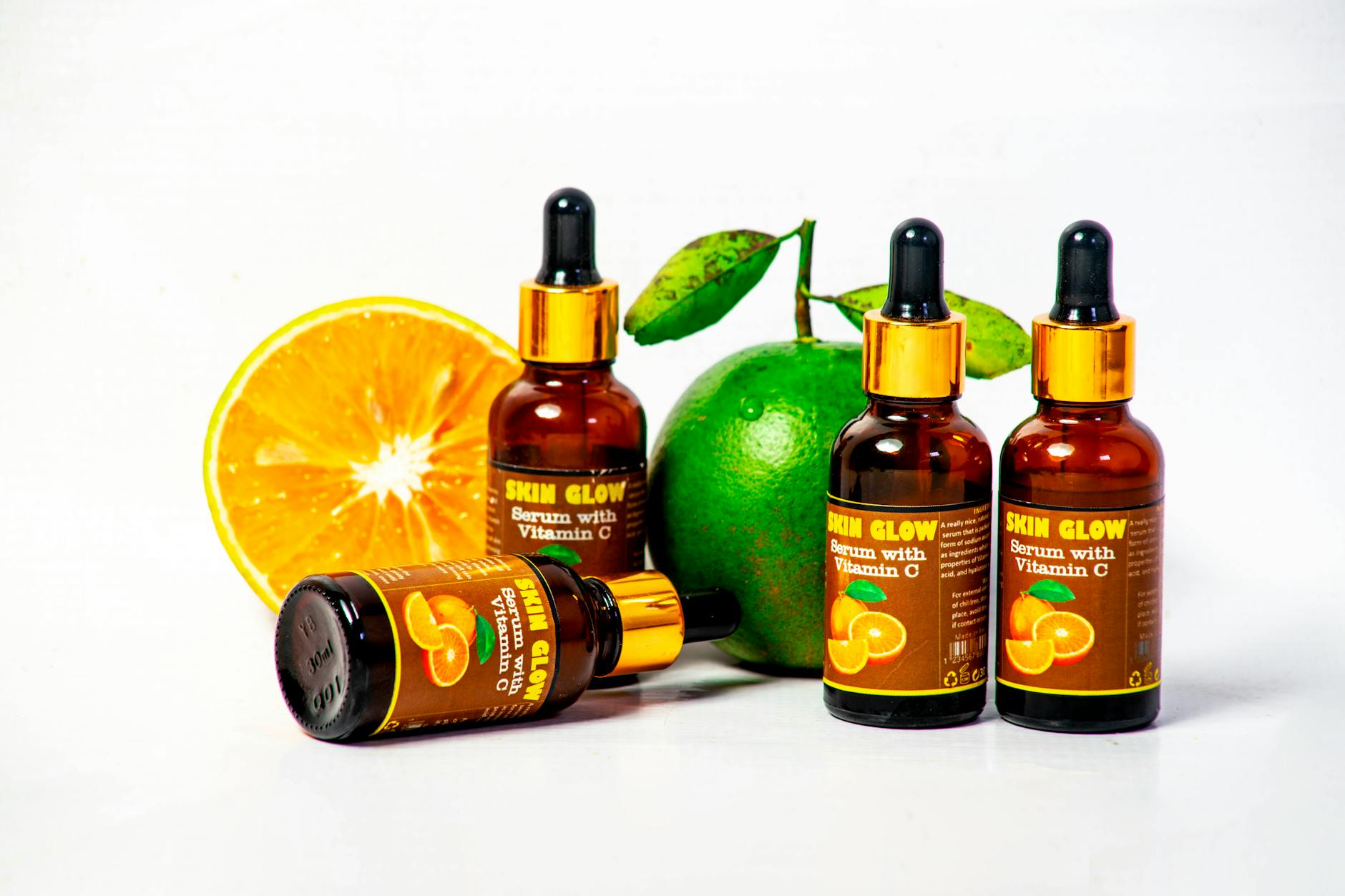
Method 10: Topical Vitamin C (L-Ascorbic Acid Serums)
Applied topically, vitamin C works through the same pathway as dietary vitamin C — it is a required co-factor for collagen synthesis — but it also adds potent antioxidant activity that neutralizes UV-generated free radicals before they can degrade existing collagen. L-ascorbic acid is the most bioavailable topical form, but it is notoriously unstable and oxidizes quickly when exposed to air and light.
Research supports concentrations of 10–20% L-ascorbic acid as most effective for skin penetration and collagen stimulation. Stabilized derivatives (such as ascorbyl glucoside, sodium ascorbyl phosphate, and magnesium ascorbyl phosphate) are more stable but require conversion in the skin and may be less potent. Studies combining topical vitamin C with sunscreen show additive photoprotection significantly beyond either alone.
Method 11: Copper Peptides, Matrixyl (Palmitoyl Pentapeptide), and Other Collagen-Signaling Peptides
Peptides are short chains of amino acids that can act as signaling molecules in the skin. When applied topically, certain peptides mimic the breakdown fragments of collagen, essentially "tricking" fibroblasts into sensing that collagen has been damaged and needs to be replaced — thereby triggering new collagen synthesis. This is a more indirect mechanism than retinoids but carries far less irritation risk.
Copper peptides (GHK-Cu) are among the most studied in this category. GHK-Cu has been shown in multiple in vitro and in vivo studies to promote fibroblast proliferation, stimulate collagen and glycosaminoglycan production, and exhibit anti-inflammatory and wound-healing properties. Matrixyl (palmitoyl pentapeptide-4) and its successor Matrixyl 3000 have peer-reviewed evidence showing increased collagen I, III, and IV production with consistent use.
Peptides are generally suitable for sensitive skin, can be layered with other actives, and have good tolerability profiles — making them a practical option for those who cannot tolerate retinoids.
Part 4 — Device-Based and Professional Collagen-Boosting Treatments
Method 12: Red Light Therapy, Microneedling, and Professional Procedures
Beyond topicals, several device-based approaches have genuine clinical evidence for stimulating collagen production, largely through the principle of controlled injury: creating a low-level stress signal that prompts the skin to repair and rebuild its collagen matrix.
Red Light Therapy (Photobiomodulation)
Red light therapy uses specific wavelengths of red (630–700 nm) and near-infrared (810–850 nm) light to penetrate the dermis and stimulate cellular energy production in fibroblasts via cytochrome c oxidase — a mitochondrial enzyme that absorbs these wavelengths. With more energy available, fibroblasts produce more collagen and other extracellular matrix components. A 2014 randomized, controlled study published in Photomedicine and Laser Surgery found significant improvements in skin complexion and collagen density in participants receiving red light therapy treatments over 30 sessions, with histological biopsies confirming increased collagen fiber density.
Red light therapy is low-risk, non-invasive, and available both in clinical settings and as at-home panel devices. Consistent sessions (typically 10–20 minutes, three to five times per week) are required for cumulative benefit. Results emerge gradually over eight to twelve weeks.
Microneedling (Collagen Induction Therapy)
Microneedling uses a device studded with fine needles to create thousands of microscopic puncture channels in the skin. These micro-injuries trigger the wound-healing cascade — releasing growth factors and signaling fibroblasts to produce new collagen, elastin, and hyaluronic acid in the treated area. Multiple systematic reviews have confirmed that professional microneedling produces measurable increases in dermal collagen density, with improvements in skin texture, firmness, and fine lines appearing four to six weeks after treatment as the new collagen matures.
Needle depths of 0.5–1.5 mm in professional settings are generally considered most effective for collagen stimulation. At-home derma rollers (0.2–0.3 mm) can support product penetration but are unlikely to produce the same depth of collagen induction as professional treatments.
Other Professional Procedures Worth Knowing
Several other in-clinic procedures have strong evidence for stimulating collagen production:
- Radiofrequency (RF) treatments (e.g., Thermage, Morpheus8) use heat energy to contract existing collagen and stimulate new collagen synthesis — particularly effective for skin laxity.
- Fractional laser resurfacing (e.g., Fraxel, CO2 lasers) creates controlled thermal injury in a grid pattern that drives robust collagen remodeling with longer-lasting results than microneedling alone.
- Ultrasound therapy (e.g., Ultherapy) delivers focused ultrasound energy to the deep dermis and SMAS layer, stimulating collagen at depths beyond what most other non-surgical devices can reach.
All professional procedures carry varying levels of downtime, cost, and risk — and should always be performed or supervised by qualified medical professionals. They represent the most powerful tools available for collagen boosting treatments, particularly for moderate-to-significant skin laxity.
How These Methods Work Together: A Practical Framework
The research is clear that no single method in isolation produces dramatic, lasting results. The most effective approach combines multiple synergistic strategies:
- Foundation (daily, non-negotiable): Daily SPF 30+, vitamin C-rich diet, adequate protein and zinc, no smoking, 7–9 hours of sleep.
- Dietary enhancement: Regular consumption of bone broth, collagen-rich animal proteins, and copper-containing foods; reduction of added sugars and refined carbohydrates.
- Topical routine: Retinol (or prescription tretinoin if tolerated) used consistently 3–5 nights per week; topical vitamin C serum applied in the morning under SPF; peptide-based moisturizers for additional support.
- Device-based support: Red light therapy panel sessions three to five times per week for cumulative photobiomodulation benefits; professional microneedling two to four times per year for deeper collagen induction.
- Professional procedures: As needed based on individual skin concerns, age, and budget — best discussed with a board-certified dermatologist.
The timeline to see results varies by method. Dietary changes and lifestyle habits create their benefit cumulatively over months and years. Topical retinoids typically show visible improvement in 12–24 weeks. Professional treatments can produce results within four to eight weeks but require repeated sessions for maintenance.

What About Collagen Supplements?
No guide on how to boost collagen production naturally would be complete without addressing collagen supplements, which have exploded in popularity. The evidence has improved meaningfully in the last decade. Hydrolyzed collagen peptides (collagen broken down into smaller peptide chains) are absorbed from the gut and appear in the bloodstream as dipeptides and tripeptides that can signal fibroblasts to produce more collagen.
A 2019 systematic review of 11 randomized controlled trials in the Journal of Drugs in Dermatology found that oral collagen supplementation consistently improved skin hydration, elasticity, and collagen density compared to placebo over 8–24 week periods. The most commonly studied and effective doses range from 2.5–10 grams of hydrolyzed collagen peptides per day, taken consistently.
It is worth noting that the body does not preferentially direct consumed collagen to skin — it is distributed based on where signaling and demand exist. However, the combined signaling effect from collagen-derived peptides in the bloodstream appears to create a measurable net benefit for skin collagen. Taking collagen peptides alongside vitamin C may enhance the effect, as the vitamin C is needed to catalyze the synthesis that the peptides signal for.
Common Myths About Collagen to Stop Believing
Myth: Topical collagen creams rebuild skin collagen. Standard collagen molecules are far too large to penetrate the skin barrier. Creams containing "collagen" primarily function as humectants and film-forming agents — they may improve the appearance of skin temporarily but do not directly rebuild the dermis. Ingredients that stimulate your skin's own collagen production (retinoids, vitamin C, peptides) are far more effective than products containing collagen itself.
Myth: Results should appear within a few weeks. Collagen remodeling is a slow biological process. Even the best evidence-backed interventions take 8–24 weeks to show visible changes, because the collagen being built has to mature and integrate into the existing matrix. Patience and consistency are essential.
Myth: You only need one method. The research consistently favors multi-modal approaches. Sun protection alone slows loss. Retinoids alone stimulate production. Combined with a nutrient-dense diet, sleep, and stress management, the cumulative effect is substantially greater than any single intervention.
Key Takeaways
Collagen loss is inevitable with age, but the rate at which it happens — and how well you support the body's ability to produce new collagen — is very much within your influence. The twelve methods covered here represent the most evidence-based levers available:
- Eat collagen-rich foods and bone broth to supply amino acid building blocks
- Get abundant dietary vitamin C every day — the rate-limiting nutrient for collagen synthesis
- Ensure adequate protein with glycine, proline, and lysine specifically
- Eat zinc and copper-rich foods to support collagen assembly and cross-linking
- Reduce sugar and refined carbohydrates to prevent glycation damage
- Wear broad-spectrum SPF daily — the most powerful collagen-preservation habit
- Quit smoking to eliminate one of the most aggressive collagen destroyers
- Prioritize sleep and manage chronic stress to support growth hormone and reduce cortisol
- Use topical retinoids consistently to directly stimulate fibroblast collagen production
- Apply topical vitamin C serum in the morning to support synthesis and block UV damage
- Incorporate copper peptides and signaling peptides for gentle, well-tolerated collagen support
- Consider red light therapy, microneedling, or professional procedures for accelerated results
None of these methods work overnight, and none are magic. But the science behind each is solid — and when layered together as part of a consistent daily routine, they offer a genuinely meaningful way to increase collagen production and slow the structural changes that drive skin aging over time.