How to Build an Anti-Aging Eye Care Routine That Actually Works After 40

You've probably tried a handful of eye creams over the years. Maybe you picked them up on impulse at a department store, went through a phase of refrigerating them, or bulk-bought a few after watching a skincare video online. Yet somehow the fine lines, puffiness, and dark circles still show up in the mirror every morning. The problem usually isn't the products — it's the absence of a real anti aging eye care routine over 40 that you actually stick to.
After 40, the skin around your eyes enters a different phase. The changes that were once slow and subtle start compounding faster: collagen production drops, the fat pads under the eyes shift, circulation slows, and decades of UV exposure begin to surface visibly. Random products applied inconsistently can't keep up with that. A structured, ingredient-smart routine can.
This guide will walk you through exactly how to build a morning and night eye care routine for aging skin — what to apply, in what order, with what technique, and why each step matters. No fluff, no $400 miracle creams. Just a clear, practical system you can start tonight.
Why Eye Area Skin Needs Special Care After 40
The skin around the eye is anatomically different from the rest of your face — and not in a forgiving way. Understanding why helps you make smarter choices about your under eye skincare routine.
- It's thinner than almost anywhere else on your body. The periorbital skin (the area surrounding the eye socket) is roughly 0.5mm thick, compared to 2mm on the rest of your face. It has almost no subcutaneous fat to cushion it and far fewer sebaceous (oil) glands, which means it can't self-moisturize effectively.
- Collagen loss accelerates here first. After 40, the body produces roughly 1% less collagen per year. The delicate eye area shows this loss earliest because there was so little structural support to begin with.
- Muscle movement creates deep lines. You blink approximately 15,000 times per day. Every smile, squint, and raised eyebrow creases the skin around your eyes repeatedly. Without adequate hydration and barrier support, those temporary lines become permanently etched.
- Lymphatic drainage slows with age. Fluid accumulates under the eyes more readily in your 40s and 50s because the lymphatic vessels that drain it become less efficient. This is why morning puffiness often worsens with age.
- Sun damage surfaces decades later. That UV exposure from your 20s and 30s? It shows up as pigmentation, crepey texture, and loss of elasticity in your 40s and beyond.
None of this is meant to alarm you — it's meant to explain why the eye area deserves its own dedicated steps rather than a swipe of whatever face moisturizer you're already using.
Key Ingredients to Look For in Eye Products
Before walking through the routine steps, it helps to understand which ingredients actually have evidence behind them. This way, when you're reading a label, you know what you're choosing — and what you're paying for.
Retinol and Retinoids
Retinol (vitamin A) is the most well-studied anti-aging ingredient in skincare. It works by speeding up cell turnover, stimulating collagen production, and reducing the appearance of fine lines. For the eye area specifically, use a gentler concentration (0.025%–0.05%) than you might use on your cheeks, and introduce it slowly — two nights per week at first. Some formulas are specifically designed for the periorbital zone and are buffered to minimize irritation.
Vitamin C (L-Ascorbic Acid or Derivatives)
Vitamin C is a potent antioxidant that neutralizes free radical damage from UV and pollution, inhibits melanin production (helping with dark circles caused by pigmentation), and supports collagen synthesis. Look for stabilized forms like ascorbyl glucoside or sodium ascorbyl phosphate if you find L-ascorbic acid too irritating around the eyes.
Peptides
Peptides are short chains of amino acids that signal the skin to produce more collagen and elastin. Unlike retinol, they cause virtually no irritation, making them ideal for daytime use and for anyone whose skin reacts easily. Look for palmitoyl pentapeptide-4 (Matrixyl), acetyl hexapeptide-3, and copper peptides.
Hyaluronic Acid
A humectant that holds up to 1,000 times its weight in water, hyaluronic acid plumps the under-eye area and temporarily reduces the appearance of fine lines caused by dehydration. It works best when applied to slightly damp skin and sealed with a richer cream on top.
Caffeine
Caffeine constricts blood vessels and has mild diuretic properties, which makes it effective at reducing the appearance of morning puffiness and dark circles caused by poor circulation. It's a morning-routine staple for most women with under-eye concerns.
Niacinamide
Niacinamide (vitamin B3) is a versatile, gentle ingredient that strengthens the skin barrier, reduces hyperpigmentation, and improves elasticity. It's well-tolerated by sensitive skin and works synergistically with many other actives in a routine.

Morning Eye Care Routine: Step by Step
Your morning routine is primarily about protection — defending the eye area against UV damage, oxidative stress, and dehydration throughout the day. Every step below serves that goal.
- Step 1 — Gentle Cleanser
Start with a mild, pH-balanced cleanser. In the morning, you're mostly rinsing off overnight skincare residue and sebum, so a foaming or gel cleanser is unnecessary for most skin types. A gentle micellar water, milk cleanser, or plain lukewarm water is sufficient for the eye area specifically. Avoid rubbing — use a soft cloth or clean hands with the lightest possible pressure.
- Step 2 — Hydrating Toner or Essence
A hydrating toner (look for glycerin, hyaluronic acid, or beta-glucan) prepares the skin to absorb subsequent actives more effectively. Pat it gently over your entire face, including the orbital bone area — not the lash line itself, but everything from the brow bone down to the top of the cheekbone. Damp skin is more permeable, so doing this before your serum step improves absorption meaningfully.
- Step 3 — Vitamin C Eye Serum or Brightening Eye Product
Apply a vitamin C–containing serum or eye-specific product around the orbital bone. This is your primary weapon against dark circles caused by UV-triggered pigmentation and free radical damage. Use the ring finger (more on technique in a later section) to press a pea-sized amount gently around the bone — not too close to the actual eye opening. Allow it to absorb for 60 seconds before moving on.
- Step 4 — Eye Cream with Peptides and/or Caffeine
Your dedicated eye cream goes on after your serum. Look for one that combines peptides (for long-term firming) with caffeine (for immediate depuffing). Apply a very small amount — roughly the size of a grain of rice per eye — using a tapping motion with the ring finger. Layer it on top of your serum and allow it to set before applying your face moisturizer.
- Step 5 — SPF (Eye-Safe Sunscreen)
This is the single most impactful step you can take for long-term anti-aging results, and the most commonly skipped around the eyes. UV radiation is directly responsible for collagen degradation, crepey texture, and hyperpigmentation. Mineral sunscreens (zinc oxide or titanium dioxide) are generally gentler for the eye area and less likely to migrate and sting. Apply SPF 30–50 along the orbital bone, stopping just short of the waterline. Reapply if you're outdoors for extended periods. Wearing UV-blocking sunglasses alongside your SPF provides a meaningful additional layer of protection.
Night Eye Care Routine: Step by Step
Your night routine is about repair — using the hours when your skin's regenerative processes are most active to deliver actives that stimulate collagen, accelerate cell turnover, and restore barrier function.
- Step 1 — Double Cleanse
At night, start with an oil-based cleanser or micellar water to break down SPF, makeup, and pollutants, then follow with a gentle water-based cleanser. This two-step process is especially important if you wear eye makeup. Never use makeup wipes alone — they drag the delicate skin and leave residue behind. Use cotton pads or clean fingers with minimal friction.
- Step 2 — Hydrating Toner or Essence (Same as Morning)
Repeat your toner or essence step to rehydrate the skin after cleansing and improve active absorption. This step takes 30 seconds and makes a measurable difference in how well your actives penetrate.
- Step 3 — Retinol or Retinoid Eye Product
This is the most powerful anti-aging step in your night routine. Introduce it slowly: start with two nights per week for the first four weeks, then increase to four nights per week, then nightly as your skin acclimates. Apply a tiny amount to the orbital bone — avoiding the lid and lash line — and wait 20–30 minutes before applying your eye cream on top. If you experience irritation, switch to every third night and buffer it: apply your eye cream first, then the retinol on top to slow absorption. Never use retinol and a vitamin C product in the same step at night — they compete for pH stability and can cause irritation when layered directly.
- Step 4 — Nourishing Eye Cream
Follow with a richer, more emollient eye cream than you use in the morning. Look for shea butter, squalane, ceramides, or niacinamide in the formula. These ingredients reinforce the skin barrier overnight, lock in moisture, and support the repair processes your skin is already doing while you sleep. The richness that might feel heavy under makeup at 8am is exactly what the thin, barrier-depleted skin around your eyes needs at midnight.
- Step 5 (Optional) — Device-Based Treatment
See the dedicated section below on when and how to add device-based treatments to your routine. If you're using one, it typically goes before your night eye cream step, on clean, slightly damp skin.
How to Apply Eye Products Correctly
Technique matters as much as ingredients. The most common application mistakes actively work against you — accelerating the very sagging and wrinkle formation you're trying to prevent.
Use Your Ring Finger
The ring finger applies the least unconscious pressure of any finger. This matters because the skin around your eye is under constant mechanical stress from blinking and expression — you don't want to add rubbing and dragging on top of that. Use the pad of your ring finger, not the tip.
Tap, Don't Rub
Press product into the skin using a gentle tapping motion along the orbital bone — the bony ridge surrounding the eye socket. Think of it like pressing piano keys very softly. Tapping stimulates circulation slightly (helpful for puffiness and dark circles) without creating friction.
Work Along the Orbital Bone, Not the Lid
Apply product along the lower orbital bone (under-eye area), upper orbital bone (brow bone), and the outer corners. Avoid applying directly on the mobile eyelid or within 5mm of the lash line. Product migrates naturally as your skin warms up — whatever you apply to the orbital bone will work its way closer to the eye over time.
Use Less Than You Think You Need
The eye area is small. A grain-of-rice amount per eye is genuinely sufficient for most products. More product does not mean more benefit — it usually just means more migration into the eye and more potential for milia (those small white bumps under the eyes caused by trapped keratin).
Allow Each Layer to Absorb
Give each product 30–60 seconds to absorb before applying the next layer. The morning routine shouldn't take more than 10 minutes total, but rushing through the steps by stacking products immediately defeats the purpose of layering.
Common Mistakes to Avoid
Even with the best products, certain habits undermine your results. Here are the most common errors women make with their eye care routine for aging skin — and how to correct them.
- Skipping SPF around the eyes. This is the single biggest missed opportunity. UV exposure accounts for roughly 80% of visible skin aging. If you protect every other part of your face but leave the eye area unshielded, you are accelerating the very changes you're trying to prevent.
- Using the same face moisturizer and calling it "eye cream." Face moisturizers often contain fragrances, acids, or heavy emollients that are too rich or potentially irritating for the periorbital zone. Eye-specific products are formulated for the thickness, sensitivity, and needs of that skin.
- Introducing retinol too aggressively. Using a high concentration every night from week one almost guarantees irritation, peeling, and barrier damage. Start slowly. The goal is consistent low-level use over months — not rapid results followed by a rash.
- Sleeping with eye makeup on. Even small amounts of mascara or eyeliner left on overnight can irritate the delicate skin, clog hair follicles, and cause inflammation that contributes to puffiness and accelerated aging.
- Rubbing your eyes. Chronic rubbing stretches the skin, damages small capillaries (worsening dark circles), and breaks down collagen over time. If allergies or tiredness are causing the urge to rub, address those underlying issues directly.
- Applying eye cream only at night. Daytime protection — vitamin C, SPF, and peptides — is arguably more important than what you do at night. Night repair can't undo eight hours of UV and oxidative damage if you're not protecting in the morning.
- Expecting results in two weeks. The ingredients that actually work — retinol, vitamin C, peptides — require 8–12 weeks of consistent use to show meaningful improvement. Switching products before that window closes means starting the clock over again every time.
When to Add Professional Treatments or Devices
A well-executed daily routine handles the baseline, but some concerns benefit from additional support. Here's a practical framework for knowing when to step up.
Under-Eye Patches and Masks (Weekly)
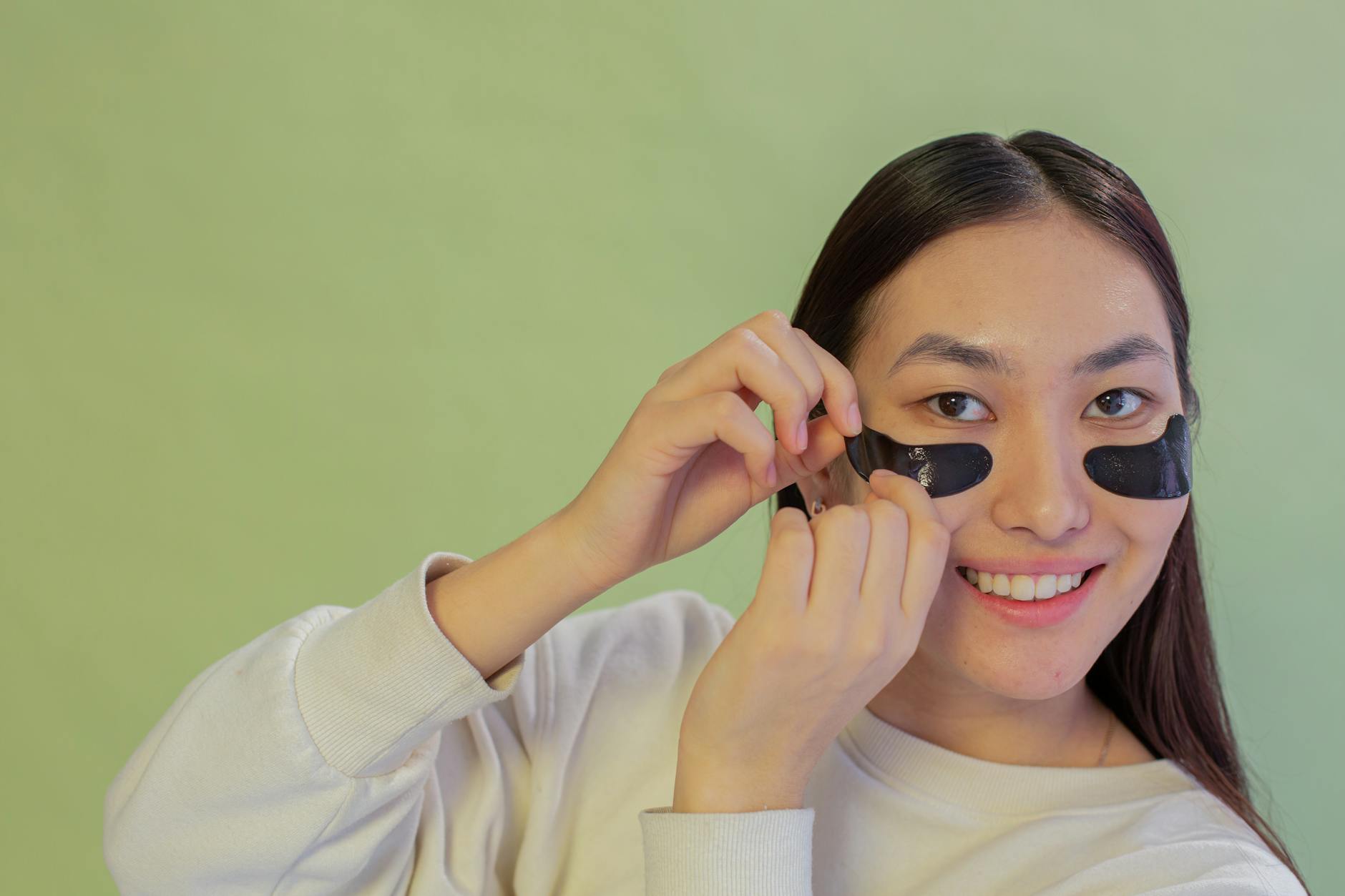
Hydrogel or sheet eye masks deliver a concentrated burst of hyaluronic acid, niacinamide, or peptides in 15–20 minutes. They're a useful weekly addition to your routine — not a replacement for daily steps. Use them on Sunday evenings, or before any event where you want to look rested. Keep them in the refrigerator for an enhanced depuffing effect.
Microcurrent and LED Light Devices (2–4x Per Week)
At-home devices using microcurrent technology gently tone the muscles around the eye and stimulate circulation and ATP production in the skin. Red light LED devices have some evidence supporting collagen stimulation and inflammation reduction. These tools work best as a complement to a strong topical routine, not a substitute for it. If you're considering one, introduce it only after you have a stable daily routine in place — typically after 2–3 months of consistent skincare. Use them on clean, slightly damp skin, before your night eye cream step.
Professional Treatments (Periodically)
Treatments like laser resurfacing, radiofrequency tightening, injectable neurotoxins, or filler address concerns that topical products cannot fully reverse — significant laxity, deep static lines, or hollow tear troughs. These are worth discussing with a board-certified dermatologist or plastic surgeon, particularly if you've built a strong at-home routine but feel you've hit a ceiling. Professional treatments work better and last longer on skin that has been well-maintained from the outside in.
Sample Weekly Eye Care Schedule
Your Weekly Rhythm at a Glance
| Day | Morning | Night |
|---|---|---|
| Monday | Cleanse → Toner → Vit C → Peptide eye cream → SPF | Double cleanse → Toner → Retinol → Nourishing eye cream |
| Tuesday | Cleanse → Toner → Vit C → Peptide eye cream → SPF | Double cleanse → Toner → Nourishing eye cream only (no retinol) |
| Wednesday | Cleanse → Toner → Vit C → Peptide eye cream → SPF | Double cleanse → Toner → Retinol → Nourishing eye cream |
| Thursday | Cleanse → Toner → Vit C → Peptide eye cream → SPF | Double cleanse → Toner → Nourishing eye cream only (no retinol) |
| Friday | Cleanse → Toner → Vit C → Peptide eye cream → SPF | Double cleanse → Toner → Retinol → Nourishing eye cream |
| Saturday | Cleanse → Toner → Vit C → Peptide eye cream → SPF | Double cleanse → Toner → Under-eye mask (15 min) → Nourishing eye cream |
| Sunday | Cleanse → Toner → Vit C → Peptide eye cream → SPF | Double cleanse → Toner → Nourishing eye cream only (retinol rest day) |
Note: This schedule reflects a retinol-introduction phase (3x/week). After 6–8 weeks, you can increase to 4–5 nights per week based on tolerance.
How to Know If Your Routine Is Actually Working
Managing expectations is part of building a routine you'll stick with. Here's what a realistic timeline looks like for a solid morning and night eye skincare routine:
- Weeks 1–2: Skin feels more hydrated. Puffiness may reduce slightly if you've added caffeine and changed application technique.
- Weeks 3–4: Fine lines caused by dehydration appear reduced when skin is well-moisturized. Texture may feel smoother.
- Weeks 6–8: If using retinol consistently, early improvements in skin cell turnover become visible — slight brightness, smoother skin surface.
- Months 3–6: Noticeable changes in fine line depth, under-eye pigmentation, and overall skin firmness. This is the range where women typically say "people have started asking if I look rested."
- Month 6 and beyond: Continued improvement, and — critically — the slowing of new damage. Maintenance is the long game.
Progress photos taken in consistent lighting every four weeks are genuinely useful here. The gradual improvements in how to take care of eye area skin can be hard to perceive day-to-day, but side-by-side comparisons over 12 weeks are usually striking.
Key Takeaways
Building an effective anti aging eye care routine over 40 isn't about finding a miracle product — it's about building a system. The eye area is thin, active, and exposed to enormous daily stress. Random products applied without intention rarely deliver results. A structured approach — with the right ingredients, applied in the right order, using the right technique, morning and night — compounds meaningfully over months and years.
Start with the basics: a vitamin C eye product in the morning, SPF every single day without exception, and a gentle retinol two to three nights per week. Add a nourishing eye cream as your final step both morning and night. Refine your application technique to tap rather than rub. Give the routine 90 days before assessing results.
The women who see the most dramatic improvement in their eye area aren't using the most expensive products. They're using evidence-based ingredients, consistently, with patience — and they started earlier than they thought they needed to. If you're 40 and reading this, you're right on time.