How to Clean Eyeglasses the Right Way: What Optometrists Actually Recommend
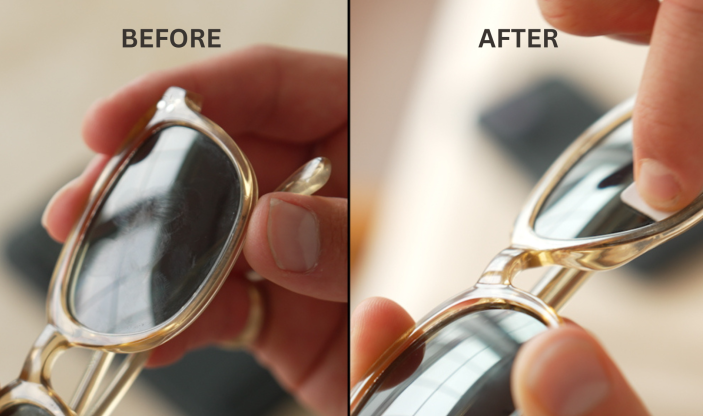
If you've ever grabbed the nearest piece of clothing to wipe a smudge off your glasses, you're not alone — almost everyone does it. But knowing how to clean eyeglasses properly is one of the most overlooked parts of owning a pair of glasses, and the wrong technique can permanently damage your lenses in ways that no amount of re-cleaning can fix. Optometrists see it constantly: patients with expensive anti-reflective coatings that are cratered, scratched, or chemically degraded — not because the lenses were cheap, but because of how they were cleaned every day.
This guide covers exactly what eye care professionals recommend, what to avoid, and how to build a simple daily routine that keeps your lenses clear for as long as possible.
Why Most People Clean Their Glasses Wrong
The instinct to grab a shirt corner or a paper towel is understandable — they're always nearby and look soft enough. But both are far more damaging than they appear. Here's what's actually happening when you clean with common household materials:
- Cotton and synthetic clothing fibers — Even soft-looking fabric like a t-shirt contains woven fibers with irregular edges under magnification. These act like microscopic abrasives against a lens surface, and the effect compounds over hundreds of wipes.
- Paper towels and facial tissues — Despite feeling smooth, paper products are made from wood pulp fibers that are genuinely abrasive. Optometrists consistently rank paper towels among the worst things you can use. The American Optometric Association specifically advises against them.
- Tap water alone — Tap water contains dissolved minerals (calcium, magnesium) that deposit micro-crystals on the lens surface as the water evaporates. Over time these create a persistent haze that looks like scratches but is actually mineral buildup.
- Household cleaners and hand soap with moisturizers — Products like Windex, bleach-based sprays, and moisturizing soaps leave chemical residues that interact badly with lens coatings — particularly anti-reflective (AR) coatings, which are especially sensitive to acetone, ammonia, and surfactants not designed for optics.
- Blowing on the lens with your breath — Mouth air contains tiny droplets of saliva and stomach acid vapor. While a single breath won't destroy a lens, using it as a regular cleaning prep adds acidic residue that accelerates coating breakdown.
The damage from these habits is usually cumulative and invisible at first. By the time you notice your lenses look permanently foggy or scratched, the harm has already been done over months of daily use.
What Optometrists Actually Recommend: The Step-by-Step Method
The best way to clean glasses lenses isn't complicated, but it does require a few minutes and the right materials. Here is the technique recommended by optometrists and optical labs:
- Wash your hands first. Skin oils, lotion residue, and dust on your fingers will transfer directly to the lens. Use plain soap without moisturizers, and rinse thoroughly.
- Rinse lenses under lukewarm water. Not hot — heat can soften certain lens coatings and warp plastic frames over time. The rinse removes loose dust particles that would otherwise scratch the surface during wiping.
- Apply a small drop of dish soap to each lens. Use a plain, lotion-free dish soap like original Dawn. Avoid anything with added moisturizers, citrus oils, or antibacterial agents with triclosan, as these leave residues on coatings.
- Rub gently with clean fingertips in small circular motions, covering the entire lens surface and the nose pads. Nose pads accumulate skin oil and are a common source of smearing.
- Rinse thoroughly. Make sure all soap is removed — soap residue left on the lens will dry into a film that looks like a new smudge.
- Shake off excess water and allow to air-dry for 10–15 seconds before wiping.
- Dry and buff with a microfiber cloth only. A clean, lint-free microfiber cloth is the only safe material for final drying and polishing. More on this below.
This full wet-clean method takes about two minutes and is recommended as a daily routine by most optometrists, particularly for people who wear their glasses all day.
Can You Use a Paper Towel to Clean Glasses?
This is one of the most-searched questions about eyeglass care, and the short answer is: no, you should not use paper towels to clean glasses. Despite feeling smooth to the touch, paper towels are manufactured from wood-pulp fibers that are significantly harder than the polycarbonate or plastic used in most modern lenses.
When you wipe a lens with a paper towel — even gently — you're dragging those fibers across a coated optical surface. Under an electron microscope, this process looks similar to sanding. The individual scratches are tiny, but after hundreds of repetitions, they accumulate into the widespread haze that makes lenses look "old" long before they should.
Facial tissues (like Kleenex) are only marginally better. Some tissues are treated to be softer, but they still contain fibers that are not safe for optical surfaces, and many are treated with lotions that leave a film on the lens.
The only materials that should ever touch a lens surface are:
- Clean microfiber cloths designed for optics
- Lens-cleaning wipes pre-moistened with optical-safe solution (single-use only, not re-used)
- Dry lens-cleaning pads engineered with non-scratching technology (discussed below)
- Your clean fingertips (for washing — not for dry-wiping)
Eyeglass Cleaning Cloth vs. Spray: Which Is Better?
Both microfiber cloths and spray solutions have a role in a proper eyeglass cleaning routine, but they serve different purposes and have important limitations to understand.
Microfiber Cloths
Microfiber cloths are the gold standard for dry buffing and polishing. When clean, they are extremely effective at removing smudges, skin oil, and light dust without scratching. The key word is clean. A microfiber cloth that has been used multiple times without washing picks up particles, oil, and debris from prior uses — and then distributes them back across your lens. Optometrists recommend washing your microfiber cloth at least once a week if you use it daily. Run it through a regular laundry cycle without fabric softener (which coats the fibers and reduces their effectiveness) and allow it to air-dry.
A dirty microfiber cloth is only slightly better than a paper towel. This is one reason many optometrists suggest that for on-the-go cleaning — where you can't wash your hands and use a freshly laundered cloth — a purpose-built dry cleaning pad may actually be safer than a cloth that has been sitting in a pocket or glasses case accumulating debris.
Lens Cleaning Spray
Lens sprays designed for optics are useful for the wet-clean step when you don't have access to a sink. Look for sprays that are:
- Alcohol-free (alcohol degrades AR coatings over time)
- Ammonia-free
- Specifically labeled as safe for anti-reflective and coated lenses
Sprays from optical retailers like Zeiss, Nikon, and major lens labs meet these criteria. Generic household sprays, eyeglass-branded sprays from dollar stores, and anything with a strong chemical smell should be avoided.
Used together — a quality spray followed by a clean microfiber cloth — you get a reliable on-the-go clean. But for a smudge between meals or a quick fog-up from wearing a mask, a dry microfiber wipe from a clean, freshly-laundered cloth is often all you need.
How to Remove Stubborn Smudges from Glasses
If your lenses have persistent smudges that don't come off with a standard microfiber wipe, the best way to remove smudges from glasses is to go straight to the wet-clean method described above. Most stubborn smudges are caused by skin oil (sebum) that has dried and bonded slightly to the lens surface — a water rinse and a small amount of dish soap will cut through this easily.
What you should not do when facing a stubborn smudge:
- Rub harder with a dry cloth. Increased pressure increases the risk of scratching, especially if there's any grit on the lens surface from environmental dust.
- Use rubbing alcohol or hand sanitizer. While isopropyl alcohol does cut grease, it also breaks down the bonding agents in AR coatings. A single use likely won't cause visible damage, but repeated use will cause the coating to crack and peel — an effect called "crazing" that is irreversible and not covered under most lens warranties.
- Use acetone-based products. Nail polish remover and similar solvents will dissolve certain lens coatings in a single application.
For sunglasses with polarized lenses, the same rules apply. Polarized films are sandwiched into or bonded to the lens surface and are particularly vulnerable to chemical damage from aggressive cleaners.
Special Considerations: How to Clean Anti-Reflective Coating Glasses
Anti-reflective (AR) coatings are among the most valuable and most fragile features of modern lenses. They consist of multiple thin layers of metallic oxides deposited on the lens surface at the nanometer scale. These layers reduce glare from screens, headlights, and fluorescent lighting — but they react poorly to the same habits that damage standard lenses, and they do so faster.
Key rules specifically for how to clean anti-reflective coating glasses:
- Never use hot water. Heat accelerates the breakdown of the adhesive layers that bond AR coatings to the lens substrate.
- Avoid ammonia-based cleaners entirely. Ammonia is a known solvent for the oxide compounds used in AR coatings.
- Do not leave lenses face-down on surfaces. AR-coated lenses are more susceptible to surface micro-abrasion than uncoated lenses because the coating surface is softer than the raw polycarbonate underneath.
- Store glasses in a hard case when not in use. Soft pouches are better than nothing, but a rigid case prevents the lens from being pressed against abrasive surfaces inside a bag or pocket.
- Be extra cautious with spray cleaners. Only use cleaners specifically tested and approved for AR coatings. When in doubt, rinse with clean water and use a freshly laundered microfiber cloth.
Blue-light blocking lenses have similar vulnerability because most blue-light filtering is applied as a coating layer, not built into the lens material itself. Treat them with the same care as standard AR lenses.
Dry Cleaning Pads: The On-the-Go Alternative Worth Knowing About
For situations where you can't access a sink — commuting, traveling, sitting in a meeting — the choice typically comes down to a cloth from your pocket or nothing at all. But there's a third option that optical professionals increasingly recommend for daily carry: dry lens cleaning pads engineered specifically not to scratch lens surfaces.
Unlike repurposed microfiber cloths, dedicated dry cleaning pads are designed as single-use or limited-use surfaces that are clean out of the packaging, have no accumulated debris, and use materials with verified optical compatibility. Some use a non-woven dry technology that physically lifts oils and particles rather than spreading them. These are particularly useful for:
- People who wear their glasses all day and need multiple touch-ups
- Anyone with AR or blue-light coatings who wants a low-risk portable option
- Situations where washing hands isn't practical before handling lenses
The key advantage over a cloth from your pocket is cleanliness at the point of use — the most common source of accidental lens damage during on-the-go cleaning.
How Often Should You Clean Your Glasses?
Most optometrists recommend a full wet clean at least once a day for regular wearers — ideally in the morning as part of a daily routine. During the day, a clean dry microfiber cloth or a dry cleaning pad is appropriate for light smudges and touch-ups.
Signs your glasses need a more thorough cleaning:
- Persistent haziness that doesn't clear with a single dry wipe
- Visible oil rings around areas you've touched (nose pads, lens edges)
- Smearing rather than clearing when you wipe with a cloth — this usually means the cloth itself is dirty and needs to be washed
- Visible dust or debris particles on the lens surface before wiping — rinse first, never wipe dry particles
One habit that optometrists particularly recommend: never wipe a dry lens with a dry cloth if there's visible grit or dust on the surface. Even a very soft cloth dragged across a particle of sand will scratch the lens. A quick rinse under water before wiping dramatically reduces this risk.
Frame and Nose Pad Cleaning
Lens cleaning gets most of the attention, but frames and nose pads accumulate skin oils, cosmetics, and bacteria at a faster rate. Nose pads in particular — the small silicone or plastic pieces that rest against your nose — are directly in contact with skin all day.
For frames and nose pads:
- Clean with the same mild dish soap used for lenses — rinse and scrub gently with your fingertip or a soft-bristled toothbrush dedicated to this purpose
- Silicone nose pads discolor over time from oil and makeup; your optometrist or optical shop can usually replace them for little or no cost
- Metal frames can be cleaned with the dish soap method; avoid soaking frames with decorative coatings or embedded elements
- Acetate (plastic) frames can occasionally be buffed with a dry microfiber cloth to restore their shine
Key Takeaways
Cleaning your glasses the right way doesn't require expensive equipment — but it does require breaking some very common habits. Here's a quick summary of what optometrists consistently recommend:
- Never use paper towels, tissues, or clothing to wipe your lenses. These are among the leading causes of micro-scratches that accumulate into permanent haze.
- The safest daily clean is a rinse under lukewarm water, a small amount of lotion-free dish soap, and a final buff with a freshly laundered microfiber cloth.
- For on-the-go touch-ups, use a clean microfiber cloth or a purpose-made dry cleaning pad — not whatever fabric is nearest.
- AR and blue-light coating lenses require extra care: no hot water, no ammonia cleaners, and always store face-up or in a hard case.
- A dirty microfiber cloth is not a safe cloth. Wash yours weekly without fabric softener and let it air-dry.
- Never rub a lens with visible grit on the surface. Always rinse first.
Your glasses are a precision optical instrument. The materials inside modern lenses — high-index plastics, polycarbonate, AR layers, blue-light coatings — are engineered to perform at a level that a scratched or chemically degraded lens simply cannot reach. A consistent, optometrist-approved cleaning routine is the simplest thing you can do to protect that investment and keep your vision as clear on day 1,000 as it was on day one.