How to Improve Your Basketball Skills at Home: 10 Drills That Actually Work
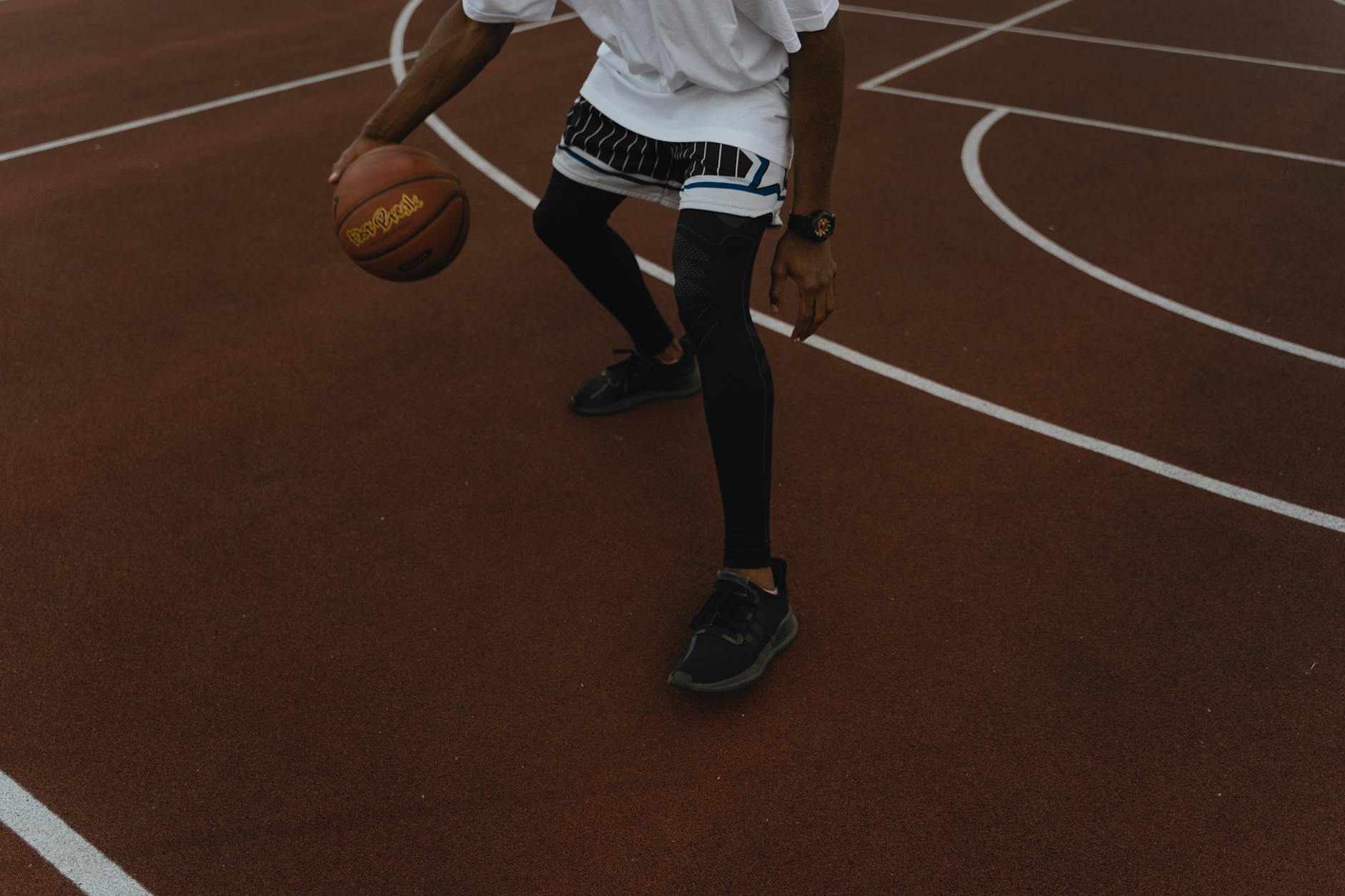
Whether you just picked up a basketball for the first time or you've been playing recreationally for years, basketball training at home is one of the most effective ways to level up your game without ever stepping foot in a gym. The best players in the world — at every level — put in significant solo work between team practices and games. The good news is you don't need a full court, a coach, or expensive equipment to make real progress. A ball, a small patch of floor, and about 30 minutes a day is enough to build skills that will show up the next time you step on the court.
This guide walks you through 10 specific drills designed for players who want to improve basketball skills solo, along with a weekly practice schedule you can start today. Every drill includes rep counts, sets, and coaching cues so you know exactly what to do and why it works.
What You Need Before You Start
Most of these drills require very little. A regulation basketball (or any basketball that holds air), roughly 6 x 6 feet of open floor space, and a wall for passing drills. A few drills benefit from cones or household objects as markers, but improvised substitutes like water bottles or tape on the floor work perfectly. For jump training, a flat outdoor surface like a driveway or patio adds variety, but hardwood or carpet indoors works fine for most movements.
No hoop required for the majority of these drills. Basketball practice without a court is completely viable for building the foundational skills — ball control, footwork, and conditioning — that separate average players from good ones.
The 10 Best Drills for Basketball Training at Home
Drill 1: Stationary Dribbling Series
This is the foundation of all ball-handling work. Stand with your feet shoulder-width apart, knees slightly bent, and dribble the ball as hard and fast as you can — not high and lazy, but low and with intent. The harder you pound the ball, the faster it comes back to your hand and the more control you develop.
- Right hand only: 30 seconds
- Left hand only: 30 seconds
- Alternating hands: 30 seconds
- Rest: 20 seconds between sets
- Sets: 3
Coaching cue: Keep your eyes up — stare at a spot on the wall, not down at the ball. This is the single most important habit to build early. Looking down while dribbling during a game is an open invitation for a turnover.
Drill 2: Two-Ball Dribbling
If you have access to two basketballs (or even one basketball and a slightly deflated ball), two-ball dribbling is one of the fastest ways to build independent hand coordination. Your weak hand is forced to operate on its own because your dominant hand is already occupied.
- Both balls at same time (simultaneous): 30 seconds
- Alternating (one up, one down): 30 seconds
- Rest: 20 seconds
- Sets: 3
Coaching cue: Most players find the alternating rhythm harder than simultaneous. If you lose control, slow down and find the rhythm before speeding up again. Control first, speed second.
Drill 3: Figure-Eight Dribble (Stationary)
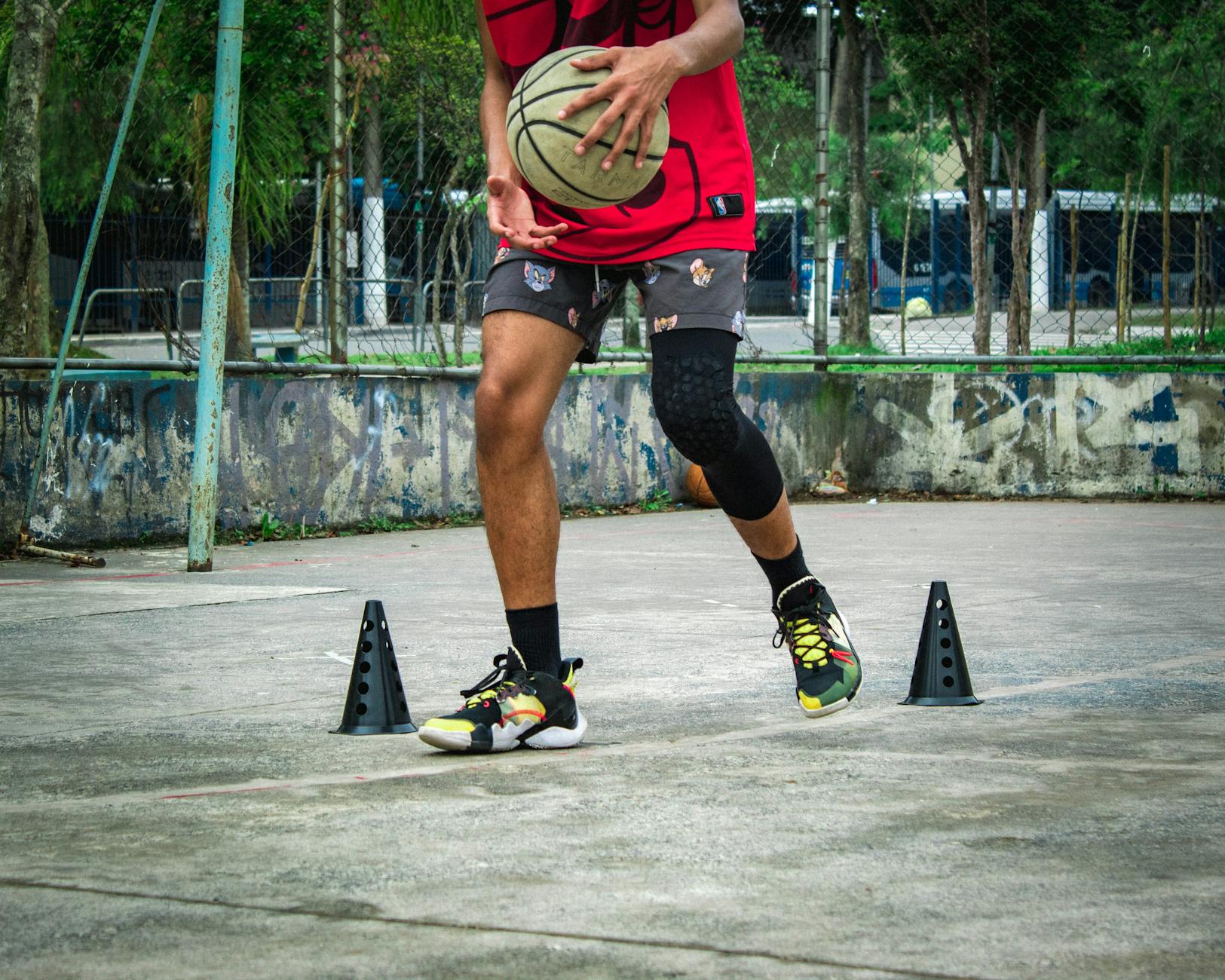
Stand with feet wider than shoulder width, knees bent deeply. Dribble the ball through and around your legs in a figure-eight pattern without stopping. This drill trains your hands to work at different heights and angles while keeping the ball under control near your body.
- Forward direction: 20 reps (one full figure-eight = 1 rep)
- Reverse direction: 20 reps
- Rest: 20 seconds
- Sets: 3
Coaching cue: Go as fast as you can without losing the ball. When you do lose it — and you will — pick it up and keep going. The errors are where the learning happens.
Drill 4: Crossover and Behind-the-Back Series
This is your at home basketball workout for developing live-game dribble moves. In a stationary position, practice a full sequence: crossover dribble, between the legs (left to right), between the legs (right to left), behind the back. Do it slowly at first so each move is crisp and deliberate, then gradually increase the pace.
- Full sequence (4 moves): counts as 1 rep
- Target: 15 reps per set
- Rest: 30 seconds
- Sets: 4
Coaching cue: Behind-the-back is the trickiest for beginners. Work it as a standalone move for a few minutes each session until it feels natural before adding it to the sequence.
Drill 5: Wall Passing (Chest Pass and Bounce Pass)
Stand 5–6 feet from a solid wall. Execute firm, accurate passes at chest height, catching the rebound and immediately releasing the next pass. This builds passing strength, accuracy, and catch-and-release quickness — crucial for basketball drills for beginners who haven't yet developed consistent passing mechanics.
- Chest passes: 3 sets of 25 reps
- Bounce passes (aim for a spot on the floor 2–3 feet out): 3 sets of 25 reps
- Rest: 20 seconds between sets
Coaching cue: Step into each pass. Your feet should move, not just your arms. A pass thrown entirely with arm strength will be slow and easy to pick off. Drive from the hip and step through.
Drill 6: Defensive Slide Footwork
Good defense starts with footwork. Set up two markers about 10–12 feet apart (tape, water bottles, shoes — anything works). Get into a defensive stance: feet wide, hips low, back straight, hands active. Slide laterally from marker to marker without crossing your feet. This is pure muscle memory work that pays dividends in every game you play.
- Slide left to right and back: counts as 1 rep
- Target: 10 reps per set
- Rest: 30 seconds
- Sets: 4
Coaching cue: The moment your feet cross, you've lost your defensive position. It's better to go slower and keep the correct form than to go fast with sloppy footwork.
Drill 7: Jump Rope or Box Jumps for Explosiveness
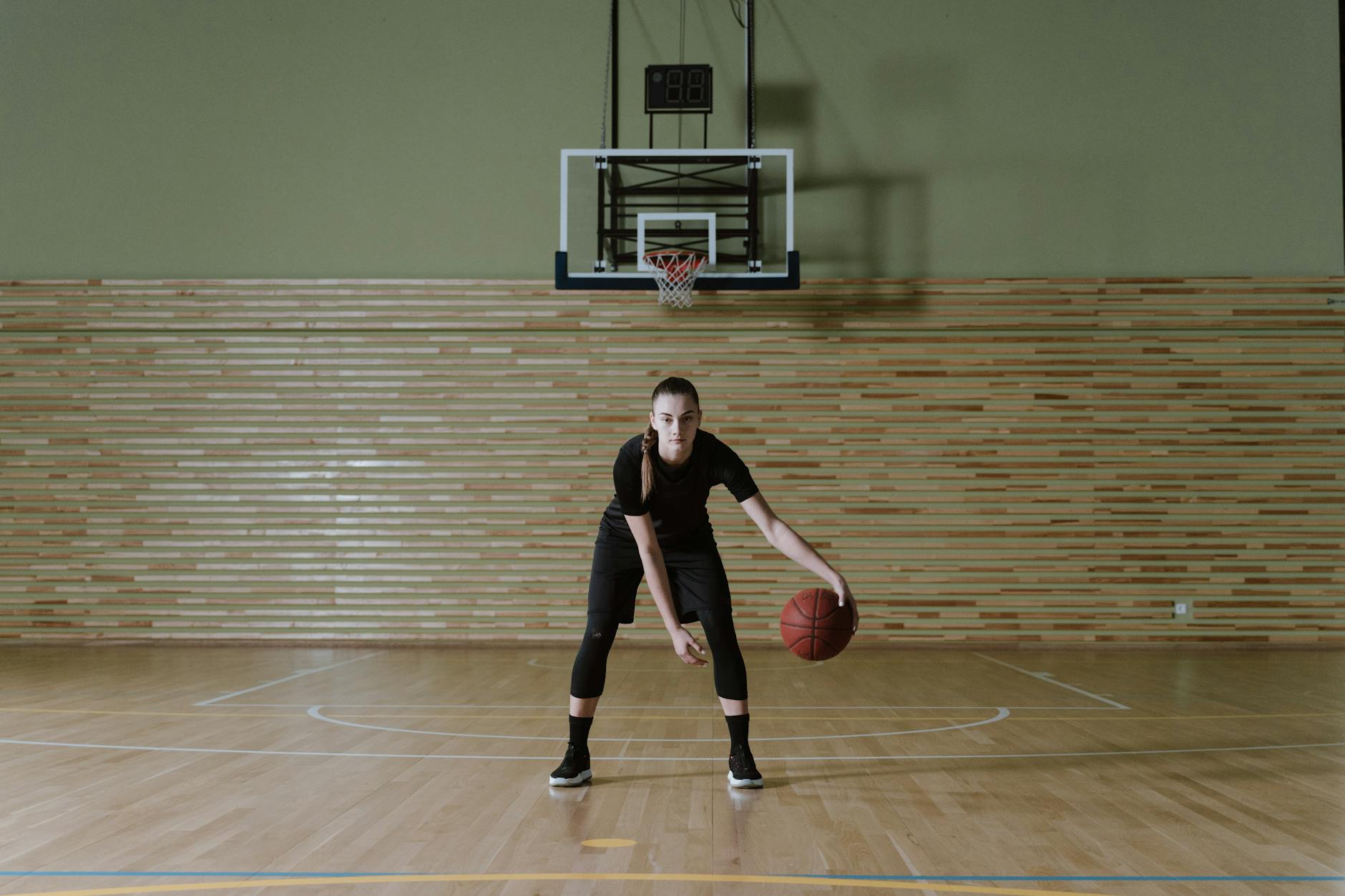
Most players overlook jump training during solo practice, but it's one of the highest-return activities you can do at home. Jump rope is ideal — 10 minutes of jump rope builds leg stamina, coordination, and the fast-twitch muscle activation that directly translates to quicker first steps and better defensive positioning.
If you don't have a jump rope, use a sturdy low step (like a stair) for box jumps instead:
- Jump rope (standard two-foot jumps): 3 sets of 60 seconds
- OR Box jumps (step up, step down or jump down): 3 sets of 10 reps
- Rest: 45 seconds between sets
Coaching cue: Land softly. Every landing should be absorbed by your knees and hips bending — not your joints absorbing a hard flat-footed impact. Soft landings protect your knees and train the exact muscle activation you need to change direction quickly on the court.
Drill 8: Mikan Drill (with or without a Hoop)
The Mikan Drill is a classic post-move layup drill named after Hall of Famer George Mikan. If you have a hoop available — even a driveway hoop — this drill alone will transform your finishing around the basket. Alternate layups from the left and right side continuously without stopping, using the backboard each time.
If you have no hoop, simulate the drill by practicing the footwork and body movement: two-step approach from the right, extend the ball toward where the rim would be, land softly, pivot, two-step approach from the left, repeat.
- Target: 10 makes per side (or 10 full reps per side without a hoop)
- Rest: 45 seconds
- Sets: 3
Coaching cue: The key to the Mikan Drill is the footwork — step, step, jump — not the shot itself. Perfect footwork at slow speed translates to clean finishes at game speed.
Drill 9: Dribble Without Looking (Blindfold or Eyes-Closed Drill)
This might be the single most underrated drill on this list. Close your eyes (or use a sleep mask) and dribble the ball for 60-second intervals. It forces your hands to develop tactile sensitivity — the ability to "feel" the ball without relying on visual feedback. Players who practice this consistently develop dramatically better court vision because their eyes are free to scan the floor instead of tracking the ball.
- Right hand, eyes closed: 60 seconds
- Left hand, eyes closed: 60 seconds
- Alternating, eyes closed: 60 seconds
- Rest: 30 seconds between sets
- Sets: 2
Coaching cue: Stay near a wall or in the middle of a room away from furniture. You will lose the ball — that's expected and fine. This drill humbles beginners and challenges experienced players equally.
Drill 10: Mental Visualization (Game Simulation)
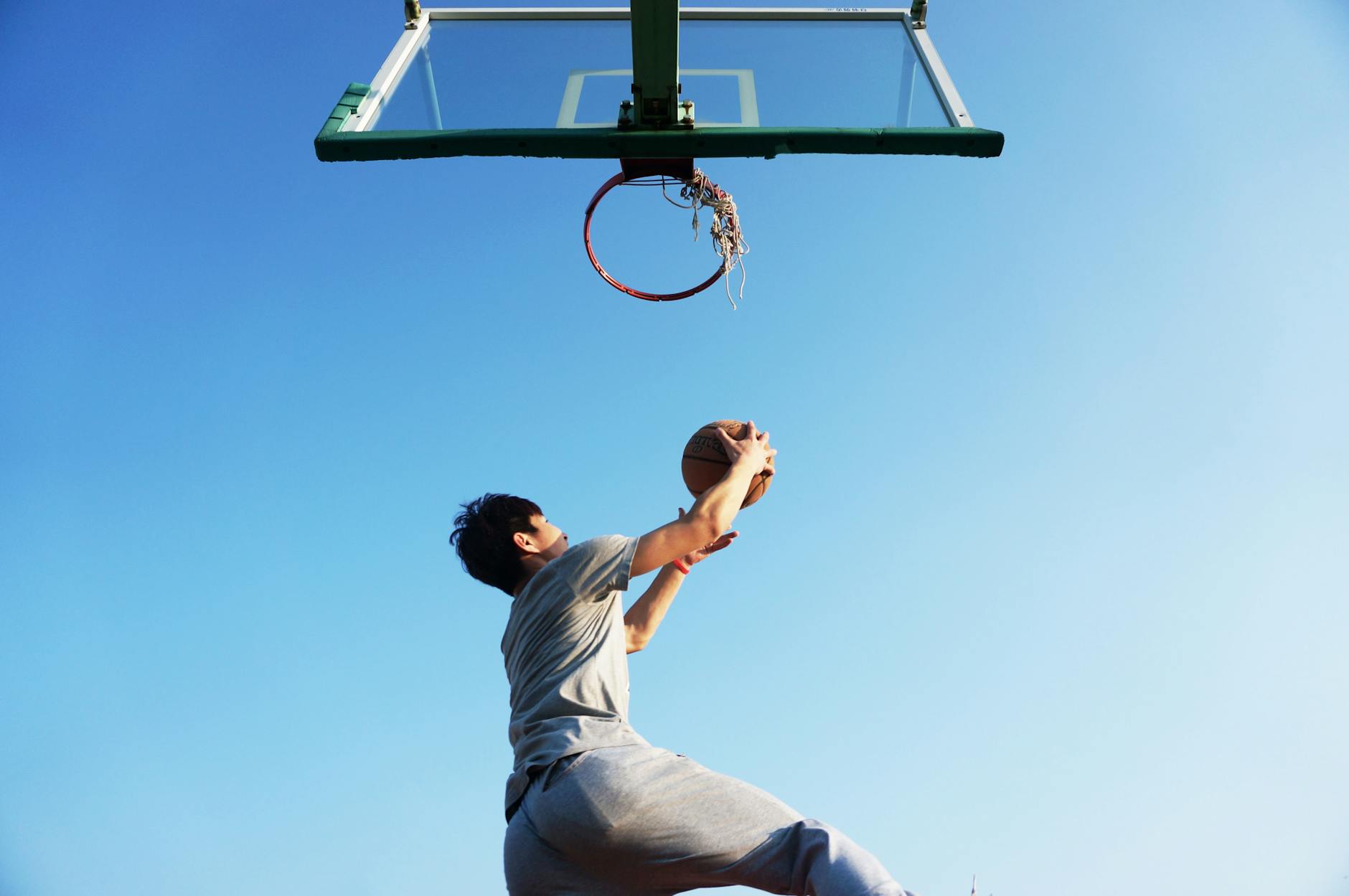
Research in sports psychology consistently shows that mental rehearsal activates the same neural pathways as physical practice. Elite athletes across sports — from basketball to gymnastics to golf — use visualization as a structured training tool, not just a motivational technique.
Set a timer for 10 minutes. Lie down or sit comfortably with your eyes closed. Walk through specific in-game scenarios in vivid detail: you receive a pass on the wing, you make two dribbles, you attack the defender's left hip, you finish with a layup. Feel the ball in your hand. See the court around you. Visualize making the right read, executing the right move, and succeeding. The more specific and sensory-rich the visualization, the more effective it is.
- Duration: 10 minutes per session
- Frequency: 3–4 times per week
- Scenarios to cover: defending a pick-and-roll, hitting a mid-range pull-up, making the right pass under pressure
Coaching cue: Don't just visualize success — visualize the process. Picture your footwork, your hand position, your body angle. The brain responds to detail, not just outcomes.
Weekly Practice Schedule for Home Training
Consistency beats intensity for skill development. Three to five focused sessions per week will produce far better results than one long marathon session. Here's a sample weekly schedule built around these 10 drills — designed for a player who has about 30–40 minutes per session available.
| Day | Focus | Drills | Duration |
|---|---|---|---|
| Monday | Ball Handling | Drills 1, 2, 3, 4 | 35 min |
| Tuesday | Footwork + Defense | Drills 6, 7 + Visualization | 40 min |
| Wednesday | Rest or Light Stretch | Optional: Drill 10 only | 10–15 min |
| Thursday | Passing + Finishing | Drills 5, 8, 9 | 35 min |
| Friday | Full Session | Drills 1–5, 7, 9, 10 | 45 min |
| Saturday | Pick-Up Game or Court Work | Apply drills in live play | Open |
| Sunday | Rest | Full recovery | — |
Tips for Getting the Most Out of Solo Practice
Raw repetition is necessary but not sufficient. The quality of your focus during each session determines how fast you actually improve. Here are a few principles that separate productive solo training from going through the motions:
- Set a specific goal before each session. "Today I'm going to make my left-hand dribble feel as automatic as my right" is a useful goal. "Get some ball work in" is not.
- Slow down to speed up. Beginners rush through drills at a pace they can't control. Slowing each movement down to 70% speed and executing it cleanly will build the habit faster than sloppy reps at full speed.
- Record yourself on video. Most skill errors are invisible to the player making them. A 30-second phone video of your dribbling form or footwork will reveal things you'd never notice on your own.
- Warm up your hands before dribbling. Two minutes of simple ball rotations — spinning the ball around your waist, between your legs, above your head — activates your grip and gets the feel of the ball before you start timed drills.
- Track your progress. Keep a simple log — a notebook or phone note — of how many reps you completed and what felt difficult. Revisiting this weekly shows you concrete improvement that's easy to miss when you're inside the process.
Common Mistakes Beginners Make During Home Training
A few pitfalls consistently slow down players who are serious about basketball training at home:
Only practicing what they're already good at. If you have a strong right hand, every drill you do will drift toward your right hand unless you actively resist it. The uncomfortable drills — the ones with your weak hand, or the defensive slides — are the ones that produce the most growth.
Skipping footwork entirely. Dribbling drills are more fun than footwork ladders. But game performance is decided at least as much by where your feet are as what your hands are doing. Commit to defensive slides and Mikan footwork every single week, not just occasionally.
Practicing with the ball too high. Low, hard dribbles keep the ball in your control. High dribbles slow your pace and make it easy for a defender to poke the ball away. If your default dribble height is above your knee during stationary drills, you're training a bad habit.
Treating visualization as optional. It's listed last on this list, but Drill 10 might deliver the highest return for time invested of any drill here. Ten minutes of high-quality visualization primes your nervous system for the movements you're trying to build. Don't skip it.
How Long Before You See Results?
Most players notice meaningful improvement in ball-handling confidence within 2–3 weeks of consistent daily practice. Footwork and conditioning improvements tend to show up in games within 3–4 weeks. The drills that compound most slowly — like visualization and the eyes-closed drill — often produce the most dramatic jumps in game performance after 4–6 weeks because the gains are neurological, not just physical.
The key word is consistent. Five 30-minute sessions per week for 30 days will change your game more than you might expect. Basketball skill is learnable at any age and any starting level — the only requirement is repetition with intention.
Key Takeaways
Basketball training at home doesn't require a full court, a team, or expensive equipment. What it requires is focused repetition, a commitment to your weak hand, and the discipline to practice footwork and defense even when shooting drills are more fun. The 10 drills in this guide cover every foundational skill — ball-handling, passing, footwork, explosiveness, and mental preparation — in a format that fits into a driveway, a living room, or a hallway.
Start with drills 1, 3, and 6 in your first session. Get comfortable with the basics before adding the more complex sequences. Follow the weekly schedule, track your sessions, and record yourself every week or two to measure real progress. The players who get better are the ones who show up consistently — not the ones who train hardest on rare occasions.
Your game improves one focused repetition at a time. Start today.