How to Pack a Carry-On Bag Like a Pro: The Complete Guide for 2026
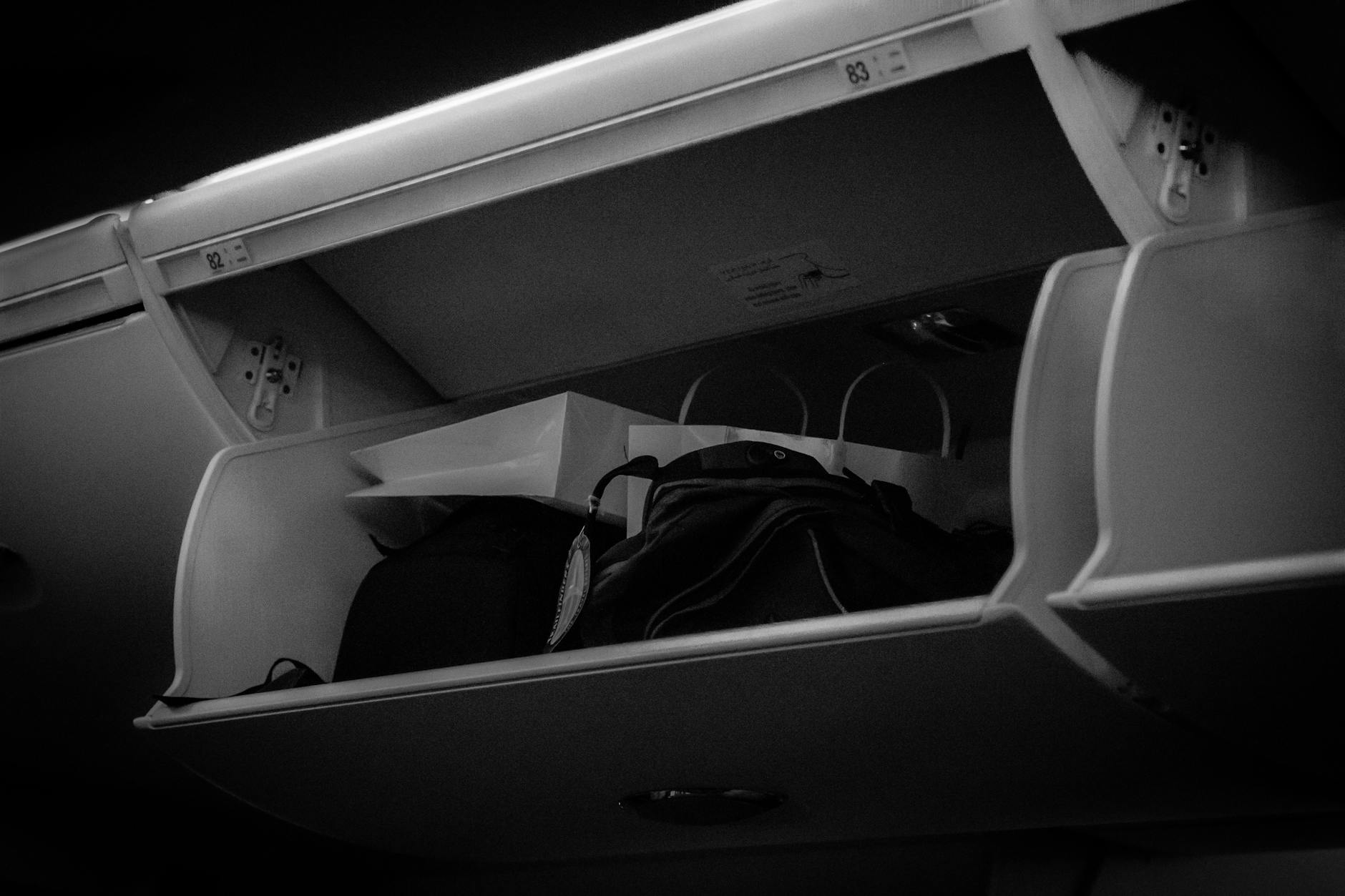
If you've ever stood at a check-in counter paying $60 to check a bag you didn't expect to check, you already know why learning how to pack a carry-on bag is one of the most practical travel skills you can build. Done right, carry-on-only travel saves money, eliminates the risk of lost luggage, and gets you out of the airport faster than anyone waiting at baggage claim.
But packing a carry-on well isn't just about squishing everything in and hoping the overhead bin lid closes. It's a system — one involving smart clothing choices, the right folding techniques, knowledge of TSA rules, and understanding what can never, ever go in your checked bag. This complete guide covers everything, whether you're a first-time flyer or a frequent traveler who wants to refine their approach.
Know Your Airline's Carry-On Size Limits Before You Pack Anything
The single biggest mistake travelers make is assuming every airline uses the same carry-on dimensions. They don't. Packing the wrong bag size for your airline can result in gate-checking fees that cost more than checking a bag at the counter would have.
Most major US carriers — Delta, United, American, and Southwest — allow a standard carry-on of roughly 22 x 14 x 9 inches (56 x 36 x 23 cm), including wheels and handles. That's the measurement of the bag itself, not just the interior. Budget airlines are where things get strict:
- Spirit Airlines: Personal item only on basic fare — carry-on costs extra. Max carry-on is 22 x 18 x 10 inches.
- Frontier Airlines: Carry-on included on some fares; dimensions up to 24 x 16 x 10 inches.
- Ryanair (Europe): Only a small personal item (40 x 20 x 25 cm) is free — any roller bag costs extra.
- EasyJet (Europe): Carry-on bag allowance depends on fare type. Size limit is 56 x 45 x 25 cm.
International weight limits: Many international carriers enforce weight limits on carry-ons, typically 7–10 kg (15–22 lbs). US carriers rarely weigh carry-ons, but Asian, Middle Eastern, and European airlines do. If you're flying internationally, weigh your packed bag before leaving home.
The rule is simple: always look up your specific airline's carry-on policy before you start packing, not after.
The Best Way to Pack Carry-On Luggage: Techniques That Actually Work
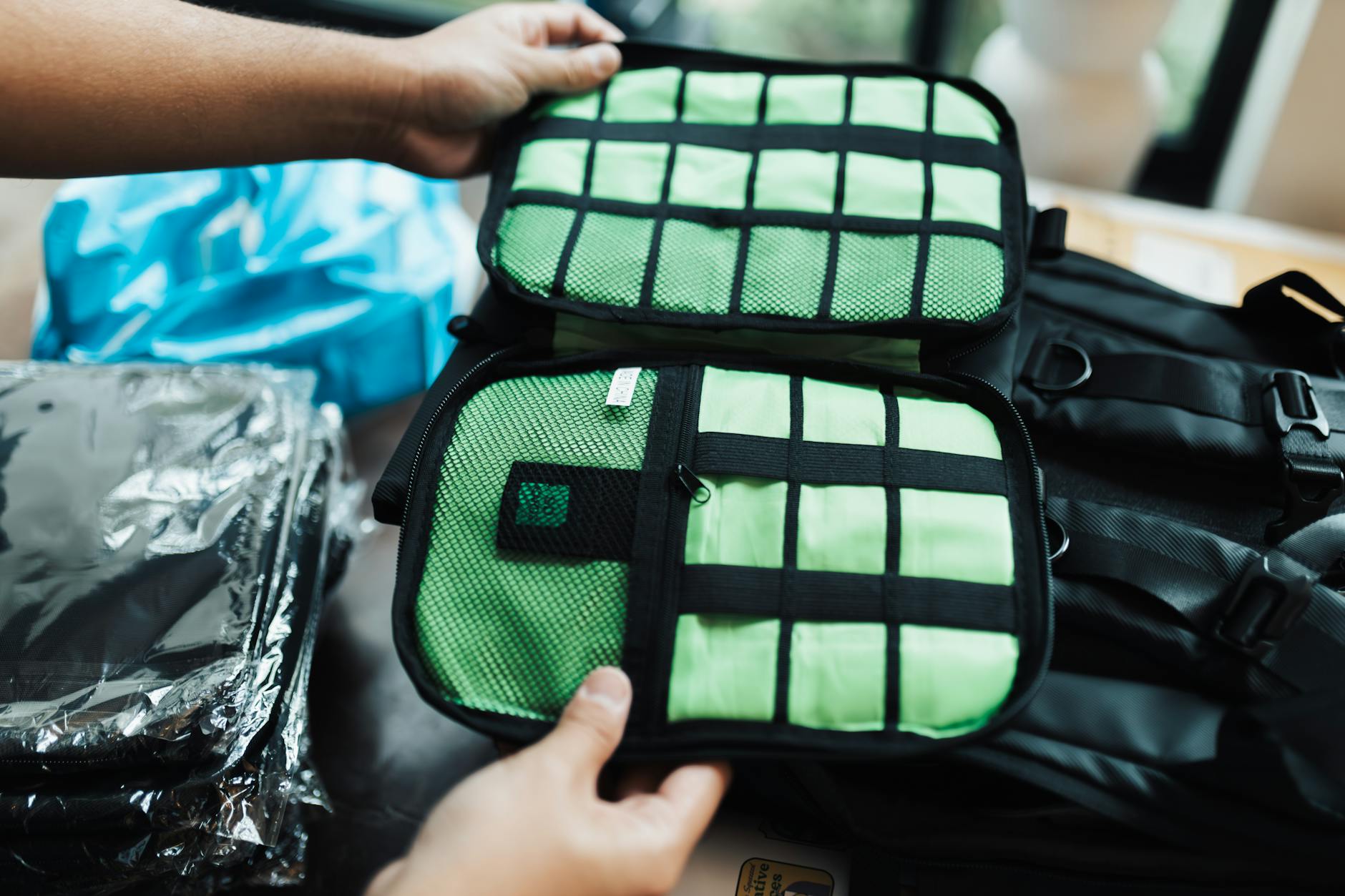
How you physically put clothes and items into your bag matters enormously. Most people stuff and hope. Experienced packers use one of three proven techniques:
Rolling
Rolling clothes is the gold standard for carry-on packing tips and tricks. Lay each garment flat, fold any sleeves in, then roll tightly from the bottom hem toward the collar. Rolled clothes take up less vertical space and fit into gaps that folded clothes can't reach. They also wrinkle less than you'd expect — especially for casual items like t-shirts, jeans, and knit fabrics.
Folding (the KonMari-style flat fold)
For structured items — dress shirts, blazers, trousers — flat folding along the garment's natural seams produces fewer wrinkles than rolling. Stack folded items vertically in packing cubes so you can see everything at once, rather than burying items under each other.
Bundling
The bundle method wraps all your clothes around a central core object (like a toiletry bag). Each garment is layered over the last, alternating direction. When done correctly, this method minimizes wrinkles because garments aren't folded — they're curved. It works best for travelers bringing multiple dressy items. The downside is that you have to unpack everything to access anything, so it's not ideal for multi-stop trips.
Using Packing Cubes
Packing cubes are rectangular fabric organizers with zippers that fit inside your suitcase and group items by category — tops in one cube, bottoms in another, underwear and socks in a third. They don't magically create space (compressed packing cubes do compress slightly, but standard ones mainly organize), but they make the bag feel manageable and help you find things without destroying your packing job. Use them to create distinct zones and keep rolled clothes from unspooling during transit.
Layering Strategy and Filling Gaps
Pack heavier, denser items — shoes, toiletry bags, electronics — at the bottom of the bag (near the wheels when standing upright). This keeps the bag stable and prevents heavier items from crushing lighter garments. Roll clothes and fill gaps around the heavier items. Stuff socks and small accessories inside shoes. Use the interior mesh pockets for flat items like cables, face masks, and documents.
TSA Carry-On Rules 2026: The 3-1-1 Rule and What's Changed
Understanding TSA carry-on rules 2026 keeps you from losing toiletries at security and from holding up the line. The core rule hasn't changed in years, but enforcement and screening technology have evolved.
The 3-1-1 Rule:
- 3.4 oz (100ml): Each liquid, gel, or aerosol container must be 3.4 oz or smaller.
- 1 quart-sized bag: All containers must fit into a single, clear, zip-top quart-sized bag.
- 1 bag per passenger: Each traveler gets one quart bag, placed in the bin separately during screening.
Liquids include anything that pours, sprays, smears, or is squishy — shampoo, conditioner, toothpaste, lotion, gel deodorant, foundation, mascara, and lip gloss all count. A solid stick of deodorant does not.
Exemptions: Medications in reasonable quantities are exempt from the 3.4 oz limit. Declare them to the TSA officer and keep them in a separate bag for easy inspection. Baby formula, breast milk, and juice for infants are also exempt and don't need to be in the quart bag. These items may receive additional screening.
Solid alternatives: The smartest way to cut down on liquids is to swap them for solid formats. Solid shampoo bars, conditioner bars, solid sunscreen sticks, toothpaste tablets, and solid moisturizer bars take zero space in your quart bag. One shampoo bar typically lasts 60–80 washes and is lighter than any bottle.
CT scanners at checkpoints: Many major US airports now use CT (computed tomography) scanners at security. These 3D scanners can see inside bags more clearly than traditional X-ray, so TSA officers at some airports now allow you to leave electronics and liquids inside your bag. However, this is not universal — unless a sign at the checkpoint says otherwise, follow the standard rules: liquids out, electronics out.
What Must Always Go in Your Carry-On (Never Check These Items)
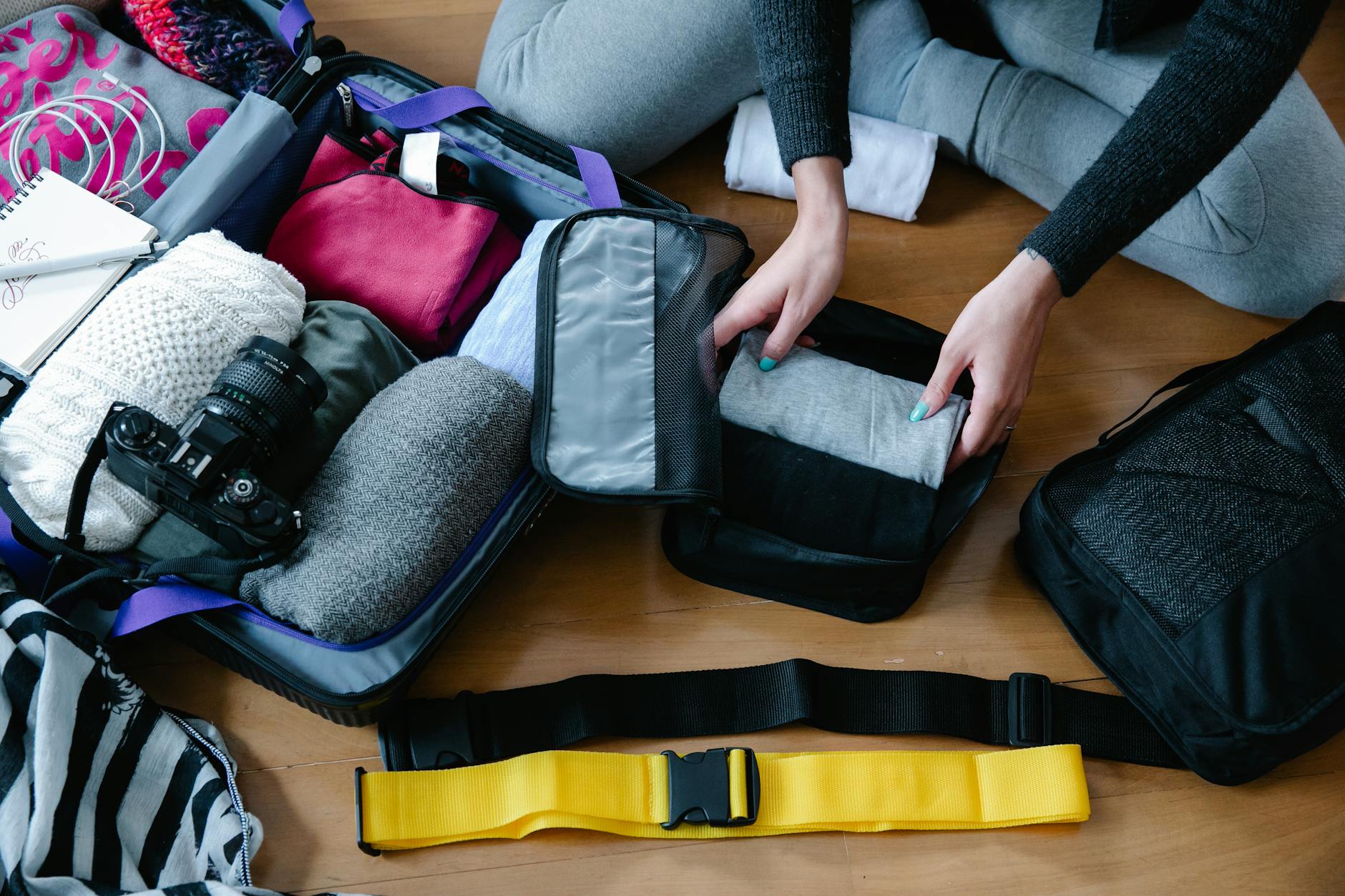
Even if you plan to check a bag, certain items should always travel with you in the cabin. Checked bags get lost, delayed, damaged, and sometimes stolen. If the following items are in a checked bag when that happens, you're in serious trouble:
- All medications — prescription and over-the-counter. If your checked bag is delayed 24 hours, you need your medications. Airlines are not responsible for medical expenses caused by delayed luggage.
- Electronics with lithium batteries — laptops, phones, tablets, e-readers, portable power banks, and wireless headphones. The FAA bans lithium batteries in checked bags due to fire risk. Power banks are explicitly prohibited from checked luggage.
- Irreplaceable items — jewelry, family heirlooms, cash, and anything with sentimental value that cannot be replaced.
- Important documents — passport, visa documents, travel insurance papers, hotel confirmations. Keep digital copies in email, but the originals travel on your person or in your carry-on.
- Your first 24 hours of essentials — a change of clothes, phone charger, and toiletries. Even if you're checking a bag, pack one day's worth of items in your carry-on in case your checked bag doesn't arrive with you.
- Fragile or expensive camera equipment — camera bodies, lenses, and memory cards should never go in checked bags. Baggage handlers are not gentle.
Clothing Strategies: Packing Smart, Not Just Light
The best way to pack carry-on luggage for clothing is not about bringing fewer clothes — it's about bringing clothes that work harder. The goal is maximum outfit combinations from minimum individual pieces.
The capsule wardrobe approach: Choose a base color palette — navy, grey, or black — and add two or three accent pieces. Every item should coordinate with at least two others. For a 7-day trip, you realistically need 3–4 tops, 2 bottoms, 1 dress or versatile piece, 1 light layer, and enough underwear and socks for each day.
Wear your bulkiest items on travel day: Your heaviest shoes, thickest sweater, and bulkiest jacket should be on your body when you board — not in your bag. A thick down jacket, for example, can consume a quarter of a carry-on's volume. Wearing it costs you nothing in bag space.
Choose quick-dry and wrinkle-resistant fabrics: Merino wool and synthetic blends are excellent for travel. Merino wool t-shirts and base layers resist odor, regulate temperature, dry quickly, and wrinkle far less than cotton. They can genuinely be worn multiple times between washes without issue.
Laundry options for longer trips: For trips longer than a week, plan to do laundry. Most hotels provide laundry service. Many have in-room sinks where you can hand-wash items overnight using a small packet of travel laundry soap. Laundromats exist in every city. Packing a two-week wardrobe into a carry-on is unnecessary — packing a one-week wardrobe and washing it once is entirely practical.
The Shoe Strategy: The Hardest Item to Pack
Shoes are the most volume-inefficient item in any bag. They're rigid, irregularly shaped, and heavy. Most carry-on-only travelers bring exactly two pairs: one comfortable walking shoe worn on travel day, and one pair that handles everything else (sandals in warm climates, a versatile sneaker or flat otherwise).
Pack shoes sole-to-sole (facing each other) to save space and keep the inside of your bag clean. Stuff the interior of each shoe with rolled socks, a phone charger, small electronics accessories, or anything else small and soft. This fills dead space, helps shoes hold their shape, and means nothing is wasted inside your bag.
Use a shoe bag or shower cap over the soles to keep dirt off your clothes. A plastic grocery bag works just as well.
Organization Tips: Finding Anything in 10 Seconds
A well-packed carry-on is useless if you have to destroy it every time you need something. Thoughtful organization means you can access what you need without repacking.
- Front and outer pockets: Reserve these for items you'll need before, during, and immediately after the flight — boarding pass, passport, earbuds, lip balm, snacks, and your quart bag of liquids.
- Compression bags: For bulky items like a down jacket or a heavy sweater you didn't want to wear on the plane, roll-up compression bags (no vacuum pump required) can reduce volume by up to 50%. They're not for everyday clothes — compression can cause creasing — but they're excellent for single, bulky items.
- Cable and tech organizer: A small flat pouch with elastic loops keeps cables, adapters, charging blocks, and earbuds tangle-free and in one place. When you arrive at a hotel, the entire pouch goes on the nightstand. This alone saves 10 minutes per trip of untangling cables from the bottom of bags.
- The "daily bag" system: If you use a personal item (backpack or tote), treat it as your daily bag at your destination. Pack it so that once you land and store your roller in the hotel room, you can take your personal item out for the day without repacking.
Avoiding Extra Fees: How to Keep Your Bag Out of the Gate-Check Line
Gate-checking — when a gate agent takes your carry-on at the door of the plane because overhead bins are full — can trigger fees on some airlines and almost always means waiting at baggage claim. Here's how to avoid it:
- Board as early as possible. Overhead bin space fills from the front. The earlier you board, the more likely you are to find space near your seat. Check in exactly 24 hours before departure to get the best available boarding group.
- Have elite status or a co-branded airline credit card. Most airline credit cards include priority boarding, which gets you on the plane before the general boarding rush. For frequent flyers, this is one of the most practical benefits of airline cards.
- Choose seats toward the back. Counter-intuitively, seats near the back board early on many airlines (families and those needing assistance board first, then often rear passengers). Overhead bins at the back of the plane fill last.
- Use a soft-sided bag. Soft-sided carry-ons can compress and squeeze into bins even when they're nearly full. Hard-shell bags can't compress at all and may be gate-checked even when the bin has room.
- Maximize your personal item. Your personal item — the bag that goes under the seat — often has no weight limit and can be generously sized. A well-packed personal item can hold everything you'll need in flight plus anything you'd otherwise stress about fitting in the overhead bin.
The Carry-On Packing Checklist (By Category)
Use this as a starting template. Adjust for trip length, climate, and purpose.
Clothing (for 5–7 days)
- 3–4 tops (mix of casual and dressier)
- 2 bottoms (pants/jeans + shorts or skirt)
- 1 versatile layer (cardigan, light jacket)
- 5–7 pairs of underwear
- 4–5 pairs of socks
- Sleepwear (a light t-shirt doubles fine)
- 1 pair of shoes (worn on travel day)
- 1 pair of sandals or alternate shoes (packed)
Toiletries (quart bag)
- Travel-size shampoo or shampoo bar
- Conditioner or conditioner bar
- Toothbrush + toothpaste (or toothpaste tablets)
- Solid deodorant
- Moisturizer (travel size)
- Sunscreen stick or travel-size SPF
- Razor + any other personal items
Electronics (in carry-on or personal item — never checked)
- Phone + charger cable
- Laptop or tablet + charger (if needed)
- Power bank / portable battery
- Universal travel adapter (for international trips)
- Earbuds or noise-canceling headphones
Documents and Essentials (always on your person or top of bag)
- Passport or government ID
- Boarding passes (app or printed)
- Travel insurance card or documents
- Hotel/accommodation confirmations
- Credit cards + small amount of local cash
- Any prescriptions and medications
Common Carry-On Packing Mistakes to Avoid
Even experienced travelers fall into these traps. Avoiding them separates a stressful trip from a smooth one:
- Packing full-size toiletries "just in case." A full-size shampoo bottle that doesn't fit the 3.4 oz rule will be confiscated at security. Period. Never pack a full-size liquid hoping it won't get flagged.
- Bringing "just in case" outfits. Every "just in case" item is guaranteed dead weight. Pack for what you've planned. If something unexpected happens, stores exist at your destination.
- Forgetting to weigh the bag. Even if your airline doesn't weigh carry-ons domestically, if you're connecting to an international flight, the international carrier might. Weigh your bag at home before leaving.
- Overpacking the personal item. Your personal item must fit under the seat in front of you. An over-stuffed backpack that won't fit under the seat may be taken and gate-checked with your carry-on.
- Leaving security prep to the last second. Having your quart bag buried under everything else when you reach the security checkpoint slows you down and frustrates other travelers. Pack it in the outermost pocket of your carry-on or at the very top.
- Packing anything prohibited. Sharp objects, sporting goods, and certain tools are prohibited in carry-ons. When in doubt, check the TSA's official website (tsa.gov) — they have a searchable "Can I Bring?" tool for any item.
Frequently Asked Questions About Carry-On Packing
Key Takeaways
Mastering how to pack a carry-on bag is less about having perfect gear and more about making deliberate decisions before you zip anything up. Know your airline's size rules. Roll casual clothes, fold structured ones. Understand the TSA 3-1-1 liquid rule and switch to solid toiletries where you can. Never check electronics, medications, or documents. Wear your heaviest items onto the plane. Board as early as you can.
The carry-on packing tips and tricks that experienced travelers swear by all come down to one principle: everything in your bag should earn its place. Every item you remove is one less thing to carry, lose, or pay a fee for. With the right system, a single carry-on bag can handle a two-week trip comfortably — and you'll walk off the plane and straight out of the airport while everyone else waits at baggage claim.
Start with one trip using carry-on only. Most travelers who try it once never willingly go back.