How to Strengthen Your Feet: 10 Exercises That Actually Rebuild Foot Muscle
If you've ever dealt with plantar fasciitis, chronic foot pain, flat arches, or ankles that seem to roll at the slightest uneven surface, there's a good chance your feet are simply weak — and modern footwear is largely to blame. Learning how to strengthen feet is one of the most overlooked yet impactful things you can do for your overall movement health, posture, and injury prevention. The good news: the feet respond remarkably well to targeted exercise, and you don't need a gym or equipment to start.
This guide covers 10 evidence-based foot strengthening exercises, complete with instructions, sets and reps, progressions, and safety notes — drawn from podiatric research and clinical rehabilitation practice.
Why Foot Strength Matters More Than Most People Realize
Your feet contain 26 bones, 33 joints, and more than 100 muscles, tendons, and ligaments. They are not passive platforms — they are dynamic structures that absorb force, propel movement, and continuously send proprioceptive signals to your brain to keep you balanced and upright.
Yet the average adult spends the majority of their waking hours in rigid, cushioned shoes. Research published in Scientific Reports (2018) found that habitually shod populations show measurably weaker intrinsic foot muscles compared to people who spend significant time barefoot. Thick-soled shoes reduce sensory feedback from the ground, suppress natural muscle activation, and essentially allow the intrinsic foot muscles to atrophy over time — much like wearing a cast weakens the muscles beneath it.
The consequences are tangible:
- Weakened arches and flat feet
- Increased risk of plantar fasciitis
- Chronic ankle instability and repeated sprains
- Knee, hip, and lower back pain caused by poor force transfer from the ground up
- Reduced balance and a higher fall risk, especially as we age
The encouraging flip side: foot muscle exercises have been shown to measurably improve arch height, reduce plantar fascia strain, enhance balance, and decrease pain. A 2019 study in the Journal of Orthopaedic & Sports Physical Therapy found that an eight-week intrinsic foot muscle training program significantly reduced plantar fasciitis pain and improved function in participants.
Barefoot Training: Why Less Shoe Can Mean More Strength
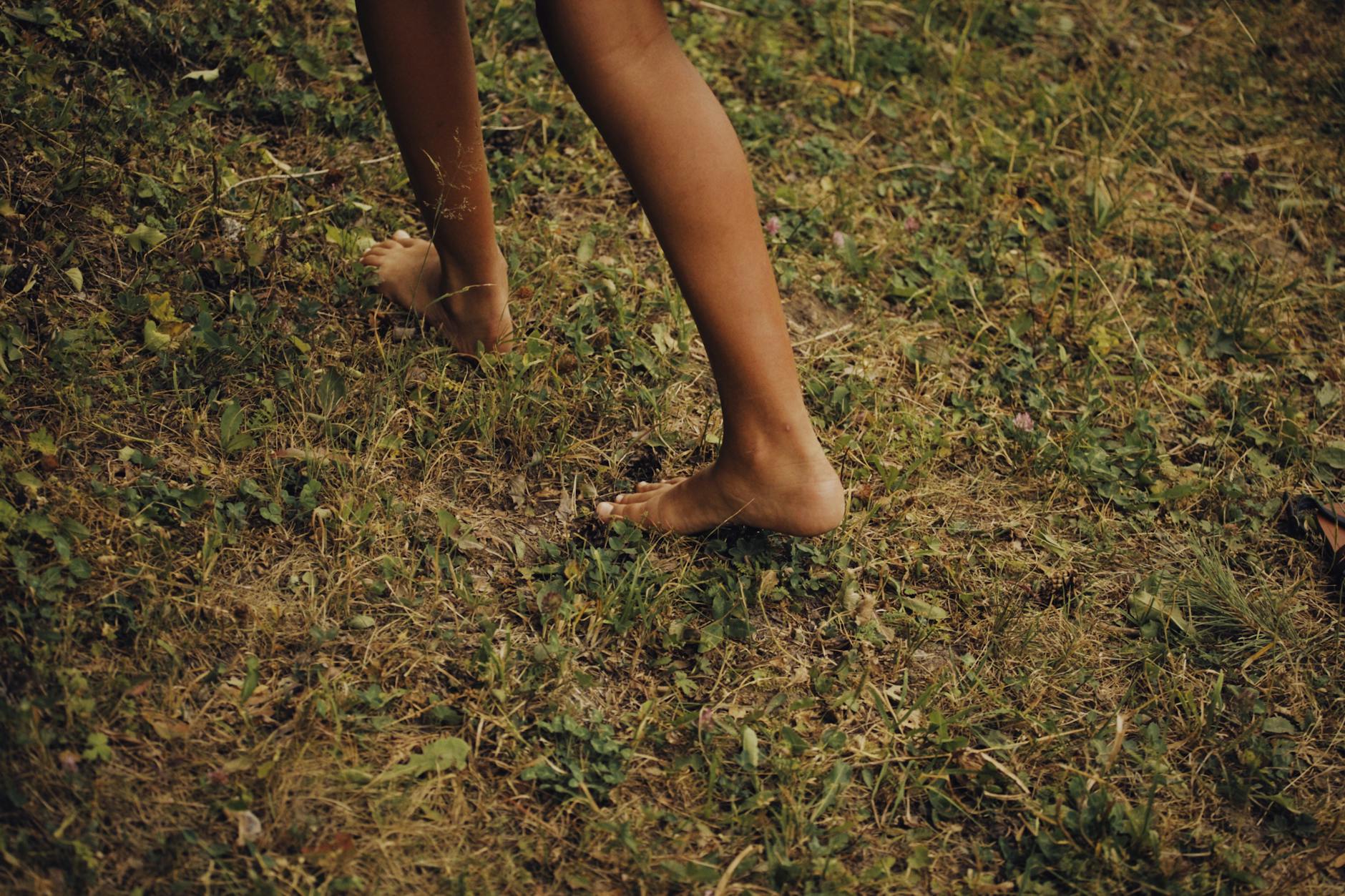
Before getting into the specific exercises, it's worth understanding the role of barefoot training benefits in the broader picture. Spending time without shoes — even just walking around your home or on grass — forces the small intrinsic muscles of the foot to engage in ways that cushioned footwear prevents. The ground surface sends constant sensory feedback through the soles, activating a reflex loop that keeps muscles firing and responsive.
This doesn't mean you need to abandon shoes entirely. But gradually increasing barefoot or minimal-footwear time alongside a structured exercise program accelerates the strength gains significantly. Think of it as removing the training wheels: the muscles have to do the work themselves rather than leaning on artificial support.
A practical starting point is to perform the exercises below in bare feet on a firm surface. As your strength improves, you can begin spending more time walking and standing barefoot indoors, then progressing to varied outdoor terrains.
10 Foot Strengthening Exercises: Complete Guide With Instructions
These exercises are organized from foundational (targeting the smallest intrinsic muscles) to more demanding (full-body integration). If you are recovering from plantar fasciitis or another foot injury, start with exercises 1 through 5 and only progress when those feel comfortable and pain-free.
Exercise 1: Toe Spreads (Toe Splays)
What it does: Activates the abductor hallucis and interosseous muscles, which are often severely inhibited in people who wear narrow-toed shoes. Strong toe abductors contribute to arch stability and reduce bunion progression.
How to do it: Sit in a chair with both feet flat on the floor. Without curling your toes, spread them as wide apart as possible and hold for 3–5 seconds, then relax completely. Focus especially on spreading the big toe away from the others — this specific movement (big toe abduction) is the most commonly lost and most clinically important.
Sets and reps: 3 sets of 10 reps per foot. Perform daily.
Progression: Once you can spread all toes independently and hold for 5 seconds, try doing it standing with weight on the foot.
Exercise 2: Arch Lifts (Short Foot Exercise)
What it does: The "short foot" exercise is arguably the most researched foot strengthening exercise in clinical literature. It directly targets the abductor hallucis and other intrinsic arch muscles without curling the toes, making it more specific than towel scrunches for arch development.
How to do it: Sit with your foot flat on the floor. Without curling your toes, try to shorten your foot by drawing the ball of the foot toward your heel — as if you were trying to create an arch by doming the midfoot upward. Your toes should remain long and flat on the ground. Hold the domed position for 5 seconds, then slowly release.
Sets and reps: 3 sets of 10 reps per foot. Perform daily. This exercise requires neuromuscular focus — expect it to feel unfamiliar at first.
Progression: Move from seated to standing on both feet, then single-leg standing.
Exercise 3: Calf Raises
What it does: Strengthens the gastrocnemius and soleus (the calf complex), which transmit tremendous force through the Achilles tendon into the heel and plantar fascia. Weak calves are a primary driver of plantar fasciitis and Achilles tendinopathy.
How to do it: Stand with feet hip-width apart, toes pointing forward. Slowly rise onto the balls of your feet, holding at the top for 1–2 seconds, then lower with control over 3 seconds. The slow descent (eccentric phase) is where most of the strengthening occurs. Perform barefoot on a flat surface or with your heels slightly off the edge of a step for greater range of motion.
Sets and reps: 3 sets of 15 reps. Three times per week.
Progression: Single-leg calf raises. Add weight (hold dumbbells) once you can perform 20 single-leg reps with control.
Exercise 4: Towel Scrunches
What it does: Engages the flexor digitorum brevis and the long toe flexors, building gripping strength in the toes and strengthening the longitudinal arch from below.
How to do it: Place a small towel flat on a hard floor. Sit in a chair and position your foot on the towel. Using only your toes, scrunch the towel toward you by curling your toes and gripping the fabric, then release and spread the towel back out. Keep your heel on the ground throughout.
Sets and reps: 3 sets of 10–15 scrunches per foot. Daily.
Progression: Perform the movement standing. Add a light weight (like a book) on top of the towel to increase resistance.
Exercise 5: Marble Pickups
What it does: Develops fine motor control and coordination in the toe flexors while training the foot to work as a precision tool rather than a blunt platform.
How to do it: Place 10–15 marbles (or similarly sized objects — walnuts or small stones work) on the floor beside a cup or bowl. Seated in a chair, use your toes to pick up one marble at a time and drop it into the container. Work through all marbles, then switch feet.
Sets and reps: 2–3 rounds per foot. Daily or every other day.
Progression: Use smaller objects (like pencils or pen caps). Try doing it with a slightly elevated surface for the container to increase the range of toe movement.
Exercise 6: Toe Yoga
What it does: Develops independent neuromuscular control of the big toe versus the lesser toes — a distinction that is critical for normal gait mechanics and push-off power. Most people cannot isolate these movements at all when they first try.
How to do it: Sit or stand with your foot flat. First, press your big toe down into the floor while lifting all four lesser toes up. Hold 3 seconds. Then reverse: press the four lesser toes down while lifting only the big toe. Hold 3 seconds. Alternate between the two positions.
Sets and reps: 3 sets of 10 alternations per foot. Daily.
Progression: Once the movement feels natural, perform it standing on the target foot only, adding a balance challenge to every rep.
Exercise 7: Barefoot Walking on Varied Surfaces
What it does: Unlike isolated exercises, barefoot walking on different textures activates the full suite of intrinsic and extrinsic foot muscles simultaneously while also training proprioception — the foot's ability to sense and respond to the ground in real time. Research in gait science consistently shows that varied surface exposure is one of the most potent stimuli for improving foot strength and ankle stability together.
How to do it: Begin with 5–10 minutes of barefoot walking indoors on hard floors. Gradually introduce grass, gravel paths, sand, and uneven ground. Pay attention to how your foot rolls and grips at each step. Walk mindfully — slow, deliberate steps allow the intrinsic muscles to work; rushing tends to produce stiff, protective walking patterns that defeat the purpose.
Sets and reps: Start with 5 minutes daily and build to 20–30 minutes over 4–6 weeks.
Safety note: If you have diabetes or reduced sensation in your feet, consult a healthcare provider before barefoot walking on outdoor surfaces.
Exercise 8: Single-Leg Balance
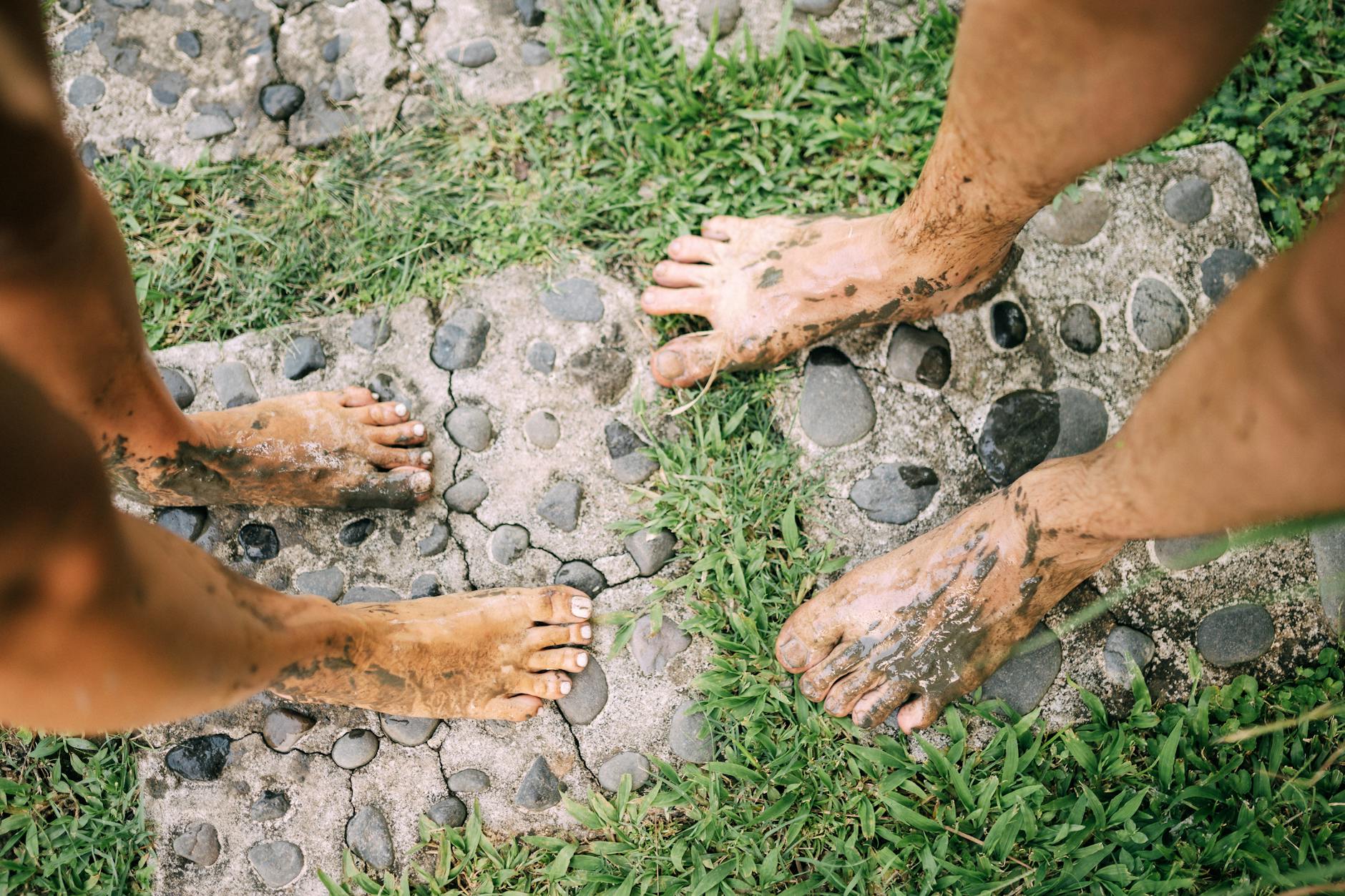
What it does: Single-leg balance directly loads the intrinsic foot muscles and peroneal muscles while also training the ankle stabilizers that prevent inversion sprains. A 2020 review in Physical Therapy in Sport identified single-leg balance training as one of the most effective interventions for reducing ankle instability and recurrent sprains.
How to do it: Stand barefoot on one foot, with a slight bend in the standing knee (never lock the joint). Hold for 20–30 seconds. Keep your gaze fixed on a point in front of you at eye level to assist balance. The standing foot should be working actively — you should feel the arch muscles engaging and the toes lightly pressing into the floor to stabilize.
Sets and reps: 3 sets of 30 seconds per foot. Daily.
Progressions: Eyes closed (dramatically harder — increases proprioceptive demand). Standing on a folded towel or balance pad. Adding arm movements to destabilize balance.
Exercise 9: Heel Walks
What it does: Strengthens the tibialis anterior — the muscle running along the shin — which controls dorsiflexion (pulling the foot upward) and acts as an important counterbalance to calf tightness. Tight or weak tibialis anterior muscles are a common but under-addressed contributor to shin splints, flat arches, and plantar fasciitis.
How to do it: Lift the front of both feet off the ground so you are balancing on your heels only, toes pointing toward the ceiling. Walk forward for 20–30 steps, maintaining the lifted toe position throughout. Keep your steps deliberate and controlled.
Sets and reps: 3 sets of 20–30 steps. Three to four times per week.
Progression: Walk in a figure-eight pattern to add directional challenge. Slow the pace to increase time under tension in the tibialis anterior.
Exercise 10: Resistance Band Exercises
What it does: A resistance band allows you to train ankle inversion, eversion, dorsiflexion, and plantarflexion against progressive load — targeting the extrinsic foot and ankle musculature that protects against sprains and supports the arch from the outside in.
How to do it: Secure a light resistance band around a table leg or anchor point. Sit on the floor with your leg extended.
- Plantarflexion: Loop the band around the top of your foot. Point your foot away from you against resistance, then return slowly. 3 x 15 reps.
- Dorsiflexion: Loop the band around the ball of your foot with the anchor behind you. Pull your toes toward your shin against resistance. 3 x 15 reps.
- Eversion: Anchor the band to the inside of your foot, rotate the foot outward against resistance. 3 x 12 reps per side.
- Inversion: Anchor the band to the outside of your foot, rotate inward. 3 x 12 reps per side.
Progression: Move to a heavier band as each direction becomes easy. Perform standing rather than seated for added stability demand.
How to Structure Your Foot Strengthening Routine
With 10 exercises to choose from, the natural question is: do you do them all every day? The short answer is no — and you don't need to for meaningful results. Here is a practical weekly structure based on exercise type:
Sample Weekly Schedule
Daily (5–10 minutes): Toe spreads, arch lifts (short foot), toe yoga, barefoot walking indoors
3x per week: Calf raises, single-leg balance, heel walks
2–3x per week: Towel scrunches, marble pickups, resistance band exercises
As available: Outdoor barefoot walking on varied terrain (5–20 minutes)
Expect the daily exercises to take about 8–10 minutes once you know the movements. The three-times-per-week exercises add another 10–15 minutes per session. Consistency matters far more than volume — five minutes every day will outperform 45 minutes once a week for foot neuromuscular adaptation.
Important Safety Guidelines and When to See a Professional
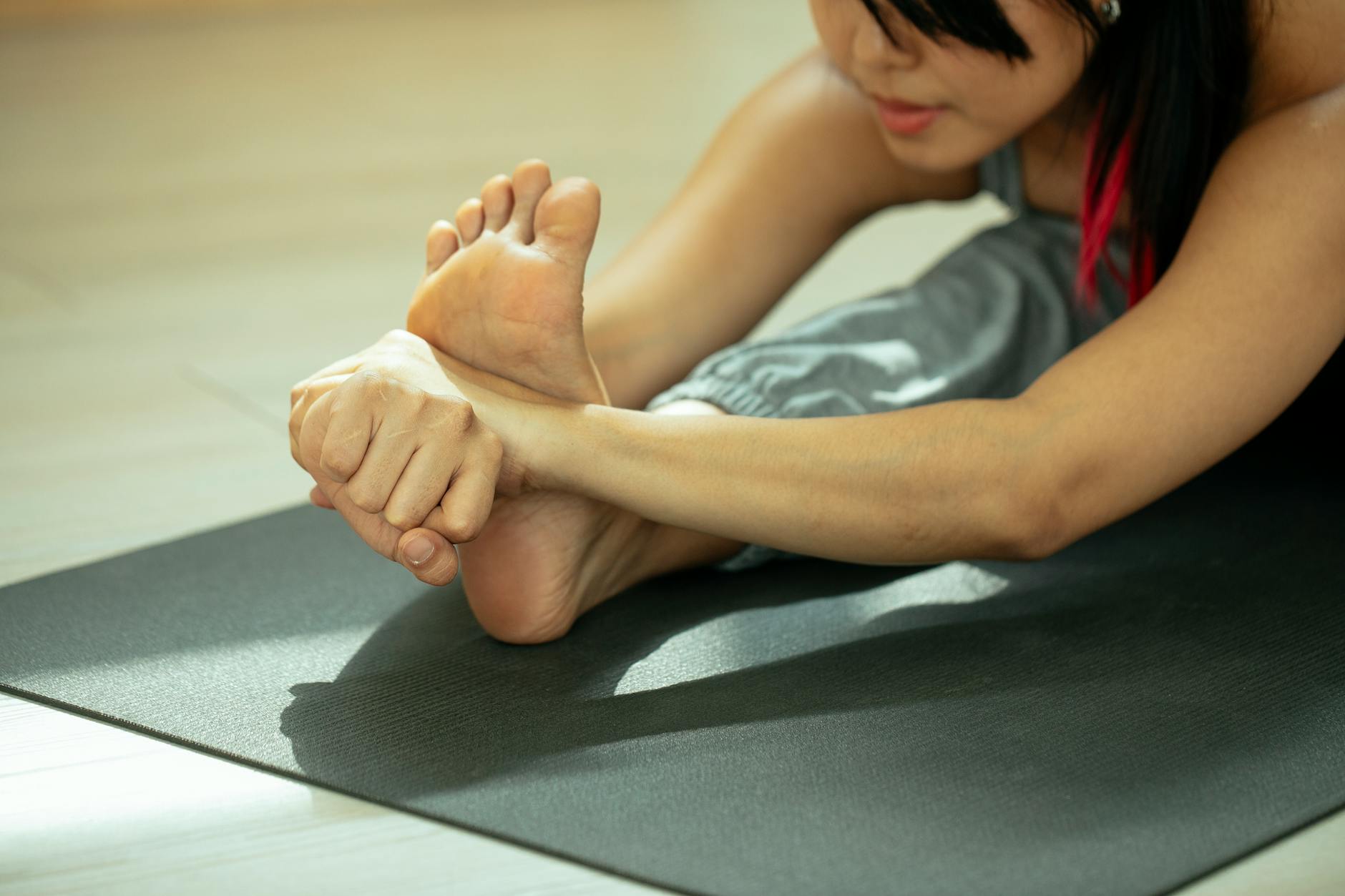
As with any physical training program, there are guidelines worth following to avoid setbacks:
- Start with seated exercises. If you have active plantar fasciitis pain, begin with exercises 1, 2, 4, and 5 in a seated position. Standing exercises place direct load on the plantar fascia and should be introduced gradually once seated work feels pain-free.
- Expect mild muscle fatigue, not pain. Intrinsic foot muscles fatigue quickly when they are first being trained — this is normal. Sharp, stabbing, or burning pain is not normal and means you should stop and rest, or consult a podiatrist or physiotherapist.
- Progress gradually on barefoot exposure. The plantar fascia and Achilles tendon adapt more slowly than muscles. Going from heavily cushioned shoes to extended barefoot walking overnight is a recipe for injury. Add 5 minutes per week to your barefoot time and let tissue adaptation keep pace with muscle adaptation.
- Stretch as well as strengthen. Calf stretching (gastrocnemius and soleus separately), plantar fascia stretching (toe extension stretch), and big toe mobilization should accompany strengthening work, especially if you have plantar fasciitis or Achilles tightness.
- See a podiatrist if pain persists beyond 3–4 weeks of conservative exercise, if you have structural deformities such as severe bunions or rigid flat feet, or if you experience any numbness or tingling.
How Long Until You See Results?
Neuromuscular adaptation — the brain-muscle connection improving — begins within 2–3 weeks. You may notice that toe splay feels more natural, balance feels steadier, and the arch lifts become perceptibly easier. These early gains are primarily neural, not structural.
Genuine muscle hypertrophy in the intrinsic foot muscles becomes measurable around the 6–8 week mark with consistent training. Research using ultrasound has shown increases in abductor hallucis muscle cross-sectional area after 8 weeks of targeted exercise. Clinically meaningful pain reduction from plantar fasciitis exercises typically occurs in this same 6–8 week window.
Arch height changes — actual structural remodeling — take longer, often 3–6 months of consistent training. But don't be discouraged by this timeline. The functional gains in balance, stability, and pain relief arrive well before the structural changes, and they make a real difference in daily quality of movement.
Key Takeaways
Your feet are capable of far more strength, mobility, and sensory precision than modern footwear typically allows them to express. The evidence is clear: foot strengthening exercises reduce pain, improve balance, support the arch, and protect the entire kinetic chain from the ground up.
Here are the most important points to carry forward:
- The intrinsic foot muscles weaken with prolonged use of heavily cushioned, motion-controlling footwear — this is well-documented in the research.
- The short foot exercise (arch lift) and toe splay are the most evidence-backed starting points for rebuilding intrinsic strength and should be done daily.
- Calf raises, single-leg balance, and resistance band work address the extrinsic muscles and ankle stabilizers that protect against sprains and plantar fasciitis recurrence.
- Barefoot training benefits extend beyond any single exercise — the sensory feedback from ground contact is a training stimulus in itself.
- Consistency beats intensity. Ten minutes daily will rebuild foot strength more effectively than occasional long sessions.
- Most people begin noticing functional improvement within 2–3 weeks. Measurable strength changes follow at 6–8 weeks.
Strong feet are the foundation of everything you do on two legs. Investing a few minutes a day in the exercises above is one of the highest-return habits you can build — whether you are recovering from injury, trying to prevent one, or simply looking to move better for decades to come.