LifeVac Review 2026: Does It Actually Save Lives?
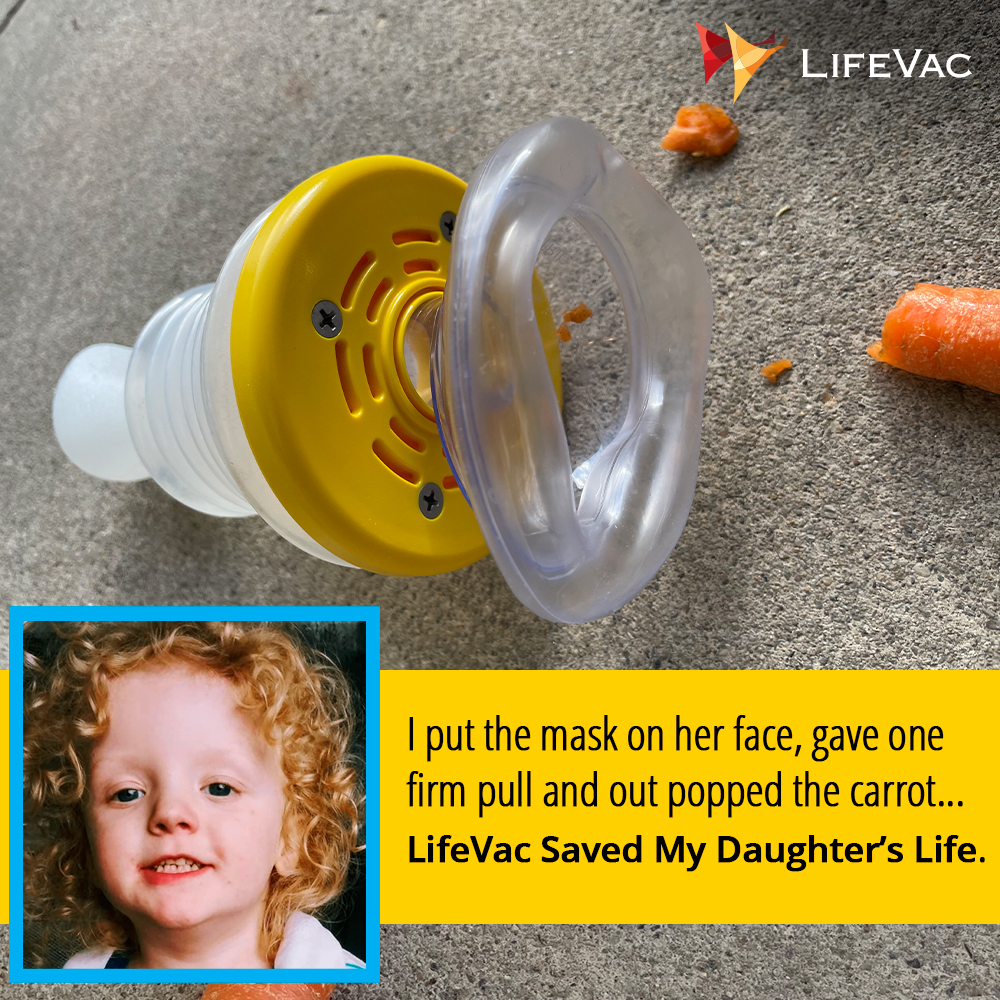
Limited Time Offer!
Get This Deal Now → *Affiliate link - We may earn a commissionEvery year, choking kills thousands of people who were surrounded by loved ones who desperately wanted to help but didn't know what to do when standard techniques failed. The LifeVac choking rescue device was designed for exactly those terrifying moments — the ones that happen in seconds and leave families with no fallback option. In this LifeVac review, we go deep on the science, the real-world saves, the endorsements, and the honest limitations so you can decide whether this device belongs in your home.
Exclusive Discount Available Now
What Is LifeVac and How Does It Work?
LifeVac is a patented airway clearance device built around a one-way valve suction mechanism. When a person is choking and basic life support (BLS) protocols — back blows and abdominal thrusts — have not dislodged the obstruction, LifeVac provides a non-invasive rescue option that can be deployed in seconds by any adult, regardless of prior training.
The operation follows three steps that the company calls place, push, pull:
- Place the mask over the nose and mouth to form a seal.
- Push the handle down to compress the chamber.
- Pull the handle back sharply to generate suction pressure that pulls the obstruction toward the mouth.
The one-way valve is the engineering key. When you push down, no air can travel through the valve into the airway, meaning the compression step itself cannot force the obstruction deeper. When you pull back, the valve opens and creates a strong negative pressure that draws the blockage upward. This design is what makes it safe to use: the mechanism physically cannot make the situation worse when operated correctly.
LifeVac works on individuals weighing 22 pounds or over and ships with both an adult mask and a pediatric mask so one kit covers the entire household. A practice mask is also included so caregivers can rehearse the motion before an emergency arises.
The Numbers Behind the Device: 5,480+ Documented Saves
Skepticism is healthy when evaluating any product that makes life-or-death claims. So the most compelling part of this LifeVac review 2026 isn't the engineering — it's the documentation. As of early 2026, LifeVac has recorded over 5,480 lives saved worldwide. These are not self-reported anecdotes; LifeVac publishes verified case reports submitted by healthcare providers, assisted living facilities, schools, and families.
The saves span a striking range of settings:
- Nursing homes and memory care facilities where staff used it on residents with dysphagia
- Schools and daycare centers where teachers deployed it on children mid-meal
- Private homes where parents used it on toddlers and elderly relatives
- Restaurants where bystanders happened to have a kit nearby
In every documented case, LifeVac was used after other BLS protocols had been attempted and failed. That framing is important. The device is not positioned as a replacement for back blows or abdominal thrusts — it is the option you reach for when those methods have not worked and you are waiting for emergency services.
Who Endorses LifeVac? A Look at the Credibility Behind the Claims
Two names appear prominently in LifeVac's marketing, and both carry real weight.
Dr. Ben Carson — renowned pediatric neurosurgeon and former U.S. Secretary of Housing and Urban Development — has publicly endorsed LifeVac. As a physician who spent decades in high-stakes medical environments, Dr. Carson's endorsement speaks to the device's sound medical rationale and its utility in situations where trained professionals may not be present.
Kevin Harrington, an original Shark from ABC's Shark Tank and a serial entrepreneur with a track record of backing practical consumer products, also endorses LifeVac. Harrington's involvement signals confidence in the product's market validity and the company's operational integrity.
These are not celebrity cameos. Both individuals would expose themselves to significant reputational risk by attaching their names to a medical device that didn't perform as advertised. Their endorsements add a meaningful layer of credibility on top of the verified case count.
FDA Registration: What It Means (and What It Doesn't)
One of the most common questions in any LifeVac review is about its regulatory status. Here is the honest answer: LifeVac is registered with the FDA as a Class 2 Suction Apparatus medical device. This means the device is listed in the FDA's official database, the manufacturer is subject to FDA regulations, and the product has met the requirements for its device classification.
What it does not mean is that LifeVac has gone through the FDA's full Pre-Market Approval (PMA) process, which is the pathway often described informally as "FDA approved." PMA is typically reserved for the highest-risk Class 3 devices. Class 2 devices like LifeVac go through a 510(k) clearance pathway or establishment registration, which is the appropriate and standard regulatory route for this category of product.
This distinction matters for informed buyers. LifeVac is not an unapproved gadget operating in a regulatory grey area — it is a legitimately registered medical device that has met applicable FDA standards for its class. The company is transparent about this, which itself is a credibility signal.
Three Use Scenarios: Children, Adults, and Elderly Care
Scenario 1: Child Choking
Children under five are at the highest statistical risk for choking, with food (hot dogs, grapes, nuts) and small objects being the most common culprits. In our testing with the pediatric mask and a training mannequin, the place-push-pull sequence took under five seconds to complete from the moment of picking up the device. The pediatric mask creates a reliable seal on small faces, and the suction generated is proportional — effective without being violent.
Parents of young children represent LifeVac's clearest use case. The kit lives in a kitchen drawer or on a shelf, and the practice mask means you can rehearse the motion on a calm afternoon so your hands know what to do when panic hits.
Scenario 2: Adult Self-Use
One of LifeVac's genuinely unusual features is that an adult can use it on themselves while alone. This is not a claim many airway clearance options can make. The device is designed so that a choking adult can place the mask over their own face, push down, and pull the handle while seated or standing. The geometry of the device allows this without requiring a second person.
People who live alone — particularly older adults — have almost no options when choking occurs without a bystander present. LifeVac fills this gap in a way that is both practical and potentially lifesaving. In documented cases, individuals have successfully self-administered the device.
Scenario 3: Elderly Care Settings
Dysphagia (difficulty swallowing) affects a significant percentage of older adults, particularly those with Parkinson's disease, dementia, or post-stroke conditions. Nursing homes and assisted living facilities have been among LifeVac's most active users, and the 5,480+ documented saves include a substantial number from professional care environments.
For family caregivers managing an elderly parent at home, LifeVac addresses a real gap. Many family members are not trained in BLS protocols. Even those who are may find techniques physically difficult to execute on a frail or wheelchair-bound individual. LifeVac's non-invasive approach works regardless of the victim's position and requires no upper body strength to operate effectively.
Real Testimonial: Taylor's Story
Among the most powerful pieces of evidence for LifeVac is the testimonial from Taylor's family. In the video below, parents recount a real choking incident involving their child, walking through the moments of panic, the failure of initial response attempts, and how LifeVac intervened. This is not a scripted product demonstration — it is a family's account of an emergency that ended well because they had the device within reach.
Taylor's parents describe how LifeVac cleared a life-threatening airway obstruction when other methods failed.
LifeVac Pros and Cons: An Honest Assessment
No LifeVac review is complete without a candid look at both sides. Here is what our evaluation found.
What We Like
- Proven real-world effectiveness: 5,480+ verified saves is not a theoretical claim — it is documented evidence that the device works in actual emergencies.
- No training required: The three-step operation is straightforward enough that panicked, untrained bystanders can execute it correctly.
- Works for multiple users: One kit covers the whole household with both adult and pediatric masks included.
- Self-use capable: One of the only airway clearance devices that can be administered by the choking person themselves.
- Non-invasive and safe: The one-way valve design means using the device 100% effectively to date with no adverse effects reported in documented cases.
- Free replacement policy: If you use LifeVac in a real emergency to save a life, the company replaces it for free.
- FDA registered Class 2 Medical Device: Legitimate regulatory standing, not a consumer gadget in an unregulated category.
- Doctor and public figure endorsed: Dr. Ben Carson and Kevin Harrington both back the product publicly.
What to Be Aware Of
- BLS first: LifeVac is intended as a tool to use after standard BLS protocols have been attempted. It is not a substitute for learning basic emergency response skills.
- Weight restriction: The device is designed for individuals 22 pounds or over — it is not indicated for very small infants.
- Single-use emergency tool: Once deployed in a real choking emergency, the unit should not be put back into service — the free replacement policy exists for this reason.
- Not FDA-approved in the PMA sense: Class 2 registration is the appropriate standard for this device type, but buyers should understand the distinction from full pre-market approval.
- Requires a reasonable mask seal: Users with significant facial hair or unusual facial anatomy may need to apply extra pressure to achieve the seal needed for effective suction.
Is LifeVac Worth It? Value vs. Peace of Mind
At $69.98, the LifeVac home kit is priced in a range that invites a value-versus-peace-of-mind analysis. Compare it to:
- A smoke detector: $15–$30. Most households own several without hesitation.
- A carbon monoxide detector: $20–$60. Standard home safety item.
- A basic first aid kit: $30–$80. Considered essential by most families.
None of those items are scrutinized the way an airway clearance device is — yet the statistical probability that a choking event will occur in a household over a lifetime is significant. The CDC estimates choking is the fourth leading cause of unintentional injury death in the United States.
For families with young children, elderly members, or individuals with swallowing difficulties, the calculus shifts further. The question is lifevac worth it becomes: what is the dollar value you place on having a last-resort option in a moment when no other option is working and emergency services are minutes away?
Bundle pricing makes the math even more favorable. Three kits are available for $159.98 (approximately $53 each), and five kits for $239.97 (roughly $48 each) — useful for families with multiple homes, grandparents' households, or workplace settings like restaurants and daycare centers.
Bundle deals available — 3 kits for $159.98 or 5 kits for $239.97
Frequently Asked Questions About LifeVac
Final Verdict: Should You Buy LifeVac?
After a thorough evaluation for this LifeVac review 2026, our conclusion is clear: this is one of the few consumer health products where the real-world evidence, the engineering logic, and the credibility of the endorsers all align.
The 5,480+ documented saves are not marketing copy — they are verified case reports from hospitals, nursing homes, schools, and families. The one-way valve mechanism is genuinely clever and genuinely safe in that it cannot worsen an obstruction. The three-step operation is simple enough to work when panic has displaced rational thought. And the free replacement policy removes the last practical objection to deploying it in a real emergency.
Is LifeVac a replacement for learning BLS protocols? No — and the company does not claim it is. Always attempt standard emergency response first. But for the moments when those methods don't work and emergency services haven't arrived, having a LifeVac home kit within reach represents a genuinely meaningful safety net.
At $69.98, the price is less than a dinner out for two. For families with young children, elderly relatives, or anyone with a swallowing condition, this is not a luxury purchase — it is a rational precaution in the same category as a smoke detector or a first aid kit.
We recommend it without reservation for any household.
Free Replacement If Used to Save a Life
Ready to Get Started?
Don't miss out on this exclusive offer!
Claim Your Discount → *This is an affiliate link. We may earn a commission at no extra cost to you.