NBA Games Explained: A First-Timer's Guide to Understanding Professional Basketball
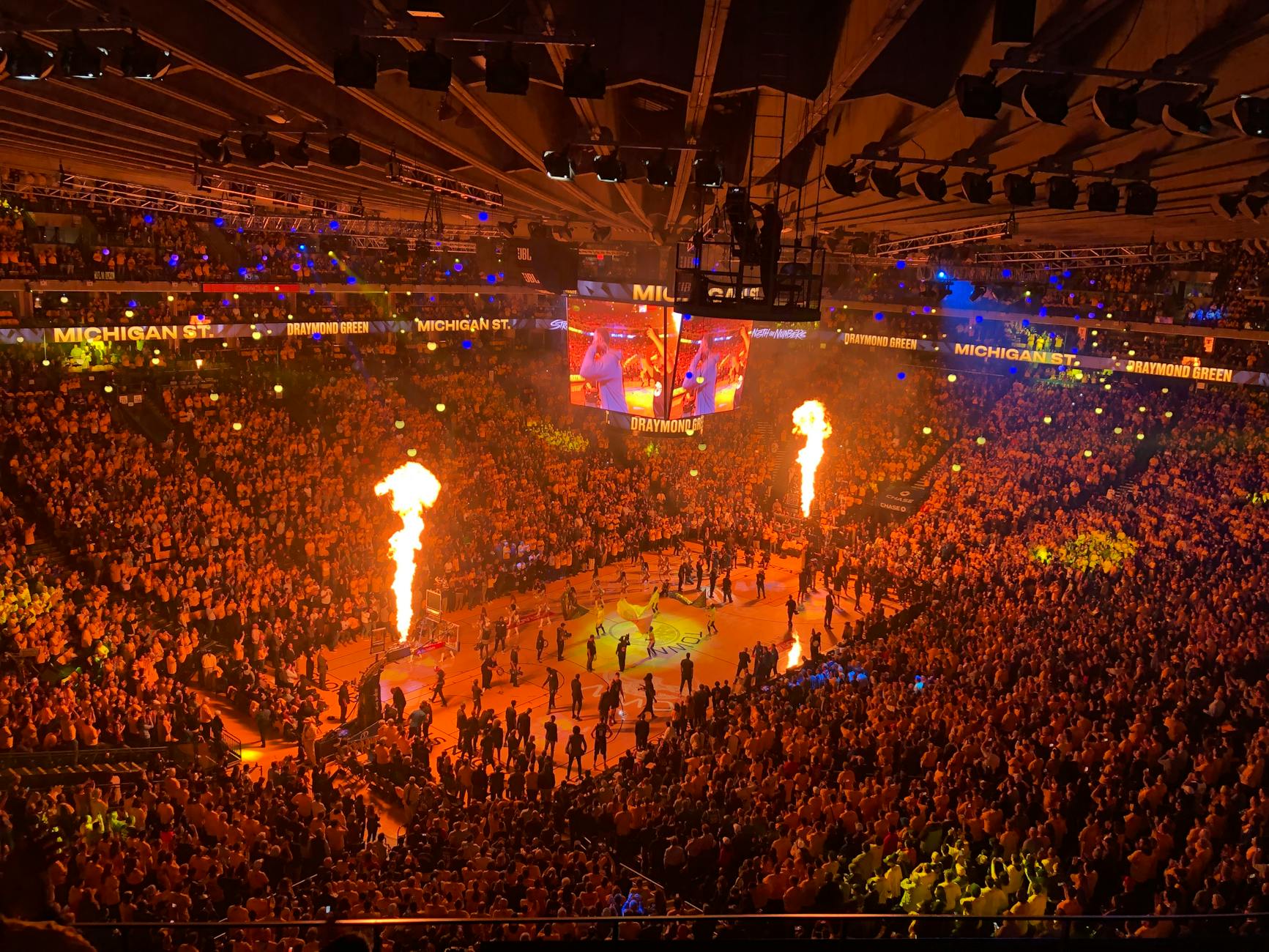
If you've just started watching NBA games — or you're trying to figure out why everyone around you is screaming at a television — you've come to the right place. The NBA is the world's premier professional basketball league, and once you understand the basic structure, it becomes one of the most exciting sports to follow. This guide breaks down everything a first-timer needs to know: how the game is played, how scoring works, what all those whistles mean, and how the season eventually crowns a champion.
How an NBA Game Is Structured
Every NBA game is divided into four quarters, each 12 minutes long — making the total regulation playing time 48 minutes. That's slightly longer than international basketball (FIBA uses 10-minute quarters), which is one reason NBA games can feel more expansive and high-scoring.
Between the second and third quarters, there is a halftime break that typically lasts 15 minutes. Each quarter is also separated by a short two-minute rest period. Teams are also entitled to timeouts — each team gets seven timeouts per game, with a maximum of four in the fourth quarter, used to rest players, draw up plays, or stop the clock in crunch time.
In practice, a regulation NBA game that is 48 minutes of playing time will take around two to two-and-a-half hours to watch from tip-off to final buzzer. Late-game timeouts and free throw stoppages in close games can stretch things out, but that tension is a big part of what makes NBA basketball so compelling.

The Shot Clock: Why Players Can't Hold the Ball Forever
One of the first things new viewers notice is a number counting down above each basket. That's the shot clock, and it's one of the most important rules in the game. The offensive team has exactly 24 seconds to attempt a shot that hits the rim. If they fail to do so, possession automatically turns over to the other team.
The shot clock was introduced in 1954 specifically to speed up the game and prevent teams from stalling indefinitely with the lead. Before its invention, teams would simply hold the ball for minutes at a time. Today, 24 seconds creates a relentless pace that defines NBA basketball — every offensive possession is a race against the clock.
The shot clock resets to 14 seconds (not 24) after an offensive rebound on a missed shot that hits the rim. This is a newer rule designed to keep the game flowing and reward teams for attacking the basket.
How Scoring Works: Points, Three-Pointers, and Free Throws
Scoring in NBA games is straightforward once you understand the three types of shots:
- Two-point field goal — Any shot made from inside the three-point arc. This includes layups, dunks, mid-range jumpers, and floaters. Worth 2 points.
- Three-point field goal — A shot made from behind the arc, which sits 23 feet 9 inches from the basket at the top and 22 feet in the corners. Worth 3 points.
- Free throw — An uncontested shot from the free-throw line (15 feet from the basket), awarded after certain fouls. Each made free throw is worth 1 point.
Modern NBA teams typically score between 108 and 125 points per game. The three-point shot has become central to the sport over the last decade — top teams now attempt 35 to 45 threes per game, whereas teams in the 1990s might launch fewer than 10. Understanding the value of the three-pointer helps explain most of the strategic decisions you'll see coaches make.
Fouls and Violations: What All Those Whistles Mean
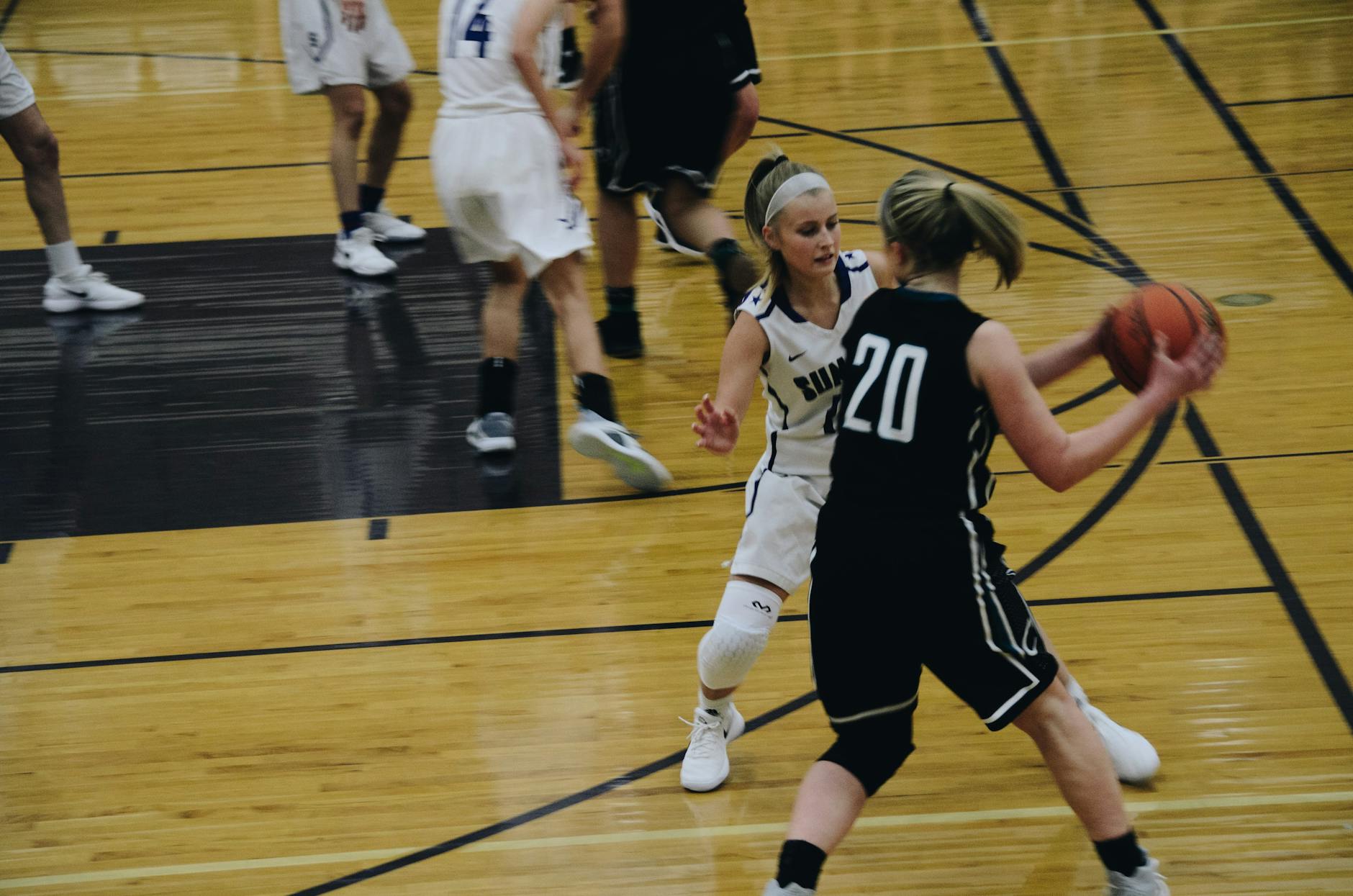
Referees blow their whistles often in NBA basketball, and for first-timers it can seem chaotic. Here's a breakdown of the most common calls:
Personal Fouls
A personal foul is called when a defender makes illegal physical contact with an offensive player — reaching in, pushing, hitting a shooting arm. Each player is allowed six personal fouls before they are disqualified (fouled out) for the rest of the game. Teams accumulate fouls too: once a team commits five fouls in a quarter, the opposing team enters the "bonus" and gets two free throws for every subsequent foul that quarter, even non-shooting fouls.
Shooting Fouls
When a defender fouls a player in the act of shooting, that player is awarded free throws — two if the shot was a two-point attempt, three if it was a three-point attempt. If the shot goes in despite the foul, the basket counts and the player gets one bonus free throw (called an "and-one").
Common Violations
- Traveling — Moving with the ball without dribbling. Results in a turnover.
- Double dribble — Dribbling with both hands simultaneously, or stopping a dribble and then dribbling again. Turnover.
- Goaltending — Blocking a shot while it's on the way down toward the basket. The offensive team is automatically awarded the basket.
- Out of bounds — If the ball or ball-carrier touches the sideline or baseline, possession is awarded to the other team.
- Back court violation — Once the offense advances the ball past half court, they cannot return it to the back court. Turnover.
Overtime: What Happens If the Game Is Tied
If a game is tied at the end of four quarters, the teams play a five-minute overtime period. If still tied after that, another five-minute overtime is added — and this continues until someone wins. There is no shootout or sudden death; one team simply has to outscore the other by the time the period expires. Multiple overtime games are rare but they happen several times per season and are among the most exciting moments in NBA basketball.

The NBA Season: 82 Games and a Long Road to the Playoffs
The NBA schedule is famously long. Each of the 30 NBA teams plays 82 regular-season games — 41 at home and 41 on the road. The season typically runs from mid-October through mid-April, meaning teams play roughly four games per week across six months. This marathon format rewards depth and consistent excellence over flash performances.
The 30 teams are divided into two conferences — the Eastern Conference and the Western Conference — each containing 15 teams. Within each conference, teams are further grouped into three divisions of five. Division standings affect seeding slightly, but the most important number at the end of the regular season is a team's conference record, which determines playoff seeding.
In 2021 the NBA added the Play-In Tournament, a mini-competition at the end of the regular season. Teams finishing 7th through 10th in each conference compete for the final two playoff spots (7th and 8th seeds). This has added significant drama to the final weeks of the NBA schedule and given more teams something to play for late in the season.
How the NBA Playoffs Work
The NBA playoffs begin in mid-April and run through mid-June. Sixteen teams qualify — the top eight from each conference based on regular-season record. The bracket is straightforward: in each round, the higher seed plays the lower seed in a best-of-seven series. A team must win four games to advance. Lose four, and your season is over.
The four rounds are:
- First Round — 16 teams enter, 8 advance
- Conference Semifinals — 8 teams, 4 advance
- Conference Finals — 4 teams, 2 advance (one per conference)
- NBA Finals — The Eastern Conference champion vs. the Western Conference champion, best of seven
The team that wins the NBA Finals is crowned champion and awarded the Larry O'Brien Championship Trophy. The best player of the Finals is named Finals MVP — one of the most prestigious individual honors in the sport. Home-court advantage throughout the playoffs goes to the higher-seeded team, which matters enormously: NBA arenas are some of the loudest sports venues in the world, and the energy of a home crowd is a genuine factor.
The All-Star Game and Other Mid-Season Events
Every February, the NBA pauses the regular season for All-Star Weekend — a three-day celebration of the sport's best talent. Fans vote for their favorite players to fill the rosters of two All-Star teams (Team LeBron vs. Team Eastern Conference, historically, though the format changes periodically). The All-Star Game itself is a high-scoring, loosely defended showcase, but the surrounding events are often more popular:
- Slam Dunk Contest — Players compete with creative, high-flying dunks judged on difficulty and style
- Three-Point Contest — Speed shooting from five spots behind the arc
- Skills Challenge — A dribbling and passing obstacle course
- Rising Stars — A showcase game for rookies and second-year players
The All-Star break also serves as the unofficial halfway marker of the season and a time for trade rumors to heat up — the NBA trade deadline typically falls just before All-Star Weekend.
Top Teams and Players to Follow in 2026
Part of the joy of NBA games is following specific teams and players over the course of a season. As of 2026, a few names and franchises consistently draw the largest audiences worldwide:
Teams with strong recent track records include the Boston Celtics (reigning champions as of 2024), the Golden State Warriors (whose dynasty defined much of the 2010s and early 2020s), the Denver Nuggets (champions in 2023, led by Nikola Jokic), and the Milwaukee Bucks (featuring Giannis Antetokounmpo). On the Eastern side, the New York Knicks and Miami Heat are perennial playoff contenders with massive fan bases.
Players who define the current era include Nikola Jokic (Denver Nuggets), widely considered the best player in the world and a three-time MVP; Giannis Antetokounmpo (Milwaukee Bucks), a two-time MVP and defensive force; LeBron James, who continues to play at an elite level well into his forties and recently became the NBA's all-time leading scorer; and a new generation of stars including Jayson Tatum, Tyrese Haliburton, Anthony Edwards, and Victor Wembanyama — the generational French phenom who arrived in 2023 and has quickly become one of the league's most talked-about players.
How to Watch NBA Games
Depending on where you live, there are several reliable ways to watch NBA games:
In the United States
National broadcast partners carry the majority of games. As of the 2025-26 season, the NBA's broadcast rights have shifted significantly, with games airing on NBC (returning after a long absence), ESPN/ABC, and Amazon Prime Video. Local market games for each team also air on regional sports networks. Cord-cutters can access most games through streaming services that carry these networks.
Internationally
The NBA has broadcasting deals in over 200 countries. In the UK, Sky Sports carries extensive coverage. In Europe, Canal+ and other regional providers carry games. In Australia, ESPN (via Foxtel or Kayo) and ESPN+ carry the bulk of the schedule.
NBA League Pass
For the most comprehensive access, NBA League Pass is the league's own streaming subscription service. It offers out-of-market games (games not available on local broadcasts), condensed game replays, and live audio. It's available as a global subscription and is the go-to option for international fans or hardcore fans who want to watch every game of their favorite team regardless of where they live.
Key Takeaways
Understanding NBA games doesn't require years of experience — a few core concepts unlock the whole sport. Here's what to keep in mind as a first-timer:
- A game consists of four 12-minute quarters (48 minutes total), with a 15-minute halftime
- The 24-second shot clock ensures constant offensive action and prevents stalling
- Shots are worth 2 points inside the arc, 3 points beyond it, and 1 point from the free-throw line
- Each player gets six personal fouls before being disqualified; team fouls trigger the bonus
- Tied games go to five-minute overtime periods until a winner emerges
- The regular season runs October through April, with each of 30 teams playing 82 games
- The top eight teams per conference qualify for the playoffs, which crown a champion each June via best-of-seven series
- NBA League Pass is the best option for international viewers who want to watch every game
The NBA is a sport that rewards attention. The more games you watch, the more you'll notice the subtle chess match happening between coaches, the way defenders rotate on screens, and the clutch-time decisions that separate elite players from everyone else. Start with a team in your time zone, pick a player whose highlights excite you, and let the 82-game season do the rest.