Outdoor Lighting Safety: Why Dark Spots Around Your Home Are More Dangerous Than You Think
The Dark Spot Problem: Why Criminals Love Unlit Areas
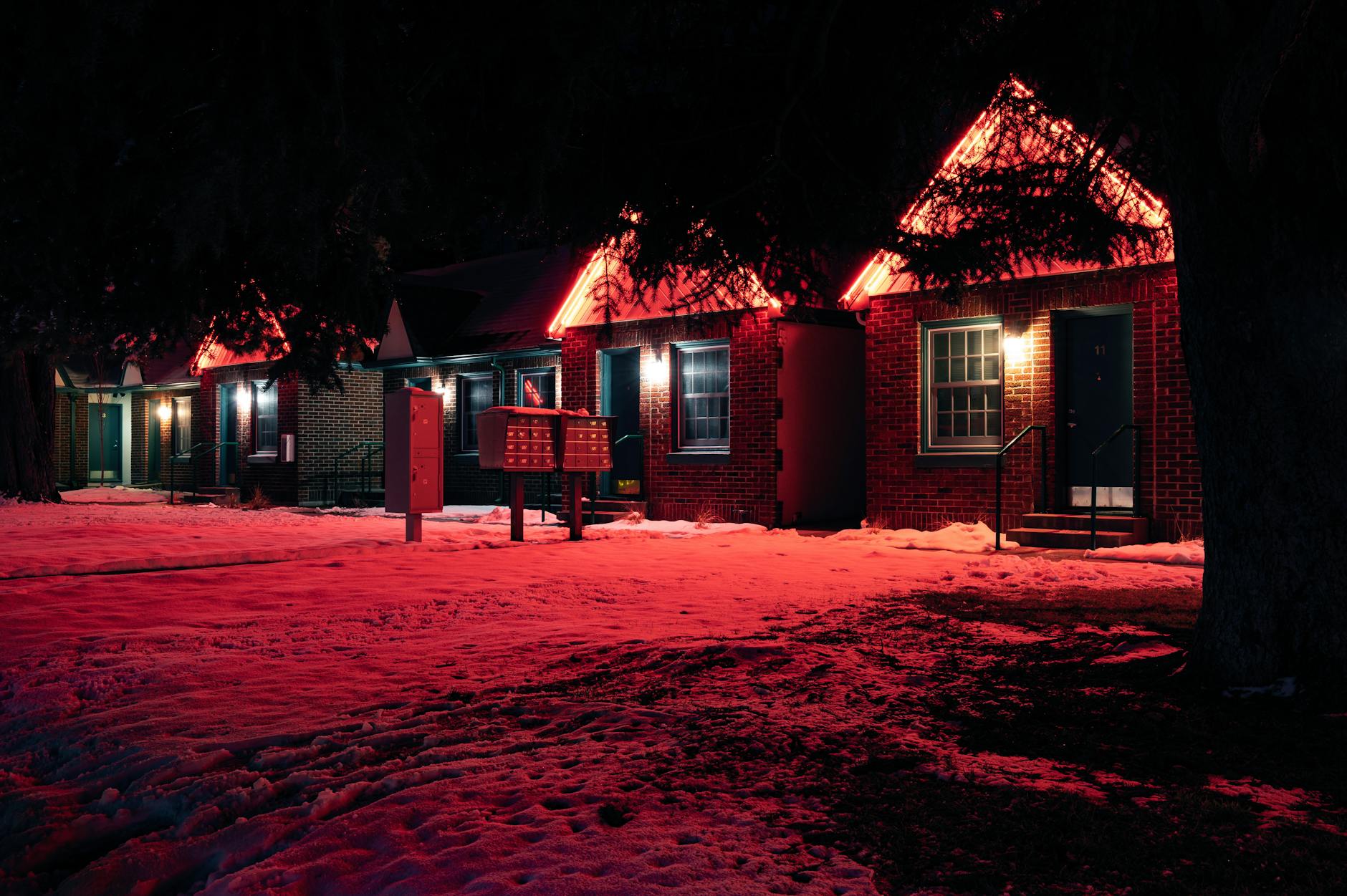
If you've ever walked around your home at night, you've probably noticed them—those shadowy areas near your garage, along the side of your house, or beside your front entrance. Dark spots might seem minor, but outdoor lighting safety experts and criminologists agree that unlit areas are the single most exploited feature in residential burglaries. According to FBI data, approximately 70% of home burglaries involve forced entry, and the vast majority of those occur at points of entry hidden from view by darkness or landscaping. Criminals don't choose random homes; they actively scout properties for entry points obscured from neighbors and street lights.
The science is straightforward: poor outdoor lighting creates opportunity. A burglar approaching a well-lit home faces increased risk of being seen, photographed, or caught. The moment they cross into shadow, that risk plummets. Understanding where these dangerous dark spots exist and how to eliminate them is one of the most effective—and most overlooked—steps in home security.
What Criminology Research Actually Says About Lighting and Crime
For decades, researchers have studied the relationship between environmental design and criminal behavior. The findings are remarkably consistent. A landmark study published in the Journal of Research in Crime and Delinquency found that improved outdoor lighting reduced crime by an average of 20-36% in residential areas. But here's what matters: the benefit wasn't uniform. Lighting mattered most when it targeted specific vulnerability points around homes—not just general area illumination.
The key principle is visibility. Criminals operate on a risk-reward calculation. If they feel exposed and observable, the risk exceeds the reward. This is why neighborhoods with active street lighting and well-lit home entrances see fewer break-ins. Burglars literally move to darker properties. In one comprehensive analysis of burglary patterns, researchers found that homes with motion-sensor lighting outside primary entry points reported 50% fewer attempts compared to similar homes with no lighting.
What's particularly important to understand is that lighting works through deterrence, not detection alone. A criminal doesn't need to believe they'll be caught in the moment—they just need to believe the risk is too visible, too exposed, too uncertain. A well-lit entryway transforms a property from an attractive target to an unattractive one in seconds.
The Four Critical Zones: Where to Prioritize Your Outdoor Lighting
You don't need to flood your entire property with light to be effective. Instead, focus on the four zones where burglars most commonly attempt entry. These are the high-vulnerability areas that require the most attention:
1. Front Entrance and Porch (Primary Entry Zone)
Your front door is the obvious entry point, but that's exactly why it's critical to light. Burglars will approach the front door when they determine it's the quickest way in or out. A well-lit front entrance prevents someone from hiding in the shadow of your porch while attempting to pick a lock or kick in a door. You want enough light that someone working at your door is clearly visible from the street and neighboring properties. This is where you want the brightest, most consistent lighting—typically 100-200 lumens, mounted 6-8 feet high on either side of the door.
2. Side Yards and Pathways (Hidden Approach Zone)
Side yards are the burglar's highway. They're hidden from street view, rarely visited by neighbors, and often provide direct access to back doors, deck doors, or garage windows. Many homeowners neglect side yard lighting entirely, creating a dark corridor that connects the front of the property to less-visible rear areas. Mount lights along side pathways at 8-10 foot intervals. You don't need intense brightness here—50-100 lumens is often sufficient—but you need coverage. No gaps, no shadows.
3. Garage and Garage Doors (Vehicle Entry Zone)
Garages are favorite targets because they often contain tools, power equipment, and vehicles themselves. The overhead door is a natural focal point. Burglars will linger here, attempting to pry open doors or probe for security weaknesses. Light your garage doors and the area immediately in front with 100-150 lumens from fixtures that illuminate the entire door surface. This prevents someone from working in the shadows cast by exterior walls.
4. Backyard and Deck Areas (Concealed Rear Zone)
Rear entry points (back doors, deck doors, windows) are often less visible than front areas, making them attractive targets. Many burglaries occur at rear access points because they're naturally more private. However, darkness here can be strategic—you want enough light to eliminate hiding spots and cover approach routes, but not so much that you're lighting your own interior when people approach windows. Use 75-150 lumens positioned to light pathways and door areas without creating glare.
Always-On vs. Motion-Activated Lighting: The Trade-Off Analysis
One of the most debated questions in home security is whether lights should run continuously or activate only when motion is detected. Both have merit, and understanding the trade-offs helps you make the right choice for each zone.
Always-On (Continuous) Lighting
Advantages: Continuous lighting provides constant deterrence. A burglar approaching at any hour faces the same visibility risk. There's no "testing" to see if anyone's home or if the motion sensors are functioning. The property looks occupied and maintained. Criminals actively avoid well-lit homes regardless of time.
Disadvantages: Energy consumption is significant—a typical 150-watt security light running 12 hours nightly costs roughly $25-40 monthly. That adds up across multiple fixtures. Continuous lighting can also attract insects and create light pollution if poorly designed.
Motion-Activated Lighting
Advantages: Motion lights use 70-90% less energy than continuous fixtures because they only activate during movement. Modern motion sensors are reliable and trigger quickly (typically within 1-2 seconds). They create a psychological advantage—sudden illumination startles potential intruders and signals an active security response. Motion lights can also work as occupancy indicators if someone's watching.
Disadvantages: A savvy burglar can observe a property, learn where motion sensors are located, and potentially move between dead zones. Motion lights also can be triggered by animals or wind-blown debris, creating false alarms that desensitize you to alerts. Some homeowners disable them after repeated false triggers.
The Smart Approach
Most security experts recommend a hybrid strategy: use continuous, low-level lighting for high-value entry zones (front doors, garage), and supplement with motion-activated fixtures in secondary areas (side yards, backyards). This provides constant deterrence where it matters most while maintaining energy efficiency. You'll spend more on the front and garage but less overall than full continuous lighting.
Understanding Lumens: The Number That Actually Matters
Walk into a lighting store and you'll hear lumens mentioned constantly, but many homeowners don't understand what the number means. Lumens measure the total amount of visible light emitted by a source. This is different from wattage, which measures energy consumption. An LED bulb might use 20 watts but produce 2,000 lumens, while an old incandescent used 100 watts for 1,500 lumens. When planning outdoor lighting, lumens are what matter for security—wattage is just what you'll pay for.
Lumens by Purpose and Distance
Pathway and side yard lighting (15-20 foot distance): 50-100 lumens. This is enough to see movement and general shapes but not enough for detailed work. It prevents hiding in shadows without being uncomfortable to look at.
Door and entrance lighting (10-15 foot distance): 100-200 lumens. This is your "working light"—enough for someone to see details of a lock or hinges, but also bright enough to be uncomfortable for someone attempting to hide. This is where you want concentrated light.
Garage and wider area coverage (20-30 foot distance): 150-300 lumens. Overhead lights and wide-coverage fixtures need more lumens because light spreads across larger areas. The goal is even illumination with no dark pockets.
Backyard perimeter and deck (variable distance): 75-150 lumens depending on deck size. You're balancing security with not creating harsh glare into your own home or neighbors' windows.
Light Color Temperature: Warmer vs. Cooler Light for Security
Light color is measured in Kelvin units (K). Warmer light (2700K-3000K) is yellowish and feels cozy. Cool light (4000K-5000K) is white or slightly blue and feels more clinical. For security purposes, the range is narrower than you'd think.
Warmer light (3000K) is generally preferred for outdoor home lighting because it:
- Feels less institutional, maintaining the home's aesthetic
- Attracts fewer insects than cooler light
- Reduces light pollution for neighbors
- Still provides adequate visibility for security purposes
Cooler light (4000K-5000K) is sometimes used in commercial or wider-area applications because it provides slightly more perceived brightness and can feel more "official," but for residential homes, it's often unnecessary. A 3000-4000K range represents the practical sweet spot—warm enough to maintain aesthetics, cool enough for adequate security visibility.
Common Outdoor Lighting Mistakes That Undermine Security
Even homeowners trying to light their properties correctly often make critical mistakes:
Mounting Lights Too High
Lights mounted at 15+ feet cast light downward but create deep shadows below eaves and along walls. Optimal mounting height is typically 6-10 feet for entry doors and 8-12 feet for area coverage. This puts the light source in a position where it illuminates faces and hands—the details that matter for identification.
Insufficient Coverage of Side and Rear Areas
Many homeowners light the front beautifully but ignore sides and back. Burglars absolutely notice this pattern. They simply approach from the dark side. You must address all entry approaches.
Using Lighting Without Securing Entry Points
Lighting deters approach but doesn't prevent entry. A burglar will still attempt a well-lit door if it's easy to breach. Combine lighting with proper locks, deadbolts, and security measures. Lighting alone is incomplete security.
Leaving Motion Sensors Misaligned or Obstructed
Motion sensors need a clear line of sight. If tall landscaping, porch railings, or architectural features block sensors, they won't trigger consistently. Clean sightlines matter.
Installing Lights on Timers That Are Predictable
If your lights come on at exactly 8 PM every night and shut off at exactly 10 PM, an observer quickly learns your schedule and can time a break-in accordingly. If using timers, vary the schedule or use a randomizing system. Better yet, use motion sensors or dusk-to-dawn sensors.
The Full Picture: Lighting as Part of a Layered Approach
Outdoor lighting doesn't solve security alone. It's one layer in a comprehensive home security approach. Effective security combines:
- Strategic lighting of all entry points and approach routes
- Reinforced doors and frames with deadbolts
- Security-grade locks on windows and sliding doors
- Maintained landscaping that doesn't provide cover
- Visible security system signage
- Neighborhood watch or community awareness
Lighting is the foundation of visible security. It eliminates the darkness that criminals rely on and makes your home a less attractive target than the next one over. When a burglar is scoping neighborhoods, they gravitate toward the darkest properties—the ones where risk is minimized by simple human inability to see.
Key Takeaways
Dark spots around your home aren't just aesthetic problems—they're security vulnerabilities that active criminals exploit. Outdoor lighting safety is fundamentally about eliminating the hiding places and approach corridors that make burglary possible. The criminology research is clear: visible properties deter crime more effectively than many expensive security measures.
Focus on the four critical zones (front entrance, side yards, garage, and backyard). Use lumens appropriate to distance and purpose. Combine always-on lighting for entry points with motion-activated coverage in secondary areas. Maintain 3000-4000K color temperature for balance between aesthetics and visibility. And remember that lighting is most effective when part of a complete security strategy that also includes proper locks, maintained landscaping, and professional-grade security systems.
The next time you walk around your property at night, look for shadows. If a criminal could hide there, it needs light. That simple observation—and the action to address it—is one of the most practical home security improvements you can make.