Paingone Plus Review 2026: What a TENS Pen Can and Cannot Do
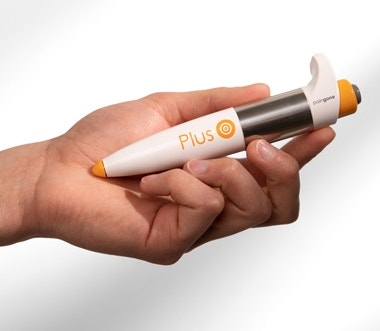
Limited Time Offer!
Get This Deal Now → *Affiliate link - We may earn a commissionThe Paingone Plus is a handheld pen-shaped device that delivers transcutaneous electrical nerve stimulation — TENS — to a small area of skin. This paingone plus review explains what that technology is, what the evidence does and does not support, and, most importantly, the safety contraindications that decide whether you should use one at all.
Read this first — safety
TENS devices are not suitable for everyone. The example cleared device's FDA labelling — the 510(k) summary for an Omron over-the-counter TENS device (K110068), linked in Sources — lists implanted pacemakers, defibrillators and other implanted electronic or metallic devices as contraindications. That document concerns a different manufacturer's device and establishes nothing about Paingone Plus's labelling or regulatory status. That document concerns a different device and does not establish Paingone Plus's labelling or regulatory status — but the underlying electrical-interference concern applies to the technology, not to one brand. Clinical references also treat pregnancy and epilepsy as contraindications or precautions, and advise against placement over the chest or near an implanted device. New, unexplained, severe or worsening pain needs a diagnosis, not a gadget. Speak to a clinician before using a TENS device if any of this applies. This article is general information, not medical advice.
How we researched this
This is a research-based review, not a hands-on test. We have not purchased or used a Paingone Plus, we did not run a 30-day trial, and we have no personal pain outcomes to report. An earlier version of this article described exactly such a trial; those claims were not supported by any real testing and have been removed. What follows draws on regulatory labelling for the device class and published clinical literature on TENS, with product-specific figures labelled as manufacturer claims. We are not clinicians, and nothing here is a diagnosis or treatment plan.
What TENS Actually Is
TENS applies a low-voltage electrical current through the skin near a painful area. The usual physiological explanation is that stimulating large-diameter sensory nerve fibres changes how pain signals are processed — often summarised as "gate control" — and that stimulation may also influence the body's own opioid activity. It is a symptom-management technique: it does not treat the underlying cause of pain and it does not heal tissue.
That distinction matters commercially, because devices in this category are frequently marketed in language implying a cure. TENS is a way to feel less pain while the underlying problem is addressed by something else — or while it resolves on its own.
What the Regulatory Status Does and Does Not Mean
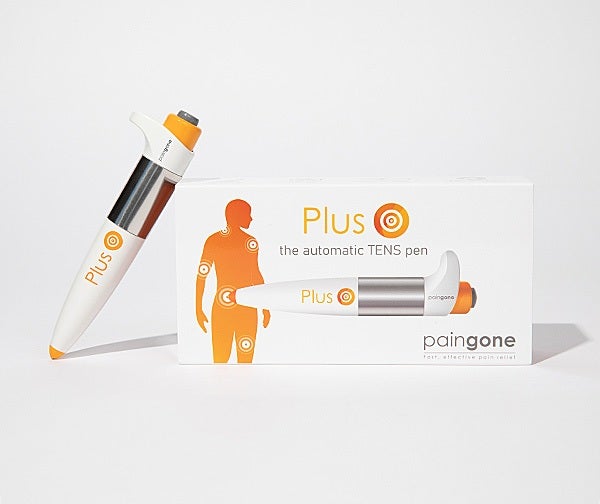
Marketing for TENS products leans heavily on regulatory language, and it is routinely misunderstood. Two points deserve precision:
- "Cleared" is not "approved." The example device we cite was cleared through the 510(k) route, in which FDA finds a device substantially equivalent to an existing legally marketed device. Clearance is not a finding that a device will relieve your pain — and Paingone Plus's own regulatory status remains unverified by us.
- The example cleared device's indication is narrow. The 510(k) documentation we reviewed for that one cleared over-the-counter TENS device describes relief of pain associated with sore or aching muscles in the lower back, arms, legs, shoulder or foot, due to strain from exercise or ordinary household activity — far narrower than "drug-free pain relief" implies.
An important limit on what we can tell you
The 510(k) document we cite is an example of labelling for a different cleared OTC TENS device. It illustrates how this device class is regulated and worded. It does not establish the regulatory status of Paingone Plus, and we did not locate a specific FDA clearance record for this product. Promotional material for this product states a warranty and a clearance status. We have not verified either, and we do not restate them as fact. If the regulatory status or warranty matters to your purchase, ask the seller for the specific clearance number and warranty terms in writing before ordering, and check that number against the FDA's public 510(k) database yourself.
Affiliate link — availability and terms are controlled by the seller
What the Evidence Supports — Honestly
TENS has been studied for decades, and the two highest-quality syntheses reach notably different conclusions. Presenting only one of them would misrepresent the field, so here are both:
- The cautious view (Cochrane). A 2019 Cochrane overview of Cochrane Reviews examined eight reviews covering 51 TENS trials in 2,895 participants with chronic pain. It rated the evidence as very low quality — citing small samples, risk of bias and inconsistent delivery of the intervention — and concluded it was not possible to determine with confidence whether TENS was beneficial for pain, disability, quality of life or analgesic use.
- The more favourable view (meta-TENS, 2022). A systematic review and meta-analysis of 381 studies reported that pain intensity was lower during or immediately after TENS than with placebo — based on 91 randomised trials and 4,841 participants, rated moderate-certainty evidence — and reported no serious adverse events.
Reading those together, the defensible position is this: TENS plausibly reduces pain intensity while it is being applied, the effect size and durability are uncertain, and study quality has been a persistent problem. Blinding is genuinely difficult because you can feel whether a unit is switched on.
- Where benefit occurs it is largely during or shortly after use, rather than a lasting change.
- It is not a treatment for a cause. Nerve damage, disc pathology, arthritis and injury are not resolved by stimulating skin. TENS is best understood as an adjunct within broader pain management, not a standalone therapy.
- Individual response varies widely — which is exactly why any article offering a precise pain-score improvement from a personal 30-day trial should be read sceptically, including the earlier version of this one.
- Note what the evidence is about. These syntheses concern TENS as a technique. Neither evaluates the Paingone Plus specifically, and results obtained with clinical pad-based units do not automatically transfer to a handheld pen.
The Pen Format: Trade-offs
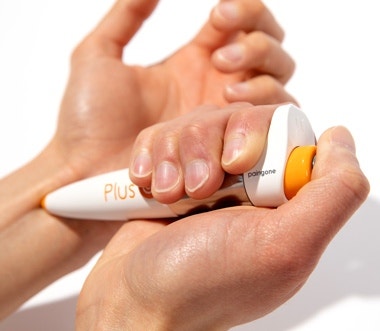
Advantages: no adhesive electrodes to replace, nothing to wire or position, portable, and precise placement on a specific tender point.
Disadvantages: it covers a small area, so it suits localised rather than diffuse pain; it must be held in place, which is impractical for long sessions or awkward areas such as the mid-back; and it cannot be worn while you get on with something else.
Who Should Not Use This
Each item below is sourced. Where a restriction is a manufacturer-labelling contraindication we say so; where it is a clinical precaution requiring judgement rather than an absolute bar, we say that instead.
- Implanted cardiac or electronic devices — labelling contraindication. The example cleared device's FDA labelling states it should not be used by anyone with a cardiac pacemaker, implanted defibrillator, or other implanted metallic or electronic device, citing risk of "electric shock, burns, electrical interference, or death." Published clinical reports document TENS interfering with cardiac pacemakers (e.g. Rasmussen et al., "Cardiac pacemaker inhibition by transcutaneous electrical nerve stimulation," 1988 — PubMed 2136990).
- Pregnancy — precaution. Listed in manufacturer guidance and clinical references as a contraindication or precaution. Clinical sources describe this as location- and risk-dependent rather than universally absolute, so it is a matter for your clinician, not for a website.
- Epilepsy — precaution. Commonly listed in manufacturer guidance; clinical references again frame it as requiring clinical judgement rather than an automatic bar.
- Placement — clinical guidance. Clinical references advise avoiding stimulation across the chest or torso, near the throat and carotid area, on the head, over an implanted device, and over broken, infected, or sensation-impaired skin.
- New, unexplained, severe or worsening pain — general clinical principle, and our own strong advice. Masking a symptom that has not been diagnosed is a bad trade. See a clinician first.
- Children — we found no OTC labelling supporting unsupervised paediatric use. We therefore do not recommend it without clinical direction. Treat this as our cautious editorial position rather than a specific published prohibition.
Realistic Alternatives
We are deliberately not ranking these by effectiveness, because doing so would require comparative evidence we have not gathered for this article.
- A conventional pad-based TENS unit — covers larger areas and can be worn hands-free. Note that most of the trial evidence summarised above used pad-based units rather than pens.
- Physiotherapy or a clinical assessment — addresses cause rather than sensation, and is the appropriate route for persistent or undiagnosed pain.
- Non-device self-care — options such as heat, movement and gradually increased activity appear in general musculoskeletal self-care guidance. We have not assessed their evidence base for this article and make no claim about how they compare with TENS; discuss suitability with a clinician.
- Nothing — for mild, self-limiting muscle soreness, time is often the honest answer.
Limitations of This Review
We cannot tell you how strong the stimulation feels, how durable the device is, how the seller handles support or returns, or whether it will reduce your particular pain — because we have not used it and cannot know your clinical situation. We have also not verified the clearance or warranty claims in the product's promotional material. Any review offering a precise personal pain-reduction figure without describing its method is not giving you evidence.
Verdict
TENS is a legitimate, well-established symptom-management technique with genuinely mixed evidence; the cleared example device we reviewed carried a narrow indication, and Paingone Plus's own regulatory status is unverified. A pen-format device is a reasonable, low-commitment way to try it for localised, benign muscle soreness — if none of the contraindications apply to you.
It is the wrong purchase if you hope to treat a cause, if you need coverage of a broad area, or — critically — if you have an implanted cardiac device, are pregnant, or have undiagnosed pain. In those cases the right next step is a clinician, not a checkout page.
Affiliate link — warranty, clearance status and shipping terms are stated by the seller and were not verified by us
Sources
- Gibson W, Wand BM, Meads C, Catley MJ, O'Connell NE — "Transcutaneous electrical nerve stimulation (TENS) for chronic pain — an overview of Cochrane Reviews", Cochrane Database of Systematic Reviews, 2019 (eight reviews, 51 trials, 2,895 participants; evidence rated very low quality; unable to determine with confidence whether TENS is beneficial). Accessed 28 July 2026.
- Johnson MI et al. — "Efficacy and safety of transcutaneous electrical nerve stimulation (TENS) for acute and chronic pain in adults: a systematic review and meta-analysis of 381 studies (the meta-TENS study)", BMJ Open, 2022 (pain intensity lower during or immediately after TENS versus placebo; 91 RCTs, 4,841 participants; moderate-certainty evidence; no serious adverse events reported). Accessed 28 July 2026.
- Teoli D, An J — "Transcutaneous Electrical Nerve Stimulation," StatPearls, NCBI Bookshelf (mechanism of action; contraindications and precautions including implanted devices, pregnancy and epilepsy; placement cautions; framing of TENS as an adjunctive symptom-focused component of multimodal pain management). Accessed 28 July 2026. Used for mechanism and precautions only, not as evidence of effectiveness.
- US Food and Drug Administration — 510(k) summary K110068 (Omron over-the-counter TENS device) — the example cleared device referenced throughout this article for its narrow indication and implanted-device contraindication wording. It concerns a different Omron device and establishes nothing about Paingone Plus. Note on verification: accessdata.fda.gov blocks our automated fetcher (the domain returns bot-mitigation responses for all paths, including its own search endpoint), so this link was verified by the operator rather than by our crawler; classified access-blocked, not dead.
- Rasmussen MJ et al. — "Cardiac pacemaker inhibition by transcutaneous electrical nerve stimulation", Archives of Physical Medicine and Rehabilitation (published clinical report of TENS interfering with cardiac pacing). Accessed 28 July 2026.
Affiliate link — availability and terms are controlled by the seller
Ready to Get Started?
Don't miss out on this exclusive offer!
Claim Your Discount → *This is an affiliate link. We may earn a commission at no extra cost to you.