Phthalates and PFAS in Everyday Products: What They Are and Why They Matter
If you have ever flipped a bottle of hand lotion over and tried to make sense of the ingredient list, you already know the feeling: a wall of chemical names that seem designed to be unreadable. Hidden somewhere in that list — or deliberately left off it — may be phthalates in home products, a class of chemical plasticizers that have attracted significant scientific attention over the past two decades. Right beside them in the conversation are PFAS, a group of synthetic compounds that earned the nickname "forever chemicals" because they almost never break down in the environment or the human body.
Neither of these chemical families requires panic. But they do require awareness. This guide explains what phthalates and PFAS actually are, where they commonly appear in the home, what credible research says about their potential effects, and — most importantly — how to read labels and make practical swaps that meaningfully reduce your exposure.
What Are Phthalates and Why Are They in So Many Products?
Phthalates (pronounced THAL-ates) are a family of chemical compounds used primarily as plasticizers — substances added to plastics to make them soft and flexible rather than rigid and brittle. Without phthalates, the plastic tubing used in medical devices would crack, and the PVC flooring in your kitchen would shatter underfoot. That flexibility has made them extraordinarily useful to manufacturers.
The second major use is in fragrance. When a product is labeled "fragrance" or "parfum" on its ingredient list, phthalates — particularly diethyl phthalate (DEP) — are frequently present as a carrier and fixative that helps scent linger on skin or fabric. This is why toxic chemicals fragrance products has become a common search query among consumers trying to understand what they are actually spraying on their bodies or into the air in their homes.
Common phthalates include:
- DEHP (di-2-ethylhexyl phthalate) — used in flexible PVC products including some food packaging and medical tubing
- DBP (dibutyl phthalate) — historically common in nail polishes; now restricted in the EU
- DEP (diethyl phthalate) — widely used in fragrances, personal care products, and some insect repellents
- DINP and DIDP — used in children's toys, flooring, and other consumer plastics
The reason phthalates are of concern is partly structural: they are not chemically bonded into the plastic or the product. They sit within the material and migrate out over time — into the air, into food, into skin — especially when exposed to heat, fat, or acidic conditions.
What Are PFAS — and Why Are They Called "Forever Chemicals"?
PFAS stands for per- and polyfluoroalkyl substances. It is an umbrella term for a group of more than 12,000 synthetic chemicals that all share an extremely strong carbon-fluorine bond. That bond is one of the strongest in organic chemistry, which is precisely what makes PFAS so technically valuable — and so environmentally persistent.
PFAS are used to create surfaces that repel water, oil, and stains. You encounter them in non-stick cookware coatings, stain-resistant fabric treatments, grease-proof food packaging (including many fast-food wrappers and microwave popcorn bags), waterproof outerwear, and certain cleaning sprays. Some dental floss products and personal care items have also tested positive for PFAS.
The "forever" label comes from the fact that PFAS accumulate in the environment and in biological tissue. Studies by the U.S. Centers for Disease Control and Prevention (CDC) have detected PFAS in the blood of the vast majority of Americans tested, including children. Drinking water contamination near industrial sites is a well-documented pathway, but everyday household sources contribute meaningfully as well.
The two most studied PFAS compounds — PFOA (perfluorooctanoic acid) and PFOS (perfluorooctane sulfonate) — were phased out of most U.S. and European manufacturing by the mid-2010s. However, they have been replaced by newer, shorter-chain PFAS variants whose long-term health profiles are less well understood.
How These Chemicals Enter the Body
Understanding the three main exposure pathways helps clarify which product categories deserve the most attention.
Inhalation is a significant route for both chemical families. Scented candles, air fresheners, fabric softeners, and spray cleaners release volatile organic compounds (VOCs) into indoor air. Studies measuring indoor air quality have detected phthalates as airborne particles in homes where heavily fragranced products are regularly used. Dust is also a surprisingly important carrier — phthalates that migrate out of flooring, wallpaper, and plastic items bind to household dust, which is then inhaled or ingested.
Skin contact is the primary route for personal care products. Lotions, perfumes, shampoos, and body washes sit on skin for extended periods. The skin is not a perfect barrier — lipophilic (fat-soluble) compounds like many phthalates are absorbed transdermally, particularly in areas of thin skin or when the product is applied after a hot shower, which dilates pores and increases absorption.
Ingestion matters more than most people expect. PFAS from non-stick cookware can transfer to food during cooking, particularly when the coating is scratched or overheated. Food stored or heated in plastic containers can leach phthalates — especially fatty foods like cheese and meat, since phthalates are fat-soluble. Canned goods lined with PFAS-containing or BPA-based coatings also contribute dietary exposure.
What Does the Research Actually Say?
Science on both phthalates and PFAS is active, nuanced, and not yet settled in every dimension. Here is what current evidence — as of 2026 — supports with reasonable confidence.
Phthalates as hormone disrupting chemicals: Multiple peer-reviewed studies have classified certain phthalates as endocrine disruptors, meaning they interfere with the body's hormonal signaling. They can mimic or block androgens (male sex hormones) and, to a lesser extent, estrogens. Research published in journals including Environmental Health Perspectives has associated high urinary phthalate metabolite levels with reduced testosterone in adult men, altered developmental outcomes in infants born to highly-exposed mothers, and markers of thyroid disruption. A 2021 systematic review in The Lancet Diabetes & Endocrinology estimated that phthalate exposure contributes to significant economic costs through health effects including obesity, diabetes, and reduced fertility.
Importantly, most studies deal with associations, not proven causation, and many observed effects occur at exposure levels higher than typical consumer exposure. Regulatory bodies including the U.S. Consumer Product Safety Commission (CPSC) have banned the highest-risk phthalates from children's products at concentrations above 0.1%, and the EU has broader restrictions under REACH legislation.
PFAS and health: The evidence base for PFAS health effects is substantial and growing. The EPA classifies PFOA and PFOS as likely human carcinogens based on animal studies and epidemiological data. Associations have been found between elevated blood PFAS levels and kidney cancer, testicular cancer, thyroid disease, elevated cholesterol, immune suppression (including reduced vaccine response in children), and pregnancy complications. The National Academies of Sciences, Engineering, and Medicine published a comprehensive clinical guidance report in 2022 recommending that clinicians treat elevated PFAS blood levels as a risk factor worthy of monitoring and mitigation.
Again, dose matters enormously. Most of the clearest effects are associated with occupational exposures or contaminated drinking water — not routine consumer product use. But cumulative, low-level exposure across multiple product categories over decades is the real-world scenario for most people, and that long-term picture is less thoroughly studied.

Which Product Categories Carry the Highest Risk?
Not all products are equal. Some categories consistently show up in exposure research as the most significant contributors to phthalates in home products and PFAS body burden.
Highest concern for phthalates:
- Scented personal care products: perfumes, body sprays, scented lotions, hair sprays
- Air fresheners and scented candles (especially paraffin-based)
- Vinyl flooring (PVC/LVT), shower curtains, and wall coverings
- Soft plastic food storage containers, especially when heated
- Nail products and some gel polish formulations
- Fabric softeners and dryer sheets
Highest concern for PFAS:
- Non-stick cookware (Teflon and similar coatings, particularly scratched or old pans)
- Stain-resistant carpet treatments and upholstery sprays
- Grease-proof food packaging: fast food wrappers, pizza boxes, microwave popcorn bags
- Water-resistant clothing treated with DWR (durable water repellent) finishes
- Some brands of dental floss (a 2019 study in Journal of Exposure Science & Environmental Epidemiology found higher PFAS blood levels in women who used certain PTFE-coated floss brands)
- Certain cosmetics including some mascaras, foundations, and lip products
How to Read Labels: What to Look For and What to Avoid
Learning to decode product labels is the most empowering practical skill in this space. Here is what to look for.
For phthalates, the challenge is that they are rarely listed by name. The word "fragrance" or "parfum" on an ingredient list is a legally permitted trade-secret umbrella term that can encompass dozens of undisclosed chemicals, including phthalates. When a product contains the word "fragrance" and has a strong, long-lasting scent, phthalate exposure is plausible. Some companies voluntarily disclose their fragrance ingredients — a practice increasingly common among "clean beauty" brands. Look specifically for any of the following if they do appear on a label: diethyl phthalate (DEP), dibutyl phthalate (DBP), dimethyl phthalate (DMP).
For PFAS, look for ingredient names containing "fluoro" or "perfluoro" — terms like PTFE, polytetrafluoroethylene, perfluorooctyl triethoxysilane, or any ingredient beginning with "perfluoro-" are PFAS indicators. On cookware, look for explicit "PFAS-free" marketing and check whether third-party certifications (such as PFAS-Free by MADE SAFE) back the claim. On food packaging, PFAS are rarely disclosed at all — avoiding fast-food wrappers and microwave popcorn bags is a pragmatic shortcut.
The recycling number rule: On plastic containers, the number inside the recycling triangle matters. #3 (PVC) is the plastic most likely to contain phthalates. Avoid storing food — especially fatty foods — in #3 plastic, and never microwave food in any plastic container regardless of number.
A Practical Room-by-Room Swap Guide
Making every change at once is unrealistic and unnecessary. A gradual, category-by-category approach reduces exposure meaningfully over time without requiring a full household overhaul on day one.
Bathroom: Replace scented lotions, body washes, and hair products with fragrance-free or naturally-scented alternatives (essential-oil based products typically use different carrier chemistry than synthetic fragrances). Switch scented spray deodorants for unscented roll-ons or natural mineral formulations. Replace nail polish with brands certified as "5-free" or "10-free" (referring to the number of chemicals — including DBP — omitted).
Kitchen: Replace scratched non-stick pans with stainless steel, cast iron, or ceramic-coated cookware that explicitly markets itself as PFAS-free and carries third-party verification. Store leftovers in glass or stainless steel containers rather than soft plastic. Reduce reliance on microwave popcorn bags and fast-food packaging; plain stovetop popcorn in a lidded pot takes three minutes. When buying canned goods, look for BPA-free and PFAS-free can lining labeling.
Living room and floors: If replacing flooring, consider solid hardwood, ceramic tile, or cork over vinyl/LVT. If replacing carpets, ask about PFAS-free treatment options. Increase ventilation — simply opening windows for 15 minutes daily measurably reduces concentrations of airborne phthalates and VOCs. Vacuum regularly with a HEPA-filter vacuum to reduce phthalate-laden dust.
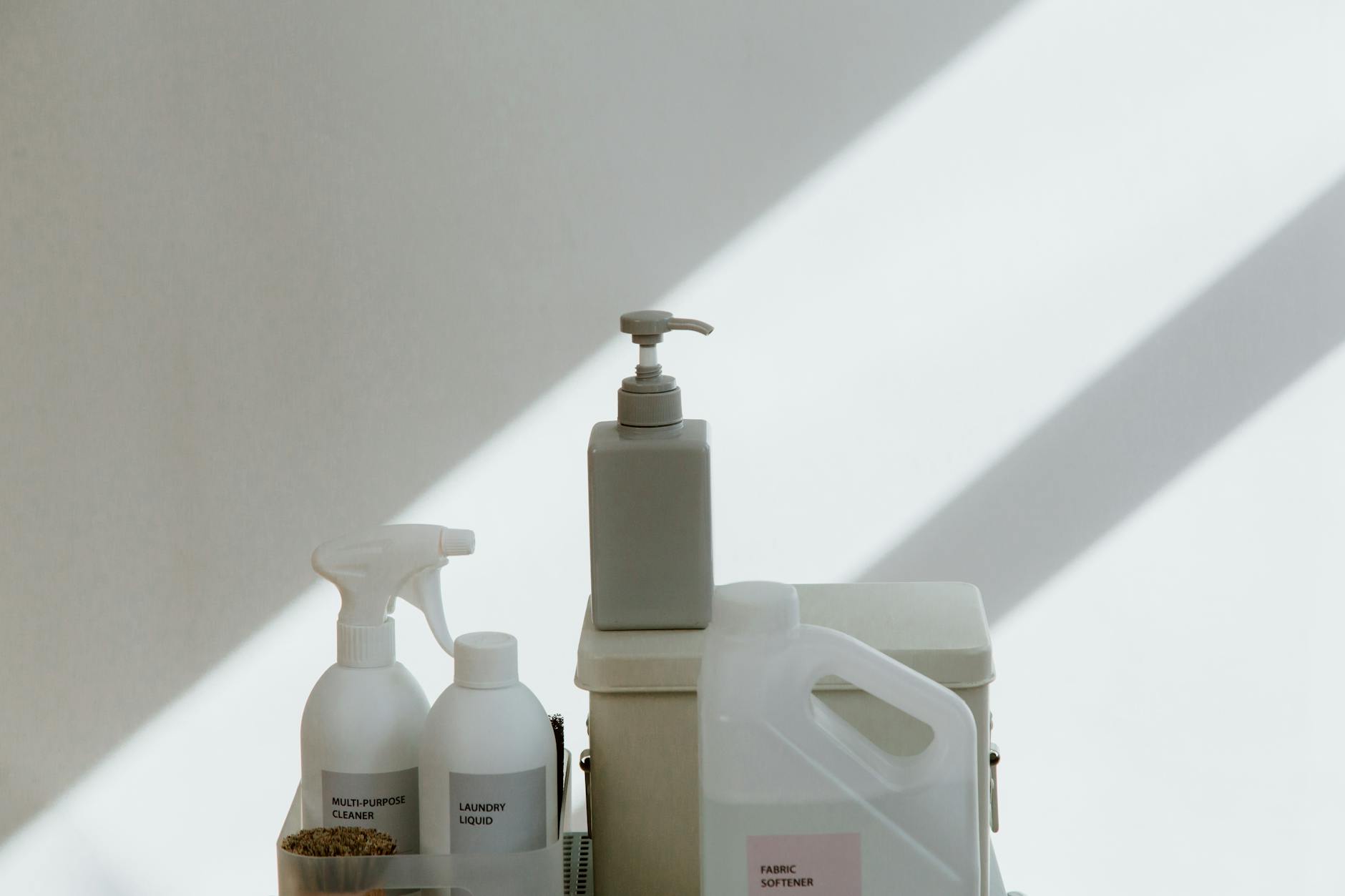
Cleaning products: Replace scented all-purpose sprays, fabric softeners, and dryer sheets with fragrance-free alternatives. Concentrated cleaning tablets that dissolve in water tend to have shorter, more transparent ingredient lists. Baking soda and white vinegar cover a wide range of cleaning tasks with zero synthetic fragrance or PFAS concerns.
Laundry: Fragrance-free laundry detergents are widely available at mainstream retailers and perform identically to scented versions on cleaning efficacy. Skip fabric softener — it is one of the higher-phthalate household products — and use wool dryer balls instead for static reduction and softening.
Are "Fragrance-Free" and "Natural" Labels Reliable?
This is one of the most important questions in the space of how to avoid phthalates at home, and the honest answer is: somewhat, but not automatically.
"Fragrance-free" is a more reliable claim than "unscented." A product labeled "unscented" may still contain masking fragrances — chemicals added to neutralize other chemical smells — which can themselves contain phthalates. "Fragrance-free" means no fragrance ingredients were added at all. The FDA does not independently verify fragrance-free claims before products reach shelves, but the term has a clear, generally accepted meaning, and companies making false claims face regulatory and legal exposure.
"Natural" is essentially unregulated in the U.S. context for personal care and household products. The FDA does not define "natural" for cosmetics, the USDA organic standard applies only to agricultural ingredients, and no federal body currently requires third-party verification before a brand places "natural" on its label. A product can be labeled "natural" while containing synthetic fragrances, preservatives, and phthalates.
"Clean," "non-toxic," and "green" are similarly unregulated in U.S. law. In Europe, the EU Cosmetics Regulation and REACH chemical safety framework provide substantially stronger baseline protections — many ingredients legal in U.S. products are outright banned in the EU.
What labels are worth trusting: Third-party certifications from organizations with published standards and audit processes carry more weight than manufacturer claims. Look for EWG Verified (Environmental Working Group), MADE SAFE, NSF/ANSI 305 for personal care, and EPA Safer Choice for cleaning products. Each of these programs prohibits phthalates and, increasingly, PFAS from certified formulations and requires documentation from manufacturers.
Summary: Key Takeaways and Your Action Checklist
The science on hormone disrupting chemicals in everyday items is serious enough to warrant thoughtful action, but not so alarming that it requires wholesale panic or dramatic lifestyle change. The most meaningful reductions in exposure come from a relatively short list of targeted habit shifts.
Your Practical Action Checklist
- Switch to fragrance-free (not just unscented) personal care products — lotion, body wash, shampoo
- Replace heavily scented cleaning sprays, fabric softeners, and dryer sheets with fragrance-free alternatives
- Stop storing or microwaving food in plastic containers, especially soft or #3-marked plastics
- Replace scratched non-stick pans with stainless steel, cast iron, or certified PFAS-free ceramic cookware
- Reduce fast-food packaging, microwave popcorn bags, and greasy takeout containers
- Vacuum regularly with a HEPA filter vacuum and air out your home daily to reduce phthalate-laden dust and VOCs
- Look for third-party certifications (EWG Verified, MADE SAFE, EPA Safer Choice) rather than unverified "natural" claims
- When shopping for nail polish, choose brands marketed as "5-free" or higher to avoid DBP and other restricted phthalates
- On ingredient labels, avoid anything listing "fragrance," "parfum," PTFE, or any ingredient beginning with "perfluoro-" if you want to minimize exposure
- Prioritize changes in the bathroom and kitchen first — these two rooms drive the largest share of daily chemical exposure for most households
None of these changes require spending more money than you currently do. Many of them — switching from fabric softener to wool dryer balls, making your own cleaning solution from vinegar and water, buying fragrance-free versions of the products you already use — are cost-neutral or cheaper. The goal is not perfection but meaningful, sustainable reduction. Small, consistent changes across multiple product categories compound over time into a genuinely lower overall exposure profile.
If you want to go deeper, the Environmental Working Group's Skin Deep database and Guide to Healthy Cleaning are free, searchable resources that rate thousands of specific products and ingredients. The Silent Spring Institute's Detox Me app offers similar guidance with a focus on PFAS and phthalate avoidance specifically. Both are grounded in peer-reviewed science and updated regularly as new research emerges.