Plantar Fasciitis Pain: What Actually Causes It and 7 Evidence-Based Ways to Treat It at Home

You take your first step out of bed in the morning and a sharp, stabbing pain shoots through your heel. It is so bad you have to hobble to the bathroom. Then, strangely, it eases off after a few minutes of walking. If this sounds familiar, you are almost certainly dealing with plantar fasciitis — the most common cause of heel pain in adults, affecting roughly two million Americans every year.
The good news is that the vast majority of cases resolve with plantar fasciitis treatment at home alone, without surgery or injections. The less-good news is that it can linger for months if you do not address it correctly. This guide explains exactly what is happening inside your foot, what caused the problem in the first place, which risk factors matter, and the seven most effective at-home treatments ranked by the strength of evidence behind them.
What Is Plantar Fasciitis? The Anatomy Explained
The plantar fascia is a thick, fibrous band of connective tissue — similar in nature to a ligament — that runs along the bottom of your foot. It originates at the heel bone (the calcaneus), fans out across the arch, and connects to the base of each of your five toes. Its job is to act as a shock absorber and to maintain the structural integrity of your arch when you walk, run, or stand.
Every time your foot strikes the ground, the plantar fascia stretches and absorbs force. When you push off, it recoils like a spring, propelling you forward. Under normal circumstances, this is seamless and pain-free. The trouble begins when the load on the fascia exceeds its capacity to recover.
When this happens repeatedly, tiny microtears develop in the tissue — most often right at the heel attachment point, which is why heel pain is so central to this condition. Historically this was called "plantar fasciitis," implying active inflammation. More recent research suggests that plantar fasciitis causes involve a degenerative process (called fasciosis) rather than classic inflammation, though the name has stuck. What this means in practice is that standard anti-inflammatory approaches (like taking ibuprofen alone) are not a complete solution.
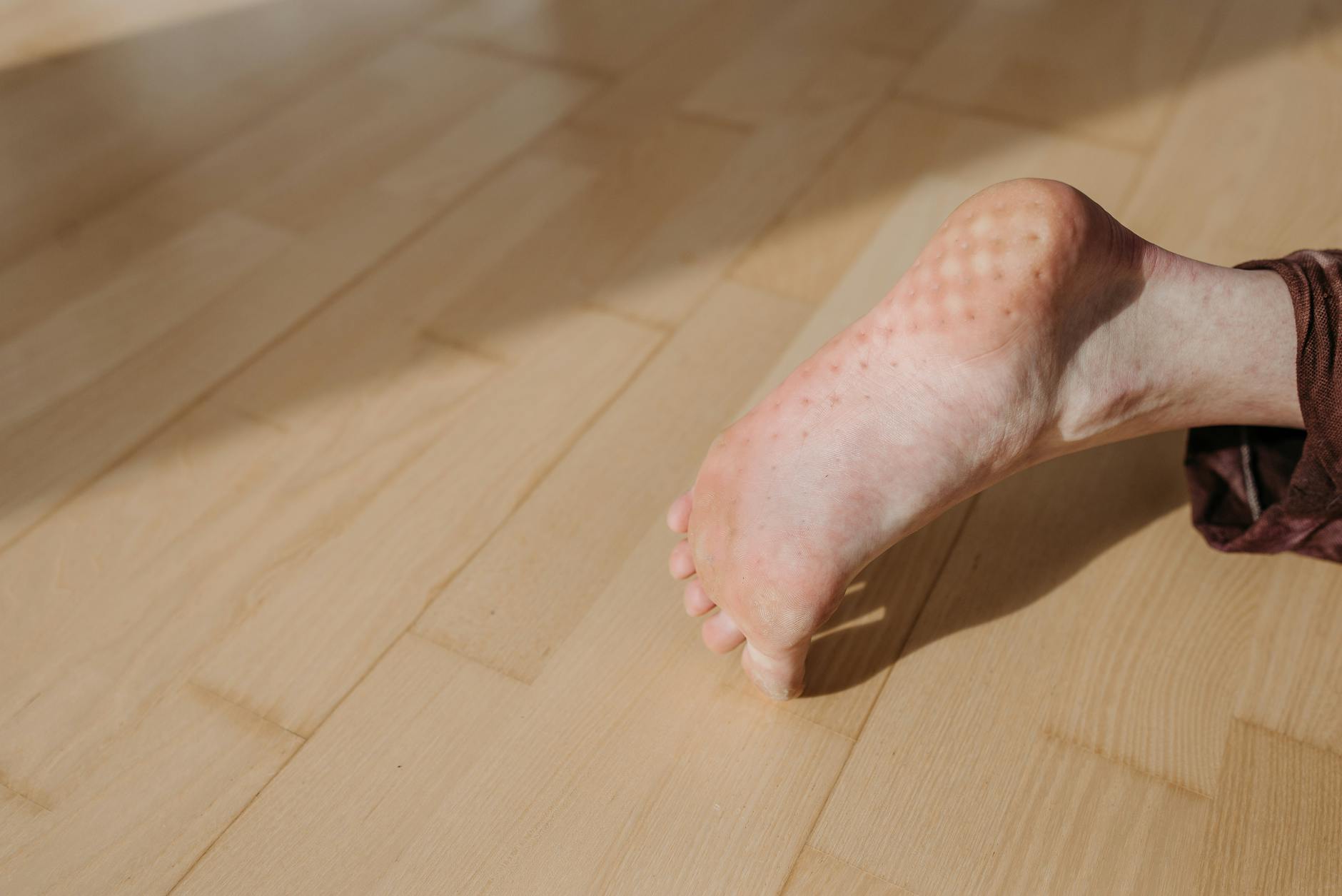
Why Does It Hurt Most in the Morning?
The classic sign of plantar fasciitis is that morning heel pain that peaks with the very first steps of the day. Understanding why this happens helps explain the condition and why certain treatments work.
When you sleep, your foot naturally rests in a plantarflexed position — toes pointing slightly downward. In this position, the plantar fascia is in a shortened, relaxed state. During sleep, your body attempts to repair the microtears in the tissue, and the fascia essentially "sets" in this shortened length.
The moment you stand up and your full body weight comes down on the foot, the fascia is suddenly forced to stretch from that shortened position. This abrupt lengthening re-tears the partially healed fibers, causing the intense pain familiar to anyone who has dealt with this condition. After a few minutes of walking, the fascia warms up and becomes more pliable, which is why the pain typically fades — only to return if you sit for a long period and then stand again.
What Causes Plantar Fasciitis? Key Risk Factors
Plantar fasciitis rarely has a single cause. Instead, it develops from a combination of mechanical, structural, and lifestyle factors that together increase load on the fascia beyond what it can handle.
Tight calf muscles and Achilles tendon. This is the single most consistent finding in plantar fasciitis research. When the calf is tight, the ankle cannot dorsiflex (bend upward) freely. To compensate, the foot rolls inward and the plantar fascia must absorb extra force with each step. Studies consistently show that calf tightness is present in a large proportion of plantar fasciitis patients.
Sudden increase in activity. A classic trigger is dramatically increasing how much you walk or run over a short period — starting a new exercise program, training for a race, or spending a week on vacation walking twice your usual daily steps. The fascia does not have time to adapt to the new load.
Prolonged standing on hard surfaces. Jobs that require standing for eight or more hours on concrete floors — retail work, manufacturing, healthcare — place sustained stress on the plantar fascia without the recovery time that intermittent activity allows.
Foot structure abnormalities. Flat feet (overpronation) and high arches both alter the way force is distributed across the foot during walking. Both can increase strain on the plantar fascia, though through different mechanisms.
BMI and body weight. Higher body weight directly increases the compressive load on the heel and fascia. Research consistently identifies BMI as an independent risk factor for plantar fasciitis development.
Footwear choices. Shoes with inadequate arch support, worn-out cushioning, or flat soles (like flip-flops or ballet flats) reduce the foot's natural shock absorption and transfer more force to the fascia.
Age. The plantar fascia becomes less elastic and less capable of rapid recovery as we age. The condition is most common in people between 40 and 60 years old, though runners of any age are at elevated risk.
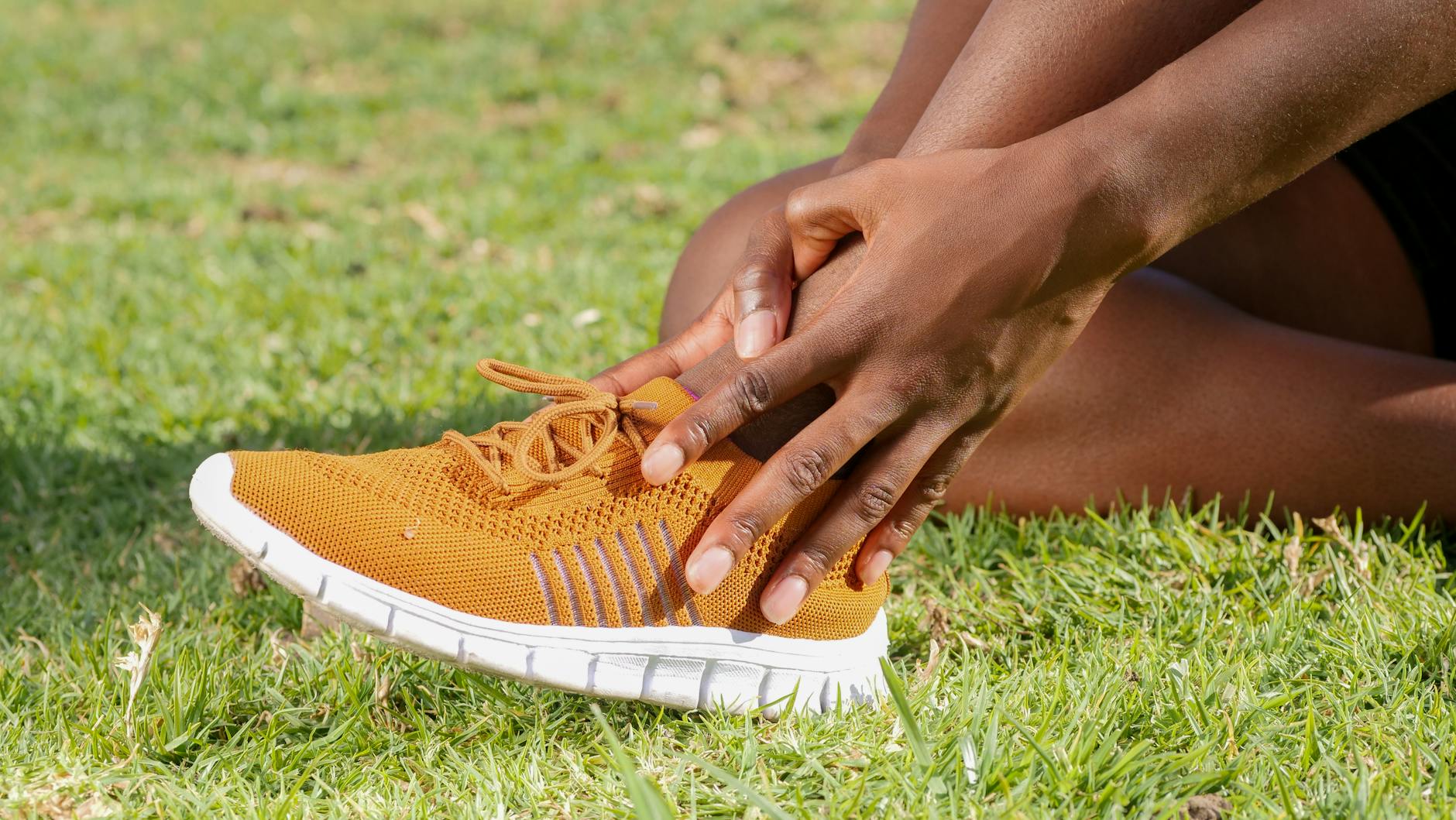
7 Evidence-Based Plantar Fasciitis Treatments at Home
The research on plantar fasciitis is clear on one point: the condition responds very well to conservative management. A landmark review published in the Journal of Bone and Joint Surgery found that more than 90 percent of patients recover fully with plantar fasciitis treatment at home and non-surgical care alone. Here are the seven most effective approaches, ranked roughly by the strength of evidence supporting them.
1. Calf and Plantar Fascia Stretching (Highest Evidence)
Stretching is consistently the most evidence-backed intervention for plantar fasciitis exercises. Two stretches in particular have strong research support.
Plantar fascia-specific stretch: Sit in a chair. Cross your affected foot over your opposite knee. Grip your toes and pull them back toward your shin until you feel a stretch along the arch. Hold for 10 seconds, repeat 10 times. Do this first thing before your first step out of bed, three times daily.
A randomized controlled trial published in Clinical Orthopaedics and Related Research found this stretch significantly more effective than Achilles tendon stretching alone for reducing plantar fasciitis pain.
Calf (gastrocnemius and soleus) stretch: Stand facing a wall. Place your hands on the wall. Step one foot back and press the heel flat to the floor, keeping the back knee straight. Hold 30 seconds. Then slightly bend the back knee to target the deeper soleus muscle. Hold another 30 seconds. Repeat three times per side, twice daily.
For maximum effect, stretch first thing in the morning before weight-bearing, after prolonged sitting, and before and after any activity. Consistency is more important than intensity — gentle daily stretching outperforms occasional aggressive sessions.
2. Night Splints (High Evidence)
Night splints address the root mechanical cause of morning heel pain. They hold the foot in a dorsiflexed position (toes up) during sleep, keeping the plantar fascia in a mildly elongated state throughout the night. When you stand up in the morning, the fascia is not suddenly wrenching from a shortened position.
Multiple randomized trials have found that night splints reduce pain significantly compared to no treatment, with studies showing 70–80 percent of patients improving after three months of consistent use. They can feel awkward initially and may disrupt sleep for the first week, but most people adapt quickly. Both rigid posterior night splints and softer "sock-style" splints have evidence behind them, with the softer versions generally better tolerated for long-term use.
3. Supportive Footwear and Orthotic Insoles (High Evidence)
Continuing to walk in flat, unsupportive shoes while treating plantar fasciitis is like trying to heal a cut while repeatedly reopening it. Footwear intervention is a foundational part of the best plantar fasciitis treatment protocol.
What to look for in supportive footwear: a firm heel counter, adequate arch support, a moderate heel-to-toe drop (8–12mm is generally considered helpful), and cushioning in the heel area. Avoid going barefoot on hard floors — even padding to the bathroom in the morning matters.
Over-the-counter arch support insoles have been shown in multiple studies to provide pain relief comparable to custom orthotics for the majority of plantar fasciitis patients. A 2018 systematic review in the Journal of Foot and Ankle Research concluded that prefabricated orthotics are effective, cost-efficient, and appropriate as a first-line treatment option.
4. Ice Therapy and Anti-Inflammatory Measures (Moderate Evidence)
While the degenerative nature of plantar fasciitis means inflammation is not the primary driver, ice remains useful for managing acute flare-ups and post-activity discomfort.
Ice massage: Freeze a water bottle. Roll the arch of your foot over it for 10–15 minutes after activity or at the end of the day. The rolling motion simultaneously provides gentle soft-tissue massage, and the cold reduces local pain signaling.
NSAIDs (like ibuprofen or naproxen) taken short-term can help manage acute pain and allow you to perform the stretching exercises more effectively. They should not be used as a stand-alone treatment or for prolonged periods, but as a bridge during the most painful phase.
5. Self-Massage and Myofascial Release (Moderate Evidence)
Manual therapies performed at home can reduce tension in the plantar fascia and surrounding musculature. The most accessible options include:
Golf ball or tennis ball rolling: Seated or standing (adjust pressure to your tolerance), place a firm ball under the arch of your foot. Apply gentle downward pressure and roll slowly from heel to ball of foot. Spend 5 minutes per session, once or twice daily. This technique addresses myofascial restrictions in the fascia itself and the intrinsic foot muscles beneath it.
Thumb massage: Using both thumbs, apply firm pressure to the arch in short strokes from the heel toward the toes. A 2012 study in the Journal of Physical Therapy Science found that self-massage combined with stretching produced better outcomes than stretching alone.
6. Athletic Taping (Moderate Evidence)
Low-Dye taping — a technique that supports the arch and limits excessive pronation — has been studied as a short-term pain relief strategy. The tape creates a mechanical support that offloads the plantar fascia during walking, reducing pain immediately and allowing you to remain more active during recovery.
A Cochrane review and subsequent studies suggest taping provides meaningful short-term pain relief, though it is more of a management tool than a curative treatment. Kinesiology tape (KT tape) applied along the arch and heel has also grown in popularity and shows similar short-term benefit, with the advantage of being more comfortable to wear for 3–5 days at a time.
If you are unfamiliar with taping techniques, a physical therapist can demonstrate the proper method at your first appointment — one session focused on taping technique can give you a skill you use throughout your recovery.
7. Strategic Rest and Activity Modification (Foundational)
Rest does not mean complete inactivity — in fact, prolonged immobilization can worsen plantar fasciitis by weakening the foot muscles and reducing blood flow to the tissue. What it means is activity modification: temporarily reducing or replacing activities that load the fascia (running on hard surfaces, extended standing) with lower-impact alternatives (swimming, cycling) while continuing to exercise the surrounding musculature.
The evidence on complete rest as a stand-alone intervention is weak. However, continuing to do the exact activities that caused the condition without modification reliably prolongs recovery time. The smart approach is to reduce provocative loads while actively treating the underlying tissue with stretching, massage, and supportive footwear.

How Long Does Plantar Fasciitis Last?
This is the question most people want answered immediately, and the honest answer is: it depends — but most people fully recover.
Research shows that with consistent conservative treatment, approximately 80 percent of people recover within 12 months. Many people see meaningful improvement within 6–8 weeks when they are diligent about stretching, supportive footwear, and the other interventions listed above. The condition is notoriously slow to heal because the plantar fascia receives relatively poor blood supply compared to muscle tissue, which means the repair process takes longer.
Key factors that influence how long plantar fasciitis lasts include how long the condition has been present before treatment begins (chronic cases take longer), consistency of stretching and footwear changes, whether aggravating activities are modified, and individual factors like weight, foot structure, and occupation.
If your pain is not improving after 6–8 weeks of consistent home treatment, that is a reasonable point to consult a podiatrist or sports medicine physician. They may consider additional interventions such as physical therapy, corticosteroid injections (effective for short-term pain relief, though not without drawbacks), or extracorporeal shockwave therapy, which has a growing body of evidence for chronic cases.
When to See a Doctor
Home treatment is appropriate for the majority of plantar fasciitis cases, but certain symptoms warrant prompt professional evaluation:
- Pain that does not ease at all after the first few minutes of walking (may suggest a different diagnosis such as a stress fracture or nerve entrapment)
- Swelling, redness, or warmth in the heel area
- Pain that came on suddenly after a specific trauma rather than gradually
- Numbness or tingling in the heel or foot (could indicate tarsal tunnel syndrome)
- No improvement after 8–12 weeks of consistent home treatment
- Pain severe enough to cause significant limping or to prevent normal daily activities
FAQ: Plantar Fasciitis Treatment at Home
Key Takeaways
Plantar fasciitis is a degenerative condition affecting the thick band of connective tissue along the bottom of your foot, most commonly causing sharp heel pain with the first steps of the day. The morning heel pain pattern is a direct result of the fascia "setting" in a shortened position overnight and then being abruptly stretched.
The most common plantar fasciitis causes include tight calf muscles, sudden increases in activity, prolonged standing, foot structure issues, higher body weight, and inadequate footwear. Most of these are modifiable, which is why the prognosis for recovery is so positive.
The seven evidence-based home treatments — stretching, night splints, supportive footwear, ice therapy, self-massage, athletic taping, and activity modification — work best when used in combination rather than individually. Stretching and supportive footwear carry the strongest evidence and should form the foundation of any self-treatment plan.
As for how long plantar fasciitis lasts: expect meaningful improvement in 6–8 weeks with consistent treatment, and full resolution within 12 months for the vast majority of people. The single most important thing you can do is start the plantar fascia-specific stretch today and make it a non-negotiable part of your morning routine before your feet ever touch the floor.