Senior-Friendly Home Upgrades That Make Everyday Life Easier — No Renovation Required
Most people picture aging in place as an expensive, months-long construction project — torn-out tiles, widened doorways, permits, and contractors underfoot. In reality, the vast majority of meaningful senior-friendly home upgrades require nothing more than a few hours, a screwdriver, and thoughtful product choices. Small, well-placed changes can dramatically reduce falls, conserve energy throughout the day, and restore a sense of independence that larger renovations often promise but delay.
This guide covers the practical, no-renovation-required adjustments that occupational therapists, geriatric care managers, and aging-in-place specialists recommend most often. Whether you are adapting your own home or helping a parent get settled more safely, the principles here apply across a wide range of budgets and physical needs.
Why Small Home Adjustments Matter More Than Major Renovations
According to the Centers for Disease Control and Prevention, falls are the leading cause of injury-related death among adults over 65 — and the majority of those falls happen at home, in familiar spaces. Counterintuitively, familiarity creates a false sense of security. People navigate their own kitchens and hallways on autopilot, which means they are less likely to compensate when something shifts — balance, grip strength, eyesight, or the position of furniture.
Major renovations, like widening doorways or installing a roll-in shower, are sometimes necessary. But for the vast majority of households, the highest-impact easy home modifications for elderly adults involve four categories: reducing reach, improving grip, stabilizing transitions, and controlling light. None of these require a building permit.
There is also a psychological dimension worth naming. Many older adults resist modifications because the visual presence of grab bars and raised seats feels like a concession to decline. The good news is that thoughtfully chosen accessories — in brushed nickel, matte black, or warm wood tones — integrate into existing decor without broadcasting vulnerability. Designers increasingly refer to this principle as "universal design," and the mainstream home market has responded with hardware and accessories that look intentional rather than institutional.
Bedroom: Reducing the Physical Work of Daily Routines
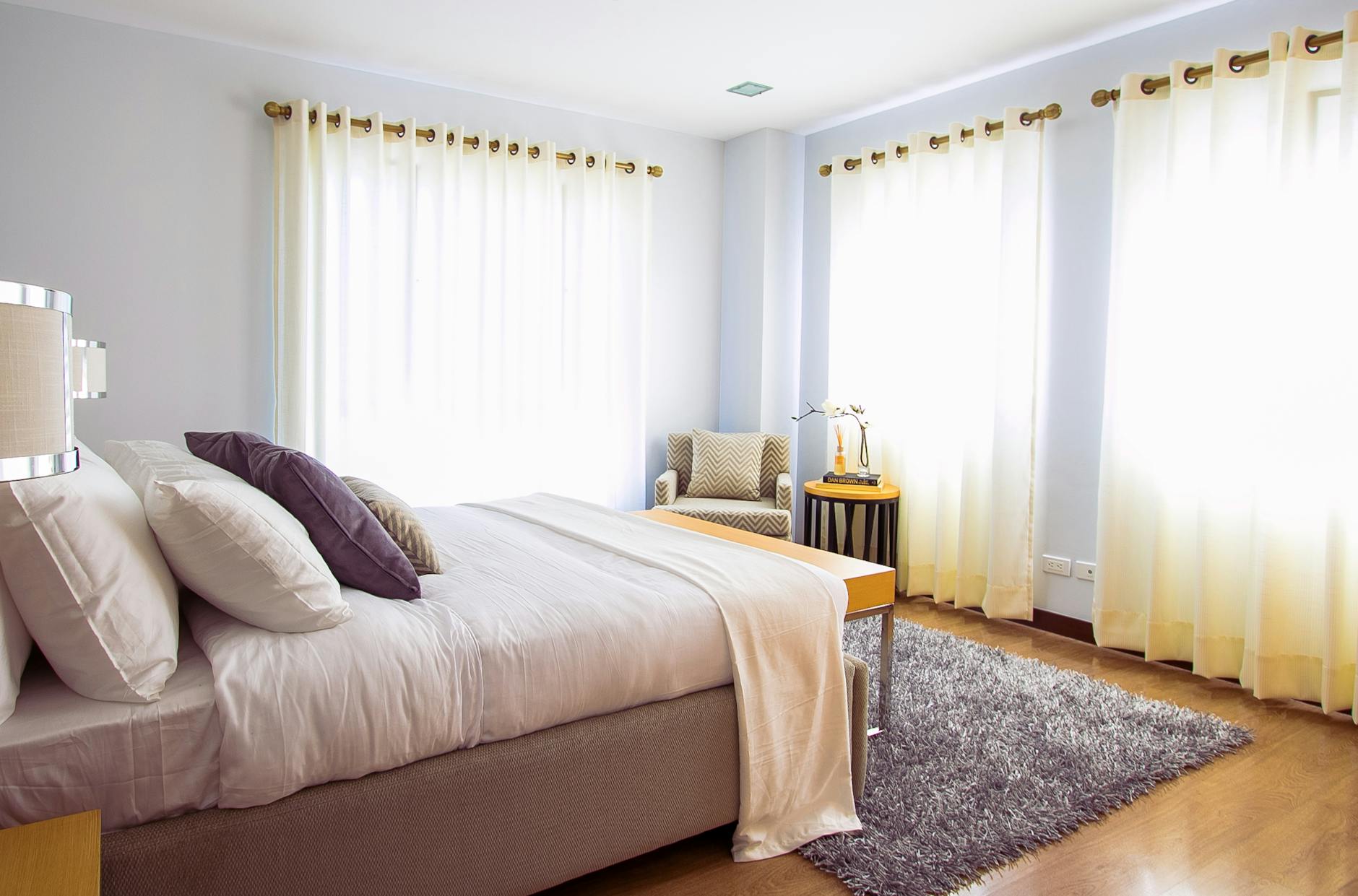
The bedroom is where most people begin and end every day, and it is also where two of the most physically demanding transitions happen: getting in and out of bed, and dressing. Both become progressively harder as hip flexibility, core strength, and balance shift with age. Accessible bedroom ideas do not require buying a new bed or repainting walls. They center on height, stability, and lighting.
Bed Height
The ideal bed height for most adults allows them to sit on the edge with feet flat on the floor and knees at roughly 90 degrees. Beds that are too low force a deep squat to stand; beds that are too high require an awkward climb. Adjustable bed leg risers — simple plastic or wooden blocks that slip under existing bed legs — can raise a frame two to eight inches without any tools. If the bed is already too high, placing a sturdy, non-slip step stool nearby provides the intermediate step that makes mounting easier and safer.
Bedside Stability
A bed rail — not the style used for children, but a freestanding handle designed for adults — tucks between the mattress and box spring and provides a stable grip point for sitting up and standing. These are among the most recommended home hacks for limited mobility because they address the single most common bedroom fall scenario: the instability of those first few seconds after waking. Pair a bed rail with a bedside lamp on a touch-activated or voice-activated switch, so there is never a need to fumble for a button in the dark.
Clothing and Storage
Bending and overhead reaching are disproportionately risky for people with balance challenges. Reorganizing a closet so that the most-used items live between shoulder height and hip height eliminates both extremes. Over-the-door organizers and pull-down closet rods (a simple hardware store installation) bring items to a comfortable standing reach. A long-handled dressing aid — a flexible tool used to pull on socks, shoes, or pants without bending — costs very little and removes the need for any balance-testing movements during morning routines.
Night Lighting
Motion-activated nightlights plugged into outlets along the path from bedroom to bathroom are one of the highest-value low-effort home improvements for seniors available. They cost a few dollars each, require no wiring, and address the fact that roughly half of all nighttime falls happen in the 30 seconds between waking and reaching the bathroom. Placing one inside the bathroom itself — ideally near the floor where the light level is most useful without being blinding — completes the path.
Bathroom: Simple Additions That Prevent Falls and Strain
The bathroom is statistically the most dangerous room in the home for older adults. Wet surfaces, confined spaces, and the physical demands of bathing, toileting, and grooming combine in a space that is typically small and hard to navigate if movement is limited. The following aging in place home tips address the bathroom's specific risks without touching tile, plumbing, or electrical systems.
Non-Slip Surfaces
The single cheapest and most impactful change in any bathroom is adding non-slip texture to every wet surface. Textured mats inside the tub or shower and on the bathroom floor outside the tub create friction without altering the room's appearance. Look for mats with strong suction cups on the underside — mats that slide are worse than no mat at all. Anti-slip adhesive strips applied directly to the tub floor are even more secure and nearly invisible once in place.
Grab Bars
Grab bars are the single most recommended bathroom modification in occupational therapy and fall-prevention literature. They belong next to the toilet, inside the shower or tub, and at the shower entry point. Properly installed grab bars must be anchored into wall studs or toggle bolts rated for body weight — a bar that pulls free under load is more dangerous than having no bar at all. For renters or anyone who cannot drill into walls, tension-mounted bars that press against floor and ceiling (designed for shower use) and over-the-toilet safety frames (which attach to the toilet's own bolts) offer stable alternatives that require no permanent installation.
Raised Toilet Seats and Commodes
Like beds, standard toilet height (roughly 15 inches) forces a deep squat that stresses knees, hips, and lower back — and makes standing back up physically demanding. A raised toilet seat, which clamps onto the existing toilet and adds two to six inches of height, is one of the most commonly cited easy home modifications for elderly adults recovering from surgery, managing arthritis, or experiencing general lower-body weakness. Models with integrated armrests provide a push-up surface that makes standing dramatically easier.
Shower Seats and Handheld Showerheads
Standing for the duration of a shower places continuous demand on balance and leg endurance. A fold-down teak or plastic teak-look bench, or a freestanding shower chair, allows bathing to happen seated without modifying the shower structure. Pairing a seat with a handheld showerhead — installed by simply unscrewing the existing fixed head and attaching an adjustable hose — gives full control of water direction while seated. These two additions together transform showering from a physically demanding endurance task into a comfortable, low-fatigue routine.
Kitchen and Living Room: Reachability and Ergonomics

Falls and injury in the kitchen and living room are less about wet surfaces and more about overreach, clutter, and furniture that does not support the body well. Adjustments in these rooms tend to focus on bringing items within comfortable range, improving grip on everyday objects, and making sure that chairs and sofas provide stable support during standing transitions.
Kitchen: The Reacher Tool and Reorganization
A reacher grabber — a lightweight, long-handled tool with a gripping jaw at one end — is one of the most versatile home hacks for limited mobility. It extends effective reach by 24 to 36 inches, which means high cabinet shelves and low-floor pickups no longer require bending or stretching. Keeping one in the kitchen and one near a favorite chair covers a surprisingly large number of daily reaching scenarios. Beyond the reacher, reorganizing kitchen storage so that everyday items (cups, plates, cereal, snacks) live between counter height and eye level removes the need to reach above the head or crouch near the floor during routine meal preparation.
Lever Handles and Easy-Turn Hardware
Round doorknobs require a firm gripping and twisting motion that becomes painful or impossible with arthritis or reduced hand strength. Lever-style door handles, which push down rather than twist, require far less grip strength and can be operated with a fist, forearm, or elbow if necessary. Swapping round knobs for levers is a simple DIY replacement that takes about ten minutes per door and costs modest amounts at any hardware store. The same principle applies to cabinet hardware — replacing small, recessed pulls with larger D-ring or bar handles reduces the precision gripping required to open drawers and cabinet doors.
Furniture Height and Stability
Low, soft sofas and armchairs look inviting but are biomechanically difficult for many older adults. Getting out of a deeply cushioned seat requires significant quad strength and forward trunk lean — both of which may be limited. Furniture risers (similar to the bed leg risers mentioned earlier) raise sofas and chairs by two to six inches, making standing transitions easier. Alternatively, a firm seat cushion adds height while improving sitting posture. Whatever seating is used, the arms should be solid and at the right height to push off from — not padded wings or decorative arms that flex under pressure.
Clutter, Rugs, and Clear Pathways
Area rugs are one of the most common fall hazards in living rooms. Edges that curl, rugs that slide on hardwood or tile, and pile height that catches the toe of a shuffling gait all contribute. The simplest approach is to remove any rug that is not completely flat and fully secured. Rug-grip pads and double-sided carpet tape can secure smaller rugs, but the reality is that a bare, even floor is far safer than any unsecured rug. Keeping a clear, unobstructed walking path through every room — at least 36 inches wide to accommodate a walker if needed — eliminates the improvised navigation that leads to catches and falls.
Lighting Throughout the Home
Vision changes with age in ways that make standard home lighting inadequate. The pupil shrinks, contrast sensitivity declines, and glare becomes more disorienting. Increasing ambient light levels — by switching to higher-lumen bulbs, adding under-cabinet lighting in the kitchen, and placing floor lamps in previously dim corners — dramatically improves navigational safety. Smart bulbs with voice or app control allow lighting adjustment without crossing the room to reach a switch. The goal is consistent, glare-free brightness throughout the home, not pools of bright light surrounded by shadow.
A Prioritized Checklist: Where to Start and What Has the Biggest Impact
With so many possible senior-friendly home upgrades available, it helps to have a clear starting sequence. The following checklist is ordered by a combination of fall-prevention impact and ease of implementation. Address the top items first, then work down as time and budget allow.
Aging in Place Home Improvement Checklist
Immediate Priority (Do This First)
- Install motion-activated nightlights along bedroom-to-bathroom path
- Add non-slip mats and adhesive strips inside tub or shower
- Remove or fully secure all area rugs with grip pads or carpet tape
- Clear a minimum 36-inch walking path through every main room
- Relocate frequently used kitchen items to between counter height and eye level
High Impact (Weekend Projects)
- Install grab bars next to toilet and inside shower or tub (use studs or weight-rated anchors)
- Add a freestanding bed rail on the side most used for entry and exit
- Replace round door and cabinet knobs with lever handles and D-ring pulls
- Add a shower chair or fold-down tub bench, plus a handheld showerhead
- Adjust bed height with risers or a step stool to achieve 90-degree knee angle
Comfort and Ergonomics (Next Steps)
- Raise low sofas and chairs with furniture risers or firm cushions
- Install a raised toilet seat with armrests
- Add under-cabinet lighting in the kitchen
- Place a reacher grabber in the kitchen and near the primary seating area
- Switch to higher-lumen, glare-free bulbs throughout the home
- Add a long-handled dressing aid to the bedroom routine
- Install touch or voice-activated lamp switches at bedside
- Reorganize closet so daily-wear clothes are at standing reach (hip to shoulder height)
Frequently Asked Questions
Key Takeaways
Senior-friendly home upgrades do not require a contractor, a budget overhaul, or months of disruption. The changes with the highest impact — non-slip surfaces in the bathroom, motion-activated lighting along nighttime paths, grab bars near the toilet and shower, and adjusted furniture heights — are accessible to virtually anyone, in any type of home, on almost any budget.
The underlying principle across all of these aging in place home tips is the same: reduce the number of physically demanding moments embedded in everyday routines. Each reach, bend, grip, and balance challenge that is engineered out of a daily routine conserves energy, reduces fall risk, and contributes to the kind of sustained independence that makes remaining at home a genuinely comfortable choice rather than a struggle.
Start with the immediate-priority items on the checklist above, address the bathroom first, and work outward from there. Small, well-chosen changes add up quickly — and the confidence that comes from a safer home environment is itself a meaningful improvement in quality of life.