The Best Arm Skincare Routine for Firmer, Smoother Skin After 40
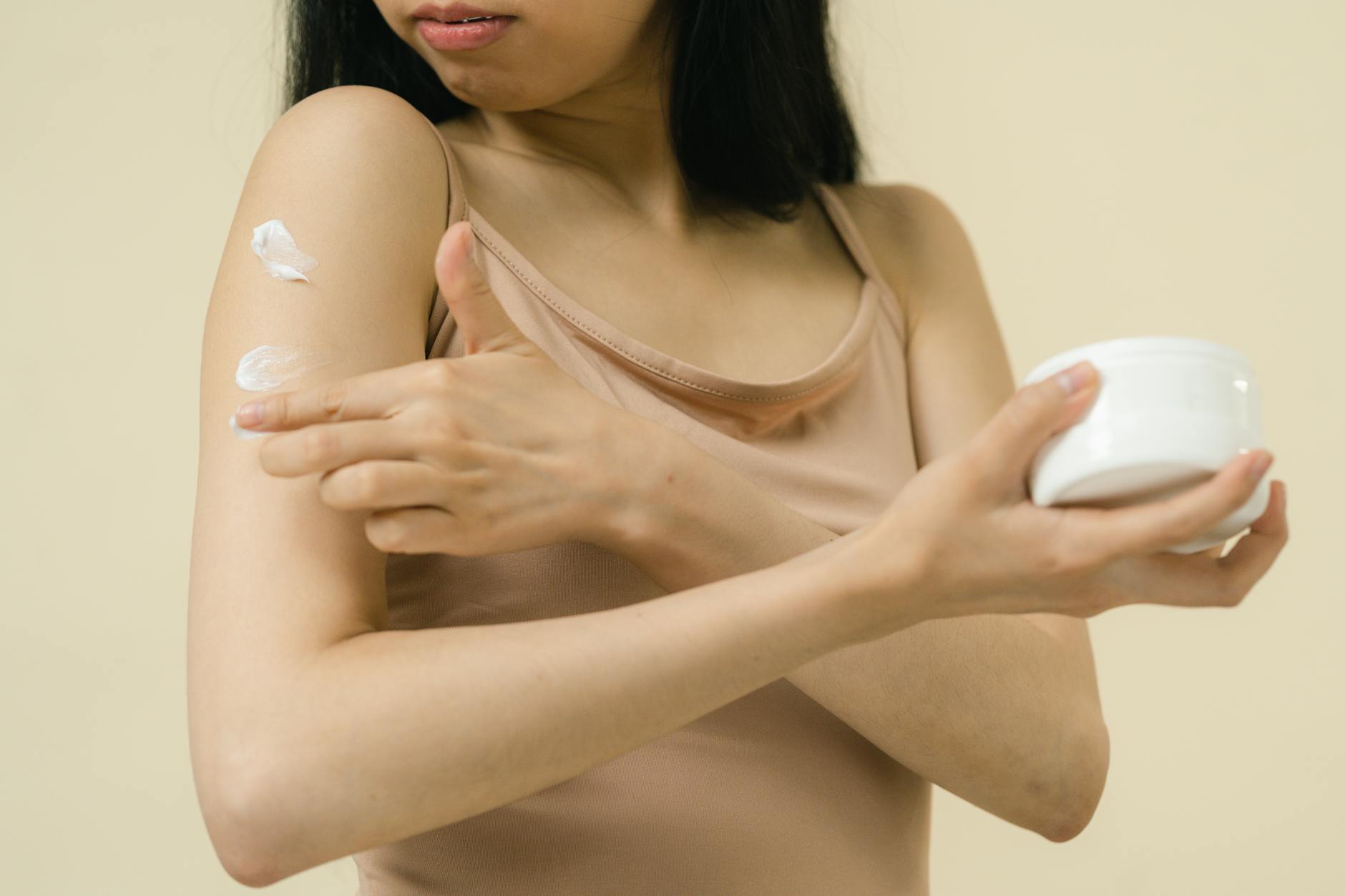
If you have noticed that the skin on your arms feels thinner, looks crepey, or has lost the firmness it once had, you are not imagining things. After 40, the skin undergoes real, measurable biological changes that affect its texture and elasticity — and the arms are one of the first places those changes become visible. The good news is that a dedicated arm skincare routine for firming can genuinely make a difference. Not overnight, and not with a single miracle cream, but with consistent, layered care that works with your skin's biology rather than against it.
This guide walks you through a complete morning and evening routine, explains which active ingredients actually move the needle, and introduces you to the more advanced tools now available for people who want to go beyond the basics. Whether you are just starting to notice changes or have been dealing with loose arm skin for a while, there is something here for every stage.
Why Arm Skin Changes After 40
Understanding why your arms look and feel different is the foundation of building a routine that actually works. Several things happen simultaneously in your 40s and beyond.
Collagen production slows significantly. By your mid-40s, your body is producing roughly 1% less collagen per year than it did in your 20s. Collagen is the structural protein that keeps skin plump, firm, and resilient. When it declines, skin starts to sag and thin.
Elastin degrades. Elastin is what allows skin to snap back after being stretched. With age, existing elastin fibers break down and fewer new ones are produced. This is largely responsible for the crepe-paper texture many people notice on the upper arms and elbows.
Skin cell turnover slows. In your 20s, your skin renewed itself roughly every 28 days. By your 40s, that cycle can extend to 45 or even 60 days. Dead skin cells sit on the surface longer, making skin look dull and rough and preventing active ingredients from penetrating effectively.
Moisture retention decreases. The skin's natural moisturizing factor (NMF) — the collection of molecules that hold water in the skin — becomes less efficient with age. Combined with hormonal shifts that reduce natural oil production, this leads to chronic dryness that worsens the appearance of crepey skin.
Sun damage accumulates. The outer forearms in particular are almost always exposed to UV radiation, even incidentally during daily activities like driving. Decades of unprotected sun exposure breaks down collagen, creates uneven pigmentation, and thickens the outer layer of skin in ways that make it appear rough and weathered.
The right arm skincare routine for firming addresses all of these factors in a logical sequence.
Step 1: Exfoliation — Clearing the Path for Everything Else
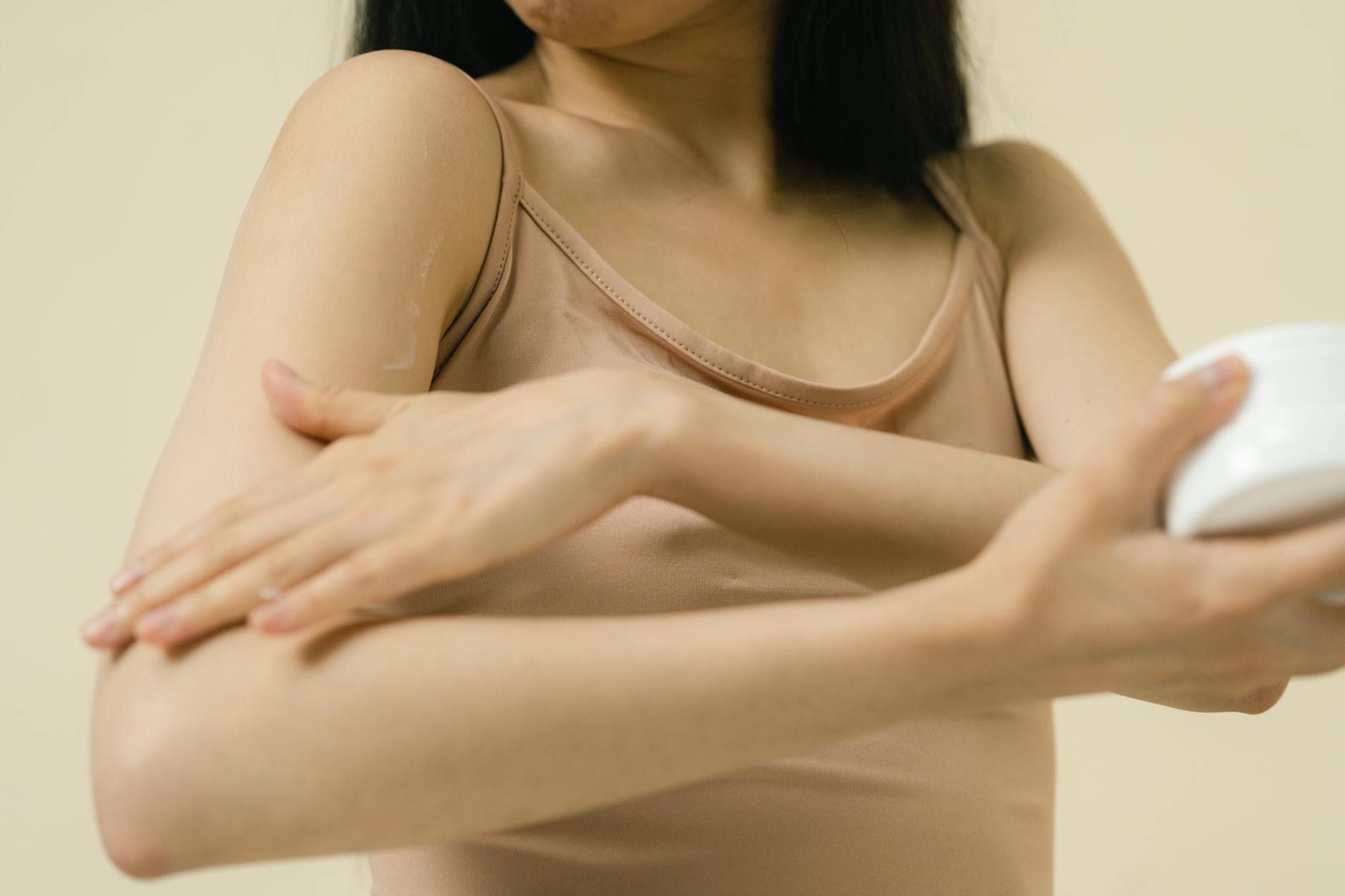
Exfoliation is the single most overlooked step in a body care routine. Most people exfoliate their face but forget their arms entirely. This is a mistake, especially after 40 when dead skin cell buildup is more pronounced.
Exfoliation works in two ways: physical exfoliation uses abrasion (a scrub, a dry brush, or a textured cloth) to manually remove dead cells, while chemical exfoliation uses acids that dissolve the bonds holding dead cells to the surface without any scrubbing.
For arm skincare tips over 40, chemical exfoliants are generally preferred because physical scrubs can be too harsh on thinning skin and sometimes cause micro-tears. The two most relevant acid types for the arms are:
- Alpha hydroxy acids (AHAs) — particularly glycolic acid and lactic acid. These work on the surface to slough off dead cells, improve texture, and over time stimulate collagen production. Lactic acid has the added benefit of being a natural humectant, so it hydrates as it exfoliates.
- Urea — technically not an acid but classified alongside chemical exfoliants. At concentrations of 10–20%, urea is excellent for rough, keratinized skin like elbows and upper arms. It softens keratin, improves moisture retention, and is particularly good for the bumpy skin condition known as keratosis pilaris.
How often: Two to three times per week is enough for most people. Over-exfoliating can compromise the skin barrier, leading to redness, sensitivity, and paradoxically, more dryness. Start at once per week and build up based on how your skin responds.
When: Evening is the better time to exfoliate the arms. Freshly exfoliated skin is more photosensitive, and using actives at night — when you are less likely to be in the sun — reduces that risk.
Step 2: Active Ingredients That Support Firmer, Smoother Arm Skin
Once exfoliation has cleared the surface, active ingredients can penetrate more deeply and work more effectively. For a skin care routine for loose arm skin, the following actives have the strongest evidence base.
Retinol
Retinol (a form of vitamin A) is one of the most studied anti-aging ingredients available without a prescription. It works by speeding up cell turnover, stimulating collagen synthesis, and improving skin thickness over time. For the arms, a body-specific retinol product or a general retinol lotion applied two to three nights per week can meaningfully improve skin texture and firmness over a period of three to six months.
Start at a low concentration (0.025–0.05%) and give your skin four to six weeks to adjust before moving higher. Retinol makes skin more photosensitive, so it should always be used in the evening and followed by SPF the next morning on any exposed skin.
Vitamin C
Vitamin C is a potent antioxidant and a direct co-factor in collagen synthesis — your body cannot make collagen without it. Topically applied vitamin C (in the form of L-ascorbic acid or more stable derivatives like ascorbyl glucoside) has been shown to brighten skin tone, reduce the appearance of sun spots, and support the collagen network. For the arms, it works particularly well in the morning as an antioxidant defense against the UV and environmental stress that drives accelerated skin aging. It is a key ingredient in any collagen boosting skin care for arms protocol.
Peptides
Peptides are short chains of amino acids that serve as messengers in the skin, signaling cells to produce more collagen and elastin. Unlike retinol, they cause no irritation and can be used morning and evening without adjustment periods. They are an excellent choice for anyone whose skin is too sensitive for retinol or who wants to layer additional firming support into their routine. Look for peptides like palmitoyl tripeptide-1, palmitoyl tetrapeptide-7, or acetyl hexapeptide-3 in the ingredient lists of body serums and firming lotions.
Niacinamide
Niacinamide (vitamin B3) is one of the most versatile ingredients in skincare. For the arms specifically, it helps improve the skin barrier, reduce redness and uneven tone, and modestly stimulate collagen production. It pairs well with almost every other active and is gentle enough for daily use morning and night.
Step 3: Hydration — The Most Underestimated Firming Step

It sounds almost too simple, but thorough and consistent hydration is one of the most effective things you can do for crepey, loose-looking arm skin. Here is why: dehydrated skin dramatically exaggerates the appearance of fine crinkling and sagging. When skin is properly hydrated, cells plump up, the surface looks smoother, and fine texture becomes far less visible. This is not a cure for structural collagen loss, but it is an immediate and cumulative improvement.
The best body lotion for crepey skin on arms will combine several types of moisturizing ingredients that work at different levels:
- Humectants draw water into the skin from the environment and deeper layers. Hyaluronic acid, glycerin, and urea are the most effective. Apply them to slightly damp skin (right after a shower) to maximize their water-attracting effect.
- Emollients fill in the gaps between skin cells, smoothing the surface and reducing that rough, rough-to-the-touch texture. Squalane, ceramides, fatty acids, and shea butter are common and effective choices.
- Occlusives create a seal over the skin to prevent water from evaporating once it has been delivered. Petrolatum is the most effective occlusive available, but dimethicone, beeswax, and plant-based butters also work well.
A well-formulated body lotion will include all three types. Applying it within two to three minutes of getting out of the shower — while skin is still slightly damp — makes a measurable difference in how much moisture is actually retained.
Timing tip: If you use a retinol or AHA product at night, apply it first, wait a few minutes for it to absorb, then apply your moisturizer on top. This buffers any potential irritation and locks in the actives.
Step 4: SPF for Arms — The Step Most People Completely Skip
Ask most people whether they apply SPF to their arms and you will almost universally get a "no." This is one of the most significant missed opportunities in an arm skincare routine for firming. UV radiation is the single largest external driver of collagen degradation, premature aging, and uneven skin tone — and the outer arms and forearms receive meaningful UV exposure every single day, whether you are driving, walking to your car, or sitting near a window.
UVA rays (the ones responsible for photoaging rather than sunburn) penetrate glass. Sitting by a window, even indoors, exposes your arms to UVA radiation year-round.
The practical solution is to incorporate a broad-spectrum SPF 30 or higher into your morning arm routine. Chemical sunscreens with avobenzone or the newer Tinosorb filters tend to have lighter textures that absorb easily on the body without feeling heavy. Physical sunscreens with zinc oxide or titanium dioxide are a good option if you have sensitive or reactive skin.
For daily commuters, at minimum apply SPF to your outer forearms and the backs of your hands — the areas with the most consistent incidental sun exposure. This simple habit, applied consistently over months and years, meaningfully slows the rate of photoaging on the arms.
Your Complete Morning Routine for Firmer Arm Skin
Here is how to bring all of the above steps together into a practical morning sequence:
- Shower or cleanse. Use a gentle, non-stripping body wash. Avoid very hot water, which compromises the skin barrier and worsens dryness.
- Pat dry, leaving skin slightly damp. Do not rub vigorously — this creates friction and irritation on already-thinning skin.
- Apply a vitamin C serum or lotion to the arms while skin is still damp. Allow it to absorb for 60–90 seconds.
- Follow with a hydrating body lotion containing peptides, niacinamide, hyaluronic acid, or ceramides — or all of the above.
- Finish with broad-spectrum SPF 30+ applied to all exposed areas, paying particular attention to the outer forearms.
Total time: roughly four to five minutes. The consistency of doing this every morning is worth far more than any single premium ingredient.
Your Complete Evening Routine for Firmer Arm Skin
- Shower if needed, or rinse the arms. Remove sunscreen, sweat, and environmental residue.
- Exfoliate 2–3 times per week with an AHA body lotion or urea-based product. On non-exfoliation nights, skip this step and move directly to step 3.
- Apply retinol on retinol nights (2–3 times per week, not the same nights as strong AHA exfoliation). On nights you use AHA, skip retinol.
- Wait 5–10 minutes for actives to absorb before layering anything on top.
- Apply a rich moisturizer — your evening moisturizer can be heavier and more occlusive than your morning one, since you do not need to worry about SPF compatibility or a greasy finish.
One helpful strategy is to designate specific nights for specific actives. For example: AHA exfoliation on Monday and Thursday evenings, retinol on Tuesday and Friday evenings, and pure hydration — no actives — on the remaining nights. This gives your skin adequate recovery time between active treatments.
Advanced Step: Device-Based Treatments for the Arms

For those who have built a solid foundation with the steps above and want to go further, technology-based treatments represent the next tier of an advanced arm skincare routine for firming. These approaches work at a level that topical products cannot reach on their own — stimulating deeper tissue changes rather than just nourishing the surface.
Red Light Therapy
Low-level red light therapy (wavelengths in the 630–850nm range) has accumulated a meaningful body of research supporting its ability to stimulate fibroblast activity — the cells responsible for producing collagen and elastin. At-home red light therapy panels and wands have become increasingly accessible and are now used by many people as a weekly body-care ritual. Sessions of 10–20 minutes over the arms, used consistently over eight to twelve weeks, represent a meaningful complement to a topical routine.
Microcurrent
Microcurrent devices deliver low-level electrical currents that mimic the body's natural bioelectrical signals. In a professional context, microcurrent is used for facial lifting and toning. At-home body microcurrent tools are a newer development, and while the research base is less established than for red light, early evidence and anecdotal reports suggest they can help improve skin tone and firmness in the arms with consistent use.
Dry Brushing
While not a high-tech device, dry brushing is a time-tested physical treatment that improves circulation, promotes lymphatic drainage, and stimulates the skin surface in ways that may support a more toned appearance over time. Use a natural-bristle brush in long upward strokes toward the heart, two to three times per week before showering, followed immediately by your active and moisturizer steps.
Radiofrequency and Ultrasound Devices
At-home radiofrequency (RF) and focused ultrasound devices use heat energy to stimulate collagen remodeling in the deeper layers of the dermis. These represent the most advanced tier of at-home body care technology. They require consistent use over several months to see results and should be used exactly as directed, as incorrect technique can cause adverse effects. If you are interested in this approach, consult a dermatologist or aesthetic practitioner to understand whether it is appropriate for your skin type and goals.
Supporting Your Routine From the Inside
No topical routine operates in isolation. Several lifestyle and nutritional factors have a direct impact on skin quality and directly influence how well your arm skincare tips over 40 will work.
- Protein intake. Collagen is a protein, and your body needs adequate dietary protein (particularly amino acids like glycine, proline, and hydroxyproline) to synthesize it. Ensure you are meeting your daily protein needs, especially if you are restricting calories.
- Hydration. Internal hydration supports every aspect of skin function. Aim for adequate water intake throughout the day, and note that caffeinated beverages have a mild diuretic effect that can contribute to skin dryness if fluid intake is not sufficient.
- Vitamin C from diet. Since vitamin C is essential for collagen synthesis and cannot be stored by the body in large amounts, regular dietary intake matters. Citrus fruits, bell peppers, strawberries, and leafy greens are all good sources.
- Resistance exercise. Strength training that works the arms — even bodyweight exercises like push-ups — builds underlying muscle mass that supports the overlying skin, making it appear firmer and more toned. This is particularly important after 40, when muscle mass naturally begins to decline.
- Sleep quality. The majority of collagen synthesis and skin repair happens during deep sleep. Chronic poor sleep measurably accelerates skin aging.
Realistic Expectations and a Timeline for Results
One of the most important things to understand when starting a skin care routine for loose arm skin is the timeline. Topical skincare works slowly and cumulatively. Here is what to realistically expect:
- 2–4 weeks: Improved hydration and surface texture. Skin will feel softer and look less dull as exfoliation and consistent moisturizing take effect.
- 6–8 weeks: Noticeable improvement in smoothness and a reduction in the rough, bumpy texture of keratosis pilaris if present. Skin tone becomes more even.
- 3–6 months: Meaningful improvement in firmness and elasticity from consistent retinol and peptide use. Collagen stimulation takes time — there are no shortcuts here.
- 6–12 months: The cumulative effect of daily SPF use begins to meaningfully slow further photoaging, and the skin may show a genuine improvement in overall quality compared to where it started.
Consistency matters more than perfection. Applying a good moisturizer every day for six months will outperform using the most expensive serum sporadically. Build the habits first; then optimize the products.
Key Takeaways
Building an effective arm skincare routine for firming after 40 does not require a complicated or expensive arsenal of products. It requires understanding what your skin actually needs and delivering it reliably.
- Exfoliate 2–3 times per week using chemical exfoliants like AHAs or urea to clear dead skin and improve active ingredient absorption.
- Use targeted actives — retinol for collagen stimulation, vitamin C for antioxidant protection and collagen synthesis, and peptides for gentle, consistent firming support.
- Hydrate thoroughly every day with a layered approach — humectants, emollients, and occlusives — applied to slightly damp skin after showering.
- Apply broad-spectrum SPF daily to exposed arms, including during low-sunlight days and while indoors near windows. This is the most important preventive step you can take.
- Consider adding device-based treatments once your topical routine is established — red light therapy, dry brushing, or more advanced energy-based tools can take results further.
- Support your routine from the inside with adequate protein, hydration, vitamin C, resistance exercise, and quality sleep.
- Give it time. Real, structural changes in skin take months. Trust the process and stay consistent.
A note on professional treatments: If you are dealing with significant skin laxity and are not seeing the results you want from a home routine after six months of consistency, it is worth consulting a board-certified dermatologist. Professional treatments such as fractional laser resurfacing, radiofrequency skin tightening, and prescription-strength retinoids can produce results that go beyond what is achievable at home — and a dermatologist can help you understand which options are appropriate for your specific skin concerns and goals.