What Is RFID Skimming and How Does It Actually Work?
You tap your credit card on a reader at the checkout line, and in a fraction of a second, a payment is authorized without a PIN or signature. It feels seamless — maybe even a little magical. But that same radio-frequency technology that makes contactless payments so convenient is also at the center of a growing security concern: RFID skimming.
Whether you've seen ads for "RFID-blocking wallets" or heard warnings about thieves stealing card data in crowded subway cars, you've probably wondered how much of this is real. In this guide, we'll break down exactly what RFID skimming is, how the technology works at a technical level, which cards are actually vulnerable, and — perhaps most importantly — how serious the real-world risk truly is.
What Is RFID? A Quick Primer
Before we can understand RFID skimming, we need to understand RFID itself. RFID stands for Radio-Frequency Identification. It's a technology that uses electromagnetic fields to automatically identify and track tags attached to objects — or in this case, embedded inside payment cards and passports.
An RFID system has two main components:
- The tag (or transponder): A tiny chip and antenna embedded in the card. It stores data and can transmit it wirelessly.
- The reader: A device that emits a radio-frequency signal, which powers the tag and triggers it to send back its stored data.
Most modern contactless credit and debit cards use a specific implementation of RFID called NFC (Near Field Communication), which operates at 13.56 MHz and is designed for very short-range communication — typically just a few centimeters. The iconic "tap to pay" symbol on your card (four curved lines, resembling a Wi-Fi icon on its side) indicates NFC capability.
Passports issued by many countries, including the United States since 2007, also use RFID chips — but these typically store biographical data and biometric information rather than financial credentials.
How Does RFID Skimming Work?
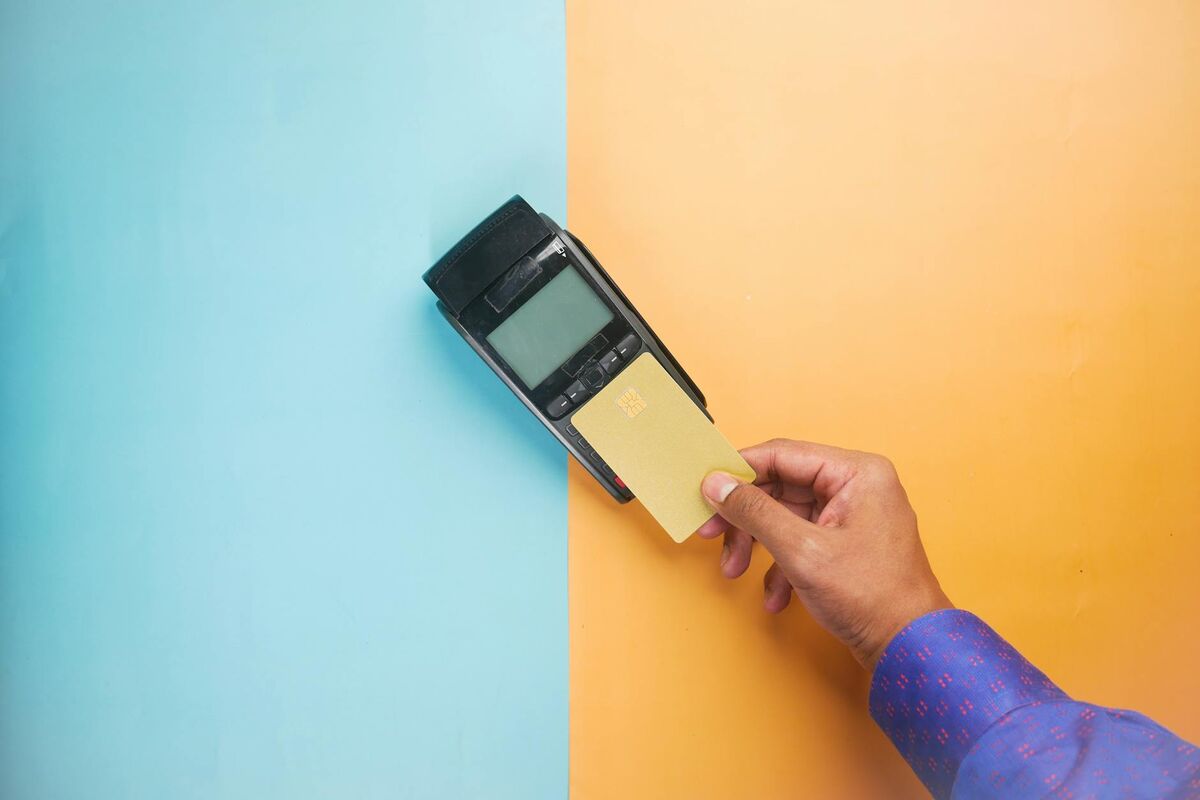
So how does RFID skimming actually happen? At its core, it's a form of eavesdropping. A thief uses a concealed RFID reader — which can be purchased online for as little as $20 to $50 — to attempt to interrogate the chip in your card without your knowledge or consent.
Here's the step-by-step process of how a theoretical contactless card fraud attack would unfold:
- The attacker acquires a reader: Portable RFID/NFC readers are widely available and require no special licensing. Many are marketed for legitimate purposes like inventory management or access control.
- The reader is concealed: The device might be hidden in a bag, briefcase, or even a modified coat pocket. Some setups are wired to a laptop or smartphone for real-time data capture.
- The reader emits a signal: When brought within range of a card (typically 1–10 cm for NFC, though some high-powered readers claim further range), it transmits a radio signal that powers the card's passive chip.
- The card responds: The card's chip "wakes up" and transmits its stored data — which on a payment card typically includes the card number, expiration date, and sometimes the cardholder's name.
- Data is stored and potentially used: The attacker saves this data, which in theory could be used to create a cloned card or attempt card-not-present (online) transactions.
The key phrase above is "in theory." As we'll explore shortly, modern security protections make successful exploitation surprisingly difficult — but that doesn't mean the risk is zero.
Which Cards and Documents Are Vulnerable to NFC Card Theft?
Not every card in your wallet is equally at risk. Understanding which types of cards are vulnerable helps you prioritize your concern appropriately.
Contactless Credit and Debit Cards
Any credit or debit card with the contactless payment symbol has an NFC chip. In the United States, the data this chip can transmit is limited. Thanks to EMV (Europay, Mastercard, Visa) standards, the chip does not store or transmit your CVV security code, your full billing address, or the data needed to process a chip-and-PIN transaction. What it can transmit is your card number and expiration date — which is enough for some online purchases that don't require a CVV.
Crucially, each NFC transaction also generates a one-time dynamic cryptogram — a unique code that cannot be reused. This means even if a criminal successfully read your card's transmission, the cryptogram they captured would be useless for making a new purchase. The static data (card number and expiry) is the real vulnerability.
RFID-Enabled Passports and ID Cards
US passports issued after 2007 contain RFID chips storing your photo, name, date of birth, and nationality. However, they use Basic Access Control (BAC) or the newer Password Authenticated Connection Establishment (PACE) protocol, which requires the reader to first optically scan the machine-readable zone on the passport before the chip will respond. A skimmer cannot read your passport chip without first seeing the printed data — making remote skimming of passports essentially impossible in normal circumstances.
Hotel Key Cards and Access Badges
Many hotel key cards and corporate access badges use older RFID standards (like HID or Mifare Classic) that have weaker encryption. These are technically easier to clone, but the value to a criminal is limited — they'd need to know which hotel you're staying at and which room you're in. Corporate badge cloning is a more realistic concern in targeted physical security breaches.
How Real Is the Threat? An Honest Assessment
This is where the conversation gets nuanced. Security researchers, consumer advocates, and financial fraud analysts have studied RFID skimming extensively, and the consensus may surprise you: the real-world threat to consumers from RFID card skimming is currently quite low — much lower than the marketing around RFID-blocking products would suggest.
Here's why:
- The physical proximity requirement is a major barrier. NFC operates at ranges of 1–10 cm under ideal conditions. A thief would need to get extremely close to you — close enough that you'd likely notice — to have any chance of reading your card through clothing and a wallet.
- Dynamic cryptograms make stolen data largely unusable. As mentioned, the one-time transaction codes generated by EMV chips mean that even a successfully intercepted transmission is cryptographically stale moments later.
- Card networks offer strong fraud protection. Visa, Mastercard, and major banks all provide zero-liability policies for unauthorized card transactions. Fraudulent charges are almost always reversed when reported promptly.
- Criminals prefer easier targets. Data breaches, phishing attacks, and traditional magnetic-stripe skimmers (at gas pumps and ATMs) yield far more card data with far less effort than trying to wirelessly skim cards in public.
- There are very few documented real-world cases. Despite years of warnings, documented cases of RFID skimming being used to commit large-scale payment fraud are extremely rare. The FBI and major card networks have not identified it as a significant fraud vector.
Consumer advocacy organizations like Which? in the UK and security researchers at Kaspersky have repeatedly tested RFID skimming scenarios and found that while the concept works in controlled lab environments, replicating it successfully in a real-world crowded environment with adequate yield is far harder in practice.
That said, this doesn't mean the concern is entirely baseless. Older card implementations from the early 2000s did expose more data. And as card penetration increases globally, the relative attractiveness of the attack vector may shift. It's reasonable to take sensible precautions without being paralyzed by fear.
How to Detect Potential RFID Skimming Attempts
Because RFID skimming — if it occurs — happens invisibly and silently, "detecting" it in the moment is nearly impossible for a typical consumer. What you can do is look for the downstream signs:
- Unexplained small charges: Fraudsters often test stolen card data with small transactions (under $5) before making larger purchases. Set up transaction alerts on all your accounts.
- Unfamiliar merchants: A transaction from an online retailer you've never visited, especially one with a vague name, could indicate your card number has been compromised.
- Geographic anomalies: A purchase made in a city you haven't visited in the past 48 hours is a red flag. Many banks flag these automatically.
- Rapid successive transactions: Multiple charges in quick succession across different merchants often indicate automated card testing.
Most major banks now offer real-time push notifications for every transaction. Enabling these is one of the single most effective steps you can take to catch fraud early — regardless of how your card data was compromised.
How to Protect Yourself from Contactless Card Fraud
Even given the relatively modest real-world risk, taking sensible steps to protect yourself costs little in time or money. Here are the most effective prevention strategies, ranked roughly by their actual impact:
1. Enable Real-Time Transaction Alerts
Log into your bank's app and enable instant push notifications for every transaction above $0. This doesn't prevent credit card wireless theft, but it ensures you catch it within minutes rather than days. This is arguably more valuable than any physical barrier.
2. Review Your Statements Regularly
Even with alerts enabled, develop a habit of reviewing your full monthly statement. Look for small, unfamiliar charges that might have slipped past your attention.
3. Use Virtual Card Numbers for Online Shopping
Many banks and services like Apple Pay, Google Pay, and Privacy.com offer virtual card numbers for online transactions. These single-use or merchant-locked numbers mean your real card number is never exposed, eliminating the risk of it being used fraudulently even if someone obtained it via RFID skimming.
4. Use a Mobile Wallet Instead of Your Physical Card
Apple Pay, Google Pay, and Samsung Pay use tokenization — they never transmit your actual card number during a transaction. Instead, they send a one-time token tied to your specific device. This is significantly more secure than tapping a physical card. If you're concerned about NFC card theft, using your phone to pay is paradoxically one of the safest options.
5. RFID-Blocking Wallets and Sleeves
RFID-blocking products use a layer of metallic mesh (typically copper or aluminum) to create a Faraday cage that blocks radio-frequency signals. They do work as advertised in lab tests. Given the low baseline risk, they are not strictly necessary — but if you want peace of mind in high-density environments like airports or crowded transit systems, a quality RFID-blocking wallet is an inexpensive and harmless precaution.
Note: Do not put both your contactless card and your RFID-blocking sleeve in the same pocket without the card inside the sleeve — the sleeve only blocks signals when the card is physically enclosed within the metallic lining.
6. Keep Cards in an Inner Pocket
Simple physical security matters. Keeping your wallet in an interior coat pocket or a front trouser pocket rather than a back pocket or a bag's exterior compartment makes opportunistic physical access significantly harder for anyone attempting to get close enough to skim your card.
7. Report Suspicious Charges Immediately
Under US federal law (the Fair Credit Billing Act), you are not liable for unauthorized credit card charges if you report them. Most banks extend this protection to debit cards as well under their own policies. Don't hesitate to call your bank the moment you see an unexplained charge — the sooner you act, the smoother the resolution.
The Difference Between RFID Skimming and Other Card Fraud
It's worth putting RFID skimming in context alongside other forms of card fraud to understand where it falls in the threat landscape:
| Fraud Type | Method | Real-World Prevalence | Consumer Risk Level |
|---|---|---|---|
| Data breaches | Hackers steal card data from merchant databases | Very High | High |
| Phishing | Fake emails/sites trick users into entering card details | Very High | High |
| Magnetic stripe skimming | Physical device on ATM/gas pump reads the mag stripe | High | Medium-High |
| Card-not-present (CNP) fraud | Stolen card numbers used for online purchases | High | Medium-High |
| RFID skimming | Wireless reader captures NFC transmission | Low | Low |
The data is clear: contactless card fraud via RFID skimming sits at the lower end of the real-world threat spectrum. Your biggest financial security risks come from online sources — phishing emails, data breaches at retailers you shop with, and malware — not from someone waving a reader near your back pocket on the subway.
Frequently Asked Questions About RFID Skimming
Key Takeaways
RFID skimming is a real technological vulnerability — but one that is far more theoretical than practical for the average consumer in 2026. Here's what to take away from this guide:
- RFID skimming is possible in controlled conditions, but extremely difficult to execute successfully in the real world due to range limitations and dynamic cryptogram protections.
- Modern EMV cards do not expose your CVV or full transaction data via NFC — the most sensitive information is protected.
- Passports have strong access controls that prevent remote wireless skimming without physical access to the document.
- Your biggest card fraud risks are digital — phishing, data breaches, and online scams — not physical wireless theft.
- The best defenses are behavioral: real-time transaction alerts, mobile wallet payments, and prompt fraud reporting beat any physical shield for practical protection.
- RFID-blocking wallets work as advertised and are a harmless precaution, but they are not a top-tier security priority given the current threat landscape.
Understanding how RFID skimming actually works — and doesn't work — empowers you to make informed decisions about your financial security rather than reacting to fear-based marketing. Stay informed, monitor your accounts, and focus your energy on the fraud threats that are genuinely most likely to affect you.